
さて、昨日は今回の東京移動での主な会合参加が無事終了。
あらゆる事象についての活発な意見交換会で、アタマのなかもスッキリさせることができました。やはりまだまだ老け込むことは許されない(笑)。
で、会合参加までの時間で上野の東京国立博物館参観。平成館での「空海展」がメインで参観していましたが、さすがの国立施設なので、その「深み」は圧倒的な迫り方。わたしは迷える真言宗徒なワケですが、あの平安期の時代相の中で、真言密教の果たした日本文化への影響力の巨大さを再認識させられました。
通常のトーハク参観よりも巨大なインパクトでした。で、こちらの方は仏教寺院関係者、いわばプロのみなさんもたいへん多数参観されていたようでした。わたしとしては、最近取り組んでこさせられている(笑)手書き筆文字・一部くずし字の大量古文書群への「見方」が、それこそ「見よう見まね」で活用出来てきているなぁと意を強くさせられた次第。・・・まぁ「なんちゃって」であることは自明ですが、それでも書き手の古人と少しくは「対話」できるような気がしてきていた。自分的には「長足の進化」ぶりで、これはいよいよ、取り組みを深めたいと思わされました。新体験。
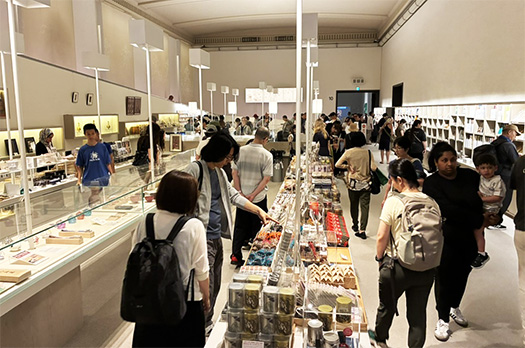
・・・というような参観でしたが、この空海展会場ではさすがに西洋系の外人さんチラホラ程度だったのが、その会場を出てトーハクの館内に出ると、ほぼ外人しか目に入らない状況。昨日ブログで書いた状況が、こうした施設ではさらに顕著に表れている。きのう記載の渋谷・東横線どころではなく、外国語が飛び交って海外からの来館者が非常に多い印象を受けた。
写真はショップの店内状況ですが、ほぼ8割くらいの印象比率。
昨日のブログを書いた後、仏教伝来期前後での大陸半島からの大量の「帰化」状況について調べてみたいと思って「帰化人と在地の人との間で、トラブルや逆に融和の様子を伝える伝承などはないだろうか?」とAIと対話してみたら以下のような返答があったので、その一部転記。
〜京都の太秦における帰化人(秦氏)と在地人との関係についてトラブルと融和の双方を伝える伝承や記録が古典や神社の縁起に残されています。後から来た技術集団である秦氏が、もともとそこにいた人々とどう関わったのか、具体的なエピソードを。・・・〜
この内容についても今後探究してみたいのですが、また別の稿で。
本日大雨との札幌に帰還予定。無事に着陸できるのかなぁ・・・。
●お知らせ
拙書「作家と住空間」幻冬舎から電子書籍で発刊
お求めはAmazonで。
https://amzn.asia/d/eUiv9yO
English version⬇
[Even at the Tokyo National Museum, the shop is almost entirely filled with foreigners (lol)]
I’m happy to see foreigners who want to “get to know Japan deeply”—welcome. Japanese history is also a flexible cultural history marked by the acceptance of “naturalized citizens.” …
Well, yesterday I successfully wrapped up the main meetings I attended during this trip to Tokyo.
It was a lively exchange of views on all sorts of topics, and it really helped clear my head. As expected, I still can’t afford to get old just yet (laughs).
So, before the meetings started, I visited the Tokyo National Museum in Ueno. My main focus was the “Kukai Exhibition” in the Heisei Hall, and as you’d expect from a national institution, its “depth” was truly overwhelming. I’m a somewhat lost Shingon Buddhist myself, but seeing the Heian-period setting really made me realize once again just how immense the influence of Shingon Esoteric Buddhism was on Japanese culture.
It had a far greater impact on me than a typical visit to the Tokyo National Museum. It also seemed that a large number of people associated with Buddhist temples—in other words, the “pros”—were visiting as well. For my part, I felt my confidence grow as I realized that the “perspective” I’ve been developing—through my recent efforts (laughs)—on a massive collection of ancient documents written in hand-drawn brush script, some in cursive, is starting to pay off, even if it’s just a matter of “learning by imitation.” …Well, it goes without saying that I’m still just “faking it,” but even so, I’ve started to feel as though I can have a bit of a “dialogue” with the ancient scribes. For me, this feels like a “giant leap forward,” and it has made me want to delve even deeper into this work. A new experience.
…That was my visit in a nutshell. While there were only a few Western visitors scattered about at the Kukai exhibition hall, once I left that hall and entered the rest of the Tokyo National Museum, almost everyone I saw was a foreigner. The situation I wrote about in yesterday’s blog is even more pronounced at facilities like this. It was nothing like the Shibuya and Toyoko Line areas I mentioned yesterday; foreign languages were flying around, and I got the impression there were a huge number of visitors from overseas.
The photo shows the scene inside the gift shop, where foreigners made up about 80 percent of the crowd.
After writing yesterday’s blog post, I wanted to look into the mass “naturalization” of people from the Asian continent and the Korean Peninsula around the time Buddhism was introduced to Japan. I asked my AI, “Are there any legends or records describing conflicts or, conversely, harmony between naturalized immigrants and the local population?” and received the following response, so I’ve transcribed a portion of it below.
~In Uzumasa, Kyoto, folklore and records preserved in classical texts and the founding legends of shrines describe both conflicts and harmony in the relationship between the naturalized immigrants (the Hata clan) and the local population. I’m looking for specific anecdotes about how the Hata clan—a group of technical experts who arrived later—interacted with the people who were already there. …~
I’d like to explore this topic further in the future, but I’ll save that for another post.
I’m scheduled to return to Sapporo today amid heavy rain. I wonder if I’ll be able to land safely…
● Announcement
My book, *Writers and Living Spaces*, has been published as an e-book by Gentosha.
Available on Amazon.
共有:

Posted on 7月 19th, 2026 by 三木 奎吾
Filed under: 未分類



コメントを投稿
「※誹謗中傷や、悪意のある書き込み、営利目的などのコメントを防ぐために、投稿された全てのコメントは一時的に保留されますのでご了承ください。」
You must be logged in to post a comment.