
家系史の探究について、昨日までで直近の重要地域・文献調査が一段落。
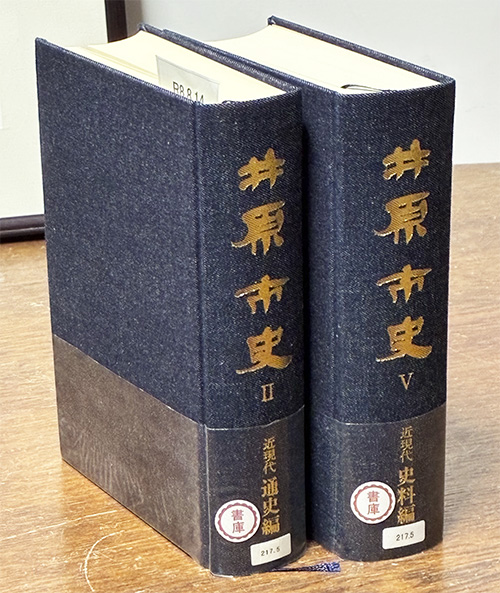
江戸期の「宿駅」間の経済交流の実態を調査確認するのに岡山県「井原市史」を読解してきていますが、必要箇所についてはおおむね確認作業が完了。これから分析作業になるところ。わが家系は、山陽道の宿駅として尾道の東隣の「今津」が故地。その地域産業「松永塩田」に依拠した経済活動で江戸後期を生きていた。
山陽道の宿駅として東隣に「神辺」があり、その先に岡山藩領の「井原」。その地の有力家と人脈コネクションを形成してきていた。
作業としては順調に推移しているのですが、どうしても引っかかっているのが地名。
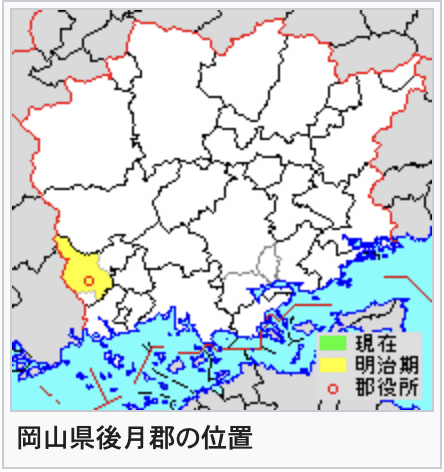
この井原は「後月」という明治以降の郡名地域。
資料でなんどもこの郡名が出てくるのですがまったく馴染めない(泣)。人間は読みがアタマのなかで残響して、馴染み感覚が生起してモノゴトの整理整頓がついていくのだと思う。
しかしこの「後月」の読みが「しつき」だとわかってからも、どうも残響してくれない。
さっぱり現場感・馴染みが持てないのです。家系史ではこの地域の人びととの関係が幕末から明治以降、非常に大きなポイントになる地域なのにであります。わたしの祖母の「生地」でもありその家系伝承の掘り起こしは最重要。なので近々この地を探訪予定でもあります。
「後」という字を「しり」と読む北海道の「後志〜後方羊蹄〜しりべし」という地名もあるので、まったくわからないではないのです。日本語古語としてそのような「読み方」はあったのでしょう。
AIの「後月〜しつき」読みについての解説は以下。
〜名前の由来と歴史
1.先進地域として渡来人や古代の職業集団(部民)が定住した古代・吉備国は、朝鮮に近い瀬戸内の海上交通の要所。優れた技術を持つ渡来系集団が多く移り住んだ。朝廷に仕える職能集団も多く配置されたため、彼らの言葉や集団名に漢字を当てた結果、独特の地名が残った。
2.「好字二字化」による強引な漢字の当てはめ。奈良時代、元明天皇の命により「地名には漢字2文字で縁起の良い文字(好字)を使え」というルール(風土記編纂の詔)が出された。これにより「しつき(足次)」地名に対し、意味を無視して強引に「後月」の2文字が割り振られた。現代人がパッと見で読めない地名が誕生した。
3.古代の言葉の「発音の変化」 何千年も前の「古代日本語の響き」がなまり変化した結果、漢字本来の読み方からかけ離れてしまったケース。〜〜
まぁ、郷に入らば従え。なんとか習慣化したい。え〜っと「しつき」か・・・。
●お知らせ
拙書「作家と住空間」幻冬舎から電子書籍で発刊
お求めはAmazonで。
https://amzn.asia/d/eUiv9yO
English version⬇
[“Shitsuki” District, Okayama Prefecture—Can You Pronounce This Place Name?]
First of all, I can’t pronounce it (lol). Apparently, it’s “Shitsuki.” It just doesn’t stick in my head. It doesn’t click. I’m planning to visit there soon. I’m going to get used to it! …
Regarding my genealogical research, I’ve just wrapped up the most recent phase of fieldwork and literature review as of yesterday.
I’ve been studying the *History of Ibara City* in Okayama Prefecture to investigate and verify the actual state of economic exchange between “post stations” during the Edo period, and I’ve largely completed the verification process for the relevant sections. Now it’s time to move on to the analysis phase. My family’s ancestral home is “Imazu,” located east of Onomichi, which served as a post station on the Sanyo Road. During the late Edo period, our family sustained itself through economic activities centered on the local industry, the “Matsunaga Salt Fields.”
To the east of Imazu along the Sanyo Road was “Kannabe,” and beyond that lay “Ibara,” part of the Okayama Domain. We had established connections with influential families in that area.
The work itself is progressing smoothly, but there’s one thing that just won’t let me go: the place names.
This “Ibara” is part of a region known as “Shitsuki” since the Meiji era.
This district name appears repeatedly in the documents, but I just can’t get used to it (sigh). I think that when a pronunciation resonates in our minds, a sense of familiarity arises, allowing us to organize and make sense of things.
However, even after learning that “Shitsuki” is the reading for “後月,” it just won’t resonate with me.
I simply can’t get a sense of the place or feel at home there. Yet in my family history research, this region is a crucial focal point for my relationships with the people there, spanning from the end of the Edo period through the Meiji era and beyond. It’s also my grandmother’s “birthplace,” so unearthing the family traditions there is of the utmost importance. That’s why I’m planning to visit the area soon.
There are place names in Hokkaido—such as “Shiri” (from “Shiribeshi” and “Shiribetsu”)—where the character “後” is read as “shiri,” so it’s not as if I don’t understand the concept at all. Such a “reading” likely existed as an archaic form of Japanese.
The AI’s explanation of the “Shitsuki” reading for “後月” is as follows.
~ Origin and History of the Name
1. Ancient Kibi Province, a leading region where immigrants and ancient occupational groups (bu-min) settled, was a key maritime transportation hub in the Seto Inland Sea, close to Korea. Many immigrant groups possessing advanced skills moved there. Since numerous professional groups serving the imperial court were also stationed there, the application of kanji to their languages and group names resulted in the preservation of unique place names.
2. Forced application of kanji based on the “two-character auspicious character” rule. During the Nara period, by order of Empress Genmei, a rule was issued (the Imperial Edict on the Compilation of the Fudoki) stating, “Place names must use two auspicious Chinese characters (kōji).” As a result, the place name “Shitsuki” (足次) was forcibly assigned the two characters “Gotsuki” (後月), disregarding its original meaning. This gave rise to place names that modern people cannot read at a glance.
3. “Pronunciation Changes” in Ancient Language: Cases where the “sounds of ancient Japanese” from thousands of years ago have evolved through dialectal changes, resulting in pronunciations that have drifted far from the original readings of the kanji. ~~
Well, when in Rome, do as the Romans do. I’ll try to get used to it somehow. Um… “Shitsuki,” I guess…
● Announcement
My book, “Writers and Living Spaces,” has been published as an e-book by Gentosha.
Available on Amazon.
共有:

Posted on 8月 11th, 2026 by 三木 奎吾
Filed under: 未分類




コメントを投稿
「※誹謗中傷や、悪意のある書き込み、営利目的などのコメントを防ぐために、投稿された全てのコメントは一時的に保留されますのでご了承ください。」
You must be logged in to post a comment.