
お盆休暇の「前哨戦」のような土日ですが、みなさまいかがお過ごしでしょうか?
11日には「山の日」の休日もあるので、10日の出社日を挟んではいるけれど、どうも大型の夏期休暇が世間に広がっているように思います。半引退の高齢者には、その世間との対応という印象。
たぶん多くの「親族」との出会い機会が増えてさまざまに「内緒話」が盛り上がるでしょう。
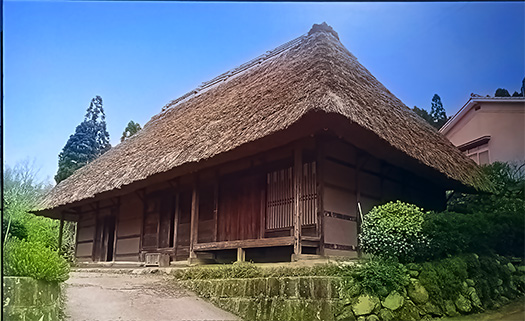
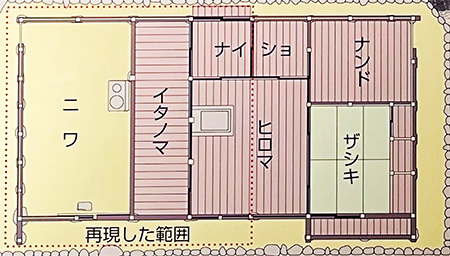
そんな気付きから、しばらく忘却していた「日本全県探訪」の個人的体験、最後の地・大分県の個人記録写真集を再見しております。実はこの大分県の古民家、大分市の野津原地区にある「後藤家住宅」の間取りに「ナイショ」という室名が記されていて、内心唸っていたことを思い出した次第。
上の写真と間取り図がその古民家ですが、このナイショとは「寝所」のことで、家族だけが就寝するための室名だということ。ただ、ナイショという名付けはなかなか言い得て妙。たしかに家族だけでひそひそと「あの人さぁ、チョットさぁ」「うんうん、わかるわかる(笑)」みたいなぶっちゃけ話をホンネそのままにさらけ出し合うのには、格好の場所だと思われました。日本人のある種の諧謔性が室名に反映したのか、それとも逆に室名の由来から習慣言語が発生したのか?
たぶんその合間のような感覚が漂ってきました。
一応、検索などでは以下のような解説。
〜「ないしょ」の語源は仏教の「内証」/自分の内面だけで深く悟る。・・・言葉の移り変わり他人に見えない・分からない⇒外に漏らさない秘密。漢字当て字:のちに「内緒」の字が当てられた。〜とのことでした。
しかし最近のわたしはAIに「ツッコミ」を入れて重層的関わりを持ちたくなってきているので、さらにこの「大分県の実例」を引用して追究したら、以下の回答。
〜面白いことに、「ナイショ」という部屋が指す内容は地域によって少し異なります。大分県などの一部地域では家族の「居間」や夫婦の「寝所」を指すことが多いのに対し、長崎県の五島列島などでは「料理をする場所(台所)」を指すなど、いずれも「ゲストの目から隠された生活の裏側」という点では完全に一致しています。〜というように微妙な「深掘り」をドヤ顔してきた(笑)。
この室名を家族間で言い交わすとき、どのような心理が響きあっていたか、また来訪者がこの室名を聞いたときどういう心象だったか、興味深い。
●お知らせ
拙書「作家と住空間」幻冬舎から電子書籍で発刊
お求めはAmazonで。
https://amzn.asia/d/eUiv9yO
English version⬇
[The Final Stop on My Tour of the Prefecture: Exploring “Naisho,” a Traditional House in Oita]
I believe traditional houses represent the very origins of “folklore.” When enveloped by their atmosphere, I can almost feel the breath and thoughts of those who lived here long ago. …
This weekend feels like a “prelude” to the Obon holiday—how is everyone spending their time?
Since “Mountain Day” is a holiday on the 11th, even though we have to go to work on the 10th in between, it seems like a long summer vacation is taking hold across the country. For seniors like me who are semi-retired, it feels like we’re just going through the motions to keep up with the rest of society.
I imagine there will be more opportunities to meet with “relatives,” and all sorts of “private conversations” will be in full swing.
Prompted by this realization, I’ve been revisiting my personal photo album documenting my final stop on my “Exploring All of Japan’s Prefectures” journey—Oita Prefecture—a project I’d forgotten about for a while. In fact, I recalled how I was secretly impressed when I noticed the room name “Naisho” listed on the floor plan of this traditional Oita house, the “Goto Family Residence,” located in the Nozuhara district of Oita City.
The photo and floor plan above show that traditional house. It turns out that “Naisho” actually means “sleeping quarters”—a room designated solely for the family to sleep in. Still, the name “Naisho” is quite apt. It certainly seemed like the perfect place for family members to whisper candidly to one another, sharing their true feelings without holding back: “You know that person… just a little…” “Yeah, yeah, I know, I know (laughs).” Did a certain Japanese sense of humor get reflected in the room’s name, or did the colloquial usage actually stem from the origin of the name?
I got the feeling it was somewhere in between.
For reference, here’s an explanation I found online:
~ The etymology of “naisho” comes from the Buddhist term “naishō” (内証) / achieving deep enlightenment solely within oneself. …The evolution of the word: “invisible or unknown to others” ⇒ “a secret not revealed to the outside world.” Kanji adaptation: Later, the characters for “内緒” (naisho) were assigned to it. ~That’s what it said.
However, lately I’ve been wanting to engage in a multi-layered dialogue by “poking fun” at AI, so when I cited this “real-life example from Oita Prefecture” to probe further, I received the following response.
~Interestingly, the meaning of a room called “Naisho” varies slightly by region. While in some areas, such as Oita Prefecture, it often refers to the family “living room” or a couple’s “bedroom,” in places like the Goto Islands of Nagasaki Prefecture, it refers to the “place where cooking is done (kitchen).” In all cases, however, they are completely consistent in that they represent “the hidden side of daily life, concealed from guests’ eyes.”~ I proudly presented this subtle “deep dive” with a smug look on my face (lol).
It’s fascinating to consider what psychological dynamics were at play when family members used this room name among themselves, and what impressions visitors formed when they heard it.
● Announcement
My book, *Writers and Living Spaces*, has been published as an e-book by Gentosha.
Available on Amazon.
共有:

Posted on 8月 9th, 2026 by 三木 奎吾
Filed under: 未分類



コメントを投稿
「※誹謗中傷や、悪意のある書き込み、営利目的などのコメントを防ぐために、投稿された全てのコメントは一時的に保留されますのでご了承ください。」
You must be logged in to post a comment.