

日本人の主食のコメですが、白米だけで食べる習慣というのはつい最近、現代になってのもので、江戸期までの一般家庭ではコメにいろいろな雑穀類を混ぜ込んで食べる方が一般的だったとされるそうです。
健康面で考えるといろいろな雑穀が栄養分を補強するような食べ方には、合理性もあるのでしょう。
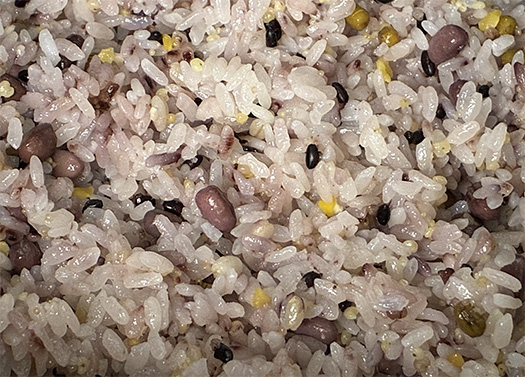
わが家では、なんとか元気で長生きという目標に向かって、ごらんのような雑穀米ぶり。
雑穀類は、小豆をベースに、黒米・九穀米のブレンド。黒米というのは玄米の一種で表皮が黒く覆われているコメということ。九穀米の方は、もちきび・胚芽押麦・とうもろこし・丸麦・緑豆・もちあわ・アマランサス・玄米・黒米のブレンドだそうであります。単なる一般消費者なので、なんとなく健康になれる、という淡い期待だけをもって、食べ続けてきています。
食感としては、やはり小豆を食べるときに「主役感」があって、コメはその「やわらかい背景」みたいな食味を感じ続けてきています。たぶん「多品種少量ずつ」というのが、健康に良いという刷り込みなのでしょう。ふしぎとこういう主食にしているとおかず類も多品種少量ずつになって、よく言われる「1日30品目を食べる」健康法志向なのでしょうか。
長年続けてきて、毎日10,000歩以上の散歩運動などをクリアし続けているので、こういった食事法は、健康に良いという呪文のような生活習慣のルーチン化なのでしょう。まぁ全体として生活バランスの基調として効果的と判断して継続してきている次第。この主食であれば「コメだけ・ばっかり」だとしてもそれなりのバランス食かも。
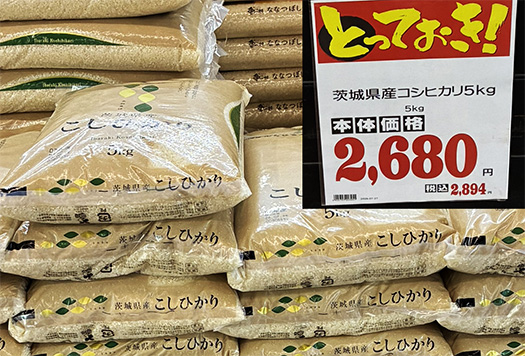
一昨日のお米価格の続篇。今度は「茨城県産コシヒカリ・令和7年産」と表記されたお米が5kg-2,680円価格。
先日のは「ブレンド米」だったものが昨日は一応銘柄米。
見た段階では大量に積み上がっていましたが、さて消費者の購買動向はどうなっていくのか。麺類などへの食習慣チェンジが相当進んでしまった感があるので、単に価格低下で消費が増えるのかどうか、予断は許さない。身近な「社会動向ウォッチ」としてお米の値段のチェック、続けたいと思います。さて?
●お知らせ
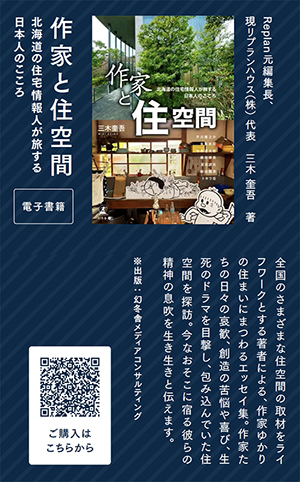
拙書「作家と住空間」幻冬舎から電子書籍で発刊
お求めはAmazonで。
https://amzn.asia/d/eUiv9yO
English version⬇
[Rice Preferences: The Joy of Mixed-Grain Rice]
Supporting the “many varieties, small portions” healthy eating habit of consuming 30 different food items a day. The peace of mind that comes from knowing 10 of those items are covered by your staple food. Now, I’m personally testing just how effective this really is…
Rice is the staple food of the Japanese, but the custom of eating only white rice is a relatively recent development—one that emerged in modern times. It is said that, up until the Edo period, it was more common for ordinary households to mix various grains into their rice.
From a health perspective, there is certainly some merit to this way of eating, as the various grains help supplement one’s nutrition.
In our household, with the goal of staying healthy and living a long life, we’ve adopted the mixed-grain rice shown here.
The blend consists of adzuki beans as the base, along with black rice and nine-grain rice. Black rice is a type of brown rice with a black outer husk. As for the nine-grain rice, I’m told it’s a blend of glutinous millet, germinated barley, corn, round barley, mung beans, glutinous foxtail millet, amaranth, brown rice, and black rice. As just an ordinary consumer, I’ve continued eating it with nothing more than a faint hope that it might somehow improve my health.
In terms of texture, the adzuki beans definitely take center stage, while the rice continues to provide a “soft backdrop” to the overall flavor. I suppose I’ve been conditioned to believe that eating “a variety of foods in small portions” is good for my health. Strangely enough, when I make this my staple food, my side dishes also tend to consist of a variety of foods in small portions—perhaps reflecting the often-cited health trend of “eating 30 different food items a day.”
I’ve kept this up for many years, and since I consistently manage to walk over 10,000 steps every day, this eating pattern has become a routine—almost like a mantra—that I believe is good for my health. Well, overall, I’ve judged it to be effective as the foundation of a balanced lifestyle, which is why I’ve continued with it. With this staple food, even if it’s “just rice—nothing but rice,” it might still be a reasonably balanced diet.
A follow-up to the rice prices from the day before yesterday. This time, rice labeled “Ibaraki Prefecture Koshihikari, Reiwa 7 Harvest” is priced at 2,680 yen for 5 kg.
While the rice mentioned the other day was a “blend,” yesterday’s was, at least, a specific brand.
At first glance, there were large piles of it stacked up, but I wonder how consumer purchasing trends will play out. It feels like the shift toward eating noodles and other foods has progressed quite significantly, so it’s too early to say whether consumption will increase simply because of the price drop. I’d like to continue monitoring rice prices as a way to keep an eye on “social trends” in my daily life. Well, we’ll see?
共有:

Posted on 7月 30th, 2026 by 三木 奎吾
Filed under: 未分類





コメントを投稿
「※誹謗中傷や、悪意のある書き込み、営利目的などのコメントを防ぐために、投稿された全てのコメントは一時的に保留されますのでご了承ください。」
You must be logged in to post a comment.