

人類史という巨視的な歴史には圧倒的な、有無を言わせぬ迫力を感じさせられる。
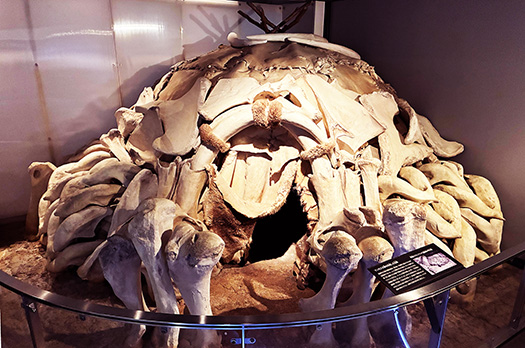
現代世界にまで繋がってくる「魂のルーツ」みたいなものが深く襲ってくる。わたしもしばらくぶりにこの国立科学博物館を訪れたので、たぶん展示が相当にリニューアルしているのか、わたしの不注意での見落としか、思わず目を見開かされていたのがこの「マンモスの骨製の家」。
解説は以下のようだった。
〜マンモスの骨を利用した住居
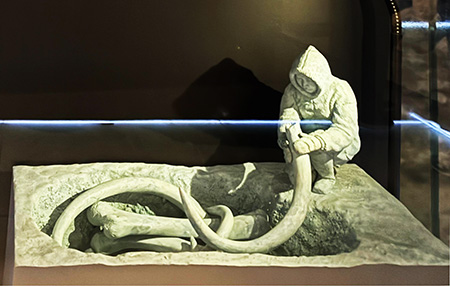
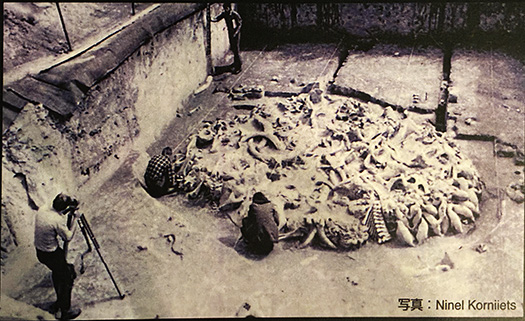
機能的な住居の建設技術は、寒冷地へ本格的に進出するための必要条件だった。とくに草原の広がる東ヨーロッパ地域では寒い冬に避難できる洞窟や岩陰が少ないのでなおさらである。ウクライナを中心に、マンモスの骨を利用した3万~1万年前の住居跡が数多く見つかっている。なかでも圧巻なのはメジリチ遺跡第1号住居(1万8000年前)で、95個の下顎(かがく)骨をはじめ400にものぼる骨が使用されていた。この展示では、メジリチ遺跡の例をモデルに、当時の住居を部分的に復元した。〜
人類のグレートジャーニーでシベリアの地は難関として立ちはだかり、陸続きのベーリング海峡を抜け、アメリカ大陸に到達するまで人類は寒冷気候に進路を阻まれていたとされる。当然、その寒冷地で「どう生存していくか」知恵が絞られた。食糧はマンモスなどの大型動物をハンティングすることで満たされていただろう。逆に言うと、人類のグレートジャーニーの「動機」は、そうした大型動物獲得が最大の「導き」だったのだろう。
一方で人類が「魚類」を食用源として最適化させたのは、日本列島到達グループだったと思える。現代にまでつながる食習慣として、ユニークな人類史なのかも知れない。
で、北方に向かえば当然、日々の暮らしの拠点である「住宅」は重武装化、寒さへの対応を必然化させる。いや、そもそも住宅の構造材として「木材」が獲得できなかった。そういう現実に直面した人類が、マンモスの食用後の巨大な骨に着目したのは、ごく自然だろうとは思う。
また、一方で「断熱」という機能について、その外皮の毛皮が着目されるのもこれまた自然。
しかし、複雑な形状の骨をどう「組み合わせるか」、最初期にこうした住宅を考えた祖先は、知能をフルに活性化させたに違いない。「えっと、あの骨は継ぎ合わせ部分がこうなっているから・・・」と複雑な3次元形状と格闘しながら、創造に向かったことだろう。 性能とデザイン・・・。
●お知らせ
拙書「作家と住空間」幻冬舎から電子書籍で発刊
お求めはAmazonで。
https://amzn.asia/d/eUiv9yO
English version⬇
[Houses Made from Mammoth Bones: The Prototype of Human Housing in Cold Climates]
The question of “How to survive in a cold climate?” presented humanity with a monumental challenge for survival. Structure and insulation. Our ancestors brought a brilliant “solution” to life. …
The grand scale of human history evokes an overwhelming, undeniable sense of awe.
A profound sense of the “roots of the soul”—something that extends all the way to the modern world—came over me. It had been a while since I’d visited the National Museum of Nature and Science, so perhaps the exhibits had been significantly revamped, or maybe I simply overlooked it due to my own inattention, but what really caught my eye was this “house made of mammoth bones.”
The explanation read as follows:
~A dwelling constructed from mammoth bones
The technology for building functional dwellings was a prerequisite for full-scale settlement in cold regions. This was especially true in Eastern Europe, with its vast grasslands, where caves and rock shelters offering refuge from the cold winters were scarce. Centered in Ukraine, numerous remains of dwellings built using mammoth bones dating from 30,000 to 10,000 years ago have been discovered. Among them, the most impressive is Dwelling No. 1 at the Mezhyrich site (8,000 years ago), which utilized as many as 400 bones, including 95 lower jawbones. This exhibit partially reconstructs a dwelling from that period, modeled after the example from the Mezhyrich site.~
During humanity’s Great Journey, Siberia stood as a formidable obstacle; it is believed that until humans crossed the Bering Strait—which was then a land bridge—to reach the Americas, their path was blocked by the frigid climate. Naturally, they had to rack their brains to figure out “how to survive” in that cold environment. Food needs were likely met by hunting large animals such as mammoths. Conversely, one might say that the “motivation” behind humanity’s Great Journey was largely driven by the pursuit of such large animals.
On the other hand, it appears that it was the group that reached the Japanese archipelago that optimized “fish” as a food source. This may represent a unique chapter in human history, as it has led to dietary habits that continue to this day.
So, as they headed north, it was only natural that their “dwellings”—the centers of their daily lives—would become heavily fortified, making it essential to adapt to the cold. In fact, they couldn’t even obtain “wood” as a structural material for their dwellings in the first place. Faced with this reality, it seems perfectly natural that early humans would turn their attention to the massive bones left over after eating mammoths.
Furthermore, regarding the function of “insulation,” it’s also natural that they would focus on the fur covering the mammoths’ bodies.
However, when it came to figuring out how to “assemble” bones with complex shapes, our ancestors who first conceived of such dwellings must have fully engaged their intellect. “Hmm, since that bone has this kind of joint…”—they likely embarked on a creative process while grappling with complex three-dimensional shapes. Performance and design…
● Announcement
My book, *Writers and Living Spaces*, has been published as an e-book by Gentosha.
Available on Amazon.
共有:

Posted on 7月 23rd, 2026 by 三木 奎吾
Filed under: 未分類





コメントを投稿
「※誹謗中傷や、悪意のある書き込み、営利目的などのコメントを防ぐために、投稿された全てのコメントは一時的に保留されますのでご了承ください。」
You must be logged in to post a comment.