
さて九州全周の旅、佐賀県という自分にとって「未踏の地」を歩きながら、ずっと気になっていた場所があった。
それは、平戸(ひらど)のこと。
わが家系は江戸後期、広島県福山市の西、尾道に隣接する今津で「商家・あが屋」を営んでいた。当時この地は参勤交代の大名たちが泊まる宿場町として機能しており、薩摩藩をはじめとする雄藩もここを利用していた歴史がある。わが家は本陣職を司る河本氏と強い縁戚関係だったことから本陣・脇本陣の用向きを「手代(てだい)」的な立場で受託し、実務を取り仕切っていたと伝承されている。当然、宿泊する大名たちと直接言葉を交わす機会も多くあった。
そうした大名の一人が、平戸藩主の松浦(まつら)氏。
幕末期、当主であり希代の文人・随筆家として名高い松浦静山がその膨大なエッセイ集『甲子夜話(かっしやわ)』の中で、1800年頃のわが家の当主・寛蔵(静山は「勘蔵」と記述)一家の様子を書き残してくれている。以下、その登場部分の引用。
〜29日 夜にいれば雨ふりたれど、つよからで、暁にはやむ。
宿立いで、流れにそひ提の上行に、けさはあたたかに覚え、夜も明、
安芸の国をも出て、備後の国三原の城もあとになし、
糸崎なる八幡の宮をふし拝み、磯辺ゆきつつながむれば、海路
は波も平かなれど、嶋山は霧を帯、雲冠て日も晴やかならず。
尾の道の塩焼くはまの冬げしき、煙もたえだえ心も慰まで、
坂こえ行けば一里あまり、今津村にいたり、ここに宿る。
家はこだかきところにて、河本保平という圧屋(庄屋)なり。
この家一室に男女群居して、妻のごとき者多しと聞けば、
家内いかほどか住ると問に、いふ。主人保平年四十余、妻も
また四十余、妾は三十ばかり京の人、養子材太二十三、材太の
妻は保平女ニ十ニ、その妹十ー、弟八十吉八、其妹は妾の子年ニ、
『手代 勘蔵三十余、其妻年詳ならず、子正二郎十』
婢三人僕六人、ともに二十人住居ける。これ和睦友愛の家というべきか。
抑男女無別の室か。何にせよ父子夫婦兄弟臣妾、めでたき栄なり。〜
この『』で表記された部分がわが三木家の先祖。三木寛蔵とその子である10歳の正二郎(のちの三木文蔵)の記述部分。
各自の年齢までこれほど詳細に記載されるのは、殿様と先祖との間に直に言葉を交わす昵懇な会話があったことの何よりの例証ではと。とくに「其妻年詳ならず(妻の年齢は詳しく分からない)」というあたり「いやぁ、あたしの歳まではちょっと・・・」なんていう、旅宿の夜の笑顔混じりの会話の残響が聞こえてくるよう(笑)。
歴史に名を残す文人大名にこうして記録されていたおかげで、わが家のルーツ調査は大きな手がかりと確信を得ることができた。まさに一族にとっての厚恩。
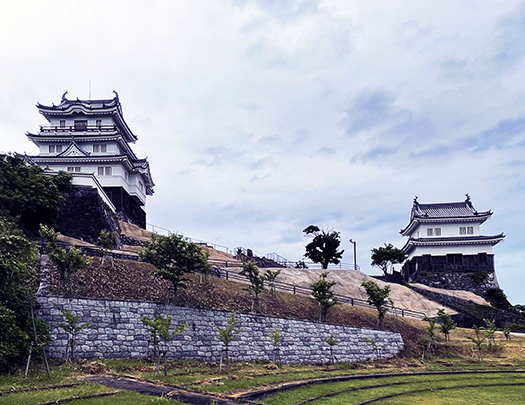
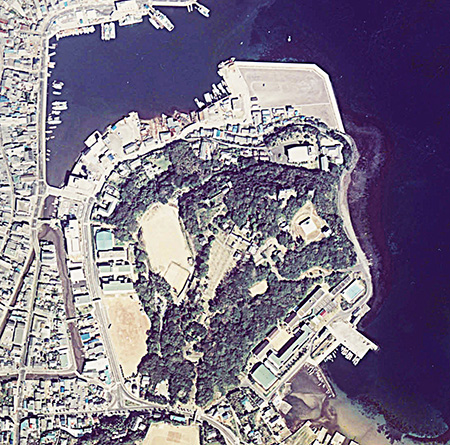
そんなわけで、今回の九州旅ではどうしても「静山公へのお礼参り」として平戸城に行きたかったワケ。2枚目の空撮写真(出典: 国土画像情報 )が示す通り、平戸城は海に突き出た見事な天然の要害。1枚目の写真の堂々たる城郭を仰ぎながら、はるばる瀬戸内海を渡りわが先祖の暮らす今津宿に泊まり温かい文章を書いてくれたと、深い感謝の念。
・・・なんですが、てっきり地理的に「佐賀県」と思い込んでいたら、実は「長崎県」だったことが判明。直前になって自分の無知ぶりに再度驚かされることとなりました(笑)。
県を勘違いとは。われながら困った無知ぶり(泣)。
●お知らせ
拙書「作家と住空間」幻冬舎から電子書籍で発刊
お求めはAmazonで。
https://amzn.asia/d/eUiv9yO
English version⬇
[Introducing My Family Lineage in *Koshiya-wa*: Seizan Matsuura’s Visit to Hirado Castle]
My exploration of my family history was greatly encouraged by a passage written by a prominent literary figure of the late Edo period—a man of humble origins himself. This visit was a gesture of deep gratitude for his kindness. …
Now, on my journey around Kyushu, as I walked through Saga Prefecture—a “land I had never set foot in” for me—there was one place that had always been on my mind.
That place was Hirado.
In the late Edo period, my family ran a merchant house called “Aga-ya” in Imazu, located west of Fukuyama City in Hiroshima Prefecture and adjacent to Onomichi. At that time, this area served as a post town where daimyo on their sankin-kōtai journeys would stay, and it has a history of being used by powerful domains, including the Satsuma Domain. According to family tradition, because our family had strong kinship ties with the Kawamoto clan—who held the position of honjin (main inn) administrator—we were entrusted with managing the operations of the honjin and waki-honjin in a “tedai” (clerk) capacity, handling the day-to-day affairs. Naturally, we had many opportunities to speak directly with the daimyo staying there.
One such daimyo was the Matsuura clan, lords of the Hirado Domain.
Toward the end of the Edo period, Matsuura Seizan—the head of the clan and a renowned literary figure and essayist of his time—recorded the circumstances of my family’s head, Kanzo (whom Seizan refers to as “Kanzō”), and his household around the year 1800 in his vast collection of essays, *Kasshi Yawa*. The following is an excerpt from that passage.
~On the 29th: It rained during the night, but the rain was heavy and stopped by dawn.
Leaving our lodgings, we walked along the embankment beside the river; the morning felt warm, and as dawn broke,
we left the province of Aki behind, and the castle of Mihara in the province of Bingo was now far behind us.
We paid our respects at the Hachiman Shrine in Itosaki, and as we traveled along the coast, we observed that, though the sea
was calm, but the islands and mountains were shrouded in mist, and with clouds crowning them, the sun did not shine brightly.
The winter scene of the salt-baking beach along the O-no-michi road—the smoke rising intermittently soothed my heart—
After crossing a hill and traveling a little over one ri, I arrived at Imazu Village, where I spent the night.
The house stood in a secluded spot and belonged to Kawamoto Hohei, the village headman.
I heard that men and women lived together in one room of this house, and that there were many women who seemed to be his wives,
so when I asked how many people lived there, he replied: The master, Yasuhira, is over forty; his wife is
also over forty; his concubine, a woman from Kyoto, is about thirty; his adopted son, Zaitaro, is twenty-three; Zaitaro’s
wife is Yasuhira’s daughter, aged twenty-two; her younger sister is eleven; his younger brother is Yachikichi, and his younger sister is the concubine’s child, aged two;
“The steward, Kanzo, is over thirty; his wife’s age is unknown; their son, Shojiro, is ten.”
Three maidservants and six male servants—a total of twenty people lived there. Should this be called a household of harmony and brotherly love?
Or is it a household where men and women live without distinction? In any case, the relationship between father and son, husband and wife, brothers, and master and concubine is a glorious and auspicious sight. ~
The section enclosed in these “” marks the ancestors of our Miki family. It describes Miki Kanzo and his 10-year-old son, Shojiro (later Miki Bunzo).
The fact that even their ages are recorded in such detail is, I believe, the best evidence of the warm, intimate conversations that took place between the lord and our ancestors. Especially the line, “The age of his wife is unknown,” makes me feel as if I can almost hear the echoes of a smiling conversation from a night at an inn, with her saying something like, “Oh, well, I’d rather not reveal my age…” (laughs).
共有:

Posted on 7月 7th, 2026 by 三木 奎吾
Filed under: 未分類



コメントを投稿
「※誹謗中傷や、悪意のある書き込み、営利目的などのコメントを防ぐために、投稿された全てのコメントは一時的に保留されますのでご了承ください。」
You must be logged in to post a comment.