
佐賀県の探訪記、いよいよ日本有数の「陶芸産業の地」有田に没入。
そう、気分的には「沈殿」してしまう街並み。歴史を経た日本的産業基盤としての「陶芸」のひとつの極地のように思えていた。以前、愛知空港の近くの常滑を街歩きしていて、はじめはカミさんの強い興味に付き合うという心理だったモノが、徐々にその陶芸の作り手たちの歴史積層の「空気感」に心象世界が満たされていって、日本人的な「ものづくり」のコアに近づく感覚に浸っていた。
有田では、その空気感に再度、脳内が満たされてしまった。
溺れてしまう、というような表現がいちばんふさわしい。
佐賀城探訪で、江戸末期に独自に高性能な大砲を独自開発できた素地として反射炉製鉄の様子を知ったが、その独自技術開発では、この有田の陶器焼成技術がその基盤を担っていた事実を知らされた。江戸期社会から明治の文明開化に至るには、こうした日本的な技術集積があったことが沁みてきた。
まことに先人たちの努力の巨大蓄積を思い知らされる。
江戸時代に設けられた上の番所(泉山)から、下の番所(岩谷川内)の大通り沿いを中心とする約2kmの細長いこの町並みは、平成3(1991)年に「有田内山伝統的建造物群保存地区【製磁町】」として選定された。江戸時代から昭和初期に至る漆喰塗の町家や洋館など、江戸、明治、大正、昭和というそれぞれの時代の特徴を持つ、質の高い建物が混在し焼物の町らしい町並みを形成している。
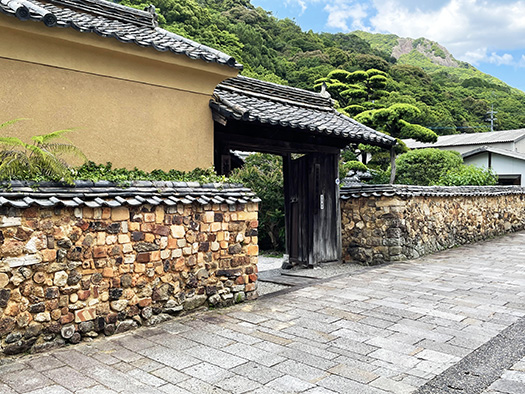
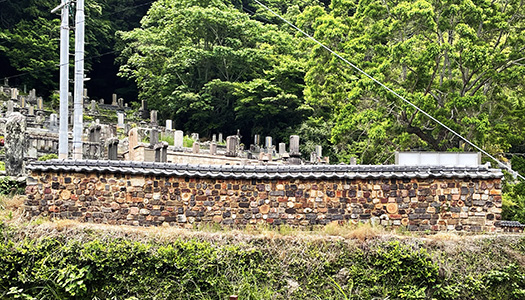
そしてその街並みの中に、まるでデザインコードのように「トンバイ塀」が地低音を響かせている。
「トンバイ」とは窯壁に使用する耐火レンガのこと。古窯の耐火レンガや窯道具を再利用した土が「トンバイ」と呼ばれる。これは窯の中で高温に熱せられ様々な釉薬が付着してできた微妙な色合いをもち、有田独特の景観を表現している。
わたしは北海道人として、自宅を建てたとき基本素材としてコンクリートブロックを使い、最後の表層外壁には道庁建築を象徴するレンガを積むことにこだわった。自分という人間は、ある時間の走り手として生きるけれど、それは多くの先人たちからのバトンを受け継ぐのだという漠然とした思いがあって、北海道での暮らしが始まったときの先人たちへのリスペクトが大きかった。
このトンバイ壁には、その時間感覚をはるかに超える積層感があった。・・・
●お知らせ
拙書「作家と住空間」幻冬舎から電子書籍で発刊
お求めはAmazonで。
https://amzn.asia/d/eUiv9yO
English version⬇
[In Arita, the Mecca of Ceramics, My Eyes Were Glazed on the “Tonbai Wall”…]
My wife seems to be interested in the aesthetic beauty of the ceramics, but I found myself deeply “immersed” in the marks of time etched into this Tonbai wall. …
In my travelogue of Saga Prefecture, I finally immersed myself in Arita—one of Japan’s leading “centers of the ceramics industry.”
Yes, it’s a townscape that makes you feel as if you’re “sinking” into it. It struck me as the very epitome of “ceramics” as a time-honored Japanese industrial foundation. Previously, while strolling through Tokoname near Aichi Airport, I initially went along simply to accommodate my wife’s keen interest. But gradually, my inner world became filled with the “atmosphere” layered with the history of those ceramic artisans, and I found myself immersed in a sense of drawing closer to the very core of Japanese “craftsmanship.”
In Arita, my mind was once again completely filled with that same atmosphere.
“Drowning” is probably the most fitting way to describe it.
During my visit to Saga Castle, I learned about the reflection furnace ironmaking process—the foundation that enabled the independent development of high-performance cannons in the late Edo period—but I was also made aware that Arita’s pottery firing techniques served as the bedrock for that independent technological development. It really sank in that this accumulation of Japanese technology was essential for the transition from Edo-period society to the Meiji era’s “Civilization and Enlightenment.”
I am truly struck by the immense accumulation of effort made by our predecessors.
This narrow, approximately 2-kilometer-long stretch of townscape—centered along the main street running from the Upper Checkpoint (Izuyama), established during the Edo period, to the Lower Checkpoint (Iwaya-gawauchi)—was designated in Heisei 3 (1991) as the “Arita Uchiyama Traditional Buildings Preservation District [Ceramic Town].” A mix of high-quality buildings—including plaster-walled townhouses and Western-style buildings dating from the Edo period to the early Showa era—each embodying the characteristics of the Edo, Meiji, Taisho, and Showa periods, forms a streetscape befitting a town renowned for its pottery.
And within that streetscape, “Tonbai walls” resonate like a design code.
“Tonbai” refers to the firebricks used in kiln walls. The clay created by reusing refractory bricks and kiln tools from old kilns is called “Tonbai.” Heated to high temperatures inside the kiln, it takes on subtle hues from the various glazes that adhere to it, embodying Arita’s unique landscape.
As a native of Hokkaido, when I built my own home, I used concrete blocks as the base material but was determined to lay bricks—symbolic of the Hokkaido Government Building—on the final outer layer of the exterior walls. I have a vague sense that, while I live as a runner through time, I am actually passing the baton handed down from many predecessors, and I felt a deep respect for those who came before me when I first began my life in Hokkaido.
This Tonbai wall possessed a sense of layered depth that far transcended that sense of time. …
● Announcement
My book, *The Writer and Living Space*, has been published as an e-book by Gentosha.
Available on Amazon.
共有:

Posted on 7月 8th, 2026 by 三木 奎吾
Filed under: 未分類




コメントを投稿
「※誹謗中傷や、悪意のある書き込み、営利目的などのコメントを防ぐために、投稿された全てのコメントは一時的に保留されますのでご了承ください。」
You must be logged in to post a comment.