
ことし5月に長兄の本家でなにげに発見の古文書。ひとつは江戸期1803年時点の東広島市河内町入野の地域史とも関わる内容だったので、広島県立文書館に訪問し解析をお願いして、無事に公的な解析結果が判明した。江戸後期の地域社会のひとつの実相記録としてアーカイブされた次第。
一方、1905年日本専売公社によって国内での塩業が国家独占とされたことによって、わが家系は江戸期からの広島県福山市松永で生産される塩の生産流通管理事業の存立基盤を喪失した。この経緯の中でどのような国家独占側との交渉などの経緯があったかは不明だけれど、このプロセスを当主として実体験したわたしの祖父は、そこから北海道へと拠点を移動させてきた。
その時期の消息を発掘するのに、江戸末期に縁戚関係を結んでビジネス的にも強固な関係であった岡山県井原市の「庄屋」家である岸岩太郎氏からの「書簡」が2通発見されたのだ。が、こちらについては地域社会との関わりより、やはり家系史の資料と判断できたので、個人としてその解析作業に向き合うこととした。
親族のなかの書の知識もある長老に意見も求め、書簡のコピーを渡してみたけれど「これはさっぱり・・・」との回答で、困難な局面に立ち至っていた。
「古文書解析」について民間で請け負うサービスはWEBなどで発見されるけれど、その解析結果の信憑性ではイマイチと思えるし、さらに親族の背景事情について詳細に情報を共有させなければ、到底不可能だと思われた。結果2ヶ月以上、古文書とにらめっこしてきていた。
祖父の性格までわきまえた親族でなければ,手紙のやり取りでの「息づかい」の部分までは判読できないということがわかってくる。牛歩のような日々を過ごしてきたのですが、TOPPANの開発した古文書解析環境「古文書カメラ〜ふみのは」なども活用し、徐々に実相が浮かび上がってきている。
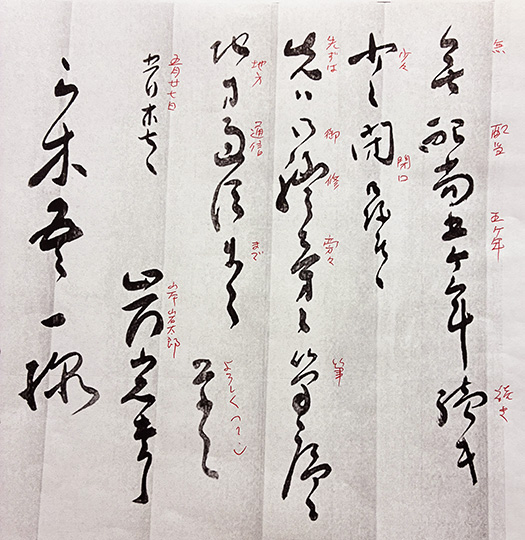
結局は正面から向き合って、徐々に判読できてくるくずし字の単語の積層から文意を掴んでいくしかない。 昭和元年時点の社会動向も踏まえると、上の写真部分(赤字は判断結果)でも戦前期の「資本家層」と思える差出人・岸岩太郎さんのため息が聞こえてくる。
「無配当」が「5年も続いていて少々閉口」している実感が見えてくる。
先日、歴史家の磯田道史さんがテレビ番組で語っていましたが、くずし字判読についてはやはりその文章と正面から向き合うしかないのですね。ふ〜む、辛抱強く頑張るしかありません。
●お知らせ
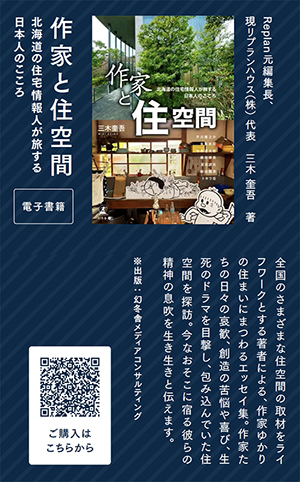
拙書「作家と住空間」幻冬舎から電子書籍で発刊
お求めはAmazonで。
https://amzn.asia/d/eUiv9yO
English version⬇
[Days of Slow-Moving Dialogue, Meditating on “Gankō Shihai” While Deciphering Letters Written in Cursive Script]
As demonstrated by TOPPAN’s development of the “Ancient Document Camera—Fuminoha,” there is a market for deciphering ancient documents. The potential for new business areas in an aging society. …
In May of this year, I casually discovered some old documents at my eldest brother’s family home. One of them contained information related to the local history of Irino in Kawachi-cho, Higashi-Hiroshima City, dating back to 1803 during the Edo period. I visited the Hiroshima Prefectural Archives to request an analysis, and the official results were successfully determined. It has now been archived as a record of the reality of a local community during the late Edo period.
Meanwhile, in 1905, when the Japan Monopoly Corporation established a state monopoly on the domestic salt industry, my family lost the foundation for our business—the production and distribution of salt in Matsunaga, Fukuyama City, Hiroshima Prefecture, which had been in operation since the Edo period. Although the details of any negotiations with the state monopoly at that time remain unclear, my grandfather, who experienced this process firsthand as the head of the family, subsequently relocated the family’s base of operations to Hokkaido.
In my efforts to uncover information from that period, I discovered two “letters” from Mr. Iwataro Kishi of the “Shōya” family in Ibara City, Okayama Prefecture—a family with whom we had formed kinship ties in the late Edo period and maintained strong business relations. However, since these letters were more relevant to our family history than to our ties with the local community, I decided to undertake their analysis on my own.
I sought the opinion of an elder relative who was knowledgeable about calligraphy and gave him copies of the letters, but his response was, “I’m completely lost…,” leaving me at an impasse.
While private services for “historical document analysis” can be found online, I found the reliability of their results to be lacking; moreover, I felt it would be impossible without sharing detailed information about our family’s background. As a result, I’ve been poring over these ancient documents for over two months.
I’ve come to realize that unless you’re a relative who truly understands my grandfather’s personality, it’s impossible to decipher the “subtle nuances” in the correspondence. It’s been a painstakingly slow process, but by utilizing tools like “Fumino-ha,” an ancient document analysis environment developed by TOPPAN, the true nature of the letters is gradually coming into focus.
Ultimately, there’s no choice but to face the text head-on and grasp the meaning of the text layer by layer as I gradually decipher the words written in cursive script. Considering the social trends at the start of the Showa era, even in the portion of the photo above (the red text indicates the analysis results), I can almost hear the sigh of the sender, Iwataro Kishi—who appears to have been part of the pre-war “capitalist class.”
You can sense his genuine frustration that “no dividends” have “continued for five years, which is a bit of a headache.”
As historian Michifumi Isoda mentioned on a TV program the other day, when it comes to deciphering cursive script, there really is no choice but to confront the text head-on. Hmm, I guess I’ll just have to be patient and keep at it.
● Announcement
My book, *Writers and Living Spaces*, has been published as an e-book by Gentosha.
Available on Amazon.
共有:

Posted on 7月 11th, 2026 by 三木 奎吾
Filed under: 未分類




コメントを投稿
「※誹謗中傷や、悪意のある書き込み、営利目的などのコメントを防ぐために、投稿された全てのコメントは一時的に保留されますのでご了承ください。」
You must be logged in to post a comment.