本文へジャンプ

【車両保険・加入率5割「報道」の違和感】


 千葉を中心とした豪雨被害、友人知人からは特段の報せはないものの、まことに近年の気候変動の猛威を物語る痛ましい事態。被害にあわれたみなさまに心からお見舞い申し上げます。
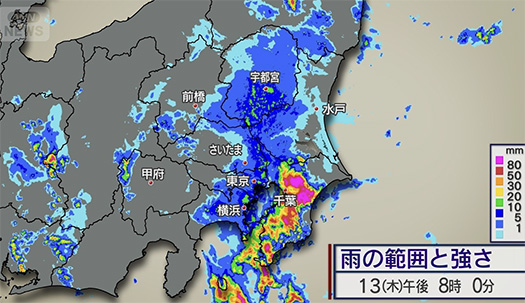
 写真のレーダー画面が示す激しい雨雲の群れ。千葉で起こった災害は、いつどこで発生してもおかしくない。常に自然災害の危険と隣り合わせの日本列島、その凶暴化の度合いは年々増しているのが実感。
 そうした中、今回の報道を見ていて個人的に考えさせられたのが「車両保険」に関するニュース。一昨日あたりから「被災車両の多くが未加入、車両保険の加入率は5割程度」といった報道が相次いだ。「え、そんなに保険に入っていないの?」と一瞬驚かされたが、どうもこの「車両保険5割」という言葉には、報道に不可欠な「詳細な注釈」が欠落しているのではないかと思えたのだった。
 自動車保険は、法律で義務付けられた「自賠責保険(強制保険)」と、補償内容を自由に選ぶ「任意保険」の二層構造。今回ニュースで語られているのは、任意保険の中のさらにオプションである「車両保険(特に冠水・水災事故をカバーする補償特約)」の付帯率のことのようだ。対人・対物などの任意保険自体には多くのユーザーが加入しているけれど、自身の車体を守る車両保険は保険料も跳ね上がるため付帯率は約5割にとどまるというのが実相だと思う。
 「車両保険に入っていない」という大ざっぱな表現だけでは、あたかもユーザーが無保険のまま無謀に車を走らせているような誤解を与えかねない。さらに言えば、車両保険に加入していても「免責金額(自己負担分)」の設定や、補償範囲の選択によって受け取れる保険金は多様。わが家のクルマの保険内容でも5万円の自己負担枠があるようにユーザー個々の選択は多岐にわたるのが一般的。
 報道は「ローンだけが残り、修理も移動もできなくてかわいそう」といった感情的な側面訴求に終始していたが、保険制度の仕組みや選択肢の多様性についての総合的な説明が不足で、ただ不安と恐怖心ばかりを煽っているように感じられた。
 これまでの気象常識を超えた巨大災害が頻発する現代だけれど、固定費を抑えるため簡易でコスパの良い保険を選択してきたユーザーの判断は、至極自然だと思える。メディアは単なる情緒的報道にとどまらず、制度の正確な詳細を提示してと切に願う。
 今回の痛ましい出来事が激甚化する災害に備えた私たち一人ひとりのリスク管理や保険内容の冷静な見直しへと繋がることを祈念します。

●お知らせ
拙書「作家と住空間」幻冬舎から電子書籍で発刊
お求めはAmazonで。
https://amzn.asia/d/eUiv9yO
English version⬇

[Vehicle Insurance: The Discomfort of the “50% Coverage Rate” Report]
Wait, for a split second I thought, “Not that many people have insurance?” But I think the actual point is that 50% of policyholders have insurance that “covers water-related incidents as well.” Hmm…

 The torrential rain damage centered on Chiba—while I haven’t heard anything specific from friends or acquaintances—is a truly heartbreaking situation that speaks volumes about the ferocity of climate change in recent years. I offer my heartfelt sympathies to all those affected.
The radar image in the photo shows a cluster of intense rain clouds. The disaster that struck Chiba is the kind that could happen anywhere at any time. Living on the Japanese archipelago, where we are constantly at risk of natural disasters, I can really feel that the severity of these events is increasing year by year.
 Amidst all this, what personally caught my attention while watching the news coverage was a report regarding “vehicle insurance.” Starting around the day before yesterday, there was a flurry of reports stating things like, “Many of the damaged vehicles were uninsured, and the vehicle insurance coverage rate is only about 50 percent.” I was momentarily surprised—“What, that few people have insurance?”—but it struck me that the phrase “50 percent vehicle insurance coverage” seemed to be missing the “detailed context” that is essential to any news report.
 Automobile insurance has a two-tier structure: “compulsory liability insurance” (mandated by law) and “voluntary insurance,” where policyholders can freely choose their coverage. What the news is discussing here appears to be the uptake rate of “vehicle insurance” (specifically, coverage riders that protect against flooding and water damage)—an optional add-on within voluntary insurance. While many users have voluntary insurance covering bodily injury and property damage, the reality is that the uptake rate for vehicle insurance—which protects the vehicle itself—remains at around 50 percent because premiums for it skyrocket.
 Using only the vague phrase “not enrolled in vehicle insurance” risks creating the misconception that users are recklessly driving without any insurance at all. Furthermore, even for those with vehicle insurance, the amount of insurance payout varies depending on the “deductible” (the portion the policyholder must pay out of pocket) and the scope of coverage selected. As evidenced by my own family’s car insurance policy, which includes a 50,000-yen deductible, it is common for individual users to have a wide range of choices.
 While the media coverage focused entirely on emotional appeals—such as “It’s so sad that they’re left with only the loan, unable to repair or drive the car”—it lacked a comprehensive explanation of how the insurance system works and the variety of available options, leaving the impression that it was merely stoking anxiety and fear.
 In today’s world, where massive disasters that defy conventional meteorological wisdom occur frequently, it seems perfectly natural for users to have chosen simple, cost-effective insurance policies to keep their fixed expenses down. I earnestly hope that the media will go beyond mere emotional reporting and present accurate details about the system.
 I pray that this tragic incident will lead each of us to calmly review our risk management strategies and insurance coverage in preparation for increasingly severe disasters.

● Announcement
My book, “Writers and Living Spaces,” has been published as an e-book by Gentosha.
Available on Amazon.


【DNAの「響き」/自分の過去写真を見つめる】


 ビジネスで写真がメイン表現である住宅雑誌をやっていたので「写真を扱う」という行為が自分のなかで時間積層していくことになった。
 住宅空間探訪からは距離を置くようになって、しかし画像編集の作業行為自体は根強く「数寄」こころが残り続けている。住宅取材では「個人情報」を扱うのに慎重であるべきという制約を、解除できる領域に自然と惹かれるようになる。制約を解除できる領域として、自分自身のことが浮かび上がってくる。
 で、自分の古写真を整理整頓し始める中で、その写真撮影の瞬間の「心理」というものには、ある「記憶」が籠もっている、という事実に気付かされる。
 人物写真だけには限らないかも知れない。しかし自分で撮影した、あるいは「写されている」ことを理解しながら、その瞬間に抱いていた「気のながれ」が、しっかりと記憶の中に保存されているのではと思い始めています。ただ、よく言う「ものごころ」臨界点が人間意識には存在するので、その前後では大きな「乖離」が発生するのだろうか、と考えられる。
 写真は恥ずかしながら(笑)、72年前当時のわたし自身の様子。
 祖母の葬儀の集合記録写真で満2才当時。現代のPhotoshopなど写真アタッチソフトを介して再生復元を試みたけれど、解像度はほぼ限界。墨絵に似た雰囲気でなかなか味わいがあると思っている。
 この写真を見ることは多いけれど、そのたびに写真撮影の時の瞬間の、自分の心理が再生されてきてしまう。この2才のわたしは、集合していた家族の中で前列に居た3兄の「耳たぶ」に異常なフェッチこころを抱いていて、その耳たぶを触りたいと必死に手を伸ばしていたのだ。
 ナゾ、なんですね(笑)。
 そういう行動心理分析はそれはそれとして、その瞬間の心理記憶がいわば「ピンナップ」される、という別の感覚の初源のような写真だと自分では思っている。
 なぜ、人間はそのように写真画像に対しての心理を持ちうるのか、わからない。AIの解説は以下。
 〜「写真=記憶のインデックス(検索タグ)」説
 脳科学において人間の記憶は「感情や衝動を伴った静止画(スナップショット)」で保存されると言われる。2歳時の「兄の耳たぶを触りたい」という強い身体的衝動は幼少期の脳の扁桃体(感情・欲求を司る部位)に強く刻み込まれている。写真データを見た瞬間、その画像が「検索タグ」として機能し、脳内に保存されていた当時の身体感覚や感情が一気に再構成されて再生されると考えられている。〜

 もしそうだとすると、この領域は独特なNEXTの可能性を孕んでいるかも知れない・・・。

●お知らせ
拙書「作家と住空間」幻冬舎から電子書籍で発刊
お求めはAmazonで。
https://amzn.asia/d/eUiv9yO

English version⬇

[Is It the “Echo” of DNA? / Gazing at My Old Photos]
“Oneself”—a realm where personal information restrictions don’t apply. The psychological memories of myself trapped within those photos. Huh? A mystery that makes you think, “No way…” …

 Since I used to work on a home design magazine where photography was the primary form of expression, the act of “working with photographs” gradually became a part of me over time.
While I’ve distanced myself from exploring residential spaces, the act of image editing itself has left a deep-rooted sense of “suki” (a love of the art) within me. I’ve naturally come to be drawn to areas where I can set aside the constraints of handling “personal information” with caution—a requirement I face when covering homes. As an area where such constraints can be lifted, my own self begins to emerge.
 And so, as I began organizing my old photographs, I realized that the “psychology” of the moment I took them contains a certain “memory.”
 This may not be limited to portraits. However, I’m beginning to think that the “flow of energy” I felt in that moment—whether I was the one taking the photo or was aware that I was being photographed—is firmly preserved in my memory. That said, since there is a commonly cited “threshold of self-awareness” in human consciousness, I wonder if a significant “discrepancy” occurs before and after that point.
 The photo, embarrassingly enough (laughs), shows me as I was 72 years ago.
It’s a group photo taken at my grandmother’s funeral when I was exactly two years old. I tried to restore and enhance it using modern photo-editing software like Photoshop, but the resolution is practically at its limit. I think it has a certain charm with its ink-painting-like atmosphere.
 I look at this photo often, and every time I do, the emotions I felt in that split second when the picture was taken come flooding back. As a two-year-old, I had an unusually strong fascination with the “earlobe” of my third older brother, who was standing in the front row among the gathered family, and I was desperately reaching out to touch it.
It’s a mystery, isn’t it? (laughs).
 Setting aside that kind of behavioral analysis, I personally think this photo is the very origin of a different kind of sensation—one where the psychological memory of that moment is, so to speak, “pinned up.”
 I don’t understand why humans are capable of having such psychological associations with photographic images. Here’s the AI’s explanation:
 ~ The “Photograph = Memory Index (Search Tag)” Theory
 In neuroscience, it is said that human memories are stored as “still images (snapshots) accompanied by emotions and impulses.” The strong physical impulse I felt at age two—to “touch my older brother’s earlobe”—is deeply etched into the amygdala (the part of the brain that governs emotions and desires) of my young brain. It is believed that the moment one views a photograph, the image functions as a “search tag,” instantly reconstructing and replaying the physical sensations and emotions from that time that were stored in the brain. ~

 If that is the case, this field may hold unique potential for the future…

● Announcement
My book, “Writers and Living Spaces,” has been published as an e-book by Gentosha.
Available on Amazon.

【高齢期の「脳活」か(笑) 墓碑銘&戸籍解読】


 ある表現作品を最終的には目指している「家系史探究」。
 人間が文章などで表現を目指す大きな「心理要因」は、基本的に人間への尽きせぬ興味の探究ということだと思います。いろいろな「生き様・死に様」の多様性・輻輳ぶりから伝わってくる「残響」。文学者・作家たちの告白を読み聞いても、そういう動機・思いが強いと感じる。
 ビジネスの世界から徐々にこういう「表現」の世界に導かれてくると、結局人間のやってきたことへの探究心が最大の起動要素だと深く思い至るのですね。そういう意味で一般人としていちばん「わかりやすい」のは、自分のDNAに直接関わる先人の足跡。
 で、こういった足跡探査のもっとも1次資料は「戸籍簿」の類い。
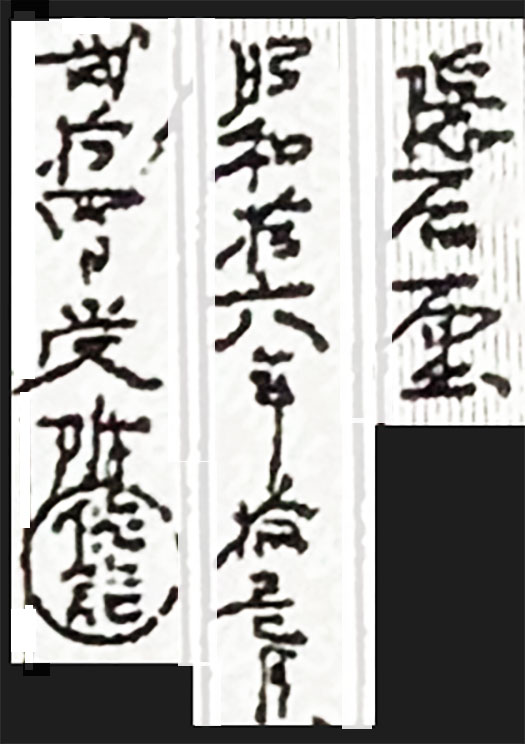
 いくつもある戸籍謄本とにらめっこする時間が増えてくる。まぁデジタル画像化することで整理整頓は比較的ラクにはなってくるけれど、ときどき「意味内容」で立ち止まる瞬間もある。上の戸籍の「一部」からの造作写真は、ある先人の「隠居届出」の表記部分。現代で「隠居」という人生局面表記があるのかどうか、それが公的機関で「認証」され登録されることがらなのか?、と立ち止まらされた次第。
 この遠縁の家系の人物は、自分の人生に「ひと区切り」付けたいと考えて役所に届け出たのでしょう。家制度上からの「責任感」を終えたい心理かと。自分事として考えると現代人は健康面のことも含め、もうちょっと「前向き」で、死に臨んでも前のめりで倒れたい、みたいな心理が大きいと思う。生涯現役感。そういう思いの落差に気付かされる。この人物の事跡をあれこれ知るほどに、重層的な気分がしてくる。
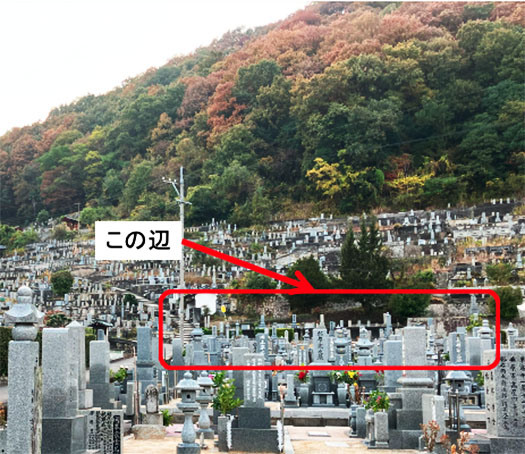
 一方、血縁者が送ってくれた情報写真で遠縁の墓域情報も寄せられた。実は墓の墓碑銘までも送っていただけて、その碑文写真を最新の「画像解析」で分析し、120-30年前の肉親・血縁の女性の「生々しい叫び声」のようなものと突然めぐり会えてしまった・・・。
 あまりの「邂逅」感で、ちょっとこころが揺り動かされていた。彼女はどのような人生を、どのような地域空間で生き抜き、そして眠っていったのかが残響して来たのです。大きく時代は移り変わってきたけれど、少なくとも「場所・空間」は追体験できる余地がある。
 月末にこの地を探訪予定ですが、前奏曲のようなものとして波動してきた・・・。

●お知らせ
拙書「作家と住空間」幻冬舎から電子書籍で発刊
お求めはAmazonで。
https://amzn.asia/d/eUiv9yO

English version⬇

[“Brain Training” in Old Age? (lol) Deciphering Tombstone Inscriptions & Family Registers]
I wonder if modern people even have the concept of “retirement”? I gain insight into the sense of responsibility tied to the family system through family registers. Furthermore, the “thoughts” of our ancestors seem to radiate from their tombstone inscriptions…

 “Exploring Family History” is ultimately the goal of a certain creative work.
I believe the major “psychological factor” that drives people to express themselves through writing and other means is, fundamentally, the pursuit of an insatiable curiosity about humanity. It’s the “echo” that resonates from the diversity and complexity of the various ways people live and die. Even when reading the confessions of literary figures and writers, I sense that this motivation and sentiment run deep.
 As I’ve gradually been drawn from the business world into this realm of “expression,” I’ve come to deeply realize that, ultimately, the curiosity to explore what humans have done is the greatest driving force. In that sense, the most “accessible” subject for the average person is the footprints of our ancestors, which are directly linked to our own DNA.
 And the most primary source material for this kind of footprint exploration is the “family register” and similar documents.
 I find myself spending more and more time poring over the numerous copies of family registers. Well, digitizing them does make organizing them relatively easier, but there are moments when I pause to reflect on their “meaning.” The photo above, taken from a “portion” of a family register, shows the section where an ancestor filed a “notification of retirement.” I found myself pausing to wonder: Is there even such a life stage designation as “retirement” in modern times? And is this something that gets “certified” and registered by a public agency?
 This distant relative probably filed a notification with the local government because he wanted to draw a “line” under his life. I suspect it stemmed from a desire to put an end to the “sense of responsibility” imposed by the traditional family system. When I think about it from my own perspective, I believe modern people—including when it comes to health—tend to be a bit more “forward-looking”; there’s a strong mindset of wanting to fall forward, even in the face of death. A sense of staying active throughout one’s life. I’m struck by the contrast between these two mindsets. The more I learn about this person’s life, the more complex my feelings become.
Meanwhile, a relative sent me some photos along with information about the grave site of this distant relative. In fact, they even sent me a photo of the tombstone’s inscription. When I analyzed that image using the latest “image analysis” technology, I suddenly came face-to-face with what felt like the “vivid cry” of a female relative who had lived 120 to 30 years ago…
 The sheer sense of this “encounter” shook me to the core. The echoes of what kind of life she lived, in what kind of geographical space, and how she eventually passed away continued to resonate within me. Although the times have changed dramatically, there is at least room to relive the “place and space” she inhabited.
 I plan to visit this area at the end of the month, but this experience has been rippling through me like a prelude…

● Announcement
My book, *Writers and Living Spaces*, has been published as an e-book by Gentosha.
Available on Amazon.


【謹白 清華亭様 石山軟石の敷石パクりました・・・】


 昨日は孫にはじめての「安藤忠雄建築体験」機会ということで「こども本の森 札幌北大」に行かせておりました。「行かせて」というのは、同行はカミさんと息子の嫁さん・孫の母のふたりに任せて、私は別行動で、ご近所の明治建築「清華亭」を再度体験していたからです。
 「こども本の森 札幌北大」の方では1日20人限定の「当日入場」が叶ったワケですが、孫は元気いっぱいに「ハイハイ」してくれたようで、安藤建築に触れたよろこびを爆発させていたようです(笑)。ジジバカもうれしい。読み聞かせの絵本の方では目が泳ぎ続けていたそうですが、まぁ先は長い。焦らずジックリ、読書というのはその人間の人生とほぼ同期する長期戦であります。6ヶ月の幼児には読書はできないけれど、読書には人類社会が続いてきた文化としての空気感の格調がある。それをカラダいっぱいに「浴びる」ことは非常にすばらしい。安藤さんの考え方に深く敬意を表します。
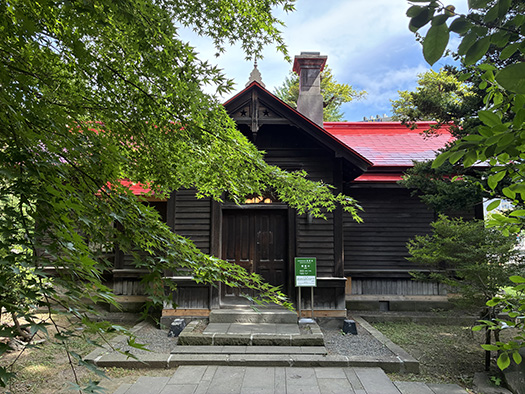
 ということでクルマでの送迎役なので選に漏れざるを得なかったわたしは、写真の清華亭へ。
 この建築はわたしのこのブログでも以前に「北海道の開拓期の創生期建築」として書いていたのですが、最近、修復工事が終わっていたようなので、歩いて5分ほどの距離なので、再訪。で、わたしは明治天皇が北海道開拓に込められた熱意を、このはじめての訪問に感じられると思っています。
 溌剌とした明治国家の創意が込められた開拓のつち音、一刻もはやくその地を訪れたいと祈念された様子に深く敬意を抱くものです。わたしたち北海道人が根底にもつ心意。そのはじめての来訪のときに「小休所」として、北海道初の「公園」として整備された「偕楽園」のなかに建てられた。歴史事実としても明治帝はこの施設で一時を過ごされた。


 開拓の状況をお知らせしようと、道産木材で建てられたとされている。
 内部でもその大径木の道産木材の天井張り板などから、心意気が伝わってくる。
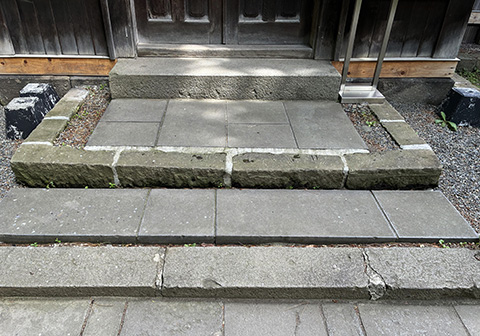
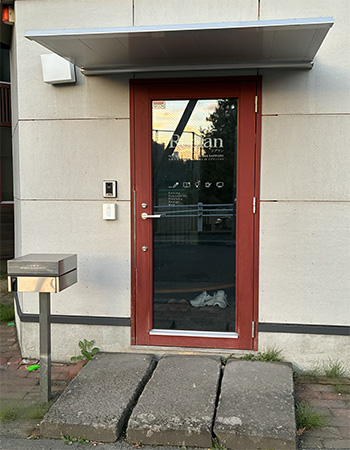
 なんですが、わたし的には天皇が足を踏まれた敷石にまで「石山軟石」という地元産材が使われたことにある感慨を持たされた。で、わが家の玄関前にも「踏み石」として石山軟石を生産工場に買いに行って、60×30cmの材を3枚敷き込んである。
 個人的には自分自身の「歴史好き」の心情と建築に関連して生きてきたことのフックを意識させてもらった。パクリについてこころ爽やかに告白。・・・

●お知らせ
拙書「作家と住空間」幻冬舎から電子書籍で発刊
お求めはAmazonで。
https://amzn.asia/d/eUiv9yO

English version⬇

[A Humble Note to Seikatei: We’ve “borrowed” your Ishiyama soft stone paving stones…]
Both those reporting on the achievements of the colonization efforts and the young Emperor Meiji, who received the report, connected through their shared experience of the Seikatei’s architecture. I can only try to follow in their footsteps, however faintly. …

 Yesterday, since it was my grandson’s first chance to experience Tadao Ando’s architecture, I sent him to “Children’s Book Forest: Sapporo Hokkaido University.” I say “sent him” because I left him in the care of my wife and my son’s wife—my grandson’s mother—while I went off on my own to revisit the Meiji-era “Seikatei” building in our neighborhood.
 At “Children’s Book Forest, Hokkaido University, Sapporo,” they managed to secure one of the 20 same-day admission spots available each day. My grandson was apparently crawling around full of energy, bursting with joy at getting to experience Ando’s architecture (laughs). This doting grandpa is happy too. I heard his eyes kept darting around during the picture book reading session, but well, he’s got a long road ahead of him. Take your time and don’t rush—reading is a long-term endeavor that runs almost parallel to a person’s entire life. A six-month-old infant can’t actually “read,” but reading possesses a certain dignity and atmosphere as a culture that has sustained human society. To “soak in” that with every fiber of one’s being is truly wonderful. I have the deepest respect for Mr. Ando’s philosophy.
So, since I was the designated driver and couldn’t join them, I headed to Seikatei, shown in the photo.
 I’d previously written about this building on my blog as an example of “architecture from the formative period of Hokkaido’s settlement,” and since restoration work seemed to have recently been completed—and it’s only about a five-minute walk away—I decided to revisit it. I believe that on this first visit, one can sense the passion that Emperor Meiji poured into the development of Hokkaido.
 I have deep respect for the vibrant creativity of the Meiji state that was poured into the pioneering efforts, and for the Emperor’s earnest desire to visit the land as soon as possible. This spirit lies at the very foundation of us Hokkaido residents. The pavilion was built within “Kairakuen,” which was developed as a “resting place” and Hokkaido’s first “park” during the Emperor’s inaugural visit. Historically, it is a fact that Emperor Meiji spent some time at this facility.

 It is said to have been built with Hokkaido-grown timber to showcase the progress of the region’s development.
 Inside, too, the spirit behind the project comes through in details such as the ceiling planks made from large-diameter Hokkaido timber.
 However, what truly moved me was the fact that even the stepping stones where the Emperor walked were made from “Ishiyama Soft Stone,” a locally sourced material. So, I went to a factory to buy Ishiyama soft stone to use as “stepping stones” in front of my own home’s entrance, and I’ve laid three 60×30 cm slabs there.
 Personally, this made me aware of the connection between my own passion for history and the fact that I’ve spent my life involved in architecture. A refreshing confession about copying. …

● Announcement
My book, *Writers and Living Spaces*, has been published as an e-book by Gentosha.
Available on Amazon.


【「庭を愛でる」ことが日本の家文化の本流なのかなぁ?】


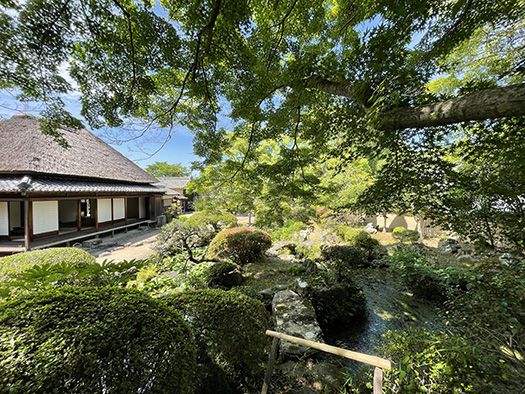
 写真は大分県杵築市の「杵築城」周辺の武家屋敷の庭のたたずまい。臨池式庭園の「格式高い」庭を愛でることが住空間としての最大着目点だったと思える造作の住宅。
 庭はたしかにその地域の自然を知る・楽しむ大きな装置であることはまったくその通りだと思う。異論は無いけれど、しかしわたしは北海道の冬の積雪状況を知った札幌人。冬になると雪山に覆われ、庭の視覚的楽しみはまったく消滅する気候環境のなかで生きてきた。
 まずなにより冬の寒さという最大障壁をどうするのか、が住宅建設の最大関心事。庭を愛でるという要素は精神生活上でもウェートは低い。高級住宅で「庭への目線」を重視した住宅を取材で冬に見ることもあった。
 当然、庭の様子を最大の楽しみに広い縁側・開放的開口部を持つ室内からの視線が、屋根からの落雪がうずたかくその視線を遮る期間が3−4ヶ月にもなる。そんな家が「高級住宅のステータス」だとは、どうしても思えなかった。
 3−4ヶ月の喪失忍耐期間のうえ愛でるための用意期間が1−2ヶ月とすれば、ほぼ半年は苦役の時間。
 こういう住宅では室内空間からの視線的快感の「眺め」が最重視される。北海道ではそんな「楽しみ」は吹きすさぶ寒風ブリザードの襲来で吹っ飛んでいく。
 実際、住み手の方からも「まぁ冬はこんなもんですけどね・・・」というため息交じりの感想を聞くことが多かった。やはり「庭が最高の高級住宅の条件」という価値観は持ちにくいのが北国人。
 一方で周囲の環境は広大で野趣に満ちた大自然環境が展開していて、その圧倒的美感からは、強烈な刺激を受け続けてきた。それには庭程度は敵いようがない。
 そういう太刀打ちできない美感に対して、相対的に圧倒的に狭い自分の敷地のなかの庭を重視するという心理はほぼ無かった。だいたい、冬囲いやら樹木の枝の養生を考えるようなことはやっていられないのが普通の感覚。
 それに対して本州地域の「武家住宅」ではこれ見よがしにドヤ顔で臨池式回遊庭園が最大の趣味関心事として提示されている。もちろんそういう文化伝統には敬意を持つけれど、彼我の極端な環境の違いに醒めた目線になる。
 立派なお庭ですね、すごいなぁ・・・と。
 しかし、その上で寒冷地ニッポン人の異次元の庭文化を密かに心待ちしてもいる。

●お知らせ
拙書「作家と住空間」幻冬舎から電子書籍で発刊
お求めはAmazonで。
https://amzn.asia/d/eUiv9yO

English version⬇

[Is “appreciating the garden” really the mainstream of Japanese home culture?]
As someone from a cold region who’s had to spend nearly half a year feeling left out, I find it hard to wholeheartedly agree with this part… (sob).

 The photo shows the ambiance of the gardens at samurai residences surrounding “Kitsuki Castle” in Kitsuki City, Oita Prefecture. This custom-built home seems to have been designed with the primary focus on appreciating the “distinguished” beauty of the pond-style garden as a living space.
 I completely agree that a garden is indeed a major means of understanding and enjoying the nature of the region. I have no objection to that, but I am a Sapporo native who knows firsthand the snow conditions of Hokkaido winters. I have lived in a climate where, come winter, the landscape is blanketed by snow, and the visual pleasure of a garden vanishes entirely.
 First and foremost, the biggest concern in home construction is how to deal with the greatest obstacle: the winter cold. The element of appreciating the garden carries little weight in my spiritual life. I have occasionally visited luxury homes during winter for reporting purposes that emphasized “views of the garden.”
 Naturally, in homes designed to make the garden the greatest source of enjoyment—with spacious engawa and open interior spaces offering views of the outdoors—snow piling up from the roof blocks that view for as long as three to four months. I simply could not bring myself to believe that such a house represented the “status of a high-end home.”
 If you consider the three- to four-month period of endurance followed by a one- to two-month period of preparation to appreciate the garden, nearly half a year is spent in hardship.
 In homes like this, the visual pleasure of the “view” from the interior space is given the highest priority. In Hokkaido, however, such “pleasure” is blown away by the onslaught of howling cold winds and blizzards.
 In fact, I often heard residents sigh and remark, “Well, that’s just how it is in winter…” Indeed, it’s difficult for people in the northern regions to embrace the value that “a garden is the ultimate criterion for a luxury home.”
 On the other hand, the surrounding landscape unfolds as a vast, wild natural environment, and I have been constantly inspired by its overwhelming beauty. A mere garden simply cannot compete with that.
 Faced with such unrivaled beauty, there was virtually no psychological inclination to place importance on the garden within my own, relatively tiny plot of land. Generally speaking, it’s only natural not to have the time or inclination to worry about winter protection for plants or pruning tree branches.
 In contrast, in the “samurai residences” of Honshu, strolling gardens with a pond are presented—almost ostentatiously—as the greatest hobby and passion. Of course, I have respect for such cultural traditions, but I view the extreme difference in our environments with a sober eye.
“What a magnificent garden—it’s amazing…”
However, even so, I secretly look forward to the garden culture of cold-climate Japanese people, which exists on a whole different level.

● Announcement
My book, *Writers and Living Spaces*, has been published as an e-book by Gentosha.
Available on Amazon.

【蓮の花と「陶棺」 日本人の死生観】


 きのうは「迎え盆」として札幌里塚に集中しているわたしの関わる墓域をめぐっておりました。
 墓参がどうしても集中する日なので、早朝からカミさんと用意段取りして自宅を出発し、墓域周辺で子どもたちと合流して墓参。その後、焼き肉パーティ風のヘビー級朝ご飯を里塚霊園にも近い清田区の方の家で楽しみました。現代人、そして子どもたちに「継承」する大切な機縁として「ひと工夫」しているわけです。
 無事に終わりましたが、カミさんは前日の買い物から食べものの用意・切り分け段取りと大車輪。わたしもヘルプとしてほぼ全行程に労役しておりました。修行に近いかなぁ(笑)。帰宅後は爆睡、爆睡・・・
 まぁそういう特異日なので、写真は最近、移動していた各地での「死生観」関連写真。
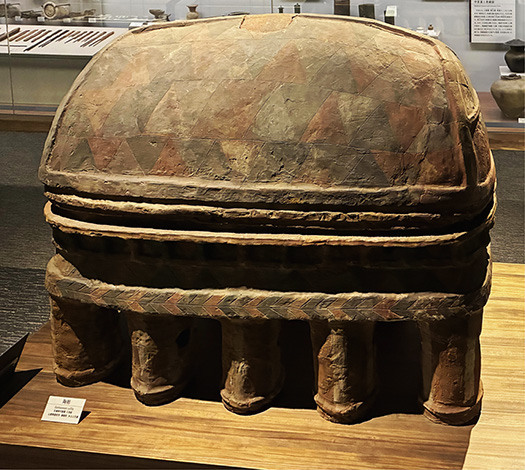
 上は、東京都内で参観していた山梨県笛吹市御坂町の古墳から出土の「陶棺」。
 〜陶棺は土師質で類例のない形状をしており、蓋や身に連続三角文などを斜線・三角文・方形区画で線刻し彩色を施している。彩色は赤・青・白・緑(?)などで塗り分けられ、九州の装飾古墳にも稀なほどの鮮やかさ。陶棺のつくりは畿内とも異なり、東国の埴輪に見られる彩色に近いとも言えるが、山梨県内では類似する埴輪の出土は極めて少ない。陶棺の長さは111cm、身の高さ49cm、棺蓋の長さ42,5cmを測り10個の脚を有する。陶棺の規模から見て成人にしては小さすぎ、小児用もしくは火葬骨を入れたと考えられる。古墳の時期を確定する遺物は少なく、現地の石室に使われた石材などから古墳時代後期と思われる。〜引用文献:國學院大學『考古学資料紀要』第15輯。
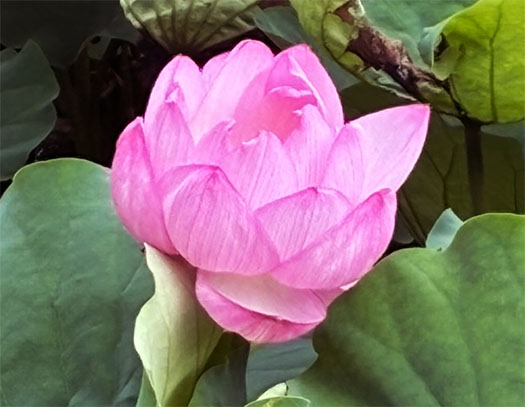
 一方、その下の写真はお盆らしい花として「蓮の花」。札幌北大でもサクシュコトニ川の遊水池に咲いていますが、この写真は東京・上野の不忍池のもの。インドが原産地らしい重厚な「ぼってり」感がいかにも蒸暑の気候を伝えてくる。泥水のような環境から育ちながらも美しい花を咲かせる姿が、煩悩に満ちた世の中で悟りを開く仏教の教えと重なるため、聖なる花として寺院などで大切に栽培されてきた、お馴染みのお姿。
 仏教という外来宗教の導入以前と以降の、日本人の死生観デザインの分脈が明瞭と思えます。

 さて、自分もやがて・・・という年齢に達してきて、わが家系の流れもたどりつつ、墓碑に刻まれた先祖の名前を見ながら、しばし黙然としておりました。合掌。

●お知らせ
拙書「作家と住空間」幻冬舎から電子書籍で発刊
お求めはAmazonで。
https://amzn.asia/d/eUiv9yO

English version⬇

[Lotus Flowers and “Clay Coffins”: The Japanese View of Life and Death]
Setting aside the lotus flowers for a moment, I am struck by the way “ancestral spirits” were venerated before the introduction of Buddhism. My thoughts wander to the sentiment behind adding such “design” elements to a person’s death. …

 Yesterday, as part of the “Mukae-bon” (pre-Obon) festivities, I visited the gravesites I’m involved with, which are concentrated in the Satotsuka area of Sapporo.
 Since this is a day when grave visits inevitably peak, my wife and I got everything ready early in the morning, left home, met up with the kids near the gravesites, and paid our respects. Afterward, we enjoyed a hearty breakfast—almost like a yakiniku party—at a home in the Kiyota Ward, which is also close to Satotsuka Cemetery. I’m putting a little extra thought into this as an important opportunity to “pass on” traditions to modern people—and especially to the children.
 It all went smoothly, but my wife was running around like crazy, from shopping the day before to preparing and portioning out the food. I also pitched in to help with almost every step of the process. It was almost like a spiritual training (laughs). After getting home, I slept like a log, and then some…
Well, since it was such a special day, here are some recent photos related to “views on life and death” that I took while traveling around various places.
The photo above shows a “ceramic coffin” excavated from a burial mound in Misaka-cho, Fuefuki City, Yamanashi Prefecture, which I visited while in Tokyo.
 ~The earthenware coffin is made of Haji clay and has a unique shape. The lid and body are engraved with continuous triangular patterns, diagonal lines, and square compartments, and then painted. The colors—red, blue, white, and green (?)—are distinctly separated, and the vibrancy is so striking that it is rare even among decorated kofun in Kyushu. The construction of the ceramic coffin differs from that found in the Kinai region; while its coloring is similar to that seen in haniwa from the eastern regions, similar haniwa have been unearthed extremely rarely within Yamanashi Prefecture. The ceramic coffin measures 111 cm in length, 49 cm in height, and the coffin lid measures 42.5 cm in length; it has ten legs. Given its size, the coffin is too small for an adult and is believed to have been intended for a child or to have contained cremated remains. There are few artifacts that can definitively date the burial mound, but based on the stone materials used in the on-site stone chamber, it is believed to date to the Late Kofun Period. — Source: Kokugakuin University, *Bulletin of Archaeological Materials*, Vol. 15.
Meanwhile, the photo below shows a “lotus flower,” which is often associated with the Obon festival. While they also bloom in the flood control basin of the Sakushukotoni River near Hokkaido University in Sapporo, this photo was taken at Shinobazu Pond in Ueno, Tokyo. Native to India, its robust, “plump” appearance perfectly conveys the sweltering, humid climate. The sight of these flowers blooming beautifully despite growing in muddy water mirrors the Buddhist teaching of attaining enlightenment in a world filled with worldly desires; as such, they have long been cherished and cultivated as sacred flowers in temples and other sacred sites—a familiar sight to many.
 It seems clear that there is a distinct lineage in the design of Japanese views on life and death, both before and after the introduction of Buddhism, a foreign religion.

 Now that I’ve reached an age where I too will eventually… I found myself standing in silence for a while, tracing the lineage of my family and gazing at the names of my ancestors engraved on the tombstones. I clasped my hands in prayer.

● Announcement
My book, *Writers and Living Spaces*, has been published as an e-book by Gentosha.
Available on Amazon.


【最高気温33度の緑に包まれた元気な散歩】


 昨日のブログ、こどもの本の森に感想が寄せられました。建築家・安藤忠雄の寄贈であることは触れませんでしたが、その設計「本意」はまっすぐに伝わってきていました。孫が「オレ、安藤忠雄って建築家のこどもへのやさしさ、体験してきているぜ!」と話すようになるのではと想像していました(笑)。
 
 で、昨日はついに朝から30度を超える気温に包まれた札幌。
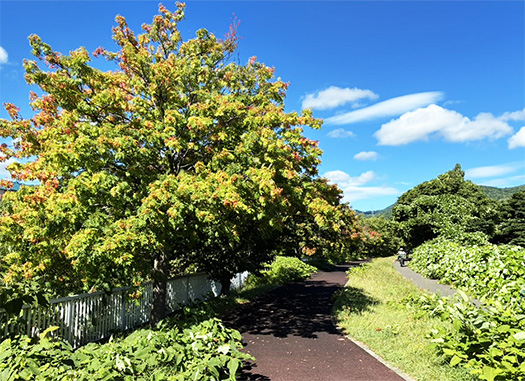
 こういうときは緑の中の「木陰」つたいに歩くのが快適と考えて、散歩コースの中でもいちばん「緑化率」の高い西野緑道コースを選択。カミさんもその前日から「ちょっと行こうかな」とのことだったので、昨日も同行。
 わたし的には30度超えとは言っても、木陰のクールダウンポイントを伝い歩きするのが、それはそれで楽しいのですが、カミさんは早々にキャンセルして乗ってきたクルマに戻って、エアコン環境へ帰還。
 いたわりつつも、わたしはめげずにトータル8,000歩強、1時間半ほどの散策へ。
 その後、1日トータルではほぼ通常ペースで、11,586歩を元気に歩いておりました。
 やはり蒸暑の木々のなかを歩くと、いかにも天国に近づいているような想念がアタマのなかに盛り上がる。ナナカマドはすでに色づきはじめていて、この蒸暑の先には一気にクールダウンする季節が顔を覗かせてくれている。
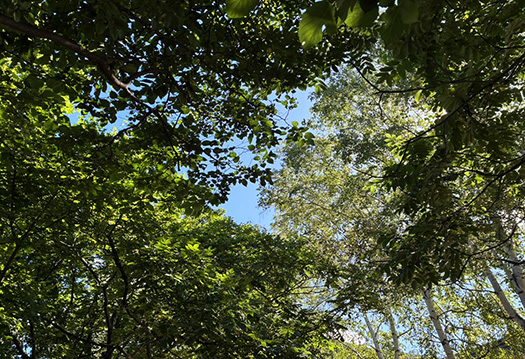
 しかし毎日1万歩超のわたしでも、さすがにこれくらいの気温環境では、すこし休憩したくなって途中のベンチで、しばし蒼天の空を仰ぎ見ておりました。木々を超えた真夏の空の重い青が蠱惑的に感じられる。
 クルマに戻ったら、エアコンのなかで元気回復のカミさんが笑顔。まぁムリせず、ですね。
 その後、本日のお盆墓参り〜親族での焼き肉パーティ用の大量食料買いだしで、お店4箇所をグルグル。お店とお店の間では散歩歩数をふたたび稼ぐこともできたわたしですが、カミさんはお店のエアコンのなかで元気いっぱいにあれこれと元気に「買い出し」を満喫しておりました。大量荷物運搬でわたしはふたたび歩数追加ゲット。
 ということですが、日頃の散歩習慣のおかげでピンピン状態の維持が続いております。
 天国に一番近い,北国の真夏、たのしく乗りきりたいですね。

●お知らせ
拙書「作家と住空間」幻冬舎から電子書籍で発刊
お求めはAmazonで。
https://amzn.asia/d/eUiv9yO

English version⬇

[A Brisk Walk Surrounded by Greenery with a High of 33 Degrees]
After all, the midsummer in the northern regions—where it’s hot but “dry”—is the closest thing to heaven. I’m completely enchanted by the heat, the light breeze, and the message from the greenery. …

 I received some feedback on yesterday’s blog post about the Children’s Book Forest. Although I didn’t mention that it was a donation from architect Tadao Ando, the “true intent” behind his design came across clearly. I found myself imagining my grandson one day saying, “Man, I’ve actually experienced the kindness that architect Tadao Ando has for kids!” (laughs).
 
 So, yesterday, Sapporo was finally enveloped in temperatures exceeding 30 degrees from the morning onward.
 I figured that on days like this, it’s most comfortable to walk along the “shade of the trees” amidst the greenery, so I chose the Nishino Greenway course—the one with the highest “greenery coverage” among my walking routes. My wife had been saying since the day before, “Maybe I’ll go for a bit,” so she joined me again yesterday.
 Personally, even though it was over 30 degrees, I actually enjoy walking along the cooling spots in the shade—but my wife called it quits early and headed back to the car we’d driven there, returning to the comfort of the air conditioning.
 While being considerate of her, I didn’t let it get me down and continued on my own for a stroll of just over 8,000 steps, lasting about an hour and a half.
 After that, I walked briskly at my usual pace for the rest of the day, racking up a total of 11,586 steps.
 As always, walking through the muggy, green trees fills my mind with the feeling that I’m getting closer to heaven. The mountain ash trees were already beginning to change color, and beyond this muggy heat, the season of sudden cooling was peeking through.
 However, even for someone like me who walks over 10,000 steps every day, at temperatures like this, I naturally felt the need for a short break, so I sat on a bench along the way and gazed up at the azure sky for a while. The heavy blue of the midsummer sky stretching beyond the trees felt mesmerizing.
 When I got back to the car, my wife was smiling, having regained her energy in the air-conditioned cabin. Well, no need to push it, I suppose.
 After that, for today’s Obon grave visit and to stock up on a massive amount of food for a family barbecue, we drove around to four different stores. While I was able to rack up more steps by walking between stores, my wife was full of energy, happily “shopping” for all sorts of things inside the air-conditioned stores. Carrying all that heavy shopping, I racked up even more steps.
 That said, thanks to my daily walking routine, I’m still going strong.
 I want to enjoy this midsummer in the northern lands—the place closest to heaven—to the fullest.

● Announcement
My book, “Writers and Living Spaces,” has been published as an e-book by Gentosha.
Available on Amazon.

【こども本の森 札幌・北大、いいね】


 昨日からはお盆休暇が一般的になってきました。
 高齢者の早朝散歩でもすこし変化があって、朝ご飯を遅めにしてふだんなかなか来られない北大構内散歩を夫婦一緒で行って参りました。ヒグマ騒動以来、札幌の真ん中にあって周囲の広大な自然林からは、幹線道路群によってほぼ孤立しているのに、太古のこの地のたたずまいが薫っている北大構内の魅力を味わっています。
 ただ、北大まではクルマで駐車場への移動になるので、ひとりのときは逆にメンドイ。
 気分的にもゆったりできる休暇日には格好と思った次第。
 案の定、北大の学生さんや教職員のみなさんも少なめで、また観光客も少なくゆったり散歩8000歩以上。
 で、休日中に「孫預かり」予定もあるのでいま話題の「こども本の森 札幌・北大」を事前チェック。あ、この施設は主に「事前予約制」であり、予定する日はすでにいっぱいなのですが、当方の孫はまだ「本を読む」ことはできない年齢なので、読書の雰囲気に馴染ませることが主目的。
 最近、日本人の本離れが指摘されますが、やはり読書は最高の「認識」向上機会。本離れが加速するほど、逆に読書習慣はその重要度が増していくのではないかと予想しています。とくに「想像力」が増進する童話や、子ども向けの本は、文化認識の基盤として重要度が増してくると思われます。
 そんな想いで、こちらの施設を参観してみた次第。もちろん早朝なので開場前でもあり、周辺のたたずまい、雰囲気を味わうのが主眼。
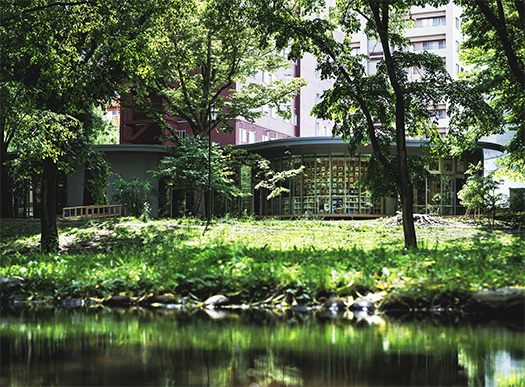
 思いの通り、北大構内のサクシュコトニ川のほとりで緑あふれる環境立地。周辺には大好きな川の水の「吹き出し口」があって、いのちの循環感に満ちている雰囲気。北大正門にもほど近い。
 そして緑の環境の中、正面側壁面はすべてガラス張りで、のびやかな曲面で構成されている。ガラス越しに内部空間が視認できますが、本の選択に於いてもたいへん工夫されていることがうかがわれた。一度はこの空間の中で本が醸し出す「世界観」を涵養することは成長を促してくれると勝手に想像していました。
 北大の空間は日本でダントツの雰囲気環境で、世界全体でも第7位という解説もありますが、自然と「学ばさる」(若干北海道弁)環境だと思えます。さて、孫はどういう「反応」を示すか、楽しみ。
 まぁ、ボーッとしている一択でしょうが(笑)。

●お知らせ
拙書「作家と住空間」幻冬舎から電子書籍で発刊
お求めはAmazonで。
https://amzn.asia/d/eUiv9yO

English version⬇

[Children’s Book Forest, Sapporo/Hokkaido University—Thumbs Up!]
I don’t get to come here very often, but a new library for young children has opened on the Hokkaido University campus. I really resonate with this concept. My doting grandparent mode is in full swing…

 Since yesterday, the Obon holiday has generally begun.
There’s been a slight change in our early-morning walks as well; we had a late breakfast and went for a walk together as a couple on the Hokkaido University campus—a place we don’t usually get to visit. Ever since the brown bear incident, even though the campus is located right in the heart of Sapporo and is almost completely isolated from the vast natural forests surrounding it by a network of major roads, we’ve been savoring the charm of the Hokkaido University campus, which exudes the atmosphere of this land’s ancient past.
 However, since we have to drive to the parking lot at Hokkaido University, it’s actually a bit of a hassle when I’m alone.
 I figured it would be perfect for a holiday when I wanted to take it easy.
 Sure enough, there were relatively few Hokkaido University students, faculty, and staff, and few tourists as well, so we enjoyed a leisurely stroll of over 8,000 steps.
 Also, since I’m scheduled to “babysit” my grandchild over the holiday, I checked out the much-talked-about “Children’s Book Forest Sapporo・Hokkaido University” in advance. Oh, this facility operates primarily on an “advance reservation system,” and the dates I had in mind were already fully booked. However, since my grandchild isn’t yet old enough to “read books,” my main goal is simply to acclimate them to the atmosphere of reading.
 Lately, there’s been talk about Japanese people drifting away from books, but reading is still the best opportunity to enhance “cognitive development.” I predict that the more this trend accelerates, the more important the habit of reading will become. In particular, children’s books and fairy tales—which foster “imagination”—are likely to grow in importance as the foundation of cultural awareness.
 With these thoughts in mind, I decided to visit this facility. Of course, since it was early in the morning, it wasn’t open yet, so my main focus was on taking in the surroundings and atmosphere.
As I had imagined, it’s located in a lush, green setting along the Sakushkotoni River on the Hokkaido University campus. Nearby is a “spout” where water flows from the river—a feature I love—creating an atmosphere brimming with a sense of the cycle of life. It’s also quite close to the main gate of Hokkaido University.
 Set amidst this green environment, the front facade is entirely glass and features graceful, curved surfaces. While the interior space is visible through the glass, I could tell that great care had been taken in the selection of books. I couldn’t help but imagine that spending time in this space, immersing oneself in the “worldview” evoked by the books, would foster personal growth.
 Hokkaido University’s campus boasts an atmosphere that is unrivaled in Japan—some sources even rank it seventh in the world—and I feel it’s an environment where one is naturally “taught” (to use a bit of Hokkaido dialect). Now, I’m looking forward to seeing what kind of “reaction” my grandchild will have.
Well, I suppose the only option is for him to just zone out (laughs).

● Announcement
My book, *Writers and Living Spaces*, has been published as an e-book by Gentosha.
Available on Amazon.


【岡山県「後月」郡、この地名って読めますか?】


 家系史の探究について、昨日までで直近の重要地域・文献調査が一段落。
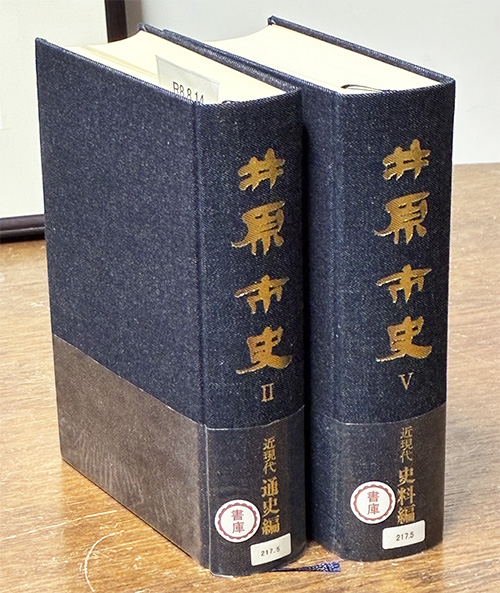
 江戸期の「宿駅」間の経済交流の実態を調査確認するのに岡山県「井原市史」を読解してきていますが、必要箇所についてはおおむね確認作業が完了。これから分析作業になるところ。わが家系は、山陽道の宿駅として尾道の東隣の「今津」が故地。その地域産業「松永塩田」に依拠した経済活動で江戸後期を生きていた。
 山陽道の宿駅として東隣に「神辺」があり、その先に岡山藩領の「井原」。その地の有力家と人脈コネクションを形成してきていた。
 作業としては順調に推移しているのですが、どうしても引っかかっているのが地名。
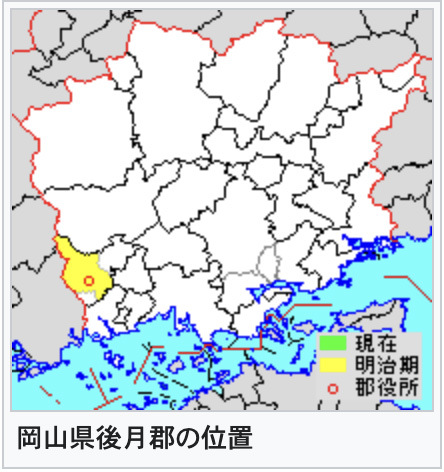
 この井原は「後月」という明治以降の郡名地域。
 資料でなんどもこの郡名が出てくるのですがまったく馴染めない(泣)。人間は読みがアタマのなかで残響して、馴染み感覚が生起してモノゴトの整理整頓がついていくのだと思う。
 しかしこの「後月」の読みが「しつき」だとわかってからも、どうも残響してくれない。
 さっぱり現場感・馴染みが持てないのです。家系史ではこの地域の人びととの関係が幕末から明治以降、非常に大きなポイントになる地域なのにであります。わたしの祖母の「生地」でもありその家系伝承の掘り起こしは最重要。なので近々この地を探訪予定でもあります。
 「後」という字を「しり」と読む北海道の「後志〜後方羊蹄〜しりべし」という地名もあるので、まったくわからないではないのです。日本語古語としてそのような「読み方」はあったのでしょう。
 AIの「後月〜しつき」読みについての解説は以下。
 〜名前の由来と歴史
 1.先進地域として渡来人や古代の職業集団(部民)が定住した古代・吉備国は、朝鮮に近い瀬戸内の海上交通の要所。優れた技術を持つ渡来系集団が多く移り住んだ。朝廷に仕える職能集団も多く配置されたため、彼らの言葉や集団名に漢字を当てた結果、独特の地名が残った。
 2.「好字二字化」による強引な漢字の当てはめ。奈良時代、元明天皇の命により「地名には漢字2文字で縁起の良い文字(好字)を使え」というルール(風土記編纂の詔)が出された。これにより「しつき(足次)」地名に対し、意味を無視して強引に「後月」の2文字が割り振られた。現代人がパッと見で読めない地名が誕生した。
 3.古代の言葉の「発音の変化」 何千年も前の「古代日本語の響き」がなまり変化した結果、漢字本来の読み方からかけ離れてしまったケース。〜〜
 まぁ、郷に入らば従え。なんとか習慣化したい。え〜っと「しつき」か・・・。

 
●お知らせ
拙書「作家と住空間」幻冬舎から電子書籍で発刊
お求めはAmazonで。
https://amzn.asia/d/eUiv9yO

English version⬇
 
[“Shitsuki” District, Okayama Prefecture—Can You Pronounce This Place Name?]
First of all, I can’t pronounce it (lol). Apparently, it’s “Shitsuki.” It just doesn’t stick in my head. It doesn’t click. I’m planning to visit there soon. I’m going to get used to it! …

 Regarding my genealogical research, I’ve just wrapped up the most recent phase of fieldwork and literature review as of yesterday.
 I’ve been studying the *History of Ibara City* in Okayama Prefecture to investigate and verify the actual state of economic exchange between “post stations” during the Edo period, and I’ve largely completed the verification process for the relevant sections. Now it’s time to move on to the analysis phase. My family’s ancestral home is “Imazu,” located east of Onomichi, which served as a post station on the Sanyo Road. During the late Edo period, our family sustained itself through economic activities centered on the local industry, the “Matsunaga Salt Fields.”
 To the east of Imazu along the Sanyo Road was “Kannabe,” and beyond that lay “Ibara,” part of the Okayama Domain. We had established connections with influential families in that area.
 The work itself is progressing smoothly, but there’s one thing that just won’t let me go: the place names.
 This “Ibara” is part of a region known as “Shitsuki” since the Meiji era.
 This district name appears repeatedly in the documents, but I just can’t get used to it (sigh). I think that when a pronunciation resonates in our minds, a sense of familiarity arises, allowing us to organize and make sense of things.
 However, even after learning that “Shitsuki” is the reading for “後月,” it just won’t resonate with me.
 I simply can’t get a sense of the place or feel at home there. Yet in my family history research, this region is a crucial focal point for my relationships with the people there, spanning from the end of the Edo period through the Meiji era and beyond. It’s also my grandmother’s “birthplace,” so unearthing the family traditions there is of the utmost importance. That’s why I’m planning to visit the area soon.
 There are place names in Hokkaido—such as “Shiri” (from “Shiribeshi” and “Shiribetsu”)—where the character “後” is read as “shiri,” so it’s not as if I don’t understand the concept at all. Such a “reading” likely existed as an archaic form of Japanese.
 The AI’s explanation of the “Shitsuki” reading for “後月” is as follows.
 ~ Origin and History of the Name
 1. Ancient Kibi Province, a leading region where immigrants and ancient occupational groups (bu-min) settled, was a key maritime transportation hub in the Seto Inland Sea, close to Korea. Many immigrant groups possessing advanced skills moved there. Since numerous professional groups serving the imperial court were also stationed there, the application of kanji to their languages and group names resulted in the preservation of unique place names.
 2. Forced application of kanji based on the “two-character auspicious character” rule. During the Nara period, by order of Empress Genmei, a rule was issued (the Imperial Edict on the Compilation of the Fudoki) stating, “Place names must use two auspicious Chinese characters (kōji).” As a result, the place name “Shitsuki” (足次) was forcibly assigned the two characters “Gotsuki” (後月), disregarding its original meaning. This gave rise to place names that modern people cannot read at a glance.
 3. “Pronunciation Changes” in Ancient Language: Cases where the “sounds of ancient Japanese” from thousands of years ago have evolved through dialectal changes, resulting in pronunciations that have drifted far from the original readings of the kanji. ~~
Well, when in Rome, do as the Romans do. I’ll try to get used to it somehow. Um… “Shitsuki,” I guess…

 
● Announcement
My book, “Writers and Living Spaces,” has been published as an e-book by Gentosha.
Available on Amazon.

【大分/宇佐国は古代以来、九州屈指の聖域】


 ようやく全県踏破の最終地・大分県を巡り歩くことができた。少年期、修学旅行以外でははじめて旅行できたのがいきなりヨーロッパだったことで、帰国後いわば渇望するように京都や奈良の空気に湿潤したくなって、日本というものを心底、体感したかった。そういう時間を持てたことを深く感謝している。その後の人生で、遠隔地を歩く、知らない日本を巡るということは、最上の「数寄」になっていった人間。仕事の領域選択でもこのことは心理の基底で揺り動かしてくれていたと思う。
 それがようやく人生最終盤で「全地域・全県制覇」として叶えられたことが率直に嬉しい(笑)。やっと来られたぜ大分、であります。そのことを敬して「大分県立歴史博物館」逍遥させていただいた。
 <太古の昔、宇佐は九州屈指の聖域!
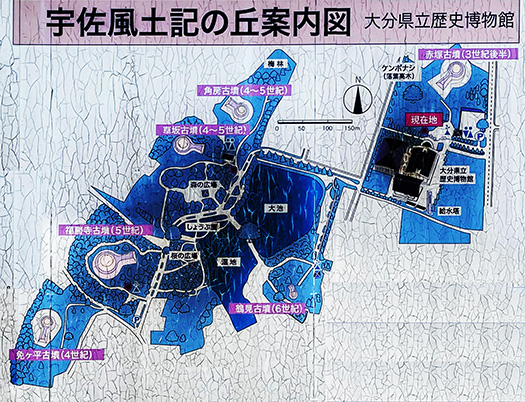
 宇佐平野を南から北へ流れる駅館川(やっかんがわ)東岸の台地上に、3世紀後半から6世紀に造られた前方後円墳6基を含む、数多くの古墳からなる川部・高森古墳群がある。宇佐風土記の丘はその地の史跡公園。
 ここは宇佐平野を見渡す丘にあり、長い間地域有力者たちが眠る聖域。とくに3世紀後半に造られた赤塚古墳は前方後円墳であることから、宇佐地域が九州で最も早くヤマト政権との結びつきを深めたことを示している。
 古代日本では地域の有力者が「国造(くにのみやつこ)」に任命された。古事記には宇佐国造として「宇沙都比古・宇沙都比売(うさつひこ・うさつひめ)」の名がみえる。
 宇佐国造がこの古墳群に葬られた可能性も高く、宇佐がヤマト政権にとって重要な場所だったことを示している。そういう重要地だから7、8世紀に仏教文化や八幡神文化が宇佐において盛んになっていく。〜宇佐風土記の丘の案内文より〜>
 古代「女系」天皇制になってしまう危機があった。女性天皇・称徳帝(孝謙上皇)との恋愛関係を利用した道鏡は、政治権力を握り次の天皇になろうとした。この日本国の男系男子の皇統の危機を救ったのが、宇佐神宮の神意(和気清麻呂による託宣)。
 そういう古代以来の国家の深淵たる知恵が深く根付いている地域。
 そしてこの九州から瀬戸内海を経てヤマト政権と深くつながり、さまざまな面で日本に大きな影響をもたらし続けた地域。北海道人として最後に訪れるのにふさわしいとも思えていました。

●お知らせ
拙書「作家と住空間」幻冬舎から電子書籍で発刊
お求めはAmazonで。
https://amzn.asia/d/eUiv9yO

English version⬇

[Oita / Usa Province: One of Kyushu’s Most Sacred Sites Since Ancient Times]
This is the land where the divine will of Usa Jingu—which prevented Dōkyō from ascending to the throne—was nurtured. We explore this prefecture, which has preserved its unique cultural traditions within the global context, with deep respect. …

 I was finally able to walk around Oita Prefecture, the last stop on my journey to visit every prefecture in Japan. As a teenager, my first trip outside of school field trips was to Europe—and upon returning home, I found myself yearning to soak in the atmosphere of Kyoto and Nara, as if to quench a deep thirst, and to experience the essence of Japan from the bottom of my heart. I am deeply grateful to have had that time. Throughout the rest of my life, walking through remote areas and exploring the unknown corners of Japan became my greatest “passion.” I believe this desire also served as a fundamental driving force behind my career choices.
It gives me sincere joy that, finally, in the twilight of my life, I’ve been able to fulfill this goal of “conquering every region and every prefecture” (laughs). “I’ve finally made it to Oita,” I thought to myself. Out of respect for that achievement, I took a leisurely stroll through the Oita Prefectural Museum of History.