
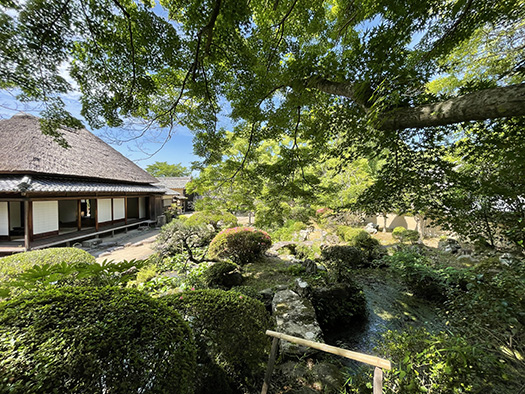
写真は大分県杵築市の「杵築城」周辺の武家屋敷の庭のたたずまい。臨池式庭園の「格式高い」庭を愛でることが住空間としての最大着目点だったと思える造作の住宅。
庭はたしかにその地域の自然を知る・楽しむ大きな装置であることはまったくその通りだと思う。異論は無いけれど、しかしわたしは北海道の冬の積雪状況を知った札幌人。冬になると雪山に覆われ、庭の視覚的楽しみはまったく消滅する気候環境のなかで生きてきた。
まずなにより冬の寒さという最大障壁をどうするのか、が住宅建設の最大関心事。庭を愛でるという要素は精神生活上でもウェートは低い。高級住宅で「庭への目線」を重視した住宅を取材で冬に見ることもあった。
当然、庭の様子を最大の楽しみに広い縁側・開放的開口部を持つ室内からの視線が、屋根からの落雪がうずたかくその視線を遮る期間が3−4ヶ月にもなる。そんな家が「高級住宅のステータス」だとは、どうしても思えなかった。
3−4ヶ月の喪失忍耐期間のうえ愛でるための用意期間が1−2ヶ月とすれば、ほぼ半年は苦役の時間。
こういう住宅では室内空間からの視線的快感の「眺め」が最重視される。北海道ではそんな「楽しみ」は吹きすさぶ寒風ブリザードの襲来で吹っ飛んでいく。
実際、住み手の方からも「まぁ冬はこんなもんですけどね・・・」というため息交じりの感想を聞くことが多かった。やはり「庭が最高の高級住宅の条件」という価値観は持ちにくいのが北国人。
一方で周囲の環境は広大で野趣に満ちた大自然環境が展開していて、その圧倒的美感からは、強烈な刺激を受け続けてきた。それには庭程度は敵いようがない。
そういう太刀打ちできない美感に対して、相対的に圧倒的に狭い自分の敷地のなかの庭を重視するという心理はほぼ無かった。だいたい、冬囲いやら樹木の枝の養生を考えるようなことはやっていられないのが普通の感覚。
それに対して本州地域の「武家住宅」ではこれ見よがしにドヤ顔で臨池式回遊庭園が最大の趣味関心事として提示されている。もちろんそういう文化伝統には敬意を持つけれど、彼我の極端な環境の違いに醒めた目線になる。
立派なお庭ですね、すごいなぁ・・・と。
しかし、その上で寒冷地ニッポン人の異次元の庭文化を密かに心待ちしてもいる。
●お知らせ
拙書「作家と住空間」幻冬舎から電子書籍で発刊
お求めはAmazonで。
https://amzn.asia/d/eUiv9yO
English version⬇
[Is “appreciating the garden” really the mainstream of Japanese home culture?]
As someone from a cold region who’s had to spend nearly half a year feeling left out, I find it hard to wholeheartedly agree with this part… (sob).
The photo shows the ambiance of the gardens at samurai residences surrounding “Kitsuki Castle” in Kitsuki City, Oita Prefecture. This custom-built home seems to have been designed with the primary focus on appreciating the “distinguished” beauty of the pond-style garden as a living space.
I completely agree that a garden is indeed a major means of understanding and enjoying the nature of the region. I have no objection to that, but I am a Sapporo native who knows firsthand the snow conditions of Hokkaido winters. I have lived in a climate where, come winter, the landscape is blanketed by snow, and the visual pleasure of a garden vanishes entirely.
First and foremost, the biggest concern in home construction is how to deal with the greatest obstacle: the winter cold. The element of appreciating the garden carries little weight in my spiritual life. I have occasionally visited luxury homes during winter for reporting purposes that emphasized “views of the garden.”
Naturally, in homes designed to make the garden the greatest source of enjoyment—with spacious engawa and open interior spaces offering views of the outdoors—snow piling up from the roof blocks that view for as long as three to four months. I simply could not bring myself to believe that such a house represented the “status of a high-end home.”
If you consider the three- to four-month period of endurance followed by a one- to two-month period of preparation to appreciate the garden, nearly half a year is spent in hardship.
In homes like this, the visual pleasure of the “view” from the interior space is given the highest priority. In Hokkaido, however, such “pleasure” is blown away by the onslaught of howling cold winds and blizzards.
In fact, I often heard residents sigh and remark, “Well, that’s just how it is in winter…” Indeed, it’s difficult for people in the northern regions to embrace the value that “a garden is the ultimate criterion for a luxury home.”
On the other hand, the surrounding landscape unfolds as a vast, wild natural environment, and I have been constantly inspired by its overwhelming beauty. A mere garden simply cannot compete with that.
Faced with such unrivaled beauty, there was virtually no psychological inclination to place importance on the garden within my own, relatively tiny plot of land. Generally speaking, it’s only natural not to have the time or inclination to worry about winter protection for plants or pruning tree branches.
In contrast, in the “samurai residences” of Honshu, strolling gardens with a pond are presented—almost ostentatiously—as the greatest hobby and passion. Of course, I have respect for such cultural traditions, but I view the extreme difference in our environments with a sober eye.
“What a magnificent garden—it’s amazing…”
However, even so, I secretly look forward to the garden culture of cold-climate Japanese people, which exists on a whole different level.
● Announcement
My book, *Writers and Living Spaces*, has been published as an e-book by Gentosha.
Available on Amazon.
共有:

Posted on 8月 15th, 2026 by 三木 奎吾
Filed under: 未分類




コメントを投稿
「※誹謗中傷や、悪意のある書き込み、営利目的などのコメントを防ぐために、投稿された全てのコメントは一時的に保留されますのでご了承ください。」
You must be logged in to post a comment.