

ビジネスで写真がメイン表現である住宅雑誌をやっていたので「写真を扱う」という行為が自分のなかで時間積層していくことになった。
住宅空間探訪からは距離を置くようになって、しかし画像編集の作業行為自体は根強く「数寄」こころが残り続けている。住宅取材では「個人情報」を扱うのに慎重であるべきという制約を、解除できる領域に自然と惹かれるようになる。制約を解除できる領域として、自分自身のことが浮かび上がってくる。
で、自分の古写真を整理整頓し始める中で、その写真撮影の瞬間の「心理」というものには、ある「記憶」が籠もっている、という事実に気付かされる。
人物写真だけには限らないかも知れない。しかし自分で撮影した、あるいは「写されている」ことを理解しながら、その瞬間に抱いていた「気のながれ」が、しっかりと記憶の中に保存されているのではと思い始めています。ただ、よく言う「ものごころ」臨界点が人間意識には存在するので、その前後では大きな「乖離」が発生するのだろうか、と考えられる。
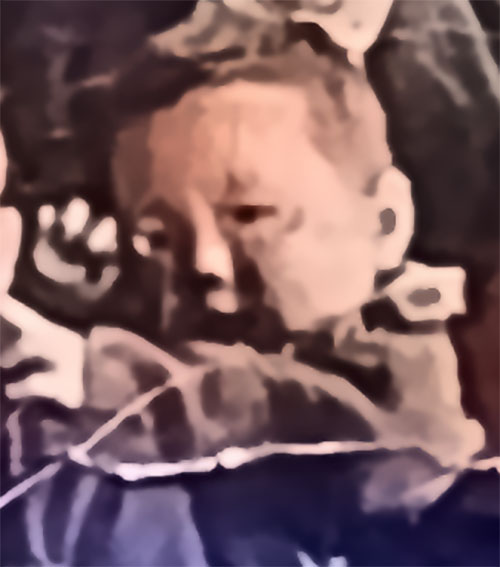
写真は恥ずかしながら(笑)、72年前当時のわたし自身の様子。
祖母の葬儀の集合記録写真で満2才当時。現代のPhotoshopなど写真アタッチソフトを介して再生復元を試みたけれど、解像度はほぼ限界。墨絵に似た雰囲気でなかなか味わいがあると思っている。
この写真を見ることは多いけれど、そのたびに写真撮影の時の瞬間の、自分の心理が再生されてきてしまう。この2才のわたしは、集合していた家族の中で前列に居た3兄の「耳たぶ」に異常なフェッチこころを抱いていて、その耳たぶを触りたいと必死に手を伸ばしていたのだ。
ナゾ、なんですね(笑)。
そういう行動心理分析はそれはそれとして、その瞬間の心理記憶がいわば「ピンナップ」される、という別の感覚の初源のような写真だと自分では思っている。
なぜ、人間はそのように写真画像に対しての心理を持ちうるのか、わからない。AIの解説は以下。
〜「写真=記憶のインデックス(検索タグ)」説
脳科学において人間の記憶は「感情や衝動を伴った静止画(スナップショット)」で保存されると言われる。2歳時の「兄の耳たぶを触りたい」という強い身体的衝動は幼少期の脳の扁桃体(感情・欲求を司る部位)に強く刻み込まれている。写真データを見た瞬間、その画像が「検索タグ」として機能し、脳内に保存されていた当時の身体感覚や感情が一気に再構成されて再生されると考えられている。〜
もしそうだとすると、この領域は独特なNEXTの可能性を孕んでいるかも知れない・・・。
●お知らせ
拙書「作家と住空間」幻冬舎から電子書籍で発刊
お求めはAmazonで。
https://amzn.asia/d/eUiv9yO
English version⬇
[Is It the “Echo” of DNA? / Gazing at My Old Photos]
“Oneself”—a realm where personal information restrictions don’t apply. The psychological memories of myself trapped within those photos. Huh? A mystery that makes you think, “No way…” …
Since I used to work on a home design magazine where photography was the primary form of expression, the act of “working with photographs” gradually became a part of me over time.
While I’ve distanced myself from exploring residential spaces, the act of image editing itself has left a deep-rooted sense of “suki” (a love of the art) within me. I’ve naturally come to be drawn to areas where I can set aside the constraints of handling “personal information” with caution—a requirement I face when covering homes. As an area where such constraints can be lifted, my own self begins to emerge.
And so, as I began organizing my old photographs, I realized that the “psychology” of the moment I took them contains a certain “memory.”
This may not be limited to portraits. However, I’m beginning to think that the “flow of energy” I felt in that moment—whether I was the one taking the photo or was aware that I was being photographed—is firmly preserved in my memory. That said, since there is a commonly cited “threshold of self-awareness” in human consciousness, I wonder if a significant “discrepancy” occurs before and after that point.
The photo, embarrassingly enough (laughs), shows me as I was 72 years ago.
It’s a group photo taken at my grandmother’s funeral when I was exactly two years old. I tried to restore and enhance it using modern photo-editing software like Photoshop, but the resolution is practically at its limit. I think it has a certain charm with its ink-painting-like atmosphere.
I look at this photo often, and every time I do, the emotions I felt in that split second when the picture was taken come flooding back. As a two-year-old, I had an unusually strong fascination with the “earlobe” of my third older brother, who was standing in the front row among the gathered family, and I was desperately reaching out to touch it.
It’s a mystery, isn’t it? (laughs).
Setting aside that kind of behavioral analysis, I personally think this photo is the very origin of a different kind of sensation—one where the psychological memory of that moment is, so to speak, “pinned up.”
I don’t understand why humans are capable of having such psychological associations with photographic images. Here’s the AI’s explanation:
~ The “Photograph = Memory Index (Search Tag)” Theory
In neuroscience, it is said that human memories are stored as “still images (snapshots) accompanied by emotions and impulses.” The strong physical impulse I felt at age two—to “touch my older brother’s earlobe”—is deeply etched into the amygdala (the part of the brain that governs emotions and desires) of my young brain. It is believed that the moment one views a photograph, the image functions as a “search tag,” instantly reconstructing and replaying the physical sensations and emotions from that time that were stored in the brain. ~
If that is the case, this field may hold unique potential for the future…
● Announcement
My book, “Writers and Living Spaces,” has been published as an e-book by Gentosha.
Available on Amazon.
共有:

Posted on 8月 18th, 2026 by 三木 奎吾
Filed under: 未分類





コメントを投稿
「※誹謗中傷や、悪意のある書き込み、営利目的などのコメントを防ぐために、投稿された全てのコメントは一時的に保留されますのでご了承ください。」
You must be logged in to post a comment.