
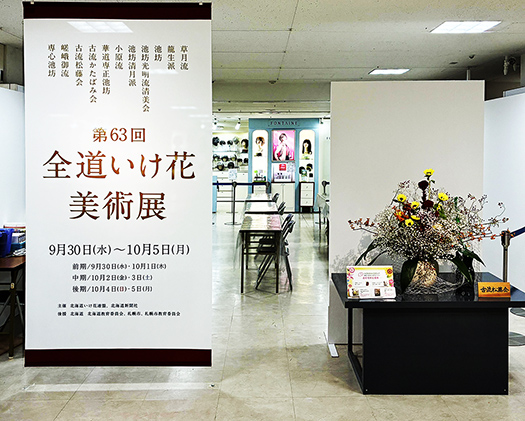
高校同期の友人女子が、札幌の老舗デパートの会場での「いけ花美術展」に出展しているという情報を受けて、人生ではじめて「いけ花」の文化にふれることができた。感謝そのものでした。
で、わたし個人としてはこの文化に触れたことで建築との、具体的には「床の間」との相互作用、その空気感の日本文化ということについて瞑目させられていた次第。いや、目を閉じるのではなく、開かせられたのか。
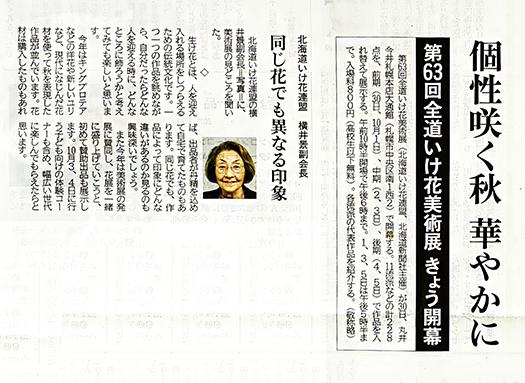
2枚目の写真はこの「いけ花美術展」を主催している北海道新聞の記事の一部。こちらの主宰者側からの発言には、基本的な文化としての「ありよう」の趣旨が記載されていると感じた次第。わたしは新聞を購読していませんが、こういう「文化ジャーナリズム」の側面には深く賛意を持ちます。
こういったフラワーデザインの文化自体は世界共通のものでしょうが、そのなかでも日本の華道はガラパゴス的(AIの解説)な発展を遂げたとされている。現在の「反日」が国是なのかと思える中国ですら、日本のこの文化は文革による弾圧・破壊を経てなお受容され、日式のそのままが大衆的な支持を受けているとされている。
花や葉、樹木、枝などの構成要素を淡々とみつめ、そのそれぞれの「いのちのつながり」を可視化させて、再構成するという一連の精神活動の結果が、おもしろく伝わってくる。会場ではたくさんの「流派」ごとの明示的な相違も見えていて、その「多様性」にも驚かされてしまった。
こういった文化が、日本の床の間とそして庭園文化が融合して日本人同士のコミュニケーションの重要な構成要素を作っていたのが実相なのでしょう。そこでさらに茶がふるまわれたりすることで、同じ時空間を過ごすという文化性が立ち上ってくる。日本的な精神世界の主要な舞台装置。
茶室文化・床の間文化などには一定の「教わる」ような気分で接していましたが、そのさらに奥に日本的な自然美が反映する「いけ花」があること、煌々と照らし出されたような時間でした。
そこからいろいろ思索を巡らされて楽しい時間を過ごしておりました。深く感謝。
なお、札幌地下鉄琴似駅には、同期女子が毎日ボランティアで続けている「いけ花」コーナーが常置されているとのこと。これもまったく知らずにおりました。心して参観させていただきたい。
●お知らせ
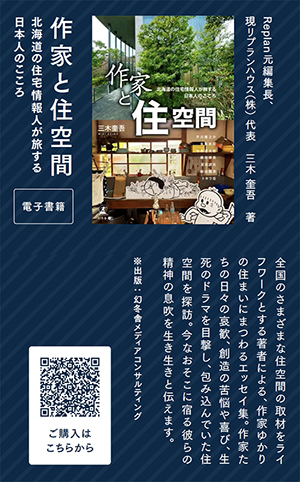
拙書「作家と住空間」幻冬舎から電子書籍で発刊
お求めはAmazonで。
https://amzn.asia/d/eUiv9yO
English version⬇
[Humbly Seeking Guidance in the Art of Ikebana at an Ikebana Art Exhibition]
I visited an art exhibition where a classmate from high school was exhibiting. It made me realize—albeit belatedly—that this is a culture of “bringing out the best” in Japanese plants themselves through artistic arrangement. …
Upon hearing that a female friend from my high school class was exhibiting at the “Ikebana Art Exhibition” held at a long-established department store in Sapporo, I was able to experience the culture of “ikebana” for the very first time in my life. I was truly grateful.
Personally, coming into contact with this culture led me to reflect on its interaction with architecture—specifically, the “tokonoma”—and on the essence of Japanese culture embodied in that atmosphere. Or rather, perhaps it wasn’t that I closed my eyes, but that they were opened.
The second photo shows an excerpt from an article in the Hokkaido Shimbun, which organized this “Ikebana Art Exhibition.” I felt that the remarks from the organizers captured the essence of what it means to practice this art as a fundamental cultural tradition. I don’t subscribe to the newspaper, but I deeply appreciate this aspect of “cultural journalism.”
While the culture of floral design itself is likely universal, Japanese ikebana is said to have undergone a “Galápagos-like” (as explained by AI) evolution. Even in China—where one might think “anti-Japanese sentiment” is a national policy—this Japanese culture is said to have been accepted despite the suppression and destruction it suffered during the Cultural Revolution, and the Japanese style itself is reported to enjoy widespread popular support.
The result of this series of mental activities—calmly observing the constituent elements such as flowers, leaves, trees, and branches, visualizing the “connection of life” between them, and then reconfiguring them—is conveyed in a fascinating way. At the venue, I could also see many explicit differences between the various “schools,” and I was amazed by that “diversity.”
The reality is that this culture, fused with Japan’s tokonoma and garden traditions, formed a crucial element of communication among the Japanese people. When tea is served in such settings, a cultural sense of sharing the same time and space emerges. It is a central element of the Japanese spiritual world.
I had always approached tea room culture and tokonoma culture with a certain sense of “being taught,” but this experience was a moment of revelation—it illuminated the fact that “ikebana,” which reflects Japanese natural beauty, lies even deeper within these traditions.
I spent a delightful time letting my thoughts wander from there. I am deeply grateful.
Incidentally, I’ve heard that there is a permanent “ikebana” corner at Kotoni Station on the Sapporo Subway, maintained daily by a female classmate of mine who volunteers there. I was completely unaware of this as well. I look forward to visiting it with great interest.
● Announcement
My book, “Writers and Living Spaces,” has been published as an e-book by Gentosha.
Available on Amazon.
共有:

Posted on 10月 4th, 2026 by 三木 奎吾
Filed under: 未分類



コメントを投稿
「※誹謗中傷や、悪意のある書き込み、営利目的などのコメントを防ぐために、投稿された全てのコメントは一時的に保留されますのでご了承ください。」
You must be logged in to post a comment.