
さて、昨日の続篇。茶会というような高邁な会合については凡百としてはまったく不明を恥じるしかありませんが、一方、そこで供された料理については、超興味津々・・・。
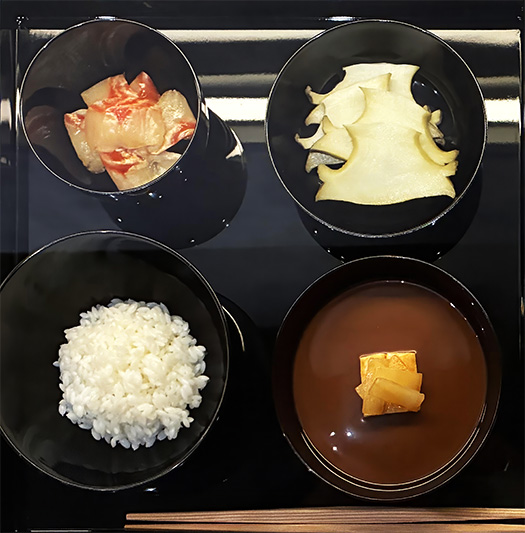
〜天正18年(1590)利休69歳の茶会では「串アワビ」「鮒(ふな)のなます」「ミソヤキ汁」「飯」という1汁2菜に、「麩の焼」と「シイタケ」が菓子として出されています。<え?シイタケが菓子?>
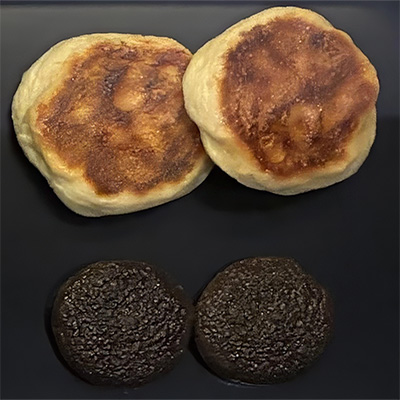
1603年にイエズス会によって刊行された『日匍(にっぽ)辞書』に、ミソヤキ汁は「豆腐と細かく切った大根とが入っている汁の料理」、麩の焼は「小麦のふすまで作った一種の小餅」とあります。
利休の茶会料理や菓子を再現する上では、それらの記述を参考にしました。〜との解説。
「小麦のふすま」の解説は以下。〜「ふすま」とは小麦粒の表皮部分のこと。小麦一粒の中で15%程しかない希少な部位を製粉したもの。小麦は「表皮」「胚乳」「胚芽」の3つで構成しており、普段目にする小麦粉は「胚乳」部分のみを使用しています。胚乳は糖質・タンパク質が多く含まれているため、パンに使うと膨らみやすく、中身が白く仕上がります。小麦の風味や味がよく出やすいのが胚乳ですが、高カロリー。
一方、ふすまは糖質が胚乳の半分以下で食物繊維やビタミンが豊富に含まれており、パンの中身まで茶色く仕上がるのが特徴。低糖質な上、ごぼうの5倍に相当する食物繊維が含まれているため、ダイエットだけでなく健康志向の方にもおすすめ。〜 う〜む、魅力的。こんなのあるんだぁ、であります。
1汁2菜のメインの方ですが、串アワビは港・堺としては地場の特産なのか。また「鮒のなます」とは、中国から伝わった当時は、生肉や生魚を細かく切った料理ということで、淡水魚の鮒を多少,酢で味付けしたような食感だったと思える。ミソヤキ汁というヤツの食感にもそそられる。豆腐はまんまとして、大根を細かく切って、というあたりにオモシロさを感じる。目視としては上に大根が芸術的に載っかっているけれど、案外さらに味噌椀の下の方に沈殿するように隠れていて箸で探り当てたとき、その調理の仕方にさらにめぐり会う「快感」があるのでは、と妄想が刺激されます(笑)。
「お、こっちでは案外細かく切ってあるな」とか「お、千切りかよ、その手か?」など・・・。
昨日のブログでも、書を見ながらの内語対話的「仕掛け」と思いましたが、こういう料理でも「仕掛け」はたしかに可能だろうなと思われた。利休さんは、当然そういう部分でも創意を凝らしたのでしょうね。う〜む、茶はわからないけれど、料理は味わってみたいなぁ・・・調理と「食」の深遠な道楽。
●お知らせ
拙書「作家と住空間」幻冬舎から電子書籍で発刊
お求めはAmazonで。
https://amzn.asia/d/eUiv9yO
English version⬇
[Recreating the Food Served at Rikyu’s “Tea Ceremony” When He Was 69—Mmm…]
I don’t really understand the profound world of the tea ceremony, but I react strongly to the details of the meal (lol). There’s something deeply profound about this miso soup made with tofu and finely chopped daikon radish. …
Now, continuing from yesterday. As an ordinary person, I must admit I know next to nothing about such lofty gatherings as tea ceremonies, but on the other hand, I’m incredibly curious about the dishes served there…
~At a tea ceremony held in Tenshō 18 (1590), when Rikyū was 69 years old, the menu consisted of “skewered abalone,” “marinated crucian carp,” “miso-yaki soup,” and “rice”—one soup and two side dishes—with “grilled fu” and “shiitake mushrooms” served as sweets.
The *Nippo Jisho* (Japanese Dictionary), published by the Jesuits in 1603, describes miso-yaki soup as “a soup dish containing tofu and finely chopped daikon radish,” and fu-no-yaki as “a type of small rice cake made from wheat bran.”
We referred to these descriptions when recreating the dishes and sweets served at Rikyu’s tea ceremonies. —Explanation.
The explanation for “wheat bran” is as follows: “Bran” refers to the outer layer of the wheat kernel. It is made by milling this rare part, which accounts for only about 15% of a single wheat kernel. Wheat consists of three parts: the “bran,” “endosperm,” and “germ.” The wheat flour we commonly see is made using only the “endosperm.” Since the endosperm is rich in carbohydrates and protein, it causes bread to rise easily and results in a white interior. While the endosperm brings out the wheat’s flavor and aroma well, it is high in calories.
On the other hand, bran contains less than half the carbohydrates of the endosperm and is rich in dietary fiber and vitamins; it’s characterized by giving the bread a brown color all the way through. Not only is it low in carbohydrates, but it also contains five times as much dietary fiber as burdock root, making it recommended not only for those on a diet but also for health-conscious individuals. ~ Hmm, that sounds appealing. I didn’t know something like this existed.
As for the main dish in the “one soup, two side dishes” set, I wonder if the abalone skewers are a local specialty here in Sakai, a port city. Also, “funa no namasu” (pickled crucian carp)—when this dish was first introduced from China, it referred to dishes made with finely chopped raw meat or fish, so I imagine it had a texture similar to freshwater crucian carp lightly seasoned with vinegar. The texture of the “miso-yaki soup” also sounds intriguing. I find it interesting that the tofu is left whole, while the daikon radish is finely chopped. Visually, the daikon is artfully arranged on top, but I can’t help but imagine that it’s actually hidden, settled at the bottom of the miso bowl—and that there’s a “thrill” in discovering it with your chopsticks and encountering that cooking technique all over again (laughs).
“Oh, they’ve cut it surprisingly finely here,” or “Oh, julienned? Is that the trick?” and so on…
In yesterday’s blog post, I thought of this as a kind of “gimmick” involving an internal monologue while reading the text, but it struck me that such “gimmicks” are certainly possible with dishes like this as well. I imagine Rikyu must have poured his creativity into those details as well. Hmm… I don’t know much about tea, but I’d love to try the food… The profound pleasures of cooking and “eating.”
● Announcement
My book, *Writers and Living Spaces*, has been published as an e-book by Gentosha.
Available on Amazon.
共有:

Posted on 9月 2nd, 2026 by 三木 奎吾
Filed under: 未分類



コメントを投稿
「※誹謗中傷や、悪意のある書き込み、営利目的などのコメントを防ぐために、投稿された全てのコメントは一時的に保留されますのでご了承ください。」
You must be logged in to post a comment.