
さて大阪での用件も土曜日に終わって、関西圏でのホーム・堺で1泊して昨日帰還。
関空からの飛行機の時間まで、いつも学ばせてもらっている「利晶の杜」でデスクワークもあわせ「整理整頓」を行っていました。利晶の杜というネーミングは堺が生んだ千利休と与謝野晶子の名を冠した記念館。場所も、与謝野晶子の生家近辺で、彼女が詩に表現した「大浜」や堺の灯台にもほど近く、同時に「大航海時代」の日本の玄関口として機能していた街の空気感に満ちている。
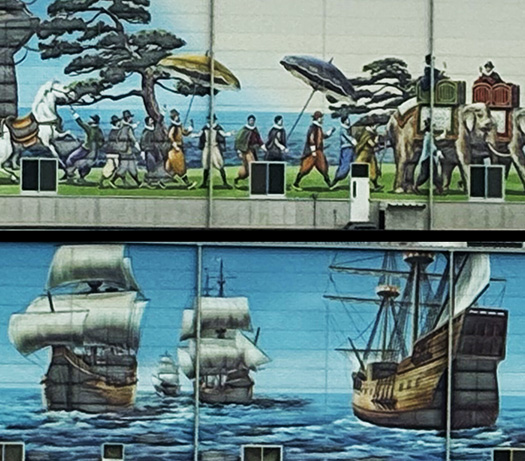
上の写真は世界に開かれていた雰囲気を体感させてくれる堺の「燈台」に海岸線で対面する企業が、その外壁に描いているペイント画を。その企業姿勢も含めて好ましい。
堺という始原的な「国際都市」の自覚がそうさせていると思うと、なかなかと思えるのですね。
で、描かれているのは西洋人たちが船で上陸してくる様子。なかには「象」が描かれたりしている。見たこともない世界の「珍獣」をデモンストレーションに活用したかれらのコミュニケーション「国際交易の戦略眼」が色濃く反映している。
そういう特性が堺なのだけれど、同時に現代にまで引き継がれる「茶道」という文化現象で「和の数寄」を育んだ地域性も持っている。
以下、利休コーナーの展示解説からの引用。
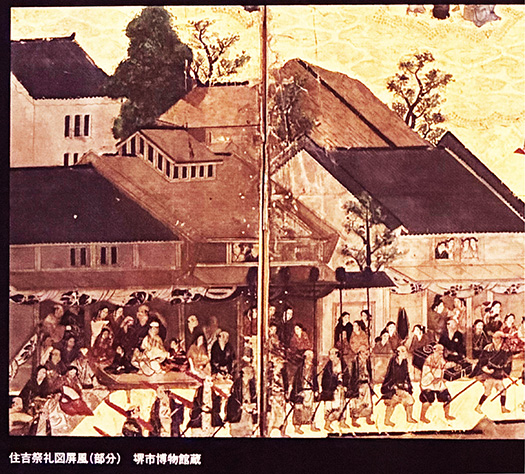
〜市中の山居 堺の町衆は、狭く密集した都市の中に山里の風情を作りだして茶会を催すようになります。それは、山中での純粋な隠遁に優るとさえ考えられ、「市中の山居」と称されました。宜教師ロドリゲスは「xicha no sankio」と記し、堺に始まった新しい茶の湯の様式であったと述べています。中近世の堺のまちを描いた『住吉祭礼図嵐」には草庵風の茶室と思しき建物もみられます。〜
この説明、これまで、あんまり気付かなかったポイントを突いていると感じた。それは、侘びサビみたいな茶道のコアな考え方が、実は世界との交流の極地・堺が出生の地だったこと。灯台もと暗し。世界との交流から逆に「日本らしさ」を追究する心理が生まれた。和を自覚させたのは国際交流かと。
そしてそのポイントが、日本の風土景観の「らしさ」再発見だった。先般も箱庭的な日本の庭文化と北海道の「高断熱高気密」住文化について触れましたが、また違う視覚。ふーむ。
●お知らせ
拙書「作家と住空間」幻冬舎から電子書籍で発刊
お求めはAmazonで。
https://amzn.asia/d/eUiv9yO
English version⬇
[Sakai, the Birthplace of the “Way of Tea,” Is a Melting Pot of Global Exchange]
Sakai, often called the “Venice of Japan,” is also the holy land and pinnacle of tea ceremony culture. Perhaps this seemingly contradictory blend of environmental conditions is what makes it so “Japanese”…
Well, my business in Osaka wrapped up on Saturday, so I spent one night in Sakai—my home base in the Kansai region—and returned home yesterday.
While waiting for my flight from Kansai International Airport, I spent some time at “Rishō no Mori”—a place where I always learn so much—doing some desk work and “tidying up.” The name “Rishō no Mori” comes from the memorial hall named after Sen no Rikyū and Yosano Akiko, both of whom were born in Sakai. It’s located near Akiko Yosano’s birthplace, close to “Ohama”—which she described in her poetry—and the Sakai Lighthouse, and is imbued with the atmosphere of a city that once served as Japan’s gateway during the Age of Discovery.
The photo above shows a mural painted on the exterior wall of a company facing the Sakai Lighthouse along the coastline—a sight that lets you experience firsthand the city’s atmosphere of openness to the world. I find this corporate philosophy particularly commendable.
When I consider that this is likely driven by Sakai’s self-awareness as a primordial “international city,” I find it quite impressive.
The mural depicts Westerners disembarking from ships. Some of the figures even include “elephants.” It vividly reflects their “strategic vision for international trade”—a form of communication that utilized “exotic animals” from a world they had never seen before as demonstration tools.
While these characteristics define Sakai, the city also possesses a regional identity that fostered “Japanese aesthetic sensibility” through the cultural phenomenon of the “tea ceremony,” a tradition that has been passed down to the present day.
The following is a quote from the exhibition commentary in the Rikyu Corner.
~A Mountain Retreat in the City: The townspeople of Sakai began to create the atmosphere of a mountain village within the narrow, densely packed city to host tea ceremonies. This was even considered superior to pure seclusion in the mountains and was called “a mountain retreat in the city.” The missionary Rodriguez recorded it as “xicha no sankio” and noted that it was a new style of tea ceremony that originated in Sakai. In the painting *Sumiyoshi Festival Procession*, which depicts the town of Sakai during the early modern period, a building that appears to be a thatched-hut-style tea room can also be seen. ~
I felt that this explanation hit upon a point I hadn’t really noticed before. It is that core concepts of the tea ceremony, such as wabi-sabi, actually originated in Sakai—the very epicenter of international exchange. The light is darkest under the lamp. The psychology of pursuing “Japanese-ness” in response to engagement with the world was born. Perhaps it was international exchange that made us conscious of “Wa” (harmony).
And that insight led to the rediscovery of the “authenticity” of Japan’s natural landscapes and environments. I recently touched on Japan’s miniature garden culture and Hokkaido’s “high-insulation, high-airtightness” housing culture, but this offers yet another perspective. Hmm.
● Announcement
My book, *Writers and Living Spaces*, has been published as an e-book by Gentosha.
Available on Amazon.
共有:

Posted on 8月 31st, 2026 by 三木 奎吾
Filed under: 未分類




コメントを投稿
「※誹謗中傷や、悪意のある書き込み、営利目的などのコメントを防ぐために、投稿された全てのコメントは一時的に保留されますのでご了承ください。」
You must be logged in to post a comment.