
先日の従兄弟の家系史ヒアリングからの「解析」作業進行中。
従兄弟の「先祖認識」は一族の渡道前の母系の故地に深い心底があることを驚きを持って知ることになった。なんともノスタルジックな気分が発出されていた。「え、そんなドップリ世界なの?」。
わたしは戦後1952年生まれで、戦前期の「肌感覚」は当然持っていない。敗戦後ベビーブーム世代の後の世代。成長後「歴史」が数寄になった人間だが、小学校から高校まで、時代を追ってきたのに明治維新すらきちんと学ばされなかった。「学年末に近いから以降はパスな」「受験テストに出ないから」みたいに放置教育されてきた。(教科書にはその後も記載はあったけど)
明治〜戦前期社会についての学習は、いまその時のリアルな政治とも関わりすぎる、という面は確かにあっただろう。センシティブな権力実態にも関わる。けれど、それ以上に教師たちの様子を見ていて「あ、触れたくないんだな」ということを子ども心として確信的に受け取った。良い子は受け入れ一択。
歴史教育が結果としてその段階で終わってしまうので「戦前社会」への基本理解が放り出された。社会の基層支配構造についてイマイチ、リアリティがない。戦争に突き進んだ「軍部独裁」に至ったという慚愧だけが刷り込まれてきた。
こういう教育を受けてきた人間にとって、北海道で生まれ育ちながら満州から帰還する地が、その母系の故地ということに想像を超えた落差を感じ、同時に戦前期の社会支配構造を垣間見た。
それは当時『寄生地主』と呼ばれた大土地所有層の厳然たる存在。
戦前期は江戸末期の混乱時期に大土地所有層として身分固定された階層に「だけ」衆議院議員資格が保証されていたような時代。徐々に戦争期に向かって実質解体されていったが名家意識は残り続けた。
明治維新当時、急激な社会改革を進めるため安定税収確保が絶対条件で、形成されていた地主金融資本=大規模土地所有層から税を得ることが合理的だったことに由来する。納税とバーターで身分保証が戦前期国家から容認されてきていた。多く発生した「小作争議」では基本的に地主側に立った治安策が執行された。
持てる層に依拠した思潮も有力だった。特権層のドヤ意識と事実として経済構造を握る実相。
わたしなどの戦後世代にしてみると、それならそうと教えてくれよですが(笑)・・・。
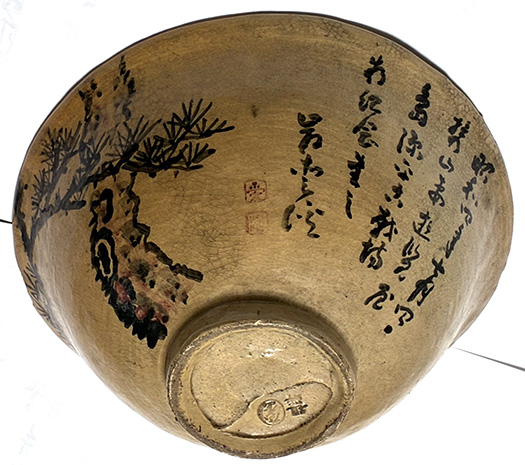
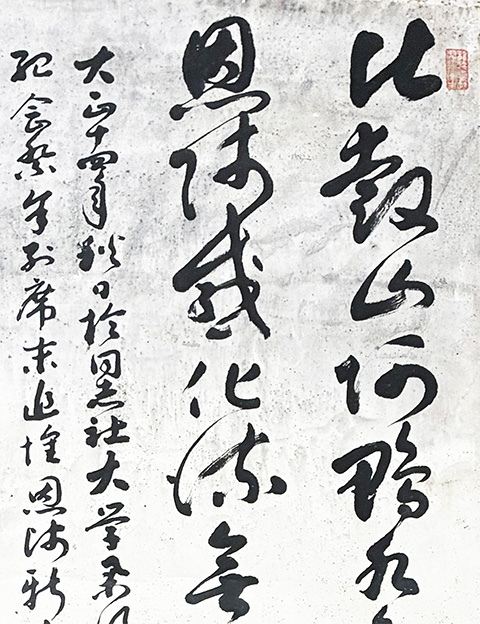
<写真は「ドヤ」顔表現系の書・ウツワ工芸品。名家の文化意識は、書や茶の湯、美術品の教養の世界に対しても表れる。>
●お知らせ
拙書「作家と住空間」幻冬舎から電子書籍で発刊
お求めはAmazonで。
https://amzn.asia/d/eUiv9yO
English version⬇
[Exploring Family History: The Structural Revolution in Japanese Society Before and After the War]
From the late Edo period onward, financial capital pursued large-scale land acquisition, and the Meiji government condoned this, leading to the solidification of the prewar ruling class. Was the GHQ’s land reform a structural reform for Japan? …
I’m currently working on “analyzing” the information I gathered the other day during an interview with my cousin about our family history.
I was surprised to learn that my cousin’s “perception of his ancestors” is deeply rooted in the maternal ancestral homeland from before our clan migrated to Hokkaido. It evoked a truly nostalgic feeling. “Wait, is he that deeply immersed in that world?”
I was born in 1952, after the war, so naturally I have no “firsthand experience” of the pre-war era. I belong to the generation that came after the post-war baby boom. Although I developed a passion for “history” as an adult, even though I followed the progression of eras from elementary school through high school, I wasn’t even properly taught about the Meiji Restoration. I was neglected in my education with excuses like, “We’re nearing the end of the school year, so we’ll skip this,” or “It won’t be on the entrance exams.” (Although the textbooks did cover it later on.)
It’s certainly true that studying Meiji-era and pre-war society was seen as too closely tied to the political realities of the time. It also touched on sensitive aspects of the reality of power. But more than that, watching the teachers’ demeanor, I instinctively sensed as a child, “Ah, they don’t want to touch on this.” For a well-behaved child, acceptance was the only option.
Since history education effectively ended at that stage, a basic understanding of “pre-war society” was left out. I lack a real sense of the underlying structures of social domination. The only thing that was instilled in me was a sense of shame over how the country had descended into a “military dictatorship” that drove the nation toward war.
For someone who received this kind of education, the fact that—despite being born and raised in Hokkaido—the place I returned to from Manchuria was my mother’s ancestral homeland struck me as a disparity beyond my imagination; at the same time, it offered a glimpse into the social power structures of the pre-war era.
That was the imposing presence of the large landowning class, known at the time as “parasitic landlords.”
In the pre-war era, eligibility to serve as a member of the House of Representatives was guaranteed “exclusively” to those who had been fixed in their social status as large landowners during the chaotic period of the late Edo era. Although this system was gradually dismantled as the country moved toward the war years, the sense of being part of a distinguished family persisted.
This stemmed from the fact that, at the time of the Meiji Restoration, securing stable tax revenue was an absolute prerequisite for advancing rapid social reform, and it was reasonable to collect taxes from the landowner-financial capitalists—that is, the large-scale landowners—who had been established. The state had tacitly accepted the guarantee of social status in exchange for tax payments during the pre-war period. In the numerous “tenant disputes” that arose, public order measures were generally enforced in favor of the landlords.
Ideologies relying on the privileged class were also influential. The sense of superiority among the privileged class and the reality that they effectively controlled the economic structure.
From the perspective of my postwar generation, I just wish they’d have told us that outright (laughs)….
● Announcement
My book, *Writers and Living Spaces*, has been published as an e-book by Gentosha.
Available on Amazon.
共有:

Posted on 8月 2nd, 2026 by 三木 奎吾
Filed under: 未分類




コメントを投稿
「※誹謗中傷や、悪意のある書き込み、営利目的などのコメントを防ぐために、投稿された全てのコメントは一時的に保留されますのでご了承ください。」
You must be logged in to post a comment.