

国立科学博物館での「人類史再学習」。高齢期に立ち至ってはじめて学ばせられる覚醒感。
いかに「ボーッと」生きてきたか、わが身の愚かさをつくづくと思い知らされます。しかし現代に至ってこういった人類史の知見は広範に、そして深く探究されてきているのでしょう。PCなどの情報機器の普及、そしてWEBという情報通信・交換手段の急発展などが「情報進化」を促進しているのでしょう。
そしていま、AIの利活用も急速に普及して、さらに加速していくだろうと思われます。
先日「実用・食用として役には立たないが、美しいもの」への人類の基本的志向性ということを考えて見たのですが、さらに展示では「音楽のルーツ」までも公開されていた。以下説明文から引用。
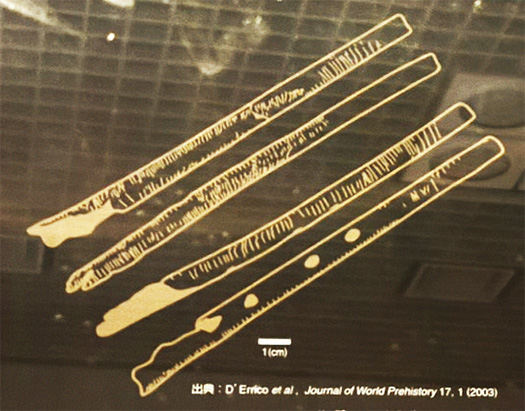
〜ヨーロッパの遺跡からは、鳥の骨製のフルートが多数発見されている。その一部は3方年前より古く、確実な楽器としては世界最古である。音楽は各地のホモ・サピエンス社会に普遍的であり、おそらくアフリカにいた共通祖先の時代からあったのであろう。・・・フランスのイストゥリッツ遺跡から出土した、2方7000~2万年前のフルート。側面には細かな刻み模様がつけられている。(残念ながら実物・複製ではなくイラスト表現だけだったが)〜
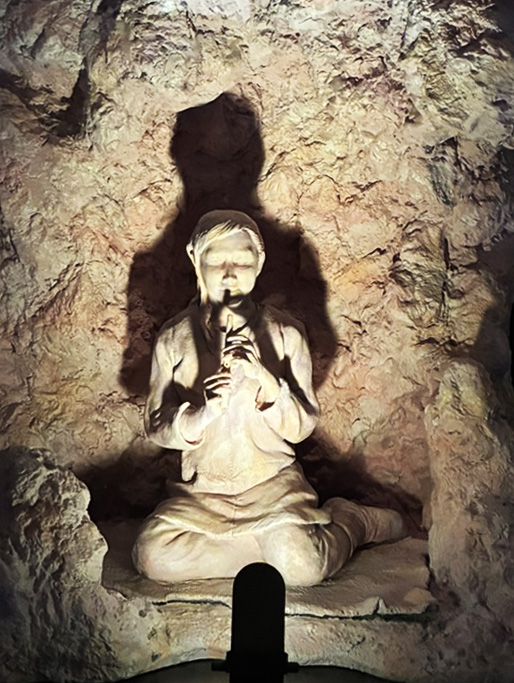
そして洞窟生活のなかでこうした楽器が奏でられて、おそらくは夜の闇の中で多くの先人たちがその音色に聞き入っていただろう情景が復元されていた。洞窟という残響効果の高い空間での演奏。捕獲した動物たちの骨類は夜の洞穴の中で利活用されただろうことがうかがい知れるけれど、そうした作業の合間にその発展形として、このように「音楽文化」が初源されていった状況が可視化されてきている。
そういう文化発展の中から「上手に、ひとのこころを打つ演奏者・音楽家」の才能も磨かれていった事実が浮かび上がってくる。そして旋律が生まれ、詩的な情感が人類の「共通文化領域」として生成された。こうした「伴奏」楽器は、より初源的だと思える「声での訴求/歌」に随伴したことだろう。
そこで「歌い上げられた」脳内的な文化領域は、多くのひとに普遍的な「体験」を呼び覚ますようなテーマだったに違いない。そこからひとびとに「数寄」の領域が覚醒されて音楽・芸術が初源していった。
考古出土品としては楽器しか考えられないけれど、実はその背景にこうした人類的文化性が垣間見えてくる。こういう「様式」文化が世界各地で独自に発展していく・・・。
●お知らせ
拙書「作家と住空間」幻冬舎から電子書籍で発刊
お求めはAmazonで。
https://amzn.asia/d/eUiv9yO
English version⬇
[Universal Culture Since the Dawn of Humanity / Traces of the Roots of Music]
The very origins of “musical instruments,” said to date back 30,000 years. It is only in my later years that I have finally come across this frontier of human history research. I am simply overwhelmed by its richness. …
“Relearning Human History” at the National Museum of Nature and Science. It’s a sense of awakening that I’ve only come to experience now that I’ve reached old age.
It makes me keenly realize just how “spaced out” I’ve been living and how foolish I’ve been. However, in the modern era, such insights into human history have likely been explored both extensively and deeply. The widespread adoption of information devices like personal computers, along with the rapid development of the web as a means of information communication and exchange, are likely driving this “information evolution.”
And now, the practical application of AI is rapidly spreading and is likely to accelerate even further.
The other day, I found myself reflecting on humanity’s fundamental inclination toward “things that are beautiful, even if they serve no practical or edible purpose,” and the exhibition even showcased “the roots of music.” The following is quoted from the explanatory text.
~Numerous flutes made from bird bones have been discovered at archaeological sites across Europe. Some of these date back more than 30,000 years and are the world’s oldest confirmed musical instruments. Music was universal across Homo sapiens societies worldwide and likely existed as far back as the time of our common ancestors in Africa. …A flute excavated from the Isturitz site in France, dating from 27,000 to 20,000 years ago. Its sides are adorned with fine incised patterns. (Unfortunately, it was presented only as an illustration, not the actual artifact or a replica.)~
A scene was recreated depicting how such instruments were played during cave life, with many of our ancestors likely listening intently to their tones in the darkness of night. Performances in caves—spaces with high reverberation. While we can surmise that the bones of hunted animals were put to use within the caves at night, the situation in which “musical culture” emerged as an evolved form during breaks from such tasks is becoming increasingly clear.
From this cultural development, the fact emerges that the talents of “performers and musicians who could skillfully move people’s hearts” were also honed. Melodies were born, and poetic emotions took shape as a “shared cultural realm” for humanity. These “accompaniment” instruments likely accompanied what appears to be an even more primordial form of expression: “vocal expression/song.”
The cultural realm “sung forth” in the mind must have centered on themes that evoked a universal “experience” for many people. From there, the realm of “suki” (aesthetic appreciation) was awakened in people, and music and art took their earliest form.
While musical instruments are the only artifacts we can consider from archaeological excavations, we can actually catch a glimpse of this human cultural essence in the background. This kind of “stylistic” culture developed independently in various parts of the world…
● Announcement
My book, “Writers and Living Spaces,” has been published as an e-book by Gentosha.
Available on Amazon.
共有:

Posted on 7月 25th, 2026 by 三木 奎吾
Filed under: 未分類





コメントを投稿
「※誹謗中傷や、悪意のある書き込み、営利目的などのコメントを防ぐために、投稿された全てのコメントは一時的に保留されますのでご了承ください。」
You must be logged in to post a comment.