
「四百年間のいのちの履歴書」シリーズに復帰であります。
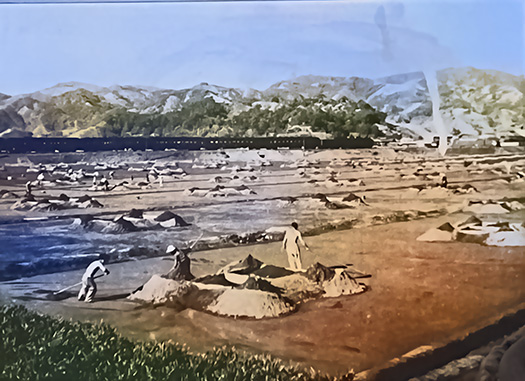
今回の旅路でついに310年以上前に家系の人間が深く関与していた「塩業」の始原の地・竹原を訪れることが出来ました。瀬戸内海に面した風光明媚な海岸線の様子と、そこで生き抜いてきた祖先の
「息づかい」の痕跡が脳内に「ひたひた」と残照してくれていた。
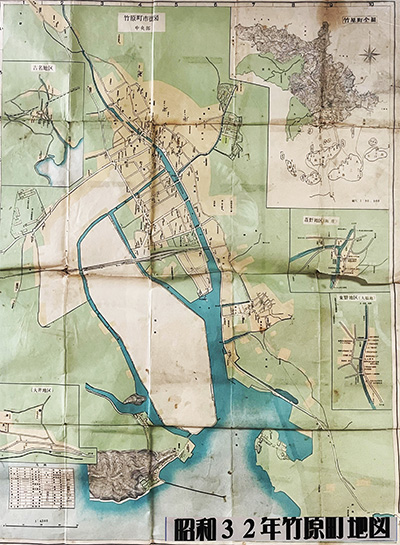
伝承ではこの当時のわが家系は、広島藩から「所務役」という地域経済管理者という立場に任じられていて、広域的にはこの竹原塩田を含む一帯を管理していた。ただし、中核的な「市域」については藩の直轄地域として、担当は外れていたけれど、周辺地域・吉名浜ほかの塩田については直接管理もしていたという記録が残っている。家系の本拠地は入野という、ここから12-3km離れた農村なのだけれど、その農業については家族や家人が労役にあたって、当主はこの管理地域を常時巡視しつつ、年貢の状況を把握することに鋭意務めていた。藩にとっては、もっとも現場的で不可欠な経済根拠を担保するような役割を果たしていたことになる。
そして当然ながら、塩田という、この当時の画期的ニュービジネスについて、その発展可能性から事業実態について把握しコントロールしていたことが見える。
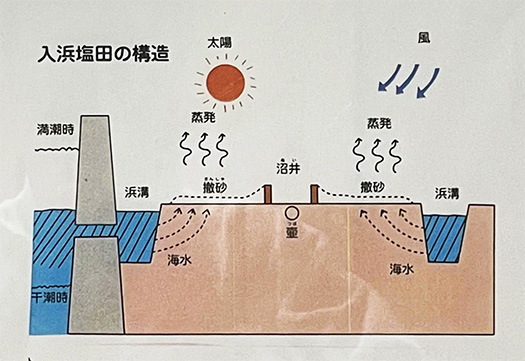
竹原塩田には同じ「浅野藩」で著名な分家藩である播州赤穂藩がある。赤穂浪士の中心人物・大石内蔵助はそもそも塩業の「総元締め」的な家主であったという。全国に先駆けて「入浜式塩田」という江戸期の最先端技術を開発運用して、経済的利益を赤穂藩にもたらしていた。その最先端技術がこの芸州浅野藩領・竹原に移入された。経緯は、赤穂からこの竹原地方まで塩田で不可欠な加熱燃料として、材木を入手するのにこの地を訪れていた船が、当時この地域で米作用の新田土木開発を行っていたところ、「この浜辺では塩気が強すぎて米作には適さないよ。塩田ならば好適だよ」という情報をもたらせたという「事始め」。
わが家系は、そういった江戸期の経済発展のリアルタイムを体感していた。
そして江戸期社会の必然的な政治・経済的破綻の現場に身をさらすことになってそこからの「転身」をこの塩業への転換で果たしていくことになる。江戸期の庶民の「生存戦略」が興味深く発動されていくことになるのだ。
●お知らせ
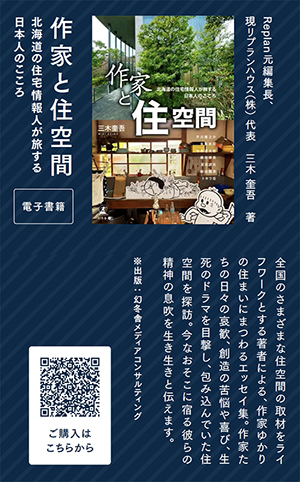
拙書「作家と住空間」幻冬舎から電子書籍で発刊
お求めはAmazonで。
https://amzn.asia/d/eUiv9yO
English version⬇
[A Stroll Through “Takahara Salt Fields”: Recalling Memories on My First Visit]
The greatest “turning point” in my family’s history—gaining an understanding of the structure of the salt industry and its advanced nature, and taking on the role of managing and contributing to it. Takahara is the “birthplace” of that journey. …
I am returning to the “400-Year History of Life” series.
On this journey, I was finally able to visit Takehara—the birthplace of the salt industry, in which members of my family were deeply involved over 310 years ago. The scenery of the picturesque coastline facing the Seto Inland Sea and the traces of the “breath” of my ancestors who survived there
lingered in my mind, slowly and deeply.
According to tradition, at that time, our family was appointed by the Hiroshima Domain to the position of “Somu-yaku” (local economic administrator), and on a broader scale, we managed the entire area including these Takehara salt fields. However, while records indicate that we were not responsible for the core “city area”—which was under the domain’s direct control—we did directly manage the surrounding areas, including the salt fields at Yoshina-hama and elsewhere. Although the family’s main base was in Irino, a farming village some 12–13 km away, the family members and household staff handled the agricultural labor, while the head of the household was constantly patrolling this administrative area and diligently monitoring the status of tax payments. For the domain, this role served to secure the most practical and indispensable economic foundation.
Furthermore, it is evident that they understood and controlled the operational realities of this groundbreaking new business—the salt fields—based on its development potential.
The Takehara Salt Fields were located within the same “Asano Domain” as the renowned branch domain of Banshu Akō. It is said that Ōishi Kuranosuke, the central figure of the Akō rōnin, was originally a landowner who acted as the “overall coordinator” of the salt industry. They pioneered the development and operation of “Irihama-style salt fields”—the cutting-edge technology of the Edo period—bringing economic benefits to the Ako Domain. This cutting-edge technology was then introduced to Takihara, a territory of the Asano Domain of Aki Province. The story began when a ship visiting this area from Akō to obtain timber—an essential fuel for heating the salt fields—noticed that new rice paddies were being developed in the region. The crew reportedly provided the information: “The salt content on this beach is too high for rice cultivation, but it’s ideal for salt fields.”
My family experienced this economic development of the Edo period firsthand.
We then found ourselves exposed to the inevitable political and economic collapse of Edo-period society, and it was through this shift to the salt industry that we achieved our “transformation.” It was a fascinating example of the “survival strategies” employed by the common people of the Edo period.
● Announcement
My book, “Writers and Living Spaces,” has been published as an e-book by Gentosha.
Available on Amazon.
共有:

Posted on 3月 22nd, 2026 by 三木 奎吾
Filed under: 未分類



コメントを投稿
「※誹謗中傷や、悪意のある書き込み、営利目的などのコメントを防ぐために、投稿された全てのコメントは一時的に保留されますのでご了承ください。」
You must be logged in to post a comment.