
ふだんは出張など「ひとり旅」が普通なのですが、夫婦旅ではそれなりに様相が一変。やはり判断基準になる情報がそれぞれあるので、常時「話合い」が必要になる。それなりの楽しさと同時に、自分勝手・風来坊ではあり得ない要因も増えてこざるを得ない。・・・という旅路。
だいたい男は旅といってもボーッと「空」と対話し続けている。
人生ではじめて国を出てその空気感に抱かれたイタリアで、地中海気候の温湿度環境と地形風土の中で生成する「雲の造形」に目を奪われていた記憶がある。「へ〜、こんなの見たことない」。
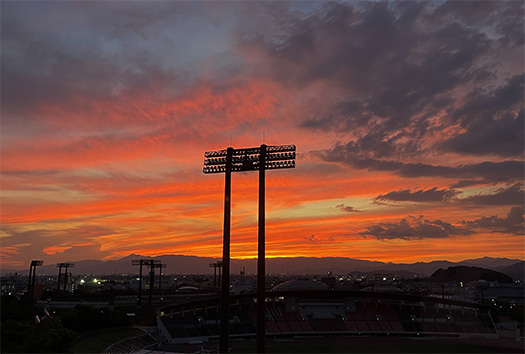
上の写真は岐阜で泊まっているホテルから。どうも方角的に伊吹山〜関ヶ原方面のようです。視界の前に広がっている「サッカー場」越しに「西方浄土」もかくやと思わせられる夕景。
人類は毎日の終わりにこういう夕焼けの光景を体験し続けてきた。太陽は毎日西に沈んでいく様子と対面し続けた。その経験に踏まえて人類は宗教思想としても昇華させてきたと確信する。逆に言えば宗教は「西方浄土」というキャッチフレーズでその人類共有体験を深く想起させて強い「納得感」を訴求したのだろう。
それをさらに加速させたのが、宗教者たちの「遍路」だったかも。
旅に生きることは、人間の観念をより純粋化させるような効果があるのだろう。
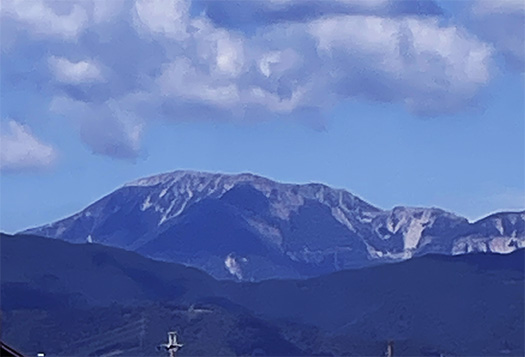
そういう視覚体験では同時に「山」というものも印象的だった。とくに日本列島では「山岳宗教」的なバイアスが色濃い。島国列島では富士山など特異な視覚体験の山岳が人間意識に深く投影してきたことが間違いない。わたし的にはこの写真の伊吹山に強い印象がある。さざれ石の産地として日本中の神社には展示の一角が設けられている。日頃、わたしも北海道神宮で参観する機会が多い。
日本史はこの山のふもと地域で3回、世を決する戦いを重ねてきた。東西決戦の地。
今回の旅でも岐阜の宿から遠くない関ヶ原にも足を向けてみた。2020年新築完成という「関ケ原古戦場記念館」も参観。最新デジタル機器活用による展示で人気とか。たしかに「わかりやすく」というテーマ性は伝わってきた。歴史数寄からすると、あまりにも単純化しすぎとも思えたけれど・・・。
あちこち行脚の旅が重なってきて、それら情報の「整理整頓」希望が強くなってくる。いくつかの旅路を重ねながら、本日ようやく札幌に帰還予定。ふ〜む。
●お知らせ
拙書「作家と住空間」幻冬舎から電子書籍で発刊
お求めはAmazonで。
https://amzn.asia/d/eUiv9yO
English version⬇
【Sky Along the Journey in Gifu & Mt. Ibuki】
A distant ideal world beyond the sunset. The layered visual experiences of the Japanese archipelago’s inhabitants culminate in the Buddhist concept of the “Western Pure Land.” The nation’s unique landforms and mountains, shaped by distinctive processes, also…
Usually, I travel alone for business trips and such, but when traveling as a couple, things change quite a bit. Since each person has their own criteria for decision-making, constant discussion becomes necessary. Alongside its own kind of enjoyment, factors that make selfishness or recklessness impossible inevitably increase. That’s the nature of this journey.
Generally, even when traveling, men tend to just space out, continuing their silent conversation with the sky.
I recall being utterly captivated by the “cloud formations” created by the Mediterranean climate’s warmth and humidity, along with the terrain and local conditions, during my first trip abroad to Italy, where I was embraced by that country’s unique atmosphere. “Wow, I’ve never seen anything like this.”
The photo above is from the hotel where I’m staying in Gifu. Judging by the direction, it seems to be towards Mount Ibuki and Sekigahara. A sunset view stretching beyond the “soccer field” in front of me, making me think, “Could this be the Western Paradise?”
Humanity has continued to experience such sunset scenes at the end of each day. We have continually faced the sun setting in the west each day. I am convinced that based on this experience, humanity has sublimated it into religious thought. Conversely, religion likely appealed to a deep sense of conviction by evoking this shared human experience through the catchphrase “Western Pure Land.”
What may have further accelerated this was the “pilgrimage” undertaken by religious practitioners.
Living through travel seems to have the effect of purifying human concepts.
In such visual experiences, the concept of “mountains” itself must have been equally striking. Particularly within Japanese society, a strong “mountain-based religion” bias persists. There’s no doubt that in this island nation, mountains like Mount Fuji, offering unique visual experiences, have been deeply imprinted on human consciousness. Personally, Mount Ibuki in this photograph leaves a strong impression on me. As the source of the sacred pebbles, shrines across Japan have dedicated sections to honor it. I often participate in ceremonies at Hokkaido Jingu Shrine.
Japanese history saw three decisive battles fought at the foot of this mountain. It was the site of the decisive battle between East and West.
On this trip, I also visited Sekigahara, not far from my lodging in Gifu. I toured the “Sekigahara Battlefield Memorial Museum,” newly completed in 2020. It seems popular for its exhibits utilizing the latest digital technology. Indeed, the theme of “making it easy to understand” came across clearly. Though, from a historical enthusiast’s perspective, it felt perhaps overly simplified…
With multiple pilgrimage-like journeys piling up, the desire to “organize and tidy up” all this information grows stronger. Today, after overlapping several more legs of the journey, I finally plan to return to Sapporo. Hmm.
●Notice
My book “Writers and Living Spaces” published as an e-book by Gentosha
Available on Amazon.
共有:

Posted on 9月 4th, 2025 by 三木 奎吾
Filed under: 出張&旅先にて




コメントを投稿
「※誹謗中傷や、悪意のある書き込み、営利目的などのコメントを防ぐために、投稿された全てのコメントは一時的に保留されますのでご了承ください。」
You must be logged in to post a comment.