
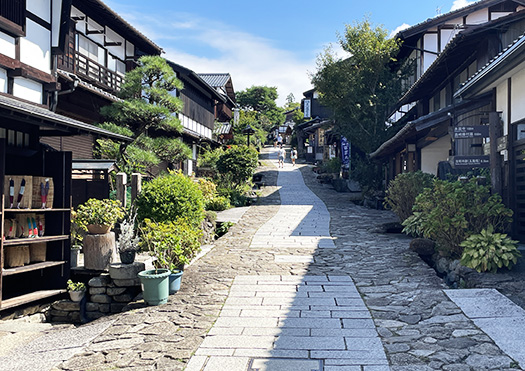
写真は昨日行脚していた岐阜県の「馬籠宿」の様子。しずかに心理が沈殿しながら、いわば「心の旅」を求めている日本人。そして馬籠宿からさらに妻籠宿までの7kmの道を歩いて「カラダに体感する旅」を志向する欧米人たち。その他、・・・というような観光状況だったように思います。
わたし的には、ある建物でその家の方とすっかり話し込んでしまって、台所の様子までご案内いただき「家宝」についての踏み込んだお話しまでさせていただいていました。
やはりその地域のみなさんから、お話を伺うことでその地域の人文の「緒〜いとぐち」が明確に認識できることがいちばん興味深い。馬籠宿については、あんまり事前知識が無く訪問していましたが、地元の方からの肉体化された情報から、生々しいリアリティを受け取らせていただいた。やはりそういった情報は「そこに行ってはじめてわかる」情報なのだと思います。場合によっては、旅から帰ってから、なにごとか、現実にそのことが反映していくこともあり得る。そういう「期待感」も発生する。
で、最近はとくにその地域に伺うと大量の「アナログ」資料類が「展示」されて、しかもそれらについて情報保護の方針が多数派になっています。その「趣旨」自体はまったく同意できるのですが、一方でそうするとデジタル時代的には、情報の自由を阻害しているとも思える。
その現地でアナログ的に受容し理解する以外の、現代的な方策を全拒否している。
その場でしか「体感」できない空間体験情報は当然あるのだけれど、たとえば文字文化としてすでに公開されている情報の内容について、このAI・デジタル対応が求められる時代に不適応なのではないか。
どうもこのあたりの情報の取扱の中身についての「論議」が不十分だと思える。一方でChatGPTなどは、どういった経緯ですべての言語情報を「収集」しているのか「不明」のまま、場合によっては不正な方法であったとしてもそのことは解明されず、事実上すべての言語文化を全包含することが常識化している。しかし一方で人間個人はそのことに関与することは不法とされる。一種の理不尽。
情報倫理にについて今後の世界は、どういう方向に進んで行くのだろうか?
●お知らせ
拙書「作家と住空間」幻冬舎から電子書籍で発刊
お求めはAmazonで。
https://amzn.asia/d/eUiv9yO
English version⬇
【What is Expected of “History and Culture” Information in the Digital Revolution Era?】
Massive amounts of analog information at tourist spots. Forcing visitors to “read it here.” Impossible for tourists and visitors. What is Japan’s unique digital evolution? …
The photo shows the scene at Magome-juku in Gifu Prefecture, where I was traveling yesterday. Japanese people seeking a kind of “journey of the heart,” where their minds settle quietly. And Westerners aiming for a “journey experienced physically,” walking the 7km path from Magome-juku to Tsumago-juku. Other than that… I think that was the general tourist situation.
Personally, I got completely engrossed in conversation with the owner of one house, who even showed me around the kitchen and shared deeply personal stories about their family heirlooms.
What’s truly fascinating is how talking to local people reveals the clearest threads of a region’s human history. I visited Magome-juku with little prior knowledge, but the embodied information from locals gave me a vivid, raw sense of reality. I believe such information is truly something you can only grasp by going there yourself. Sometimes, after returning from a trip, something might actually reflect that experience in reality. That kind of anticipation also arises.
Recently, especially when visiting such areas, I often find vast amounts of “analog” materials “displayed,” and policies prioritizing information protection are becoming the norm. While I fully agree with the underlying intent, it also feels like it hinders the freedom of information in the digital age.
It seems to reject all modern approaches beyond analog reception and understanding at the site itself.
While there is certainly spatial experiential information that can only be “experienced” on-site, isn’t this approach maladaptive in an era demanding AI and digital solutions, especially for information already publicly available as written culture?
It feels like the “discussion” surrounding the substance of how this information is handled is insufficient. Meanwhile, tools like ChatGPT operate under a shroud of mystery regarding how they “collect” all linguistic information. Even if obtained through questionable means, this remains unexamined, and their de facto inclusion of virtually all linguistic cultures has become commonplace. Yet individual humans engaging in similar collection is deemed illegal. It feels fundamentally unjust.
Where will the world head regarding information ethics?
●Notice
My book “Writers and Living Spaces” published as an e-book by Gentosha
Available on Amazon.
共有:

Posted on 9月 3rd, 2025 by 三木 奎吾
Filed under: 出張&旅先にて




コメントを投稿
「※誹謗中傷や、悪意のある書き込み、営利目的などのコメントを防ぐために、投稿された全てのコメントは一時的に保留されますのでご了承ください。」
You must be logged in to post a comment.