
昨日は江戸中期ころ1790年ころから明治初期までのわたしの家系の故地、広島県福山市今津での「交流史」の断片を古文書記録で確認したのですが、やはりこういった家系史は、一般的な日本史の英雄豪傑譚ではない庶民の生き様の実相が、深めるほどにジワジワくるよろこびがあって楽しい。きのうも近所に住む次兄といろいろ調査活動の進展を相談していて、どんどん深まる先人の「人生足跡」で情報交換であります。しかしこういう一族の活動の嚆矢は、1790年頃の当主である先祖が残してくれた「先祖探査」の記録巻物が起点。重厚な現地調査で、一統の流れを巻物文学としてまとめてくれたことに、深く導かれている。遠い父性を感じる。
わたしはこういう探索を進めるのに各地域で発行されてきている「地域史」などを基本にしてを同時にAIを活用してきていますが、そういった手法を数年以上行ってきて、AIの側でも変化の反応が見られてきて、日本の各地域の地域史がさかんにアメリカから買い求められてきているそうです。全国の「古書店」などに定期的に注文が入ってきているとのこと。
最新の文化領域としてのAIがこういう「需要」を取り込みつつあるのでしょうか。興味深い。こういうAIの進化に対して、主体性としての人間力が試されてきているのかも知れません。いつまでも戦国・幕末の英雄ものばかりでは所詮、限界があるでしょう。
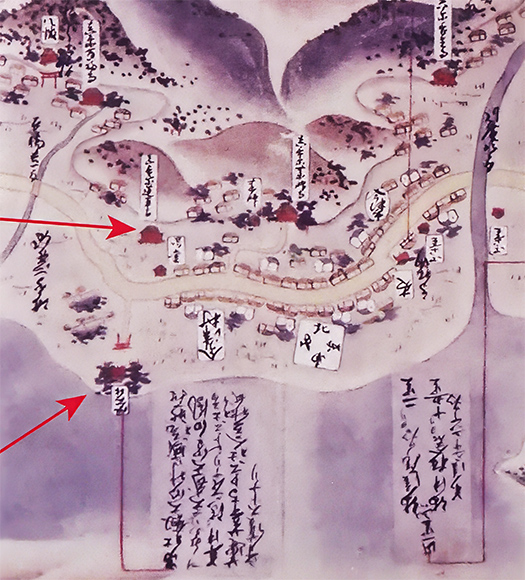
本日の図はわが家系の故地・今津のもの。縁のある寺院・蓮華寺の冊子からの絵図。
江戸期にはわが家系は山陽道の宿駅であったこの今津の地が本拠地。この今津宿の参勤交代大名たちが宿泊する「本陣・脇本陣」の経営実態に深く関与した商家だった。この絵図はその後、明治維新の主体になっていく萩藩主の参勤交代の様子を記録させた絵図。
上下2つの矢印がありますが、上は蓮華寺で、下はその住職が管理していた神社「剣大明神」。
わたしたち戦後生まれ人間にしてみると神仏は分離した存在という認識ですが、それは明治維新の動乱の結果として植え付けられた認識であって、むしろ日本の文化伝統としては神仏習合意識の方がながい歴史的とらえ方。地域の、さらに血脈の「歴史」を掘り起こすことで、庶民感覚が復元を見せてくる一断面かと。
●お知らせ
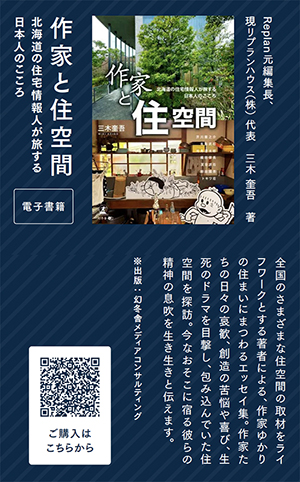
拙書「作家と住空間」幻冬舎から電子書籍で発刊
お求めはAmazonで。
https://amzn.asia/d/eUiv9yO
English version⬇
[The “Travel Map” of the Sankin-Kotai Journey by the Lord of the Hagi Domain, from His Former Residence in Imazu, Fukuyama City]
When you trace the course of Japanese history from the perspective of ordinary people’s daily lives, interesting insights emerge. The true nature of the syncretism of Shinto and Buddhism…
Yesterday, I verified fragments of the “history of interactions” in Imazu, Fukuyama City, Hiroshima Prefecture—the ancestral home of my family from around 1790 (the mid-Edo period) through the early Meiji era—using historical documents. As always, this kind of family history—which reveals the true lives of ordinary people rather than the tales of heroes and great figures found in general Japanese history—brings a quiet, gradual joy that grows the deeper I delve into it. Yesterday, I was also discussing the progress of our research activities with my second older brother, who lives nearby, and we exchanged information on the “footprints of life” left by our ancestors, which are becoming increasingly clear. However, the starting point for these family research efforts is a scroll containing records of “ancestral research” left behind by our ancestor, the head of the family around 1790. I feel deeply guided by the fact that he compiled the lineage’s history into scroll literature through meticulous field research. I sense a distant paternal presence.
In pursuing this kind of research, I’ve been using “local histories” published in various regions as a foundation while simultaneously utilizing AI. Having employed this approach for several years now, I’ve begun to see signs of change on the AI side as well; apparently, local histories from various regions of Japan are being actively purchased from the United States. I’ve heard that orders are coming in regularly to “used bookstores” nationwide.
Is AI, as the latest cultural frontier, beginning to capture this kind of “demand”? It’s fascinating. Perhaps the human capacity for autonomy is being put to the test in the face of such AI evolution. After all, there are limits to focusing solely on stories of heroes from the Warring States and Bakumatsu periods forever.
Today’s illustration is of Imazu, the ancestral home of my family. It is a map taken from a booklet published by Renge-ji Temple, with which my family has ties.
During the Edo period, my family’s base was here in Imazu, which served as a post station on the Sanyo Road. Our family was a merchant house deeply involved in the day-to-day management of the “Honjin” and “Waki-honjin”—the lodgings where daimyo on their sankin-kōtai journeys stayed in Imazu-juku. This map was commissioned to record the sankin-kōtai journey of the lord of the Hagi Domain, who would later become a key figure in the Meiji Restoration.
There are two arrows, one pointing up and one down. The upper arrow points to Renge-ji Temple, and the lower one points to the “Ken Daimyōjin” shrine, which was managed by the temple’s head priest.
For those of us born after the war, the perception is that Shinto and Buddhism are separate entities; however, this perception was instilled as a result of the upheavals of the Meiji Restoration. In fact, within Japanese cultural tradition, the concept of Shinto-Buddhist syncretism represents a longer-standing historical perspective. By unearthing the “history” of the region—and even of one’s own bloodline—we may be able to glimpse a facet of the common people’s sensibilities being restored.
● Announcement
My book, *Writers and Living Spaces*, has been published as an e-book by Gentosha.
Available on Amazon.
共有:

Posted on 10月 21st, 2026 by 三木 奎吾
Filed under: 未分類




コメントを投稿
「※誹謗中傷や、悪意のある書き込み、営利目的などのコメントを防ぐために、投稿された全てのコメントは一時的に保留されますのでご了承ください。」
You must be logged in to post a comment.