

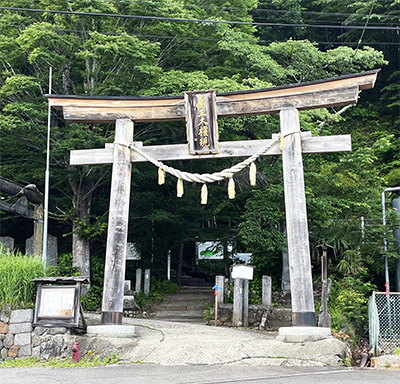
さて、加齢とともに神社への参拝が毎日の日課になって来ているわたしですが、生来の不勉強で毎日眺める「狛犬」さんたちについて、調べるということは怠り続けていた。ただたぶんスフィンクス以来の人類的な造形資産ではあるだろうとボーッと考えては来ていた。
そんな脳天気ぶりに一撃をいただいたのが先日参拝の蔵王刈田嶺神社。解説板より以下引用。
〜<蔵王刈田嶺神社の狛犬たち>
狛犬は神社の参道や社殿前などに配される御神体を守護する神獣像。口を開き立派なたてがみを持つ『獅子』と、口を閉じ頭頂に角を持つ『狛犬』の2体で一対を成す(狛犬の角は省略されることも多い)。もとは御所の守護像として用いられるものだが、やがて神社で用いられ、参道に配置されるようになる。狛犬が全国に普及するのは江戸時代以降のこと。
狛犬は作られた時代や地域、願主(依頼人)や石工(作者)の事情などによってさまざまな形態がある。蔵王刈田嶺神社には特徴の異なる3対の狛犬がある。この神社が長きに渡って人々に信仰されてきたことの表れであり、また、この地域の狛犬文化の流れを把握できる貴重な事例。以下、この神社の狛犬の分類的特徴を示す。
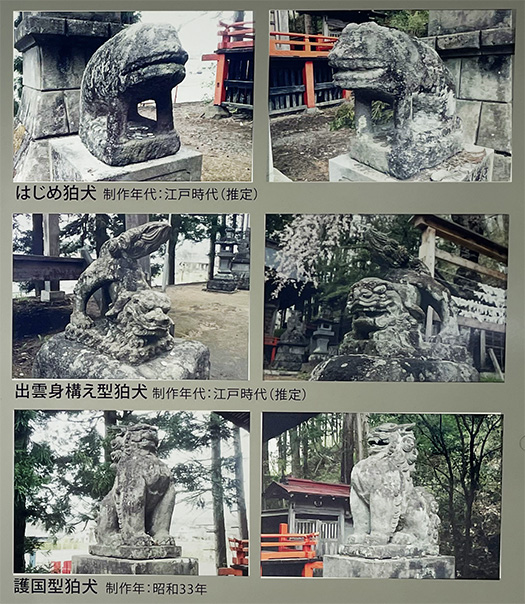
●はじめ狛犬
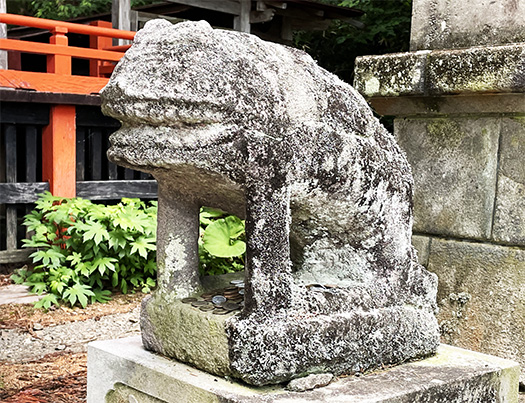
江戸時代、まだ狛犬が一般的でなかった時期に作られたもの。立体感に乏しい単純な造形で、まるでカエルのように見える。石工や願主が本格的な狛犬を知らず、限られた伝聞情報を頼りに作られたものと考えられる。
●出雲身構え型狛犬
尻を高く持ち上げ、今にも飛び掛からんばかりの姿をした狛犬で、各部の造形は立体的で精密。出雲地方に産する来待石を素材として江戸~大正期に大量に作られ、主に北前船によって全国に流通した。
●護国型狛犬
四肢が太く勇ましく胸を張った威風堂々たる狛犬。昭和10年代(太平洋戦争期)に大流行し、全国各地の神社に奉納された。蔵王刈田嶺神社のものは戦後の作ですが、願主の求める姿形がこのタイプだったと推定。〜〜
・・・ということでしたが、わたしは「はじめ狛犬」の素朴さに圧倒的に撃沈されていた。なによりもっとも単純なカタチであるのに、ちゃんと「賽銭集め」という機能性では最大効果を発揮している。具体的なおカネの種類が目視確認できて、「あ、これくらい出せばいいかなぁ」と見積認識できる(笑)。相場感まるわかり。ユーザーの可処分所得と神社経営とのバランス感覚がすばらしいのではないかと。
まぁわたしとしてはあくまで「個人情報」を秘して、社殿の賽銭箱に投入しておりましたが(笑)。
●お知らせ
拙書「作家と住空間」幻冬舎から電子書籍で発刊
お求めはAmazonで。
https://amzn.asia/d/eUiv9yO
English version⬇
[The Evolution of Komainu Designs / Learned at Zao Kariyamine Shrine]
A wonderfully “informative” information board on the shrine grounds. The religious insights here—where divine will and human will intersect—resonate so deeply that I find myself leaning forward, eager to learn more. …
Now, as I’ve gotten older, visiting shrines has become a daily routine for me, but due to my innate lack of knowledge, I’ve consistently neglected to look into the “komainu” statues I gaze at every day. I had just vaguely thought to myself that they were probably one of humanity’s greatest sculptural achievements since the Sphinx.
That carefree attitude of mine was dealt a blow by the following quote from an information board at Zao Kariyamine Shrine, which I visited the other day.
~
Komainu are statues of divine beasts placed along shrine approach paths and in front of main halls to guard the divine objects enshrined there. A pair consists of a “lion” with an open mouth and a magnificent mane, and a “komainu” with a closed mouth and horns on the top of its head (the horns of the komainu are often omitted). Originally used as guardian figures for the imperial palace, they eventually came to be used at shrines and placed along approach paths. Komainu became widespread throughout Japan from the Edo period onward.
Komainu come in various forms depending on the era and region in which they were created, as well as the circumstances of the patron (commissioner) and the stonemason (artist). Zao Kariyamine Shrine houses three pairs of komainu, each with distinct characteristics. This reflects the long history of devotion to this shrine and serves as a valuable example for understanding the evolution of komainu culture in this region. The following outlines the classificatory characteristics of the komainu at this shrine.
●Early Komainu
Created during the Edo period, when komainu were not yet common. Its simple form lacks three-dimensionality, making it look almost like a frog. It is believed to have been crafted by stonemasons or donors who were unfamiliar with authentic komainu and relied solely on limited hearsay.
●Izumo “Ready to Attack” Style Komainu
These komainu have their hindquarters raised high, appearing as if they are about to pounce at any moment; the sculpting of each part is three-dimensional and precise. Made from Kuramachi stone sourced from the Izumo region, they were produced in large quantities from the Edo to the Taisho periods and distributed nationwide primarily via Kitamae ships.
● Gokoku-style Komainu
These majestic komainu have thick limbs and stand with their chests puffed out in a bold, dignified posture. They became extremely popular during the Showa 10s (the Pacific War era) and were dedicated to shrines throughout the country. Although the ones at Zao Kariyama Shrine were made after the war, it is presumed that this was the style requested by the donor. ~~
…That was the story, but I was completely blown away by the simplicity of the “Hajime Komainu.” Above all, despite its extremely simple form, it maximizes its functionality as a “coin collector.” You can visually confirm the specific denominations of the coins, allowing you to estimate, “Oh, I guess this much should be enough” (laughs). It gives you a perfect sense of the going rate. I think the balance between users’ disposable income and the shrine’s financial management is simply brilliant.
Well, for my part, I made sure to keep my “personal information” private and dropped my offering into the shrine’s donation box (lol).
● Announcement
My book, *Writers and Living Spaces*, has been published as an e-book by Gentosha.
Available on Amazon.
共有:

Posted on 6月 25th, 2026 by 三木 奎吾
Filed under: 未分類




コメントを投稿
「※誹謗中傷や、悪意のある書き込み、営利目的などのコメントを防ぐために、投稿された全てのコメントは一時的に保留されますのでご了承ください。」
You must be logged in to post a comment.