
さて集中的な取材行脚は、その写真整理になんとかメドがついてきて、今度は分析・学習の段階にようやくなってきています。今回の旅路は「九州をも全周する」ことがメイン目標だったのでまだ未踏破に近かった佐賀県と大分県が主たる目標で、鹿児島県は「一回行ってるし」ということで、カミさんに探訪先はまったくの一任でした。
しかし、現地で「これは・・・」と唸らされ、さらに写真整理を進めるに連れて、さらなる興奮的な盛り上がりになって来ています。薩摩藩が幕末期に取り組んでいたという「集成館事業」というものを少し知らされ、そのスピリッツが北海道開拓のグランドデザインに息づいているのだと、この年齢になって初めて知らされた思い。己の至らなさに心底驚かされ、遅ればせながら、薩摩と蝦夷地・北海道の「DNA」のつながりを強く意識させられた。以下、集成館事業についての解説より。
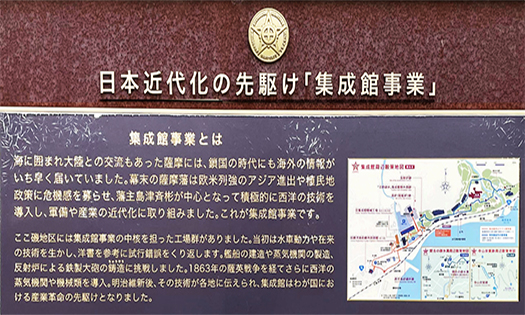
〜集成館事業とは
海に囲まれ大陸との交流もあった薩摩には、鎖国時代にも海外の情報がいち早く届いていた。幕末の薩摩藩は欧米列強のアジア進出や植民地政策に危機感を募らせ、島津斉形が中心となって積極的に西洋の技術を導入し、街や産業の近代化に取り組んだ。これが集成館事業。
ここ磯地区には集成館事業の中核を担った工場群がありました。当初は水車動力や在来の技術を生かし、洋書を参考に旅行錯誤をくり返す。船舶の建造や蒸気機関の製造、反射炉による鉄製大砲の鋳造に挑戦。1863年の薩英戦争を経てさらに西洋の蒸気換関や機械類を導入、明治維新後、その技術が各地に伝えられ、集成館はわが国における産業革命の先駆けとなった。
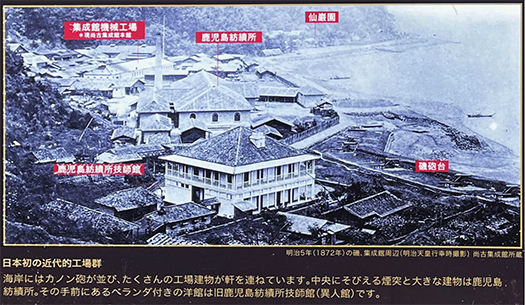
日本初の近代的工場群
海岸にはカノン砲が並び、たくさんの工場建物が軒を連ねる。中央にそびえる煙突と大きな建物は鹿児島紡績所。その手前にあるベランダ付きの洋館は旧鹿児島紡績所技師館(異人館)。〜
さらに、薩摩藩出身の第2代内閣総理大臣・開拓使長官・黒田清隆は札幌創成川に東側に麦酒醸造所、製糸場などを集めた工場群を築いた。これは集成館事業をモデルにしたと考えられている。また、北海道開拓に取り組んだ屯田兵は西南戦争では政府軍として遠征してもいる。・・・
ということで、こうした「現地学習」で激しくこころが揺れ動かされていた次第。
●お知らせ
拙書「作家と住空間」幻冬舎から電子書籍で発刊
お求めはAmazonで。
https://amzn.asia/d/eUiv9yO
English version⬇
[That DNA Lives On in Hokkaido: Learning About the Shimazu Clan’s “Shuseikan Project”]
I had merely passed through Kagoshima. This time, I learned for the first time about the outline of this brilliant project undertaken by Satsuma during the late Edo period. The military settlers in Hokkaido were educated and guided by it, and even fought in battles alongside it. …
Now that I’ve finally made some headway in organizing the photos from my intensive reporting trip, I’m finally moving on to the analysis and learning phase. Since the main goal of this trip was to “travel all the way around Kyushu,” my primary targets were Saga and Oita Prefectures—areas I’d barely visited before. As for Kagoshima Prefecture, I figured, “I’ve been there once already,” so I left the choice of destinations entirely up to my wife.
However, once I was on the ground and found myself thinking, “This is…,” and as I continued sorting through the photos, my excitement has only grown. I learned a little about the “Shuseikan Project,” an initiative undertaken by the Satsuma Domain during the late Edo period, and it felt as though I was discovering for the first time at my age that its spirit lives on in the grand design for the development of Hokkaido. I was deeply shocked by my own ignorance, and—better late than never—I became keenly aware of the connection between the “DNA” of Satsuma and that of Ezo (Hokkaido). The following is an excerpt from an explanation of the Shuseikan Project.
~What Is the Shuseikan Project?
Surrounded by the sea and having had exchanges with the continent, Satsuma received information from overseas quickly even during the era of national isolation. Toward the end of the Edo period, the Satsuma Domain grew increasingly concerned about the expansion of Western powers into Asia and their colonial policies. Led by Shimazu Naokata, the domain actively introduced Western technology and worked to modernize its cities and industries. This was the Shuseikan Project.
Here in the Iso district, there was a cluster of factories that served as the core of the Shuseikan Project. Initially, they utilized waterwheel power and traditional techniques, learning through trial and error while referencing Western books. They took on the challenges of shipbuilding, steam engine manufacturing, and casting large iron cannons using a reverberatory furnace. Following the Satsuma-British War of 1863, they introduced even more Western steam engines and machinery. After the Meiji Restoration, these technologies spread throughout the country, and the Shuseikan became a pioneer of the Industrial Revolution in Japan.
Japan’s First Modern Industrial Complex
Cannons line the coast, and numerous factory buildings stand side by side. The large building with a chimney towering in the center is the Kagoshima Spinning Mill. The Western-style building with a veranda in front of it is the former Kagoshima Spinning Mill Engineers’ Quarters (Ijinkan). ~
Furthermore, Kiyotaka Kuroda—the second Prime Minister of Japan and Commissioner-General of the Hokkaido Development Commission, who hailed from the Satsuma Domain—established a cluster of factories on the east bank of the Sosei River in Sapporo, including a brewery and a silk mill. This is believed to have been modeled after the Seishukan project. Additionally, the Tonden soldiers who worked on the development of Hokkaido also served as government troops during the Satsuma Rebellion. …
As such, my heart was deeply stirred by this “on-site learning” experience.
● Announcement
My book, *Writers and Living Spaces*, has been published as an e-book by Gentosha.
Available on Amazon.
共有:

Posted on 6月 22nd, 2026 by 三木 奎吾
Filed under: 未分類




コメントを投稿
「※誹謗中傷や、悪意のある書き込み、営利目的などのコメントを防ぐために、投稿された全てのコメントは一時的に保留されますのでご了承ください。」
You must be logged in to post a comment.