
先日の仙台行きの帰路、長かった会議と視察から脳味噌を小休止させたいとのブラブラ。
まぁ、そんな配慮はしなくても脳味噌は完全休止状態なのかも知れませんが(笑)一応疲れもあったので、巌美渓やこの蔵王などの自然造形の場所を彷徨いたくなっておりました。蔵王というのは、北海道人はあんまり馴染みはありませんが、東北中央にあっては一種の「神の領域」的な地域信仰の場なのでしょう。
本当は遠刈田温泉の「神の湯」のじっと熱さに耐えるしかない湯に浸かって、呆然とするのが主な目的の道行き。午後には飛行機で札幌に帰還する予定だったので、その前にちょっと「どうだったかなぁ」とクルマを走らせ、蔵王の山頂付近を拝んでみようとしたのです。たしか以前にも一度向かった記憶があり、その「消去された風景印象」を追体験して見たかった次第。
しかし、思った以上にクネクネの急坂道・急カーブの連続。対向車とのすれ違いに厳重注意の難所続き。「おっとっと」とこちら側車線にツッコミ気味の対向車も多数あって気がまったく抜けない。
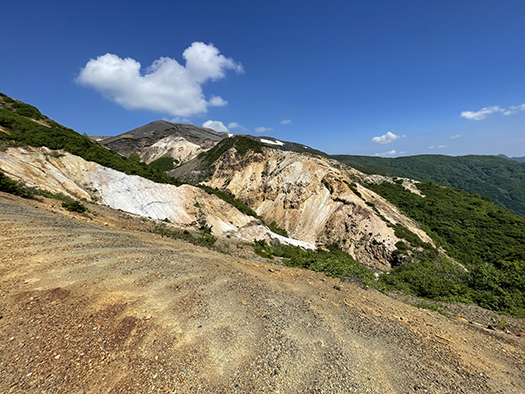
で、まだ奥には蔵王山神社があるけれど、高齢ドライバーにはもう限界ということで停まった噴火口。場所の名は賽の磧(さいのかわら)ということになるのかどうか、通りすがりの旅人なので不明。ですが、噴火口はまことに「大自然」そのものの迫力で、わが身の小ささを叩き込まれるような思いで過ごしておりました。
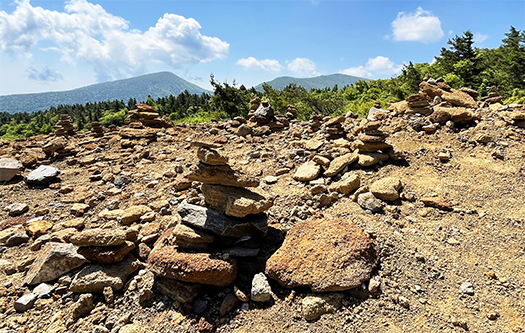
で、その噴火口を見晴らす場所の山道脇に、ふと見ると「賽の河原」の光景が少々。
親より先に亡くなった子どもが行くと言われる冥途の三途の川のほとりにある河原。子どもたちが父母供養のために小石を積み上げて塔を作ろうとするが、完成する前に鬼が来て崩してしまうという仏教地蔵信仰。
150年程度の歴史積層しかない北海道では、まんま「地獄谷」というのが噴火口の代表地点ですが、さすがに蔵王にはこういう光景がマッチしているのでしょうか。つい手を合わさせていただいていた。
まぁわたしはすでに父母を順序通り送らせていただき、振り向けば自分がNEXTになってきているので、賽の河原というのは本来違うのでしょうが・・・。しかしたくさんの先人がこうした石積みに託しただろう「思い」には自然と手が合わさってしまいます。合わさる、という他力「温顔」的な道産子的表現の方が適切か。
●お知らせ
拙書「作家と住空間」幻冬舎から電子書籍で発刊
お求めはAmazonで。
https://amzn.asia/d/eUiv9yO
English version⬇
[The Psychology Behind Stacking Stones at “Sai no Kawara” on the Summit of Mount Zao]
As a traveler, I was unaware of Mount Zao’s reputation as a “sacred site,” but the human desire to stack stones around the crater—which is likened to a cauldron of hell—in the hope of erecting at least a “memorial for one’s parents”…
On my way back from Sendai the other day, I felt like taking a leisurely stroll to give my brain a little break after a long series of meetings and site visits.
Well, my brain might have been in complete shutdown mode even without that (lol), but since I was actually feeling a bit tired, I found myself wanting to wander around places with natural formations like the Iwami Gorge and this Zao area. Zao isn’t a place Hokkaido locals are very familiar with, but in central Tohoku, it’s probably a sort of “sacred realm”—a site of local religious veneration.
My main purpose for the trip was actually to soak in the “God’s Hot Spring” at Togatta Onsen, where you have no choice but to endure the intense heat and just zone out. Since I was scheduled to fly back to Sapporo in the afternoon, I decided to drive up to the vicinity of Mount Zao beforehand, just to see what it was like and pay my respects. I distinctly remember having gone there once before, and I wanted to relive that “erased impression of the landscape.”
However, the road was a continuous series of winding, steep inclines and sharp curves—far more so than I had anticipated. It was one perilous stretch after another, requiring extreme caution when passing oncoming traffic. There were also numerous oncoming cars that veered slightly into my lane with a “Whoops!”—so I couldn’t let my guard down for a moment.
So, although Zao Shrine lies further ahead, I stopped at a crater, deciding that this was the limit for an elderly driver. I’m not sure if the name of this place is “Sainokawara” or not—I’m just a passing traveler, after all. But the crater possessed the sheer power of “Mother Nature” itself, and I spent my time there feeling my own insignificance driven home.
Then, as I looked around the mountain path overlooking that crater, I caught a glimpse of a scene that reminded me a bit of “Sainokawara.”
It’s a riverbank on the banks of the Sanzu River—the river of the afterlife—where children who died before their parents are said to go. It’s a Buddhist Jizo belief that children try to build towers by piling up small stones to honor their parents, but before they can finish, a demon comes and knocks them down.
In Hokkaido, with only about 150 years of history, “Hell Valley” is the quintessential volcanic crater site, but perhaps this scene is actually a better fit for Mount Zao. I found myself instinctively folding my hands in prayer.
Well, since I’ve already seen my parents off in the proper order and am now the “next” in line, “Sai no Kawara” isn’t really meant for me… Yet, when I think of the “feelings” that countless predecessors must have entrusted to these stone piles, my hands naturally come together in prayer. Or perhaps the Hokkaido-style expression “warm-faced” (a sense of being supported by others) is more appropriate.
● Announcement
My book, “Writers and Living Spaces,” has been published as an e-book by Gentosha.
Available on Amazon.
共有:

Posted on 6月 16th, 2026 by 三木 奎吾
Filed under: 未分類



コメントを投稿
「※誹謗中傷や、悪意のある書き込み、営利目的などのコメントを防ぐために、投稿された全てのコメントは一時的に保留されますのでご了承ください。」
You must be logged in to post a comment.