

ひとりだけであちこち「探訪」主体の行脚を重ねるときは、高齢化とともに早寝早起きスタイルに適合でき、主目的に完全にアジャストする「寝られればどこでも」がわたしの選択基準。
一方で夫婦での旅では、宿泊先選択はカミさんの専権事項。わたしはボーッとして従順に隷属。
今回は旭川駅直結のAEONモールの上階のホテル選択でした。
で、はじめて宿泊したのでそこにたどり着く「道順」はまったくわからなかった。とくに市の中心そのものの駅直結ということなのでそこに到達してからでなければ、事前では説明会話はほぼムダ。たぶん1回行ってみなければわからないのだろうなと思っていましたが、まさにその通り。逆に1回たどり着くとその便利性は、チョーわかりやすかった。体感と表現の乖離とでも言えるのかなぁ。
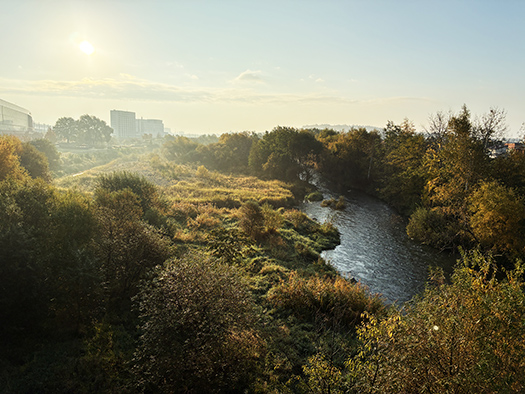
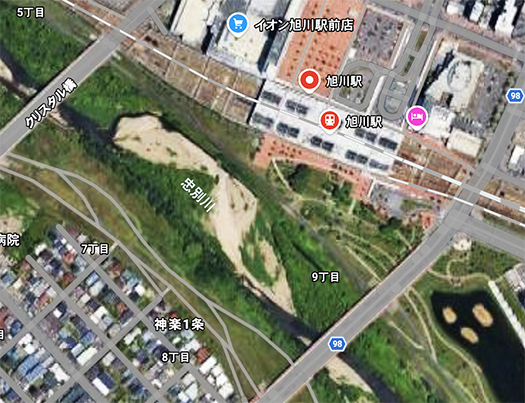
で、この旭川の駅周辺環境自体はわたしは何度か来ていて、実感していたので、2日間とも早朝には、カミさんを連れ立って駅の南側の忠別川河畔の緑地帯を楽しく散策しておりました。
駅の建物までの先端的な「都市」環境から一歩、忠別川側に出るとそこは一気に初源的な河川の流路が自然の活力を伝えてくる自然環境。なかなかにコントラストが効いていて楽しい環境。たぶん、安楽な都市環境からすぐに「スイッチ変換」できるスポットなのですね。やはりというか、案の定というか、都市景観賞を獲得しているようで、北海道民としては喜ばしいなぁと思っていました。
21世紀の現代的な地方都市としての生き残り、生存戦略としてなかなか有効な環境作りかなぁと。
しかしこれまでの「買い物公園通り」は、このAEONモールの利便性に太刀打ちするのは難しいようで、各店舗はけっこうシャッター街化していた。こういう現実はどうしても必然なのでしょうね。地域の生き残り戦略として、その象徴的な「街の変容」を感じさせられていました。
そういった変化の過程ですが、しかし自然とすぐにアクセス出来る都市環境、というコンセプトはやはり北海道の都市が獲得しやすいポイントだと思える。北海道という地域がこれからも「自然」の魅力を最大化させながら生き延びて行くには、ひとつの象徴的事例かと感じておりました。
しかしJR駅構内はイマイチ活用し切れていないようにも思えた。先日の札幌駅北口側通路にも感じた内容。都市環境の生き残り策、興味深いですね。
●お知らせ
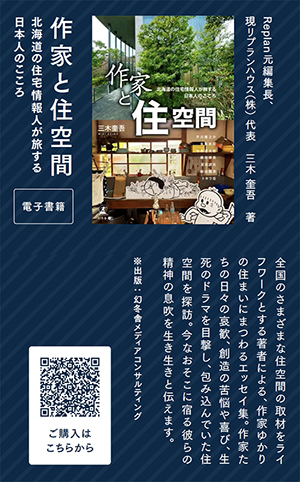
拙書「作家と住空間」幻冬舎から電子書籍で発刊
お求めはAmazonで。
https://amzn.asia/d/eUiv9yO
English version⬇
[JR Asahikawa Station: The Contrast Between the Urban Environment and Nature]
The “survival” strategies of regional cities in Hokkaido are quite interesting. The interplay between the natural environment—where rivers in the north converge—and the convenience and urban character of the city is fascinating. …
When I’m traveling alone on a series of trips focused on “exploring” various places, my choice is guided by the principle that “anywhere I can sleep is fine”—a philosophy that fits well with my aging body’s need for early to bed, early to rise routine and aligns perfectly with my main objective.
On the other hand, when traveling as a couple, choosing where to stay is entirely my wife’s domain. I just zone out and obediently go along with it.
This time, she chose a hotel on the upper floors of the AEON Mall, which is directly connected to Asahikawa Station.
Since it was our first time staying there, I had absolutely no idea how to get there. Especially since it’s directly connected to the station—which is right in the heart of the city—any attempt to explain the route beforehand was practically pointless; it wouldn’t make sense until we actually arrived. I figured I’d probably have to go there once to figure it out, and that’s exactly how it turned out. On the flip side, once I actually made it there, the convenience of the location became crystal clear. I guess you could call it a disconnect between experience and description.
Anyway, since I’d been to the area around Asahikawa Station several times before and was already familiar with it, both mornings I took my wife for a pleasant stroll along the greenbelt by the Chubetsu River on the south side of the station.
Just one step away from the cutting-edge “urban” environment of the station building, stepping out toward the Chubetsu River, you’re suddenly immersed in a natural setting where the river’s pristine course radiates the vitality of nature. It’s a delightful environment with quite a striking contrast. I suppose it’s the kind of spot where you can instantly “flip the switch” from a comfortable urban setting. As expected—or perhaps unsurprisingly—it seems to have won an Urban Landscape Award, which I found quite gratifying as a resident of Hokkaido.
I think this kind of environmental design is quite effective as a survival strategy for a modern regional city in the 21st century.
However, the former “Shopping Park Avenue” seems to have a hard time competing with the convenience of this AEON Mall, and many of the shops there had become shuttered. I suppose this reality is simply inevitable. As a survival strategy for the region, I could really sense that symbolic “transformation of the town.”
Amid this process of change, I still believe that the concept of an urban environment offering immediate access to nature is an advantage that cities in Hokkaido are particularly well-suited to achieve. I felt this was a symbolic example of how the Hokkaido region can continue to survive while maximizing the appeal of its “nature.”
However, it also seemed to me that the space inside the JR station wasn’t being fully utilized. I had a similar impression regarding the passageway on the north side of Sapporo Station the other day. Survival strategies for urban environments are truly fascinating.
● Announcement
My book, “Writers and Living Spaces,” has been published as an e-book by Gentosha.
Available on Amazon.
共有:

Posted on 10月 16th, 2026 by 三木 奎吾
Filed under: 未分類




コメントを投稿
「※誹謗中傷や、悪意のある書き込み、営利目的などのコメントを防ぐために、投稿された全てのコメントは一時的に保留されますのでご了承ください。」
You must be logged in to post a comment.