
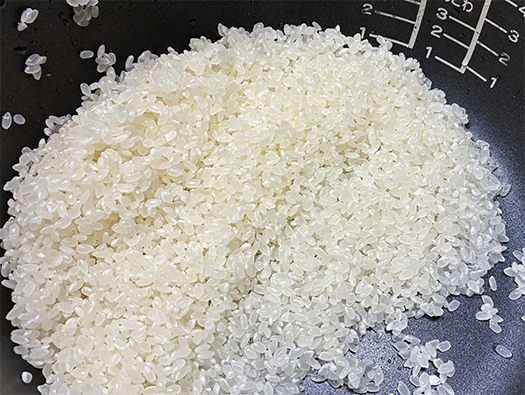
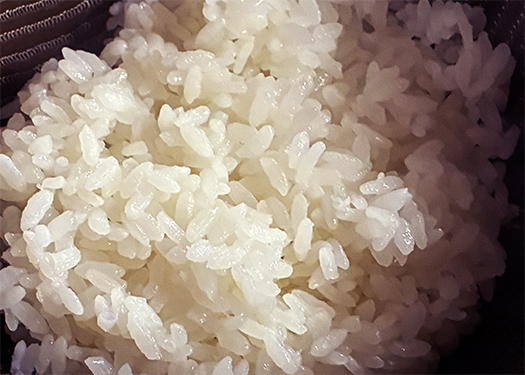
9月中に受け取っていた今年度産の新米ひとめぼれ。毎回60kgを1回に宮城県の農家から送ってもらっているのですが、ようやく昨年産のお米が一段落したので、今週から食しはじめております。 うまい。
農家の方からは「今年は昨年のような高温障害無くて美味しいです」という情報。
いや、昨年米も十分楽しませていただいていましたが、専門家としてはそういう「変動」もあったようです。
農家の方から「直売」で購入させていただくと、当然コミュニケーションがそこに発生して、いろいろな「思い」が伝わってきて、毎日の食事に「こころ」が波動してくる。いかにも人間が精魂込めた「いのち」のようなものが感じさせられるのですね、とくに「主食」なので。
毎日の食事作りでごはんについては、調理担当はわたし。
計量して、米とぎして炊飯器で炊き上げるプロセスは「日課」になっていて、深く沁みる部分。
米とぎして、1粒1粒の手ざわりから感じられるものがあって、それが心底に残ってくるのですね。ほんのちょっとした拍子に1粒程度米粒が行方不明になったりすることがあっても、丹念に「捜索」して拾い上げている。こういうのは日本人の特有の心理なのではないかといつも思わされる。
こういう米粒1粒へのこだわりって、生産者との「語らい」の1つの表現なのでしょうね。自分的には、そういう主食へのリスペクトこそが日本人の基層心理だと思っている部分。
米とぎするとそのコメから白濁した洗浄水が発生するけれど、その水の「白さ」にもある心理投影がある。
清廉潔白というコトバがあるけれど、やはり日本人の心底の「白さ」には、このコメのとぎ汁の白さが、アナロジーされているようにも思われます。
欧米の人びとは、麦類からパンを生成させるとき、どう「思う」のかなぁと想像が羽ばたく。きっと、日本人とコメと相似したような心理があるのでしょうね。主食へのリスペクト文化。
毎日、出張時以外、こういう時間を持てていることに感謝しております。
●お知らせ
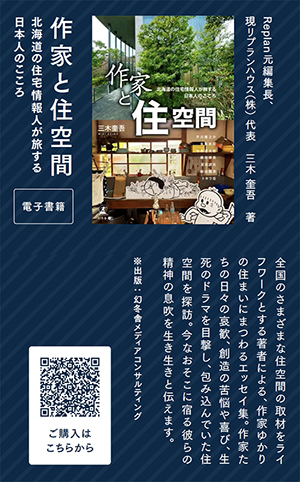
拙書「作家と住空間」幻冬舎から電子書籍で発刊
お求めはAmazonで。
https://amzn.asia/d/eUiv9yO
English version⬇
[Rinsing and Savoring “New Harvest” Hitomebore Rice from Miyagi Prefecture]
From rinsing the new harvest rice—observing the whiteness of the rinse water, savoring the texture of each grain—to finally taking a bite. A “conversation” with one’s staple food. The Japanese people. …
I received this year’s crop of Hitomebore rice in September. I usually have a farmer in Miyagi Prefecture send me 60 kg at a time, and now that I’ve finally finished eating last year’s rice, I’ve started enjoying this new batch this week. It’s delicious.
The farmer told me, “This year’s crop is delicious because we didn’t have the high-temperature damage we had last year.”
Well, I certainly enjoyed last year’s rice as well, but as an expert, it seems there were such “fluctuations.”
When I purchase directly from the farmer, communication naturally arises, and I receive all sorts of “thoughts” and “feelings” that infuse my daily meals with a sense of “heart.” I can truly feel the “life” that the farmer has poured their heart and soul into it—especially since it’s our “staple food.”
When it comes to preparing our daily meals, I’m in charge of cooking the rice.
The process of measuring, rinsing, and cooking the rice in the rice cooker has become a “daily routine,” and it’s something that touches me deeply.
When I rinse the rice, I feel something through the texture of each individual grain, and that feeling stays with me deep in my heart. Even if a single grain goes missing by accident, I meticulously “search” for it and pick it up. I’m always reminded that this might be a mindset unique to the Japanese.
This attention to even a single grain of rice is likely one expression of our “conversation” with the farmers. Personally, I believe that this respect for our staple food is the very foundation of the Japanese psyche.
When you rinse rice, a milky-white washing water is produced, and there is a psychological projection in the “whiteness” of that water as well.
There is a phrase meaning “purity and integrity,” and it seems to me that the “whiteness” deep within the Japanese heart is analogous to the whiteness of this rice-rinsing water.
My imagination runs wild as I wonder what people in the West “think” when they make bread from grains. Surely, they must have a mindset similar to that of the Japanese and rice—a culture of respect for staple foods.
I am grateful that I am able to have moments like this every day, except when I’m away on business trips.
● Announcement
My book, “Writers and Living Spaces,” has been published as an e-book by Gentosha.
Available on Amazon.
共有:

Posted on 10月 10th, 2026 by 三木 奎吾
Filed under: 未分類




コメントを投稿
「※誹謗中傷や、悪意のある書き込み、営利目的などのコメントを防ぐために、投稿された全てのコメントは一時的に保留されますのでご了承ください。」
You must be logged in to post a comment.