
わたしはいま、家系史での江戸期〜明治以降に生きた祖先の「生き様」を追っています。
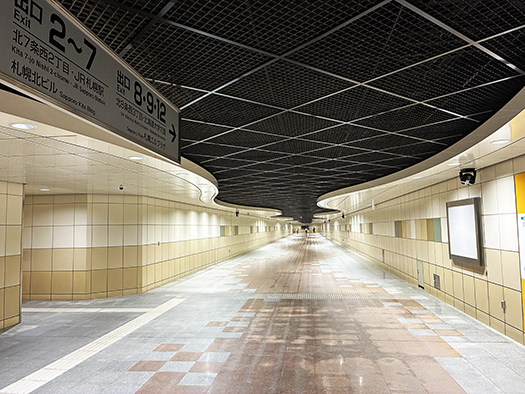
知れば知るほど波瀾万丈、時代の「うねり」に翻弄されながら必死に生きてきた実相が明滅してくる。その時空間旅を継続中。その活動では「法務局」などでの不動産の推移確認が重要な根拠事実を提供してくれる。写真は、札幌の法務局への道筋、地下鉄札幌駅を下り繁華なJR札幌駅南口側から「北口」側の法務局まで広大な「地下空間」。建築的にもオモシロい現代都市の地下に出現した異空間。
ちょうど住宅建築関係でながく関わった「新住協」全国大会が札幌で開かれていた日程だったのですが、こうした調査活動に没頭していて、うっかり失念。ふっと気付いて「あれま」と思ったのですが、まぁ後の祭り。昨日、上階に事務所同居しているReplan発行元の札促社スタッフに様子を尋ねたら「あ、鎌田先生から三木さんどうしてる?元気?」と声掛けされたとの報告。「あ、やべ」でありますが、まぁ仕方ない。
事業譲渡した人間は、あまり騒音にならないように静かにしているべきと考えます。
で、前述のそうした調査活動の甲斐があって、江戸後期から明治期までのわが家系の「住所地」が特定できた。わたしは「住空間」にこだわって生きてきた人間なので、空間認識を特定できると、いわば脳味噌がスッキリとしてくる実感があるのです。空間が特定されると、そこで生きた人間のありようが俄然「カラー化」してくる。
そして現代の利器・GoogleMapを利用すると、その特定された住所地の「現在の画像情報」が瞬時に得られてくる。それをモニター画面で見ながら、想念を巡らすことができる。
その周辺にはなんどか足を運んでいるので「土地勘」は実装されている。「あ、ここだったのか」という静かな落着感が心理に充満してくるのですね。
まぁここまで至るには、明治最初期の戸籍謄本に記載された「番屋敷」住所表示の歴史的変遷という巨大な壁が存在していました。日本の近代化システムが最初、試行錯誤を経験したあと、現代のような整合的記録環境が成立してきたのですね。さらに、現行システムからしか「過去の実相を遡る」ことができない。逆はまことに至難なのですね。大きな進展にワクワク。導いてくれた動線上の「天井」オモシロ(笑)。
●お知らせ
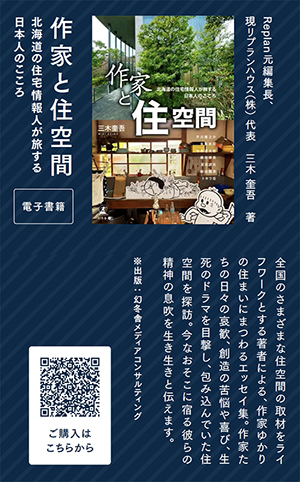
拙書「作家と住空間」幻冬舎から電子書籍で発刊
お求めはAmazonで。
https://amzn.asia/d/eUiv9yO
English version⬇
[A “Labyrinth” Appears in the Underground During My Journey of Exploration into the Past (lol)]
The area around Sapporo Station is just too interesting, with the bustling downtown to the south and that “hollow” feeling to the north (lol). This mysterious urban environment served as a guide to unearthing the past (lol)…
I am currently tracing the “lives” of my ancestors who lived from the Edo period through the Meiji era and beyond, as recorded in my family history.
The more I learn, the more the reality of their lives—filled with dramatic ups and downs as they struggled desperately while being tossed about by the “tides” of their times—begins to emerge. I am continuing this journey through time and space. In this endeavor, verifying changes in real estate ownership at places like the “Legal Affairs Bureau” provides crucial factual evidence. The photo shows the route to the Sapporo Legal Affairs Bureau—a vast “underground space” stretching from the bustling south exit of JR Sapporo Station, where the subway’s Sapporo Station is located, all the way to the Legal Affairs Bureau on the “north exit” side. It’s an intriguing, otherworldly space that has emerged beneath this modern city, architecturally fascinating in its own right.
It just so happened that the national convention of the “New Housing Association” (Shinjukyo)—an organization I’ve been involved with for a long time in the residential construction sector—was being held in Sapporo during that time, but I was so engrossed in this research that I completely forgot about it. When I suddenly realized it, I thought, “Oh no,” but it was too late. Yesterday, when I asked a staff member from Sapporo Soku-sha—the publisher of *Replan*, whose office shares the floor with mine—how things were going, they reported that someone had asked them, “Oh, has Professor Kamata asked how Mr. Miki is doing? Is he doing well?” “Oh, crap,” I thought, but oh well, it can’t be helped.
I believe that someone who has transferred their business should keep a low profile to avoid causing a fuss.
Anyway, thanks to the research activities I mentioned earlier, I was able to pinpoint the “residential addresses” of my family lineage from the late Edo period through the Meiji era. Since I’m someone who has lived my life with a strong focus on “living spaces,” I actually feel a sense of clarity in my mind when I can pinpoint a specific location. Once a space is identified, the lives of the people who lived there suddenly come to life in vivid color.
And by using the modern tool Google Maps, I can instantly access “current imagery” of those identified addresses. I can let my thoughts wander while viewing them on the monitor screen.
Since I’ve visited the surrounding area several times, I’ve developed a “sense of the terrain.” A quiet sense of resolution—“Ah, so this is where it was”—fills my mind.
Well, to get to this point, there was a massive hurdle: the historical evolution of “ban-yashiki” address notation found in family register transcripts from the very early Meiji period. After Japan’s modernization system initially went through a period of trial and error, a coherent record-keeping system like the one we have today was finally established. Furthermore, we can only “trace back to the reality of the past” from the current system; doing the reverse is truly extremely difficult. I’m thrilled by this major breakthrough. The “ceiling” along the path that led me here is quite interesting (lol).
● Announcement
My book, *Writers and Living Spaces*, has been published as an e-book by Gentosha.
Available on Amazon.
共有:

Posted on 10月 9th, 2026 by 三木 奎吾
Filed under: 未分類




コメントを投稿
「※誹謗中傷や、悪意のある書き込み、営利目的などのコメントを防ぐために、投稿された全てのコメントは一時的に保留されますのでご了承ください。」
You must be logged in to post a comment.