
さて、先般の広島県神石高原町への祖母からさらに曾祖母へと、不明の先祖の生き様探訪。その延長線上でさらにその戸籍から、より詳密な「手掛かり」を探査することにチャレンジすることにしました。
曾祖母と婚姻関係だった「義理の曾祖父」の実像を知りたい、という願望。
で、戸籍法としては全国どこでも探索可能だと言われたのですが、その旨を札幌市の西区役所に出向いて申し上げました。いまから172年前出生の曾祖母の戸籍謄本のコピーも示して申し込んだのですが、十数分後「こういう戸籍の保持期限は80年とされているので」という無念な反応が返ってきてしまった。現に広島県神石高原町で渡された172年前の戸籍謄本を示しているのに、であります。
まったくラチが開かない。早々に「お手数お掛けしました」ということで辞して、やはり神石高原町役場に直接、申請書を郵送して、さらなる詳密な調査をお願いすることにいたしました。まぁ、これも「あたって砕けろ」の心境での問合せ。優秀な日本の戸籍システムのほぼ「限界点」と思える極限点での申請。
そういう一連の流れで、こういう調査での費用については「定額小為替」での支払をという案内。ふだん一般人が利用する機会は少ない支払い方法なので、郵便局の窓口で教えてもらいながら行いました。
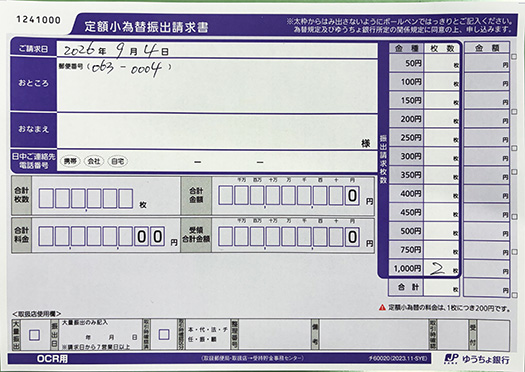
写真は、その「振出請求書」であります。こういう戸籍謄本申請では1通につき750円が基本。それに加えて付帯情報200円も「あり得る」ことから、余分に200円。それが2人分ということで、まるめて2,000円を支払うことにしました。で、この定額小為替システムではご覧のような「単価設定」になっています。
ここで思わぬ「手数料」概念が出てきて、1枚につき200円の支払いが求められることになった。この料金表からすると、50円金額に対しても別に手数料が200円掛かるという説明。郵便局員の方も「なんかなぁ・・・」という表情。わたしもまったく不可解。「え、1枚につきとにかく200円払え、ですか?」
「そうなります。」と口ごもりながらの説明。そういうことになっているのなら、振込コスパとしては、1000円一択でそれを2枚となる。切手を買うのに別にコストが掛かりますということはないはず。まぁ仕方なく2400円也を支払いましたが、あんまり納得はできない。
公共の窓口で「この方法で支払ってください」という定額小為替とはこういう不可解な別途費用が掛かるものを事実上、強制するシステムですね。まぁ、さまざまな歴史的「経緯」の結果のシステムなのでしょうが、「う〜む」と唸らされ続けておりました。まぁ泣く子となんとか、でありますね。
●お知らせ
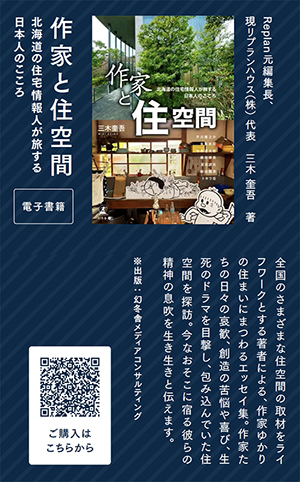
拙書「作家と住空間」幻冬舎から電子書籍で発刊
お求めはAmazonで。
https://amzn.asia/d/eUiv9yO
English version⬇
[Unclear Costs in the Earliest Exploration of Japan’s Family Register System…]
The system’s configuration for “public fees” is hard for both the counter staff and the payer to accept. Could this be a loophole in the otherwise trustworthy government system? …
Now, following my recent trip to Jinseki Kogen Town in Hiroshima Prefecture to trace the lives of my unknown ancestors—from my grandmother all the way back to my great-grandmother—I decided to take it a step further and try to uncover more detailed “clues” from their family registers.
I wanted to learn the true story of my “great-grandfather-in-law,” who was married to my great-grandmother.
I was told that, under the Family Register Act, I could search anywhere in the country, so I went to the Nishi Ward Office in Sapporo to make my request. I even presented a copy of my great-grandmother’s family register—she was born 172 years ago—but after about ten minutes, I received the disappointing response: “The retention period for family registers like this is 80 years.” And this was despite the fact that I had presented a certified copy of the family register from 172 years ago, which I had received from Jinseki Kogen Town in Hiroshima Prefecture.
I simply couldn’t make any headway. I quickly took my leave, apologizing for the trouble, and decided to mail the application form directly to the Jinseki Kogen Town Office to request a more detailed investigation. Well, this inquiry was made with a “nothing ventured, nothing gained” mindset—an application pushed to what seems to be the very “limit” of Japan’s excellent family register system.
As part of this process, I was instructed to pay the fees for this investigation using a “fixed-amount postal money order.” Since this is a payment method that ordinary people rarely use, I had to ask for guidance at the post office counter.
The photo shows the “request form” for issuing the money order. For applications for family register copies like this, the basic fee is 750 yen per copy. Since an additional 200 yen for supplementary information is “possible,” I added an extra 200 yen. Since this was for two people, I decided to round it up and pay 2,000 yen. Now, as you can see, this fixed-amount postal money order system has a “unit price” structure like the one shown here.
Here, an unexpected “handling fee” concept came up, and I was asked to pay 200 yen per copy. According to this fee schedule, they explained that a separate 200-yen handling fee applies even to amounts as low as 50 yen. The post office clerk also had a look on their face that seemed to say, “Hmm…” I found it completely baffling as well. “Wait, are you saying I just have to pay 200 yen per copy, no matter what?”
“That’s correct,” they explained, hesitating slightly. If that’s how it works, then in terms of cost-effectiveness for the transfer, the only choice is 1,000 yen—and I’d need two of those. There shouldn’t be any separate cost just for buying stamps. Well, I reluctantly paid the 2,400 yen, but I’m still not entirely convinced.
At a public service counter, the fixed-amount postal money order system—which tells you, “Please pay this way”—is effectively a system that forces you to pay these kinds of puzzling additional fees. Well, I suppose it’s a system that’s the result of various historical “circumstances,” but it kept making me go, “Hmm…” Well, I guess you just have to make the best of a bad situation.
● Announcement
My book, “Writers and Living Spaces,” has been published as an e-book by Gentosha.
Available on Amazon.
共有:

Posted on 9月 5th, 2026 by 三木 奎吾
Filed under: 未分類


コメントを投稿
「※誹謗中傷や、悪意のある書き込み、営利目的などのコメントを防ぐために、投稿された全てのコメントは一時的に保留されますのでご了承ください。」
You must be logged in to post a comment.