
昨日は「四百年間のいのちの履歴書」探究の「親族会議」。
北海道に居て一族の故地、広島県東部地域での消息を跡づけてきています。基本的な「視点」としてこうした「故地」をどう考えるかというポイントがある。
そもそも北海道に根付いて以降の、ひたすら未来志向の考え方もある。それは日々毎日の日常生活に正面から取り組んでいれば、むしろ自然な考え方。自分のルーツがどこから来たかという視点は普段はスルーする考え方。わたし自身、次兄から言われて家系史の探究をバトンタッチされるまでは、ひたすらこういう考えだった。
一方で「家」ということを血の流れ、生き抜いた人物たちの叫び声として受け止める考え方もある。いわば「伝統的家族意識」とでも言える考え方。
このふたつの思念の間で揺れ動いているのでしょう。わたしなどは「家」というとらえ方自体、住宅雑誌を創業した人間として、物理的空間性としての認識を最重要な領域として生きてきた。そういう現実から少し離れてきて、徐々に「伝統的家族意識」の領域について向かい合いはじめている。
昨日の親族会議でも、このふたつの考え方のうち、伝統的家族意識の志向性探究に向かい合い続けていた。ただ、わたしは北海道土着的な考えが基本だけれど、そうでない人もいる。会話していてときどき「へ〜え、そういう考え方するんだぁ」と内心驚いたりもしていた。どうも話していて、人生選択のはじめの段階で故地の方に「根がらみ」の宿縁を感じていて、ごく自然にそちらに惹かれて行っている様子がわかった。むしろそれを超えて北海道で暮らしたのにはわたしの父の影響があったというのだ。それにも驚かされていた。
わが家系は広島県のそれも東部地域に深く縁がある家系。
こういった「相違」が徐々に深く理解してきたことで、むしろより「透明性」が高まっていくと思える。わたし自身は北海道ネイティブでそのままの志向で生きてきて、むしろ汎日本的なこの地域の風土性こそが好き。そこから家系の先人の生き様から透明なエキスを紡ぎ出したい、ということ。
こういったふたつの志向性を踏まえながら、未来志向の方向で取り組みたいと思わされた。
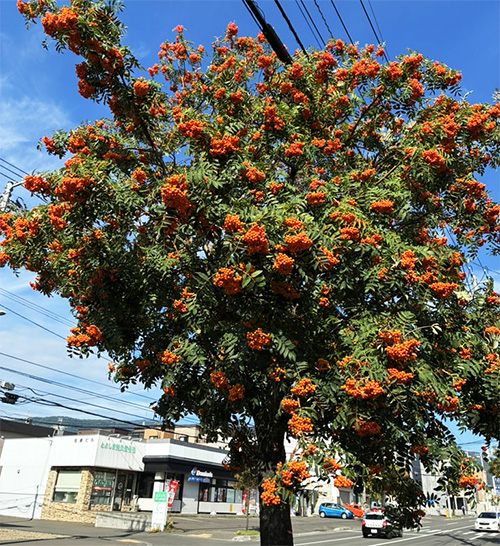
<写真は日々の散歩道のナナカマド。好きな色合い・・・>
●お知らせ
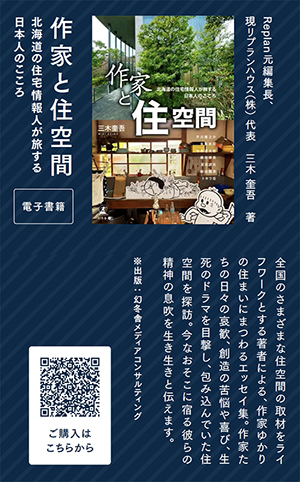
拙書「作家と住空間」幻冬舎から電子書籍で発刊
お求めはAmazonで。
https://amzn.asia/d/eUiv9yO
English version⬇
[Thoughts on the Northern Lands Turning the Color of Mountain Ash and My Still-Hot Hometown]
Hokkaido is a mini “melting pot” of people who have moved there from other regions. Two distinct mindsets emerge from their lives there. …
Yesterday was a “family meeting” as part of our exploration of “A 400-Year History of Life.”
Living in Hokkaido, I’ve been tracing the history of my clan’s ancestral homeland in eastern Hiroshima Prefecture. A key “perspective” involves how we view this “ancestral homeland.”
On the one hand, there’s a mindset that’s been purely forward-looking ever since we put down roots in Hokkaido. That’s actually a natural way of thinking if you’re fully engaged in your day-to-day life. The perspective of where one’s roots lie is something we usually overlook. I myself held this view exclusively until my second older brother told me to take over the baton of researching our family history.
On the other hand, there is also a way of thinking that perceives the “family” as the flow of blood and the cries of those who have lived through the generations. It is, so to speak, a “traditional sense of family.”
I suppose I am wavering between these two ways of thinking. As for me, having founded a home design magazine, I’ve always viewed “family” primarily through the lens of physical space—that’s been the most important aspect of my life. Now, stepping back a bit from that reality, I’m gradually beginning to engage with the realm of “traditional family consciousness.”
At yesterday’s family meeting, too, I continued to explore the orientation toward traditional family consciousness—one of these two perspectives. However, while my own outlook is rooted in Hokkaido’s local traditions, others hold different views. While talking, I sometimes found myself thinking, “Huh, so that’s how they think,” and was secretly surprised. As we spoke, it became clear that from the very beginning of their life choices, they had felt a deep, fated connection to their ancestral homeland and had been drawn there quite naturally. In fact, they said it was my father’s influence that led them to go beyond that and live in Hokkaido. That surprised me as well.
My family has deep ties to the eastern region of Hiroshima Prefecture.
As I’ve gradually come to understand these “differences” more deeply, I feel that my “transparency” has actually increased. I myself am a native of Hokkaido and have lived my life true to that inclination; in fact, I love the pan-Japanese character of this region’s culture. From there, I want to distill a pure essence from the way of life of my family’s ancestors.
Taking these two perspectives into account, I felt compelled to move forward with a forward-looking approach.
● Announcement
My book, “Writers and Living Spaces,” has been published as an e-book by Gentosha.
Available on Amazon.
共有:

Posted on 9月 4th, 2026 by 三木 奎吾
Filed under: 未分類


コメントを投稿
「※誹謗中傷や、悪意のある書き込み、営利目的などのコメントを防ぐために、投稿された全てのコメントは一時的に保留されますのでご了承ください。」
You must be logged in to post a comment.