

昨日は地域工務店の「高断熱高気密」運動の北海道における中核的メンバーの知人(個人的に「戦友」とでも呼べるひとりと認識)の葬送について書きましたが、本州以南地域では依然としてこうした「流れ」に強い市場合理性があり続けるのだろうと思います。
この住宅性能高度化「運動」は、北海道内では行政の側も独自にそれを支援し、加速させる戦略を実行してきたと思います。日本民族が本格的に北海道という積雪寒冷地で「どう生きて行くか」という根本命題と立ち向かい、そのキーポイントを「高断熱高気密」推進と見定めてきた。これは歴史的にも高く評価されるべき大きな足跡だと思います。とくに、建築工法として日本の技術システムが持ち続けてきた木造在来工法を加速度的に進化させたことは特筆されるべき実績でしょう。
昨今、気候変動が全地球規模で危機的に進行する中で、この積雪寒冷地の建築技術は、冬を暖かく、夏をクールに過ごす基本環境を提供してきたことは間違いない。
ことし顕著に表れたヨーロッパ大陸での「灼熱化」は、フランスの暴動の引き金にまでなってしまっていた。教育環境、高校の室内環境を異常な高温が襲って、反発した高校生の「環境改善」要求が暴動の起点になったことは間違いがない。そのことの推移は見守っていくしかない。
一方で、世界に誇る日本の「冷房」技術、機器進化は大きな混乱も見せずに機能してきている。わが家の近隣の中学校でも最近、冷房機器が装置工事されていた。
幸いにしてことしの日本全体の地上の気温状況は大きな変動を見せたとは言えないけれど、最近の環境省からの情報では、日本周辺の海、その中身は巨大な変動を見せていると言われている。
住宅建築としては、こういう気候変動への耐性を強靱化させることが必要。気候変動への柔軟な対応力が不可欠になるのだろう。高断熱高気密化というあゆみが、次代の守護になって欲しいと願う。
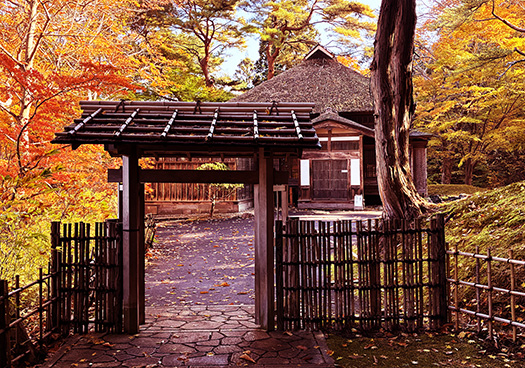
・・・さてそういう中で、北に暮らす日本人としていわば「生活デザイン」は、今後どのように進化していくのだろうか? 写真は大好きな函館・香雪園の様子。花鳥風月という日本人のこころの「骨格」が、今後、どのように北の地で進化発展していくのか?
●お知らせ
拙書「作家と住空間」幻冬舎から電子書籍で発刊
お求めはAmazonで。
https://amzn.asia/d/eUiv9yO
English version⬇
[In the Age of Climate Change, How Will Attitudes Toward Housing Evolve?]
“Climate change”—a phenomenon that has even sparked riots in Europe. From building higher-performance structures to enhance resilience against it, to evolving the Japanese spiritual framework of “flowers, birds, wind, and moon”—how will this evolve? …
Yesterday, I wrote about the funeral of an acquaintance—a core member of the “High Thermal Insulation, High Air Tightness” movement led by local construction companies in Hokkaido (someone I personally consider a “comrade-in-arms”)—but I believe that in regions south of Honshu, there will continue to be strong market resistance to this “trend.”
I believe that within Hokkaido, the government has also independently implemented strategies to support and accelerate this “movement” to enhance housing performance. The Japanese people have seriously confronted the fundamental question of “how to live” in the snowy, cold climate of Hokkaido and have identified the promotion of “high thermal insulation and airtightness” as the key to that challenge. I believe this represents a significant achievement that deserves high historical recognition. In particular, the rapid evolution of traditional Japanese timber-frame construction—a building method that has long been a cornerstone of Japan’s technical system—is an accomplishment worthy of special mention.
Recently, as climate change has progressed to a critical level on a global scale, there is no doubt that this architectural technology for snowy, cold regions has provided the basic environment for staying warm in winter and cool in summer.
The “scorching heat” that became particularly evident on the European continent this year even triggered riots in France. There is no doubt that abnormally high temperatures struck educational environments—specifically, the indoor environments of high schools—and that high school students’ demands for “environmental improvements,” born out of this frustration, served as the spark for the riots. We can only wait and see how this situation unfolds.
On the other hand, Japan’s world-renowned “air conditioning” technology and equipment have continued to function without major disruptions. Even at the junior high school near my home, air conditioning units were recently installed.
Fortunately, while this year’s surface temperatures across Japan as a whole have not shown significant fluctuations, recent information from the Ministry of the Environment indicates that the seas surrounding Japan—and the conditions within them—are undergoing massive changes.
In residential construction, it is necessary to strengthen resilience against such climate change. The ability to adapt flexibly to climate change will likely become indispensable. I hope that the progress toward high insulation and airtight construction will serve as a safeguard for the next generation.
…So, against this backdrop, as a Japanese person living in the north, how will “lifestyle design,” so to speak, evolve in the future? The photo shows a scene from Kōsetsuen in Hakodate, a place I love dearly. How will the “backbone” of the Japanese spirit—the appreciation of nature’s beauty (hana-chō-fū-getsu)—evolve and develop in the northern regions going forward?
● Announcement
My book, “Writers and Living Spaces,” has been published as an e-book by Gentosha.
Available on Amazon.
共有:

Posted on 11月 10th, 2026 by 三木 奎吾
Filed under: 未分類





コメントを投稿
「※誹謗中傷や、悪意のある書き込み、営利目的などのコメントを防ぐために、投稿された全てのコメントは一時的に保留されますのでご了承ください。」
You must be logged in to post a comment.