
選挙関連の時事ネタから「四百年間のいのちの履歴書」シリーズに復帰。
先日来、百姓一揆で「打ち毀された」家系先祖の資料を探索して鬱勃とする思いが湧き上がっている。ブログ記事として書いたら自分自身1970年安保学生運動に高校生として参加していた当時のことが記憶復元してきていた。たまたま知人から反響・意見もいただいて、まざまざと当時の記憶がよみがえってきた。
それは高校時代の政治的テーマでの「全校集会」でのこと。
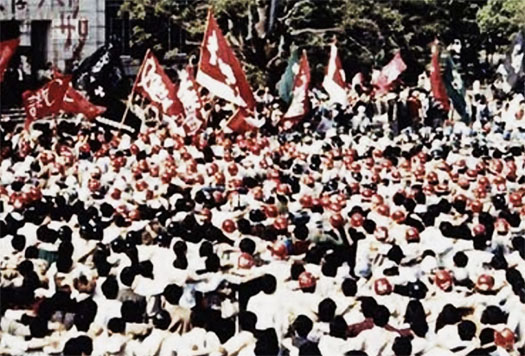
わたしの通った高校は自由な校風が謳われる環境。当時多感な高校生にとっても反安保闘争は大いに刺激される世の動き。わたしはそういう学生運動に共感した渦の中心にいた活動家。当時の佐藤首相が訪米してアメリカとの間で「安保条約」改訂の最終交渉に向かう直前。学内で朝の全校集会時にその問題を提起して多くの賛同を得て「学生集会」へと集会目的を切り替えさせていた。
わたしは「新左翼系」の運動に参加していた。集会では共産党系の「民青」とおぼしき発言も出ていたが、それに対して反論を加えて多数からの支持を受けたりしていた。
やがて集会が盛り上がってきたので、わたしはそれまで隠していた活動家の証明の「ヘルメット」をやおら被って「学内デモでみんなの意思表示をしよう!」と呼びかけた。空気が一変し、なんとたいへん多数の賛同を得ることが出来た。その瞬間の熱気はいまでも記憶の底にある。
そして学生玄関先で高校生のデモ隊列を指揮していたとき、共産党系の活動家と認識していたわたしの担任の先生が脇に立ち現れ「三木、絶対に学外には出るなよ!オマエ以外はみんな無垢の高校生だ。かれらに違法行為(無届けデモ)をさせるのは、絶対にやめろよ!」と説得に来ていたのだ。
それに対してわたしは「それは心配いりません。オレが処分されるのは甘受するけれど、参加してくれるみんなを違法行為に引き込んだりはしませんから」と返答していた。
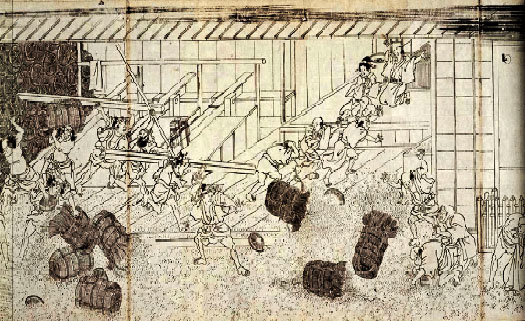
・・・わたしの家系先祖の百姓一揆「打ち毀し」受難体験を江戸期の浅野藩の「公式記録」で掘り起こしていて、自分自身のこのときの体験記憶がフラッシュバックした。さらに百姓一揆での倫理的な「掟」を学習させていただくなかで、その日本的な対応の近似性が血肉的に感じられたのだ。
300年以上の時空を越えて、それも立場が反対と思えるようなフラッシュバック。
江戸期のひとびとの高い精神性と、それがわたしたちにすら伝統意識として「つたわっている」かと。
そしてさらに、こうした高校生運動を受け止めていた当時の高校校長が、PTA集会で親御さんたちから「どうしてデモを阻止しなかったのか」と糾弾されたとき「教育者としてこどもを信じないでどうするのですか」と答えていた事実を、恥ずかしながら56年の時間を経てブログ記事反応で、はじめて知らされた。
血脈DNAの複層的な体験と周囲の反応、社会が見つめる「視線」それらが渾然一体となっての再生。歴史と人間というもののリアリティに沈殿させられている次第。・・・
<写真は百姓一揆「打ち毀し」絵図と1969年学生運動記録>
●お知らせ
拙書「作家と住空間」幻冬舎から電子書籍で発刊
お求めはAmazonで。
https://amzn.asia/d/eUiv9yO
English version⬇
【The DNA of the 1718 Peasant Uprising and the 1969 Student Movement: “Reviving Experiential Memory”】
From exploring records of uprising suppression, reviving “ethnic social memory” across 300 years of time and space. The enduring power of our ancestors’ ethical convictions. …
Returning to the “Four Hundred Years of Life’s Resume” series from election-related current events.
Recently, exploring materials on ancestors from a family line “smashed to pieces” in a peasant uprising has stirred up a surge of pent-up emotions. Writing about it as a blog post triggered memories of my own participation in the 1970 Security Treaty student protests as a high schooler. Receiving reactions and opinions from acquaintances by chance vividly brought those memories back to life.
It was during a “school-wide assembly” on a political theme back in high school.
My high school boasted an environment celebrated for its liberal ethos. For sensitive high schoolers like us, the anti-Security Treaty struggle was a hugely stimulating social movement. I was an activist right in the thick of it, deeply sympathetic to that student movement. It was just before then-Prime Minister Sato visited the US to enter final negotiations with America on revising the Security Treaty. During a morning school-wide assembly, I raised the issue, gained significant support, and successfully shifted the assembly’s purpose to a “student assembly.”
I was involved in the “New Left” movement. At the assembly, statements likely from Communist Party-affiliated “Minsei” members were made, but I countered them and gained support from the majority.
As the assembly grew more heated, I suddenly put on the “helmet” I had been hiding—my activist’s badge—and called out, “Let’s express our will through an on-campus demonstration!” The atmosphere shifted instantly, and to my surprise, I gained overwhelming support. The fervor of that moment remains etched in my memory.
Then, while directing the high school student demonstration line at the university entrance, my homeroom teacher—whom I recognized as a Communist Party activist—appeared beside me. He pleaded, “Miki, absolutely do not leave the campus! Everyone else here is innocent high school students. You must not lead them into illegal activity (an unregistered demonstration)!”
To this, I replied “Don’t worry about that. I’ll accept whatever punishment comes my way, but I won’t drag anyone else into illegal activity.”
…I was researching my family’s history of suffering during the peasant uprising “Uchikudashi” through the Edo-period Asano domain’s “official records,” and my own memory of this experience flashed back. Furthermore, as I learned the ethical “code” of the peasant uprising, I felt its Japanese-style response resonate deeply within me.
A flashback spanning over 300 years of time and space, and one where the positions seemed reversed.
The high spirituality of the Edo period people, and how it might still be “transmitted” to us as a sense of tradition.
Moreover, I was ashamed to learn only now, 56 years later through a blog comment, that the high school principal who had supported these student movements was once confronted by parents at a PTA meeting: “Why didn’t you stop the demonstrations?” To which he replied, “As an educator, how can I not believe in the children?”
The multi-layered experience of bloodline DNA, the reactions of those around us, and the “gaze” society casts upon us—all these blend into a single, regenerative whole. I find myself immersed in the reality of history and humanity. …
●Notice
My book “Writers and Living Spaces” published as an e-book by Gentosha
Available on Amazon.
共有:

Posted on 2月 10th, 2026 by 三木 奎吾
Filed under: 未分類



コメントを投稿
「※誹謗中傷や、悪意のある書き込み、営利目的などのコメントを防ぐために、投稿された全てのコメントは一時的に保留されますのでご了承ください。」
You must be logged in to post a comment.