
昨日に引き続き1718年の広島浅野藩領での「亨保の百姓一揆」について。
江戸時代も中頃になると各藩財政が苦境に至っていた。幕府は将軍吉宗が享保の改革を打ち出し財政再建を図るけれど、数年前から広島藩も農民に対して倹約令を出し貢租の増徴を計っていた。五代藩主浅野吉長は正徳2年(1712年)に徴税強化のため「正徳新格」を発布し財政改革に着手した。従来の「郡奉行ー代官ー大割庄屋ー庄屋ー組頭」という徴税組織を「郡奉行ー郡支配ー所務役人ー頭庄屋ー庄屋ー組頭」に改編。従来形では庄屋や農民の抵抗で財政改革が進まないので、有力庄屋から所務役人を抜擢して苗字帯刀を許し俸給も与え徴税強化推進役にして改革を推進しようというもの。
この改革によって貢租が強化され、藩全体に農民の不満が当然溜まった。
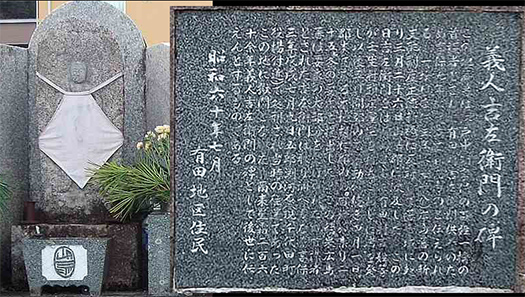
上の写真は現在の広島県山県郡北広島町有田に残されている一揆首謀者のひとり吉左衛門さんの「顕彰碑」クローズアップ。義民という尊称。一揆は1718年に勃発し藩全体で30万人が立ち上がった。藩は一揆側の要求を丸呑みし、課税強化策として導入した「所務役」制度をすぐに制度撤回し旧来に戻し行政対応のまずさを是認した。一揆側の政治的勝利。
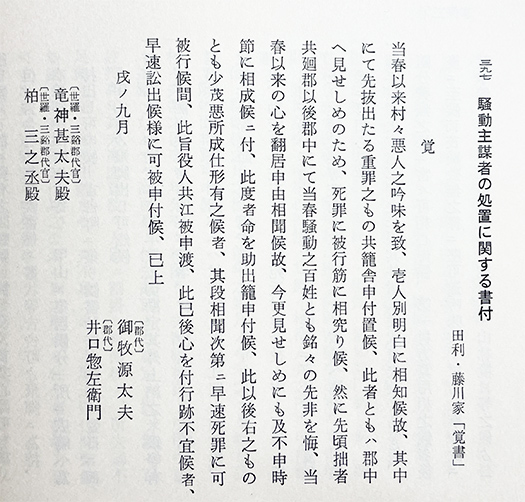
しかし一方で騒動のほとぼりが冷めた1ヶ月後、一揆首謀者は藩全体で49名が斬首・獄門の極刑に処せられ入牢などが129名、その他逐電逃亡したもの多数に及んだとされる。2枚目の古文書翻刻文は藩の一揆首謀者への処分対応記録文。「即刻死罪」と武家独裁らしい残獄さ。現代世界まで残る「独裁」の無能・無惨。
・・・わが家系の原平七さんはこの渦中のど真ん中にいた。それも藩と百姓一揆側のど真ん中(泣)。
「有力庄屋から所務役人を抜擢」され俸給も受けていた以上、封建制社会の中での「最適解」として生きてきたことが社会的に認証されたに等しい。その境遇に対し謙虚であるのは、子孫として理解できる。
しかし結果、理不尽という言葉の前で、現代のわたしでも立ち止まってしまう。
まさか所務役という抜擢指名を拒否することは、それ自体が反逆行為で「即刻死罪」だろう。
日本社会ではやむを得ない「流れ」と言えるだろうか。一方で一揆後5−6年で首謀者は「義民」として尊称される。一時期高校生の少年期、新左翼運動に関わった自分自身としても、DNAの不思議な邂逅に驚かされざるを得ない。・・・
●お知らせ
拙書「作家と住空間」幻冬舎から電子書籍で発刊
お求めはAmazonで。
https://amzn.asia/d/eUiv9yO
English version⬇
【The “School Administrator” Who Was Beaten to Death: The Rebels’ Call to “From the Gallows to Commemoration”】
In the late 1960s and early 1970s, as I became deeply involved in the New Left movement in high school, I was forced to confront the DNA of ancestors caught between the cracks of social systems. An encounter with injustice. …
Continuing from yesterday, regarding the “Kyōhō Peasants’ Uprising” in the Hiroshima Asano domain in 1718.
By the mid-Edo period, the finances of various domains had reached a critical state. Although the shogunate, under Shōgun Yoshimune, implemented the Kyōhō Reforms to rebuild the finances, the Hiroshima domain had also been issuing austerity decrees to its peasants and attempting to increase tribute taxes for several years. The fifth domain lord, Asano Yoshichō, initiated fiscal reforms in 1712 (Shōtoku 2) by enacting the “Shōtoku New Regulations” to strengthen tax collection. He reorganized the traditional tax collection hierarchy—“District Magistrate → Deputy Magistrate → Major Tax Collector → Village Headman → Group Leader”—into “District Magistrate → District Administrator → Office Clerk → Chief Village Headman → Village Headman → Group Leader.” The previous system stalled fiscal reforms due to resistance from village headmen and peasants. Therefore, influential village headmen were promoted to office clerks, granted the privilege of wearing surnames and swords, and given stipends to serve as tax collection enforcers and drive the reforms forward.
This reform strengthened tribute and tax collection, naturally causing discontent among peasants throughout the domain.
The photo above shows a close-up of the “Commemorative Monument” for Kichizaemon, one of the leaders of the uprising, preserved in Arita, Kitahiroshima Town, Yamagata District, Hiroshima Prefecture. Honored as righteous citizens. The uprising erupted in 1718, mobilizing 300,000 people across the entire domain. The domain government fully accepted the rebels’ demands, immediately repealing the “administrative officer” system introduced as a tax-strengthening measure and reverting to the old system, thereby acknowledging its poor administrative handling. A political victory for the rebels.
However, one month later, once the turmoil had subsided, 49 uprising leaders across the domain were executed by beheading or impalement. Another 129 were imprisoned, and many others fled into exile. The second ancient document is a transcript of the domain’s record of punishments for the uprising leaders. The phrase “immediate death penalty” reflects the ruthless cruelty typical of samurai autocracy. The incompetence and cruelty of “dictatorship” that lingers into the modern world.
…My ancestor, Genpei Shichi, was right in the thick of this turmoil. Right in the thick of it for both the domain and the peasant rebels (weeps).
Having been “promoted from influential village headman to official” and receiving a stipend, his life as the “optimal solution” within feudal society was effectively socially validated. As his descendant, I can understand his humility in that situation.
Yet the outcome, faced with sheer injustice, makes even me today pause.
Refusing such an appointment as a feudal official would surely have been an act of rebellion itself, warranting “immediate death penalty.”
Could this be called an unavoidable “flow” within Japanese society? On the other hand, within five or six years after the uprising, the ringleaders were honored as “righteous citizens.” As someone who was involved in the new leftist movement during my own teenage years in high school, I cannot help but be astonished by this strange encounter within my DNA. …
●Notice
My book “Writers and Living Spaces” published as an e-book by Gentosha
Available on Amazon.
共有:

Posted on 2月 6th, 2026 by 三木 奎吾
Filed under: 未分類




コメントを投稿
「※誹謗中傷や、悪意のある書き込み、営利目的などのコメントを防ぐために、投稿された全てのコメントは一時的に保留されますのでご了承ください。」
You must be logged in to post a comment.