
北大構内散歩大好き男であります(笑)。
札幌地方では一昨日の荒天で一部で樹木が台風並みの強風で倒れる被害も出たということでしたが、昨日はすっかり「世界で一番いい季節」と言われる好天ぶり。早朝散歩は迷わず北大構内へ。
来れば来るほどそこかしこの「原始の札幌」の景観にウットリさせられています。リトル東京として利便性や経済的発展が進むことはありがたいことだと思いますが、同時に開拓初期の頃の、とくにアメリカからのクラーク博士などの技官たちが、原始の札幌の自然を保全しようと尽力してくれたことに深く感謝。
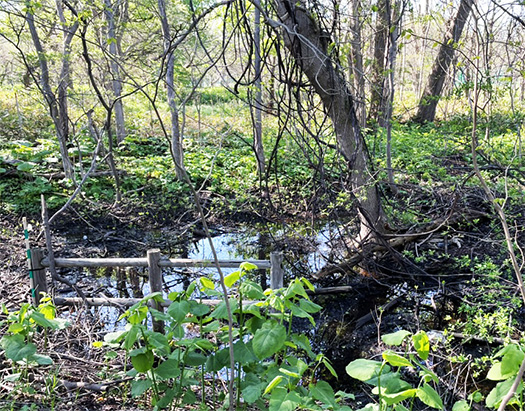
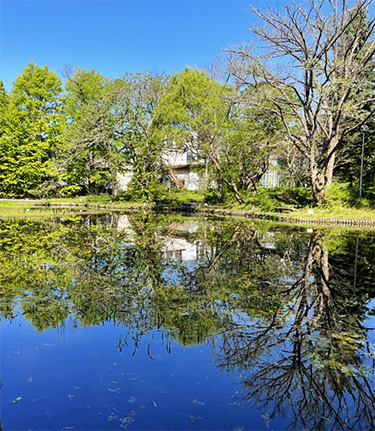
そしてこの北大は広大なキャンパスが市の中心部に展開しながら、随所に写真のような「メム〜湧水池」が点在している様子がわかる。札幌の地名のルーツは「サツポロペツ」というアイヌ語の言葉だそうだけれど、それは「葦原が広大な川辺」というような意味だと聞いたことがある。<別の説では「乾いた大きな川」とされ、市内を流れる「豊平川」を指していてかつて豊平川は、水量が減って川原が広く乾いて見える場所が多かったため、このように表現されたとも。>
まるで建国神話の「葦原の中つ国」みたいで明治の浪漫を感じさせられる。で、メムはそういう場所に点在して水源を提供していたように思えるのですね。開拓期からはるか80年を経過したこの地で育ったわたしにはメムは近しい。
メムはこの地の語源にかかわる「自然遺産」なのではないかと妄想。上の写真は先日掲載した「サクシュコトニ」川の蛇行する部分ではありますが、雰囲気としてはまことにメム感がある。
ただ、開拓にあたっては比較的に高台で地盤が安定した,現在のJR函館線の山側地域が最初地として利活用が進められ、北側に位置するこの北大構内は、低湿地が多かったということなのでしょう。
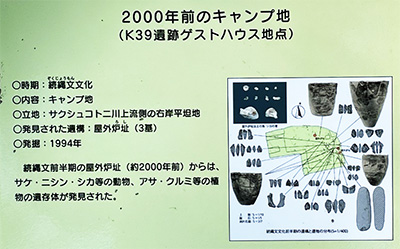
下の写真のメムの近くにはこんな解説板もありました。
2000年くらい前の人びとも、こういった水辺の環境を愛していたことが伝わってくる。そういえばわたしがいま住んでいる西区山の手でも時折カモメさんたちが叫び声を上げていてくれる。環石狩湾の暮らしぶりが、さまざまに想像できてわが家の北大フェッチは、いや増すばかりであります(笑)。
●お知らせ
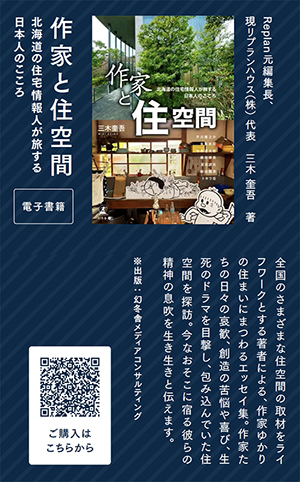
拙書「作家と住空間」幻冬舎から電子書籍で発刊
お求めはAmazonで。
https://amzn.asia/d/eUiv9yO
English version⬇
[Is this what the “mem-filled” landscape of pre-development Sapporo looked like?]
A flat area with plenty of mems and natural forests. Surrounded by a range of mountains right nearby, and with seagulls occasionally calling out, I’m growing increasingly attached to this place. …
I’m a guy who absolutely loves taking walks around the Hokkaido University campus (lol).
I heard that in the Sapporo area, the stormy weather the day before yesterday caused some damage, with trees being blown down by typhoon-force winds in certain areas, but yesterday brought the kind of beautiful weather often called “the best season in the world.” So, for my early morning walk, I headed straight to the Hokkaido University campus without hesitation.
The more I come here, the more I find myself captivated by the “primitive Sapporo” scenery that can be found all over the place. While I’m grateful for the convenience and economic development that comes with Little Tokyo, I’m also deeply thankful to the technical officials from the early days of settlement—especially Dr. Clark from the U.S.—who worked so hard to preserve the natural beauty of “primitive Sapporo.”
And here at Hokkaido University, you can see how the vast campus spreads out right in the heart of the city, dotted here and there with “Mem~ Spring Ponds” like the one in the photo. I’ve heard that the origin of Sapporo’s name comes from the Ainu word “Satsuporopets,” which means something like “a vast riverbank covered in reeds.”
It’s just like “Nakatsukuni in the Reed Plains” from the founding myth, evoking the romance of the Meiji era. And it seems to me that Mem was scattered throughout such places, providing a source of water. Having grown up in this land, 80 years after the pioneering era, Mem feels very close to me.
I can’t help but imagine that “Mem” might be a “natural heritage” tied to the etymology of this place. The photo above shows a meandering section of the “Sakushikotoni” River that I posted the other day, but the atmosphere truly has that “Mem” feel to it.
However, during the settlement period, development likely focused first on the mountain-side areas along the current JR Hakodate Line—which are on relatively high ground with stable soil—while this Hokkaido University campus to the north was likely characterized by low-lying wetlands.
There was also an information board like this near the memorial in the photo below.
It really conveys how people from around 2,000 years ago also loved this kind of waterside environment. Come to think of it, even here in Yamano-te, Nishi Ward, where I currently live, seagulls occasionally let out their cries. I can imagine all sorts of ways of life around Ishikari Bay, and my affection for Hokkaido University only grows stronger (laughs).
● Announcement
My book, “Writers and Living Spaces,” has been published as an e-book by Gentosha.
Available on Amazon.
共有:

Posted on 5月 11th, 2026 by 三木 奎吾
Filed under: 未分類




コメントを投稿
「※誹謗中傷や、悪意のある書き込み、営利目的などのコメントを防ぐために、投稿された全てのコメントは一時的に保留されますのでご了承ください。」
You must be logged in to post a comment.