
さて昨日夕刻、広島県東部の家系の故地探訪旅から帰還。福山市が拠点での調査で3日間宿泊していましたが、トータル調査ポイント20件の取材だったので、そのそれぞれの「解析」をしっかり行っていきたいと考えています。調査プロセスでは、公益財団法人・ふくやま芸術財団の学芸員の方とも突っ込んだ話合い機会を持つことも出来て、素人の研究としては望外のよろこびでありました。
これからまとめることになりますが、きょうは「尾道商業会議所」古建築での調査結果から。
わたしの家系は、安芸国東部〜備後、そして江戸期の「商都」とも言える尾道という地域で、商家的な生き様で江戸期以降、明治末での北海道移住までを過ごしてきている。
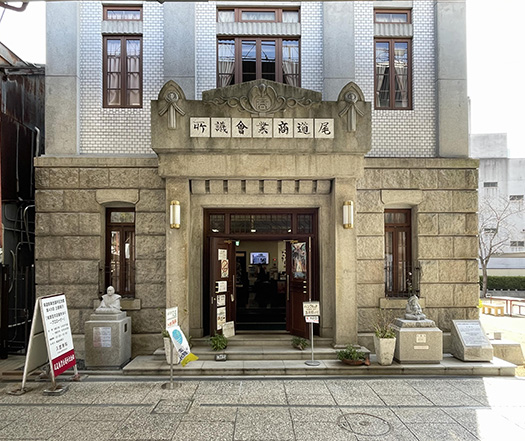
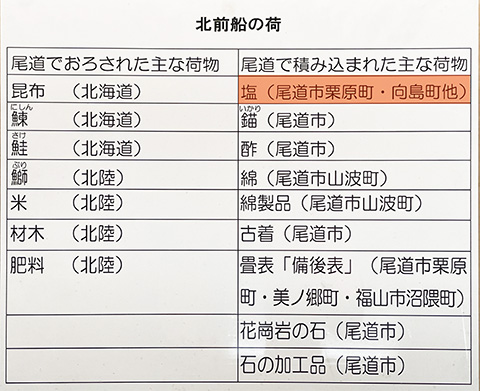
そういうなかで、尾道の経済構造全体を歴史的経緯を含めて詳細に把握できないだろうかと考えていて、今回は尾道商業会議所建築を訪ねてみた次第。そうしたら、2枚目の図のようなピッタリの資料を参観することができました。
江戸期の尾道の国内交易活動の基軸は、塩の取引、それも日本海北方沿岸地域から北海道地域との「北前船交易」がメインであったことが明確になったのです。
移入の産品に、ずらりと昆布・ニシン・サケという北海道らしい名前が並んでいる。
そして北海道地域にとっていかに「塩」が決定的に重要だったのかが、わかる。江戸期の「経済統計」のような基礎資料は幕藩体制下で広域的「貿易」内容を一覧的に把握することが出来なかった。
ここまで明示的にわかったことで、北海道人としてももっとこの安芸備後地域に着目すべきなのだということが、よく叩き込まれる思いでした。
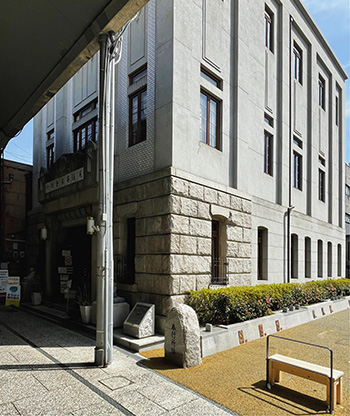
また建築としてもこの尾道商業会議所の建物は1924(大正13)年建築。「この新建築は尾道の交通の中枢たる土堂町605番地に凜然として立てり。様式はモーダンスタイルにセセッションを加味したるきわめて新しき様式にして・・・」と当時の地域新聞「芸備日日新聞」2/24号が伝えている。〜注/セセッション:19世紀末から20世紀初頭にかけてドイツ・オーストリアで興った芸術革新運動「分離派」のこと〜
このような表現スタイルの建築が受け入れられていたというのも、なにか、北海道の時計台や道庁赤煉瓦建築とも通底するような「時代の風」のようなものを感じさせられていた。
いよいよ「望郷」の思いが肉感させられるようになって来たかと(笑)・・・
●お知らせ
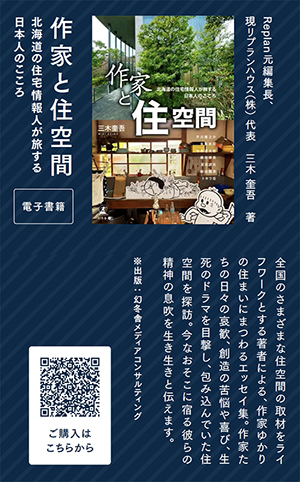
拙書「作家と住空間」幻冬舎から電子書籍で発刊
お求めはAmazonで。
https://amzn.asia/d/eUiv9yO
English version⬇
[“Salt” as the Most Important Export Commodity / Research on the Edo-Period Economy and Onomichi]
I had always assumed that Hokkaido’s relationship with Tokyo was decisive, but when I look at trade activities as a whole, the Kitamae trade reveals deep ties with the Geibi region. Salt, is it…?
Well, I returned yesterday evening from a trip to explore the ancestral lands of my family in eastern Hiroshima Prefecture. I stayed in Fukuyama City for three days while conducting my research, and since I visited a total of 20 sites, I plan to thoroughly analyze each one. During the research process, I also had the opportunity to engage in in-depth discussions with a curator from the Fukuyama Art Foundation, a public interest incorporated foundation—a source of immense joy for an amateur researcher like myself.
I’ll be compiling my findings soon, but today I’d like to start with the results from my investigation at the historic Onomichi Chamber of Commerce and Industry building.
My family lineage traces back to the eastern part of Aki Province and Bingo, and to the region of Onomichi—which could be called a “commercial hub” during the Edo period—where we lived as merchants from the Edo period through to our migration to Hokkaido at the end of the Meiji era.
With this in mind, I wondered if I could gain a detailed understanding of Onomichi’s overall economic structure, including its historical context, which is why I decided to visit the Onomichi Chamber of Commerce and Industry building this time. There, I was able to view materials that were exactly what I was looking for, as shown in the second diagram.
It became clear that the backbone of Onomichi’s domestic trade activities during the Edo period was the salt trade—specifically, the “Kitamae-bune trade” between the northern coastal regions of the Sea of Japan and Hokkaido.
The list of imported goods includes a long row of names typical of Hokkaido: kelp, herring, and salmon.
This also reveals just how critically important “salt” was to the Hokkaido region. Basic sources such as “economic statistics” from the Edo period did not allow for a comprehensive overview of wide-ranging “trade” activities under the bakufu-han system.
Having gained such explicit insight, I felt it was driven home to me that, as a native of Hokkaido, I should pay much closer attention to this Aki-Bingo region.
Architecturally speaking, the Onomichi Chamber of Commerce and Industry building was constructed in 1924 (Taisho 13). As reported in the February 24 issue of the local newspaper *Geibi Nichinichi Shimbun* at the time, “This new building stands majestically at 605 Todo-cho, the transportation hub of Onomichi. Its style is an extremely innovative blend of Modernism and Secessionism…” ~Note: Secession refers to the “Secessionist” art movement that emerged in Germany and Austria from the late 19th to early 20th centuries~
The fact that architecture in this style was accepted made me sense a certain “spirit of the times” that seemed to resonate with the Clock Tower in Hokkaido and the red-brick architecture of the Hokkaido Government Office.
I began to feel a tangible sense of “nostalgia” (laughs)…
共有:

Posted on 3月 19th, 2026 by 三木 奎吾
Filed under: 未分類


コメントを投稿
「※誹謗中傷や、悪意のある書き込み、営利目的などのコメントを防ぐために、投稿された全てのコメントは一時的に保留されますのでご了承ください。」
You must be logged in to post a comment.