
本日も家系史深掘り探訪「四百年間のいのちの履歴書」シリーズ。
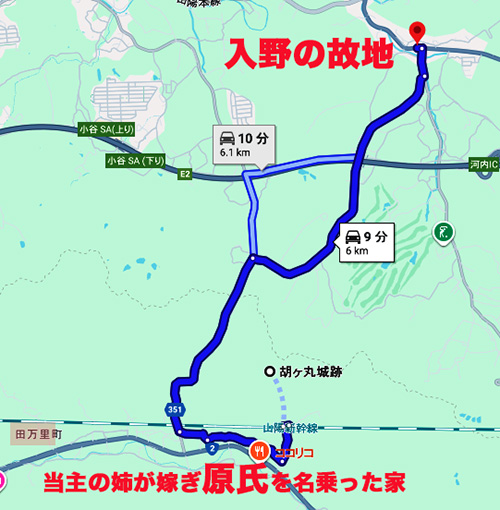
いまから423-4年前、1603年頃に紀州から移住し広島県河内町入野に入植したわが家先祖の故事を書き残してくれた六世の祖・三木寛蔵は、1815年に一族の「故地」入野を訪ねている。そこで書き残したのが「原氏由来の事」文書なのですが、その起点に以下のように書いている。
「往昔、紀州にて仕官たる処、慶長年中、故有りて浪人と相成る。兄弟四人、内男三人、女一人。(中略)
芸州豊田郡入野村え住居(すまい)す。女子のち同郡田万里村砂畑といへるに嫁ぎ、
母方の姓を以って家となされ、原氏を名乗る。」
という記述であります。実際に隣村の田万里(現在は広島県竹原市田万里町)では、江戸期を通じてこの原氏が庄屋職を務め、現在の国道2号線である山陽道の本陣を営んできた。これは芸藩通史など古記録にも記述。
ナゾ、なのであります。
嫁をもらってその嫁さんの家の家名を名乗る、とはどういうことなのか?
日本社会が基本として世界に冠たる戸籍制度を維持してきたのは、父系一系で維持されてきた天皇制という規範がすべての基底に存在したからと考えます。たしかに現代法では両性の合意があればどちらの姓を名乗ってもいいことになってはいますが、女子の家名をこの時代に名乗るのは・・・。
ひとつ考えられるのは、芸州藩・浅野家からの強い強制。入野と田万里という古代以来の交通の要衝地を「固める」のに、紀州からの国替えに同行した原氏の一族に現地管理の任を期待した。婚姻関係での「同家化」によって一体的管理を強化したか。
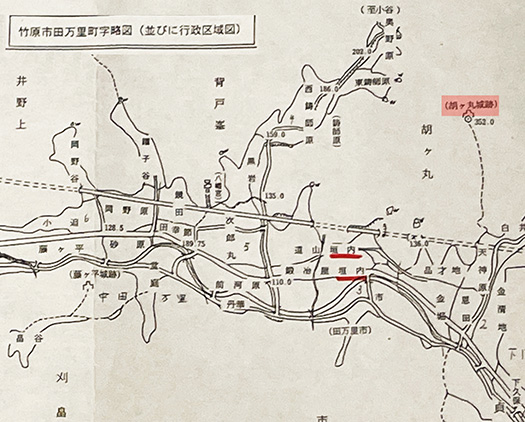
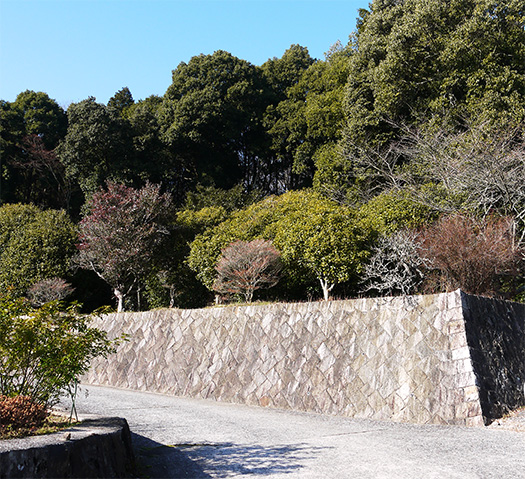
この田万里には、戦国期以来の古城がありその中心と言える「胡ヶ丸城」の防御的な石垣を想起させる地名「垣内」が複数確認できるのです。わが家系が入野で住居(すまい)した「北之垣内」と地名的に相応している。<一昨日のブログで紹介した江戸初期と思える石垣写真も掲載。>
やはり「故有りて浪人と相成る」ということの真実の意味合いは、枢要の地を現地で強力に統制管理する役割を紀州から同行させた「もと仕官」の原氏一統に委ねたという支配者・浅野藩の狙いが浮かんでくる。だから後代には藩行政のカギになる「所務役」をも受け持たせたのかと。
江戸初期の国替え、徳川最大の敵・旧毛利領の引継支配には浅野家の相当の策略があったのではないか。
家系史探究の脂っこさ沸点(笑)かなぁ・・・。
●お知らせ
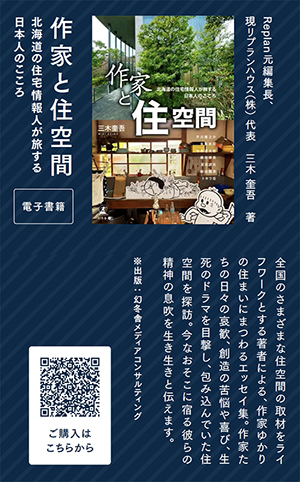
拙書「作家と住空間」幻冬舎から電子書籍で発刊
お求めはAmazonで。
https://amzn.asia/d/eUiv9yO
English version⬇
【The family that married into neighboring Tamari adopted the bride’s family name “Hara”…】
A puzzling passage in the family history. The husband’s family actually held the village headman position in neighboring Tamari throughout the Edo period. Was this part of the Hiroshima Asano clan’s regional control strategy? …
Today continues our series delving into family history: “Four Centuries of Life’s Resume.”
Our sixth-generation ancestor, Miki Kanzo, who recorded the story of our family’s migration from Kishu to settle in Irino, Kawachi Town, Hiroshima Prefecture around 423-4 years ago (circa 1603), visited the clan’s ancestral home in Irino in 1815. The document he wrote there, titled “The Origin of the Hara Clan,” begins as follows:
“Long ago, while serving as retainers in Kishu during the Keicho era, circumstances arose that led us to become ronin. There were four siblings: three sons and one daughter. (…)
We settled in Irino Village, Toyoda District, Geishu. The daughter later married into a family in Sunahata, Tamari Village, in the same district.
They established a household using her mother’s family name and adopted the name Hara.”
This is the account. Indeed, in the neighboring village of Tamari (present-day Tamari-cho, Takehara City, Hiroshima Prefecture), this Hara family served as village headmen throughout the Edo period and operated the honjin (official inn) for the Sanyo Road, now National Route 2. This is also recorded in old documents like the History of the Gei Domain.
It’s a mystery.
What does it mean to take a wife and then adopt her family name?
I believe Japanese society fundamentally maintained its world-renowned household registration system because the norm of the Emperor system, sustained through a single paternal lineage, existed as the foundation for everything. While modern law certainly allows either surname to be adopted with mutual consent, taking the wife’s family name in this era…
One possibility is strong coercion from the Asano clan of the Geishu domain. To “secure” the ancient transportation hubs of Irino and Tamari, they likely expected the Hara clan, who had accompanied the transfer from Kishu, to take charge of local administration. Did they strengthen unified management through “same-family status” achieved via marriage?
Within this Tanemari region, several place names evoking the defensive stone walls of Kogamaru Castle—a central stronghold dating back to the Warring States period—can be identified. The name “Kakuchi” corresponds geographically to “Kita-no-Kakuchi,” where my family resided in Irino.
Indeed, the true meaning of “becoming a ronin for a reason” reveals the Asano domain’s strategy: entrusting the role of strongly controlling and managing this crucial location to the Hara clan, former retainers brought from Kishu. This explains why they later assigned them the key domain administrative role of “Sokumiyaku” (Office Duty Officer).
The early Edo period domain transfer and the takeover of the former Mōri territory—Tokugawa’s greatest enemy—likely involved considerable strategy on the part of the Asano clan.
This genealogical research is reaching its boiling point of greasiness (laugh)…
●Notice
My book “Writers and Living Spaces” published as an e-book by Gentosha
Available on Amazon.
共有:

Posted on 1月 13th, 2026 by 三木 奎吾
Filed under: 未分類



コメントを投稿
「※誹謗中傷や、悪意のある書き込み、営利目的などのコメントを防ぐために、投稿された全てのコメントは一時的に保留されますのでご了承ください。」
You must be logged in to post a comment.