本文へジャンプ

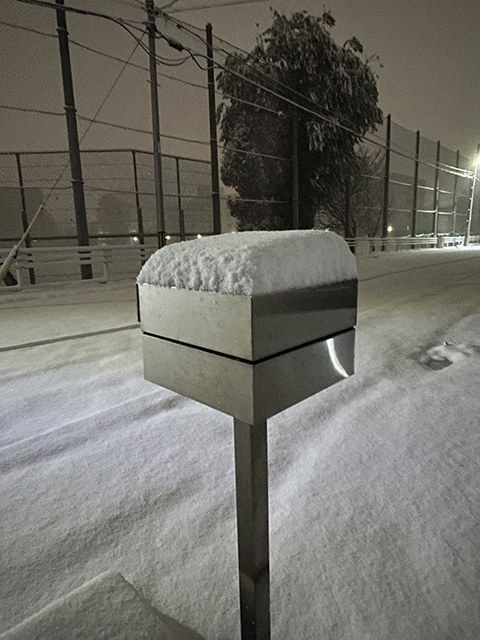
【本日早朝、目覚めたらホワイト世界・・・】


 写真のような光景が広がっておりました・・・。
 高齢期を迎えて、またブログの執筆更新を日課とした暮らし方なので、目覚めは早い。で、窓外の様子はそこはかとなく目に飛び込んでくる。北国人であればこの「雰囲気」には直感で目覚めさせられる。あ、っと。
 さっそくの「冬の元気なごあいさつ」であります(笑)。
 初雪が降り始めてから1週間〜10日ほどか。本日から本格的な「除雪」の必要なレベルの降雪。「そうか、今年も忘れずにしっかりとやって来てくれましたか、ふ〜む、ふむふむ」
 古くからの友人とも感じられる感覚なんだけど、こちらの年齢が高くなってくると、やや「やれやれ」感が漂って心理にある「重さ」が加わってくる。でも、こういう種類の律儀さには、深い部分での「愛着」もある。いっしょに生きているという感じに近いのでしょう。
 本日からはこの古い友人との「呼吸」合わせが半年ほどは続く。心理を転換させて日々の健康増進作戦の一環として、対話を始めていきたいと。静かな闘志のスイッチ着火・・・。
 一方、日々の思考・表現のツールであるMac環境でも、相次いでトラブル発生(泣)。
 現代生活の基盤的な要素であるメールの受発信のためのサーバー環境に異変が生じ、本来来るべきメールが「不着」という事実が相次いだ。調べてみたらサーバーのスペース残量が不足してきて「受け取ることが出来ません」という状況に立ち至っていた。こういったトラブルは初体験でしたが、さっそくサーバーの容量設定を拡大し、さらにメールの詳細設定で「ゴミ」を自動消去する設定をしていなかったアカウント設定を発見してきれいに消去。当面は解決させられた。ほっとひと安心。
 ところが今度は、入力ソフトであるATOKが使えないというアラート。これは支払関係の「更新」手続きについてのトラブルと判明。即座に解消することができた。現代の情報機器という基盤的環境について、高齢期になっての別法人起業という環境変化なので、きちんとした個人としての対応が不可欠。用心が肝心。
 情報化と長寿化が同時進行する現代生活。適切な対応力が試されていくのでしょう。ふーむ。

●お知らせ
拙書「作家と住空間」幻冬舎から電子書籍で発刊
お求めはAmazonで。
https://amzn.asia/d/eUiv9yO
English version⬇

【Woke up to a white world this morning…】
Oh, it’s been a while. I’ll put up with you for a bit longer, so brace yourself (lol). That kind of unapologetic attitude is nostalgic too. Like meeting an old friend again. …

 The scene spread out like a photograph…
Having reached my senior years and made blogging a daily routine, I wake up early. And so, the view outside the window inevitably catches my eye. For those of us from the northern regions, this “atmosphere” instinctively wakes us up. Ah.
It’s an immediate “vigorous winter greeting” (laugh).
 It’s been about a week to ten days since the first snow began falling. Today marks the level of snowfall requiring serious “snow removal.” “So, you’ve come faithfully again this year without fail, huh? Hmm, hmm hmm.”
It feels like an old friend, but as one gets older, a slight “Oh dear” feeling creeps in, adding a psychological “weight.” Yet, with this kind of punctuality, there’s also a deep-seated “affection.” It’s probably close to the feeling of living together.
Starting today, this “breathing in sync” with this old friend will continue for about half a year. I want to shift my mindset and start this dialogue as part of my daily health improvement strategy. The switch for quiet determination clicks on…
Meanwhile, in my Mac environment—my daily tool for thought and expression—troubles have been popping up one after another (sigh).
 The server environment for sending and receiving emails, a fundamental element of modern life, experienced abnormalities. Emails that should have arrived were repeatedly “not delivered.” Upon investigation, it turned out the server’s remaining space was insufficient, leading to a situation where “it cannot receive any more.” This was my first time experiencing such a problem. I promptly expanded the server’s capacity settings. Furthermore, I discovered an account setting where the “auto-delete junk” feature in the email’s advanced settings wasn’t enabled, so I cleaned it up. For now, it’s resolved. A sigh of relief.
But then, an alert popped up saying my input software, ATOK, wasn’t working. This turned out to be an issue related to payment “renewal” procedures. I resolved it immediately. Given the fundamental environment of modern information technology and the shift to starting a new business in my later years, proper personal management is essential. Caution is key.
Modern life sees both informatization and longevity advancing simultaneously. It seems our ability to respond appropriately will be tested. Hmm.

●Notice
My book “Writers and Living Spaces” published as an e-book by Gentosha
Available on Amazon.


【兄から先祖探索「業務」命令を拝受、うむむ】


 昨日は、令和7年度の北海道建設部・建築指導課の住宅施策検討会議に参加。今年度も引き続き任を継続することになりました。住宅建材価格の高騰と人手不足からの新設住宅マーケットの縮小傾向のなかで「北海道民」に役立つ施策の方向性という論議。提起されたテーマにはまことに多角的な検討が必要と実感させられました。謹んで少しでもお役に立つように務めたいと思っています。
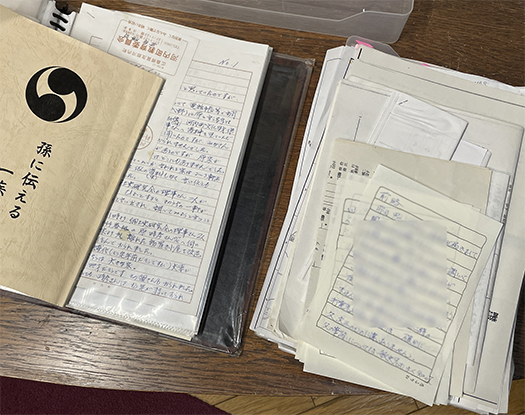
 で、帰宅後、今度はわたしより8歳年長の次兄が写真の「三木家先祖探究資料類」をかかえて来てくれた。
 次兄は数十年にわたって家系調査にあたって来ていて、わかりやすく本にもまとめてくれている(写真左側)のです。で、わたしの最近の生成AIを利用した調査中間報告を見てくれて、これは新たな発見があり得ると思って、持っている膨大な資料群から新たな「事実解明」をせよ、という「業務」命令。
 おおお、であります。生成AI自体はもちろん間違いも多く、使い方には慎重を期さねばなりませんが、使い方次第で有用性は高い。個人の調査範囲にはおのずと限界がありますが、生成AIはその面では可能性は広大。
 家系のルーツを探るというような用途では正確性に常に配慮すれば、利活用に向いている。
 しかし、提供された資料は非常に膨大なので「老後の楽しみ」領域ははるかに越えている(笑)。ニッコリ笑ってため息、というような心境であります。しかし、兄からの命令には従順に従うしかない(キッパリ)。年長者には従うというのは人類の重要な「掟」だと思います。
 さて、江戸よりも前、戦国期の社会実相にも迫りうる資料類解析作業。個人的な「先祖探索」目的とは言え、歴史探究という意味では、そのプロセスで「公益」的なこともあると思います。楽しみつつ、そして強い人間への興味関心を基軸にして、できる限りのことはしてみたい。
 そしてそのことは、高齢期の「脳活」に直結するとも思っています。
 
●お知らせ
拙書「作家と住空間」幻冬舎から電子書籍で発刊
お求めはAmazonで。
https://amzn.asia/d/eUiv9yO

English version⬇

Received an ancestral research “assignment” from my elder brother. Hmm.
Obedience to elders’ commands is the wisdom that has sustained humanity’s long lineage.
Contemplating the path’s vastness, I accept. I’ll do it. …

 Yesterday, I attended the Housing Policy Review Meeting for the Hokkaido Construction Department’s Building Guidance Division for fiscal year 2025. I will continue in this role for the current fiscal year. Amidst rising housing material costs and labor shortages leading to a shrinking new housing market, we discussed policy directions beneficial to “Hokkaido residents.” The themes raised truly highlighted the need for multifaceted consideration. I sincerely hope to be of some service.
 Then, after returning home, my second eldest brother, who is eight years older than me, brought over the materials titled “Miki Family Ancestral Research Documents.”
 My second brother has been researching our family lineage for decades and has even compiled it into an easy-to-understand book (on the left in the photo). After seeing my recent interim report using generative AI, he thought it might lead to new discoveries. He issued a “work order” to uncover new “facts” from his vast collection of materials.
Oh my. Generative AI itself, of course, makes many mistakes, and its use requires caution. However, its usefulness is high depending on how it’s applied. Personal research naturally has its limits, but generative AI offers vast possibilities in that regard.
For purposes like tracing family roots, it’s well-suited for utilization as long as accuracy is constantly considered.
However, the provided materials are so vast that this far exceeds the realm of “a hobby for retirement” (laugh). It leaves me smiling and sighing at the same time. But I have no choice but to obediently follow my brother’s orders (firmly). I believe obeying one’s elders is an important “rule” for humanity.
Now, analyzing these materials could even shed light on the social realities of the Warring States period, before Edo. While my personal goal is “ancestral exploration,” in terms of historical inquiry, I think the process itself can have some “public benefit.” I want to enjoy it, keep my strong interest in people as my core focus, and do as much as I possibly can.
And I also believe this directly connects to “brain training” in old age.
●Notice
My book “Writers and Living Spaces” published as an e-book by Gentosha.
Available on Amazon.
 

【北海道に稀有な個人住宅&日本庭園 八雲「梅雲亭」】


 今回の道南旅を巡っていて、気付いていたのが日本人的な四季変化への感受性。
 しかし函館の香雪園で出会っていた欧米人や、某国とおぼしきアジアンもこの日本列島の四季変化、とくに秋の紅葉については、有無を言わせない数寄を感じているようでした。変化に富んだ列島地形と明瞭な四季変化が織りなす景観の圧倒的な魅力には、だれもがヨワいのだと思わされる。
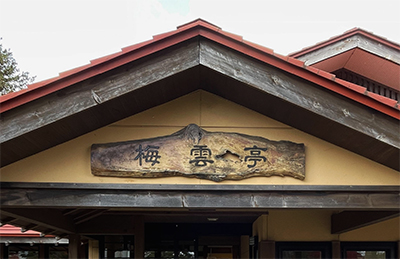
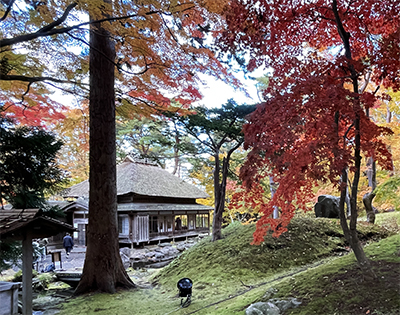
 で、最後に近く訪れていた北海道八雲町の個人住宅、旧梅村邸「梅雲亭」。こちらは個人住宅サイズの面積の中に「池泉廻遊式庭園」が本格的に造営されていた。北海道は積雪寒冷の条件から、いわゆる「日本庭園」へのこだわりは希少な存在。函館の香雪園は稀有な存在だと思っていましたが、それよりははるかにコンパクトだけれど、季節感へのこだわりを深く見せられた。
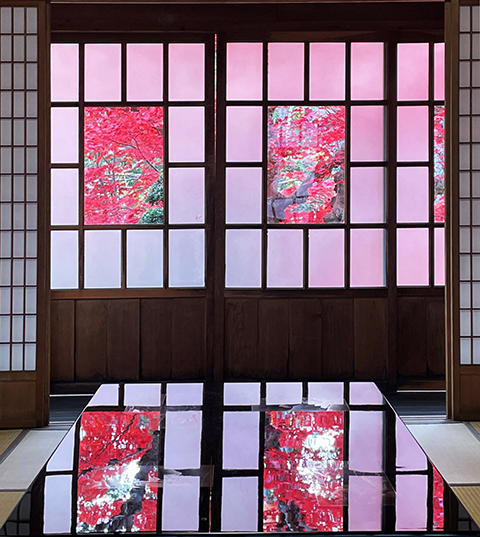
 上の写真は「離れ」室内から奥の庭を硝子窓越しに見たアングル。
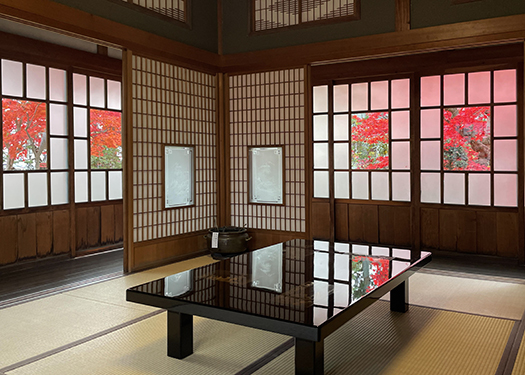
 この住宅は大正12年頃から着手され昭和5年に完成したという。この当時の建築素材としてガラスは大きさが小割だったので、それを補なって、かつ桟組みによってデザイン性も考慮された開口部になっている。その窓を通して周囲の紅葉が室内に映り込む様子を「デザイン」している。
 和の座卓表面には漆塗りが施されているけれど、その意味合いについてここまで「わかりやすい」のは初めて。
 曇ガラス窓からの紅葉が、まるで幻視のように卓表面に映り込んでいる。「そうか、そういう趣向か」
 こういう光景の中、賓客を応接する、もてなされる、という意味合いが明確に視覚化。
 映像芸術や娯楽がない時代に、こうした視覚刺激を受け取る手段として、このような建築的な仕掛けが一般的に行われていたことが、新鮮な驚き。こういう「歓待」を受けて、「それで例の案件のことですが・・・」と切り出されれば「まぁよしなに(笑)」というビジネス上の展開も、わかりやすくあり得る・・・。
 そういう目的のための雰囲気作りと考えれば、日本的建築文化にコストを掛ける心理も明確化する。
 ただ、北海道地域の大部分ではこういった「しつらい」は無力だったことだろう。その結果、まずは人間の体温の安定性確保というもっとも基盤的な部分に家づくりの主たる興味が移行していった。
 その狭隘な部分を垣間見た思いであります。

●お知らせ
拙書「作家と住空間」幻冬舎から電子書籍で発刊
お求めはAmazonで。
https://amzn.asia/d/eUiv9yO

English version⬇

【Yakumo’s “Baikuntei”: A Rare Private Residence & Japanese Garden in Hokkaido】
A beautiful visual display of the changing seasons unfolds on the black lacquered tabletop. “Oh, ◎◎-ya, you’re quite the rascal, aren’t you? Heh heh…”

 During this trip through southern Hokkaido, I noticed the Japanese sensibility for seasonal change.
Yet, the Westerners I met at Hakodate’s Kosetsuen Garden, and the Asians who seemed to be from a certain country, also appeared to feel an undeniable appreciation for the seasonal shifts across the Japanese archipelago—especially autumn’s foliage. It seems everyone is captivated by the overwhelming charm of landscapes woven from the archipelago’s varied terrain and distinct seasonal changes.
 Finally, I visited the private residence “Baikuntei” (formerly the Uemura residence) in Yakumo Town, Hokkaido. Within the compact footprint of a private home, a full-scale strolling pond garden had been meticulously constructed. Given Hokkaido’s snowy, frigid climate, such dedication to creating a traditional Japanese garden is rare. I had considered Hakodate’s Kosetsuen Garden exceptional, but this garden, though far more compact, demonstrated an even deeper commitment to capturing the essence of the seasons.
 The photo above shows the view of the inner garden through a glass window from the detached building.
Construction on this residence began around 1923 and was completed in 1930. Glass panes were small for the time, so the openings were designed with mullions to compensate and add aesthetic appeal. The view of autumn leaves reflected through these windows into the room was “designed” as part of the composition.
 The surface of the Japanese-style low table is lacquered, but the meaning behind this has never been so “obvious” to me before.
The autumn leaves seen through the frosted glass window are reflected onto the table surface like a phantom vision. “Ah, so that’s the idea.”
Within this scene, the meaning of receiving guests, of being entertained, is clearly visualized.
 It’s a fresh surprise to learn that in an era without visual arts or entertainment, such architectural devices were commonly employed as a means to provide this kind of visual stimulation. Receiving such “hospitality,” then being prompted with “Now, about that matter we discussed…” would likely lead to a business exchange along the lines of “Well, let’s see what we can do (laughs)”… quite a plausible scenario.
Considering it as atmosphere-building for that specific purpose clarifies the psychology behind investing in Japanese architectural culture.
 However, in most of Hokkaido, such “decorative arrangements” were likely ineffective. Consequently, primary interest shifted to the most fundamental aspect: ensuring stable human body temperature.
I felt I glimpsed that narrow focus.

●Notice
My book “Writers and Living Spaces” published as an e-book by Gentosha
Available on Amazon.
 

【時空間を越えてめぐる旅。往復800kmから帰還】


 連休を1日ずらしての日程で昨日夕方わが家に帰還。
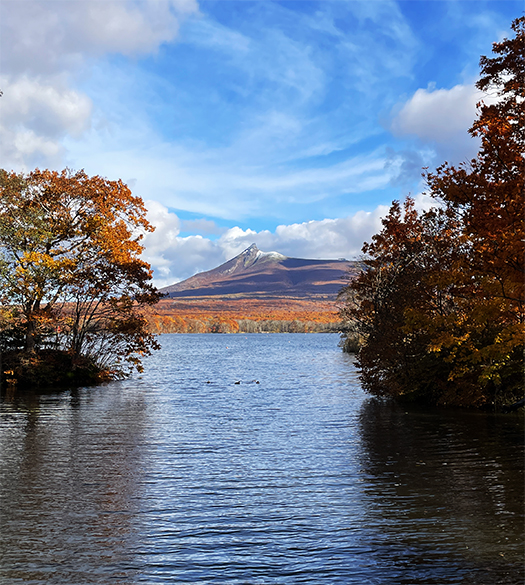
 ヒグマ騒動渦中での旅なので慎重に行動を抑制しながら紅葉を巡っていました。写真は函館の近郊・大沼公園でみる駒ヶ岳。大沼の自然景観は大好きで高校2年の頃に初めて訪ねて以来、ずいぶんたくさん訪ねてきているけれど、その魅力の奥行きにはずっと耽溺してきています。
 日本人は列島各地の名山に「ふるさとの山に向かいて言うことナシ」という感情を持ち続けていると思いますが、道南ではやはりこの駒ヶ岳。独特の山容が織りなす四季折々の表情、それをめぐっての雲の流れなど「うつろい」に癒されるのでしょうね。日本人らしさ、かと。

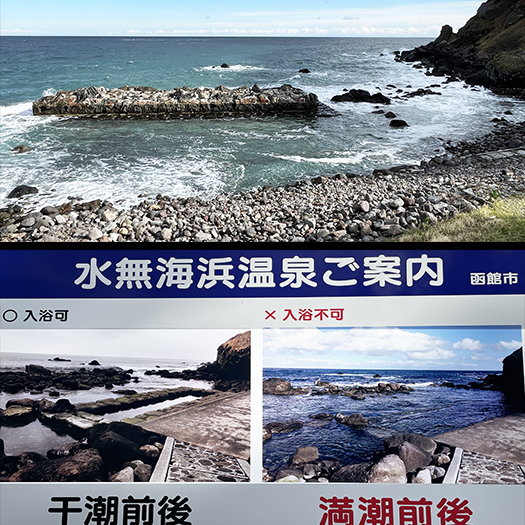
 今回の旅では、子どもたちが幼かった頃にめぐり会っていた場所が記憶再生される「恵山」地域まで再訪出来た。上の写真の場所ですが、海水の干潮時には海水と温泉水が絶妙に混合し「露天風呂」を楽しめる海岸。カミさんは小学生くらいのとき、叔父さんがこの地に暮らしていて訪ねた記憶再生。その記憶に添って子どもたちとの記憶もそこに積層していると。彼女にとっては父母に関わる世代と、自分の子どもたち世代の記憶が積層する「場所」。わたし自身も、その記憶の中で「背景」であり当事者として関わっている・・・。
 すっかり「時空間旅行」になってしまって、わたしも子どもといっしょに露天に入っていた記憶が甦ってしまっていた。現在と過去の狭隘の記憶領域に「うっとり」するような時間。

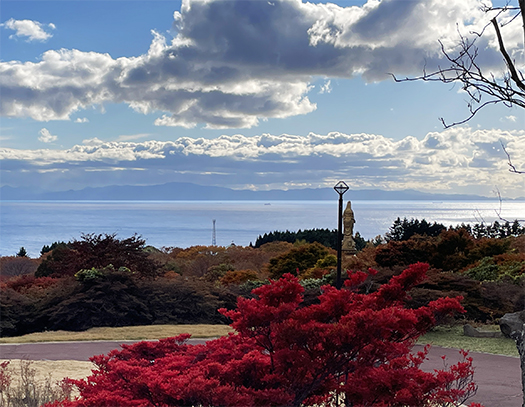
 一方でわたしもその近くの「恵山ツツジ園」を訪ねた父母の旅路の記憶が、再生されてしまっていた。
 父母から話だけを聞いていた父母ふたりでの旅の地にめぐり会えた、望外なよろこび。ツツジは春の季語かと思っていたけれど、紅葉した様子もそれなりの美感を見せてくれていた。津軽海峡に向かって観音像が建てられていて、世を去った父母のことを思い出させてもらえた。これも時空間旅行。「オレも来られたよ(笑)」
 自分が関わっている「家系」3世代のことがらが、微妙なコントラスト風景として記憶再生される空間・場所。
 高齢期になって、こんな味わいがあるのだと実感させられていました。

●お知らせ
拙書「作家と住空間」幻冬舎から電子書籍で発刊
お求めはAmazonで。
https://amzn.asia/d/eUiv9yO

English version⬇

【A journey traversing time and space. Returning from an 800km round trip】
A space and place where reality and the past intersect. A zone where the “fluctuations” of intergenerational memories encountered throughout life’s timeline are reborn, offering new experiences. …

 I returned home yesterday evening, shifting my schedule by one day during the holiday period.
Traveling amidst the brown bear commotion, I carefully restrained my actions while touring the autumn foliage. The photo shows Mount Komagatake seen from Onuma Park near Hakodate. I adore Onuma’s natural scenery; since first visiting in my second year of high school, I’ve returned countless times, continually captivated by its profound charm.
 I believe Japanese people retain a sentiment of “no complaints when facing the mountains of one’s homeland” toward famous peaks across the archipelago. In southern Hokkaido, that mountain is undoubtedly Mount Komagatake. Its unique silhouette weaves expressions across the seasons, and the shifting clouds around it—this “transience” must be what heals us. It feels quintessentially Japanese.

 On this trip, we revisited the “Esan” area where memories resurfaced of places encountered when the children were young. The location in the photo above is a coastline where, at low tide, seawater and hot spring water blend perfectly, creating an open-air bath experience. My wife recalled visiting when she was around elementary school age, as her uncle lived in this area. Alongside that memory, memories with our children have also layered there. For her, it’s a “place” where memories of the generation connected to her parents and the generation of her own children are layered. For me too, within those memories, I am both the “background” and a participant involved…
It completely became a “journey through time and space,” and memories of me bathing in the open-air bath with my children came flooding back. A time of “enchantment” in the narrow memory space between the present and the past.

 Meanwhile, memories of my parents’ journey to the nearby “Keizan Tsutsuji Garden” had been replayed in my mind.
The unexpected joy of finally visiting the place where my parents had traveled together, a destination I’d only heard about from their stories. I’d always thought azaleas were a spring seasonal word, but their autumn colors displayed a beauty all their own. A statue of Kannon faced the Tsugaru Strait, reminding me of my parents who had passed away. This too was a journey through time and space. “I made it here too (laughs).”
A space, a place where memories of three generations of my own “family lineage” are replayed as a landscape of subtle contrasts.
Reaching old age, I truly felt this kind of depth and flavor.

●Notice
My book “Writers and Living Spaces” published as an e-book by Gentosha
Available on Amazon.
 

【「マナーと創意」の海外観光客に微笑み好意】


 さて道南の旅ですが、最近は全国各地で「海外客」が爆増している。円安の流れからいわば「ジャパンセール」が起こっているのでしょうね。一方でそういった海外客の一部のマナー違反にたびたび遭遇することで「嫌気」が起こってしまい、日本人観光客が減少傾向顕著だという。長期的に見て日本の観光業の先行きは危ういのではないか、という不安の声も出てきている。
 たしかに目に余るマナー違反には思わず怒気を持たされることもある。景色の良いレストランで店側のご好意で眺望のいい席で夫婦楽しく食事していたら、某国の団体客のみなさんが入れ替わり立ち替わり、わたしたちの席の眺望を「ふさぐ」ようにカメラを持って食事の静粛性を乱される。
 一度などは、食事しているカミさんの頭の真上からカメラを構えられたりした。さすがに夫として、声を出して注意してしまっていた。それでも謝罪のアクションすらほぼ見られない。・・・。
 そんなことでこれまでの「観光スポット」を徐々に日本人は回避して「海外観光客のまったく来ないスポット」を探し求めているように思われる。だから統計カウント箇所の既存観光スポットから日本人は減少しているのではないか。わたしたち夫婦もそういう「先駆け」志向。これはこれで創意工夫でのあらたな日本観光の「進化発見」可能性かも知れませんね。
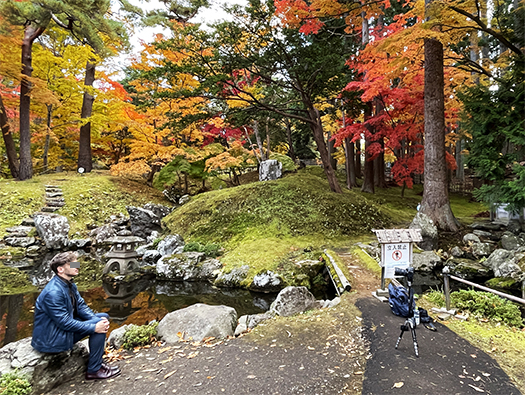
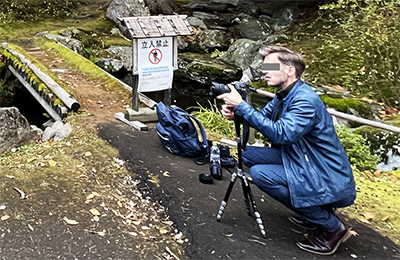
 しかし一方、観光地の中でも海外客の「マナーと創意」を感じることもある。写真は函館の日本庭園「香雪園」の人気スポット・岩船家別荘ですが「庭への遊歩道」が通行止めに。コケ絨毯が踏み荒らされる不安からと思われましたが、その停止線手前側で、別荘外観を背景に園池と紅葉を収めるべくカメラタイマー撮影を工夫している欧米観光客を発見した。
 「う〜む、その手があったか(笑)」とかれのセンスの良さを受け取った。ごく自然なんだけれど創意工夫とマナーが伝わってきて楽しい。かれの静かな内心での「ドヤ顔」ぶりが感じられ好感を持った次第。思わず握手したくなった(笑)。その場の空気感に「なごみ」が加わってくる。「香雪園」来て良かったなぁ、という気分になっておりました。

●お知らせ
拙書「作家と住空間」幻冬舎から電子書籍で発刊
お求めはAmazonで。
https://amzn.asia/d/eUiv9yO

English version⬇

【Smiling Kindness for Overseas Tourists with “Manners and Creativity”】Capturing the beauty of Japanese gardens perfectly, taking quiet, self-satisfied photos with proper manners (lol). Oh, nice. One cushion! …

 Now, regarding my trip to southern Hokkaido, there’s been a recent explosion of “overseas visitors” across the country. With the weak yen, it’s essentially a “Japan sale,” I suppose. On the other hand, frequent encounters with some of these overseas visitors’ lack of manners have led to growing resentment, resulting in a noticeable decline in Japanese tourists. Concerns are emerging that Japan’s tourism industry may face an uncertain future in the long term.
 Indeed, blatant breaches of etiquette can sometimes provoke anger. Once, my wife and I were happily dining at a scenic restaurant, seated at a table with a great view courtesy of the staff. Then, a group of tourists from a certain country took turns sitting at our table, blocking our view while taking photos and disrupting the quiet atmosphere of the meal.
 On one occasion, someone even held their camera directly above my wife’s head while she was eating. As her husband, I couldn’t help but speak up and ask them to stop. Even then, there was hardly any sign of apology. …
Because of such incidents, it seems Japanese people are gradually avoiding the traditional “tourist spots” and seeking out places where overseas tourists simply don’t go. That might explain why Japanese visitors are decreasing at the existing tourist spots counted in the statistics. My wife and I are also part of this “pioneering” trend. This could be a creative new “evolutionary discovery” for Japanese tourism.
On the other hand, I sometimes notice the “manners and creativity” of foreign tourists at these spots. This photo shows the popular spot at Hakodate’s Japanese garden, Kosetsuen: the Iwafune Villa. The “garden walkway” was closed off. I assumed it was to prevent trampling the moss carpet, but just before the stop line, I spotted a Western tourist creatively setting up a camera timer to capture the villa’s exterior against the garden pond and autumn leaves.
“Hmm, I never thought of that (laughs)” – I admired his good sense. It felt completely natural, yet conveyed both ingenuity and manners, which was delightful. I could sense his quiet, satisfied smirk inside, and it made me like him. I almost wanted to shake his hand (lol). It added a sense of warmth to the atmosphere. I found myself thinking, “I’m really glad I came to Kosetsuen.”

●Notice
My book “Writers and Living Spaces” published as an e-book by Gentosha
Available on Amazon.

【紅葉旅/日本海側〜大沼まで350km南下】


 連休につき道内行脚旅、今回は道南方面であります。ことしは最北の稚内から、北方領土を除けば最東端に近い根室付近、そして襟裳岬など北海道地形の「端っこ」を行脚してきています。あ、そういえば高度でも最高に近い「層雲峡」にも行ったので、いろいろ天地左右的に巡ってきています(笑)。
 ということで今回の道南方面でも、奥尻島を望む最西端に近い日本海側を走ってみました。夫婦とも北海道人であるわたしたちですが、「こんなとこ、初めてだべさ」という楽しいドライブ旅であります。高齢期だけど、運転は今のところ苦にならない。・・・今のうち(笑)。
 話し合っている内に最近のヒグマ危機のことが気になって、あんまり山の中とかは避けたい、ということで、またノンビリ南下しようということになって、日本海側を南下するルート選択。
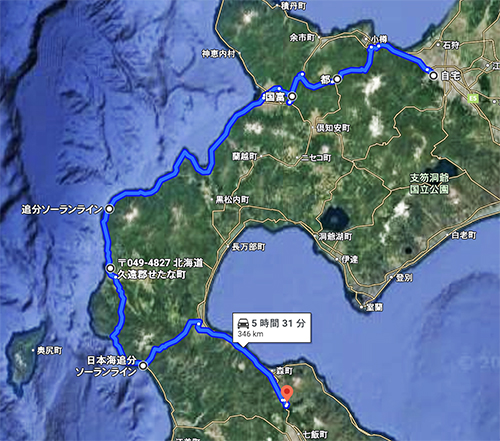
 GoogleMap図のようなルート、おおむね350kmの道中でした。途中あちこちに立ち寄りして、ヒグマを怖がりながら、少しでもウォーキングもしたいと欲張り。紅葉のすばらしさに感嘆の声を上げながら、ときどき道路脇を歩いて紅葉撮影しておりました。
 道中ではおかげさまでヒグマの影は感じませんでしたが、シカには遭遇したし、キツネたちはあちこちでクルマに「寄ってくる」姿と遭遇。その様子を見ていて、「あ、これって・・・」と気付かされたのが、野生動物への「給餌」行為へのかれらの条件反応なのではないかと言うこと。
 ほとんどクルマの車体スレスレに、怖れることもなく近接遭遇してくるのです。
 先日もブログで触れた「給餌するひと」のことが想起されてしまった。
 わたしたち夫婦も、ながく北海道の道路を走ってきているけれど、どうもこのような自然動物の反応ぶりは記憶にない。とくに最近になってこのような傾向が発生しているのだとすれば、ヒグマ危機の根はどうも深そうだと思われますね。
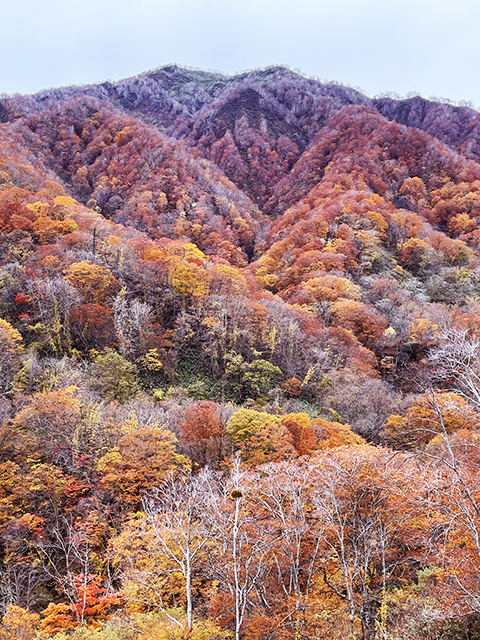
 一方、紅葉ぶりは写真のようになかなかのレベル。とくに日本海側から内浦湾側の八雲に抜けた辺りはまさに絶景の連続でした。
 連休の日、北海道の秋を、歩いてあるいは車窓からゆっくり楽しみたいです。

●お知らせ
拙書「作家と住空間」幻冬舎から電子書籍で発刊
お求めはAmazonで。
https://amzn.asia/d/eUiv9yO

English version⬇

Autumn Foliage Journey / 350km Southbound from the Sea of Japan Coast to Lake Onuma, Hakodate
Along the way, splendid autumn colors delight the eyes. Yet glimpses of wildlife abnormalities also become apparent. …

 This long weekend, we’re traveling around Hokkaido, heading to the southern part this time. This year, we’ve been visiting the “edges” of Hokkaido’s geography: from Wakkanai in the far north, to the vicinity of Nemuro near the easternmost point (excluding the Northern Territories), and then to Cape Erimo. Oh, and we also went to Sounkyo, which is close to the highest point too, so we’ve been covering all the corners, top to bottom and side to side (laugh).
 Not that it’s directly related, but on this trip to southern Hokkaido, we also drove along the Sea of Japan coast near the westernmost point overlooking Okushiri Island. Though both my spouse and I are Hokkaido natives, we laughed, saying, “We’ve never been to a place like this before, huh?” It’s been a fun driving trip. We’re getting older, but driving isn’t a burden yet… for now (laugh).
 As we talked, we started worrying about the recent brown bear crisis and decided we’d rather avoid deep mountain areas. So we chose a route heading leisurely south along the Sea of Japan coast.
 The route, roughly 350km as shown on Google Maps, took us through various stops along the way. We were a bit greedy, wanting to walk a little while still being wary of brown bears. We marveled at the stunning autumn colors, occasionally walking along the roadside to photograph the foliage.
 Thankfully, we didn’t sense any brown bears along the way, but we did encounter deer. We also saw foxes approaching cars in various places. Watching them, it struck me: “Ah, this is…” It made me realize this might be their conditioned response to being fed by humans.
They approached dangerously close to the cars, almost brushing against the bodywork, showing no fear whatsoever.
 It reminded me of the “people who feed them” I mentioned in my blog recently.
My wife and I have driven Hokkaido’s roads for many years, but I don’t recall wildlife reacting like this before. If this trend has emerged recently, it suggests the root of the brown bear crisis runs deep.
 On the other hand, the autumn foliage was truly spectacular, as seen in the photos. Especially the stretch from the Sea of Japan coast to Yakumo on the Uchiura Bay side offered one breathtaking view after another.
During the holiday, I want to leisurely enjoy Hokkaido’s autumn, either on foot or from the car window.

●Notice
My book “Writers and Living Spaces” published as an e-book by Gentosha.
Available on Amazon.
 

【古文書などの「人類知対照力」というAIパワー活用】


 昨日は1日中の激しい降雨。やむなくMacを使った高齢期のAIとの対話の日でした。
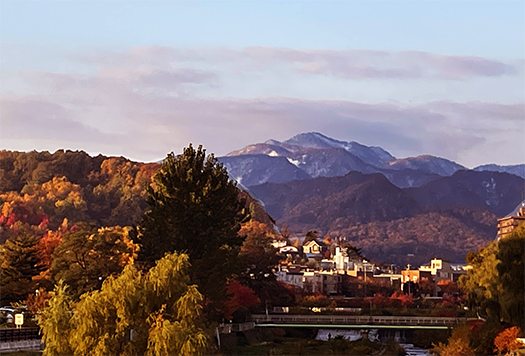
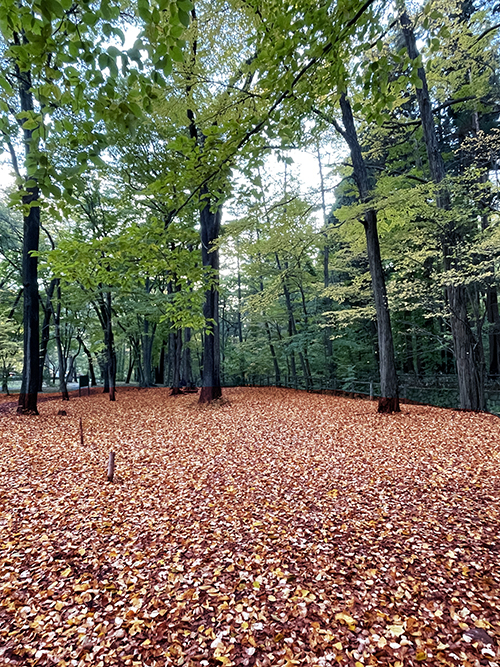
 写真はその前々日の「札幌岳」遠望と札幌円山登山口周辺の落ち葉の絨毯ぶり。いかにも「晩秋」感が漂いますが、しかしまだ緑の葉も残っていて、なかなかなコントラストぶりであります。
 さて、わたしの家系で遺されてきた「記録」や肉親・縁者の多大な労務の「調査結果」をもとにしての家系探索。現代人としていま、提供され始めたAI技術を活用し続けています。
 知人の北海道の住宅建築研究者の方からも「反応」をいただきました。多様な見方をご教授いただき、深く感謝申し上げます。そしてそのご意見も反映させてさらに調査活動を進めている次第。やはり的確な「指針」を加えれば加えるほど、いろいろな周辺的な、その時代の「社会実相」の手掛かりが得られてくるように思います。AI技術は当然ながら「間違い」も多いので、どんどん真実性が深まっていくプロセスにいま現代のわたしたちは遭遇しているのでしょう。いまのわたしたちのAIとの「対話」こそ、また次世代への「知の伝承」になるのではないかと愚考してきています。
 そういうなかで、よりリアリティのある「推論」が浮かび上がってくるものなのでしょう。そして、ふたたび現実にフィードバックして人間社会が「検証する」ということかと。
 しかし昨日のブログでも触れましたが、AI技術による「記録対照力」とでも呼ぶべきパワーは利用価値が高いものと実感しています。これまでの人類の知の積層は、さまざまな文献記録類に蓄積されてきているものですが、その総量は個人の「一生」で直接咀嚼出来る範囲をはるかにオーバーしている。
 それらを集約させる「図書館」機能として、AI技術はやはり利用価値が高い。
 もちろんAI技術に「人格」はないけれど、文章化された反応を見ていると、これらの人類知を「総合」した上での推論というように受け止めることはできますね。
 さてそういう結果の引き出し方「技術」、活用のマナーのようなものも、わたしたちAI技術活用の「フロンティア」には求められるのでしょうね。 心したい。

●お知らせ
拙書「作家と住空間」幻冬舎から電子書籍で発刊
お求めはAmazonで。
https://amzn.asia/d/eUiv9yO

English version⬇
【Leveraging AI Power Called “Human Knowledge Comparison Capability” for Ancient Documents and More】
Modern society must fully recognize that this represents a frontier in AI technology application. Efforts toward feedback-driven “reverification” are essential. …

 Yesterday brought heavy rain all day long. It inevitably became a day for conversing with AI in my later years using my Mac.
The photos show the distant view of Mt. Sapporo from two days prior and the carpet of fallen leaves around the Sapporo Maruyama trailhead. It certainly has that “late autumn” feel, yet green leaves still remain, creating quite a striking contrast.
 Now, regarding my family history research: I’m exploring my lineage based on “records” passed down in my family and the “research findings” from the tremendous labor of my relatives and close family. As a modern person, I continue to utilize the AI technology that has recently become available.
 I also received feedback from an acquaintance who is a housing architecture researcher in Hokkaido. I am deeply grateful for the diverse perspectives shared. I am incorporating that feedback to further advance my research activities. Indeed, the more precise guidance I add, the more clues I seem to uncover about the surrounding social realities of that era. AI technology, of course, makes many mistakes, so perhaps we modern people are now encountering a process where truthfulness deepens step by step. I humbly believe that our current “dialogue” with AI itself may become the “transmission of knowledge” to the next generation.
Within this context, more realistic “inferences” will likely emerge. These, in turn, will be fed back into reality for human society to “verify.”
However, as mentioned in yesterday’s blog, I truly feel the power of AI technology’s “record-comparison capability” holds significant value. The accumulated layers of human knowledge have been stored in various written records, but their total volume far exceeds what any individual can directly digest in a lifetime.
As a “library” function to consolidate these, AI technology remains highly valuable.
Of course, AI technology has no “personality,” but observing its textual responses, one can perceive them as inferences synthesized from this accumulated human knowledge.
 Now, the “technique” for retrieving such results, along with the etiquette for utilizing them, is surely what we need to explore as the “frontier” of AI technology application. Let us keep this in mind.

●Notice
My book “Writers and Living Spaces” published as an e-book by Gentosha
Available on Amazon.

【AI探索で500年前の先祖の消息と出会えた(!)】


 北海道人は一般的に、あんまり「先祖」意識は強く持ってはいない。
 そもそもがほぼ明治以降、本州社会からの「スピンアウト」型の動機の移住が多数派で、あんまり「ふりかえりたくない」意識が強いのかと思える。「仏壇を背負って」というコトバがあるけれど、そういう移住経緯の家は多くはないのだと思います。
 そういうなか、わたしの家系は比較的にこの意識が強い。仏壇を背負って来たのにはいろいろな経緯もあったようですが先祖についての意識は強い。けれどさすがに遠く離れてしまったので、情報の「縁」は遠い。そんな意識から多くの血縁が度々、出身の故地を訪問し情報のすき間を埋めてきている。わたしはそういう知見を共有させてもらってきた。
 ・・・という経緯ですが仕事の現職をやや離れたことから、わたしもときどき自分なりに家系伝承の探訪をしています。情報探索の結果、1770-1836年を生きた先祖の事跡はかなり明瞭で、しかもかれはそこから遡ること150-60年前の「慶長年中」のことを書き記している。500年以上前のわが家系状況・・・。
 で、現代のわたしとしては少し知見が出来たAI技術を活用してみたいと思った次第。AI技術では「古文書・記録」のような著作権の発生しない文字情報の検索力は超絶にすばらしい。これまでは各地方に残っている古文書や民間伝承・歴史書はその地域に足を運ばなければ探索できなかったけれど、AI技術活用では一気に達成できる。
 それも知りたい情報のピンポイントを「上手に指示すれば」即座に答えてくれる。まぁその的確な情報検索には「足で集めた」情報内容が深く生きる。端的で、情報検索がしやすいキーワードの「想像力」が大切なのだと痛感させられます。
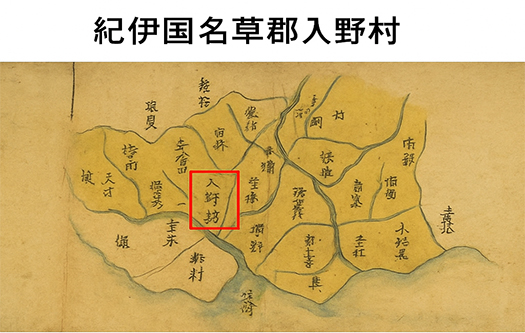
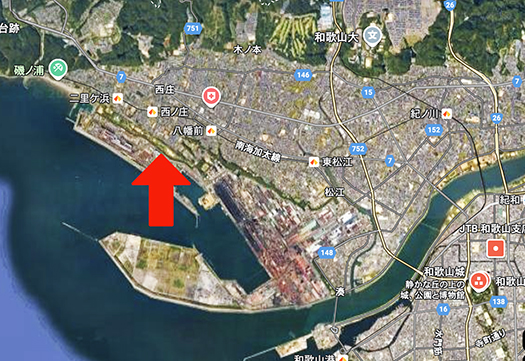
 ということで上はAIがたたき出してくれたわが家系の「故地」の古地図。英語圏で発達したAI技術なので文字表記に不明がありますが、地図以外の文字情報と対照することで問題ない。その下にGoogleMap。どうも和歌山城からほど近いこのあたりに500年以上前、家系は生存していたようなのですね。
 う〜む、であります。

●お知らせ
拙書「作家と住空間」幻冬舎から電子書籍で発刊
お求めはAmazonで。
https://amzn.asia/d/eUiv9yO

English version⬇ 

【AI Search Reveals the Whereabouts of My Ancestors from 500 Years Ago (!)】
An AI technology capable of exploring distant records of my family lineage that migrated to Hokkaido. Selecting the right “search keywords” seems to be the key. …

 People from Hokkaido generally don’t hold a particularly strong sense of “ancestry.”
Fundamentally, the majority of migration here since the Meiji period has been a “spin-off” type motivated by escape from Honshu society, so perhaps there’s a strong desire to “not look back.” While there’s the phrase “carrying the Buddhist altar on one’s back,” I don’t think many families migrated with that kind of history.
 Within this context, my own family lineage holds a comparatively strong sense of ancestry. While there were various circumstances surrounding the literal act of “carrying the Buddhist altar,” the awareness of our ancestors remains profound. However, the physical distance has inevitably made the “connections” for information scarce. Driven by this awareness, many blood relatives frequently visit their ancestral hometowns to fill in the gaps in our knowledge. I have been fortunate to share in these insights.
 …That’s the background. Now that I’ve stepped back somewhat from my current job, I occasionally explore my family history on my own. My research has revealed quite clear details about an ancestor who lived from 1770 to 1836. Moreover, he recorded events from the Keicho era, about 150-60 years before his own time. That’s over 500 years ago, detailing our family’s circumstances…
 So, as a modern individual, I thought I’d like to try utilizing the AI technology I’ve gained some insight into. AI technology has an absolutely superb search capability for textual information like “ancient documents and records” where copyright doesn’t apply. Until now, exploring ancient documents, folk traditions, and historical texts preserved in various regions required physically traveling there, but with AI technology, it can be achieved all at once.
 Moreover, if you “skillfully specify” the exact point of information you seek, it provides an immediate answer. Well, the depth of information gathered “on foot” truly comes alive in this precise information retrieval. It really drives home how crucial the “imagination” for concise, easily searchable keywords is.
So, above is an ancient map of my family’s “ancestral lands” that AI generated. Since this AI technology developed in the English-speaking world, the text notation is unclear, but cross-referencing with non-map textual information resolves any issues. Below that is Google Maps. It seems our family resided in this area, quite close to Wakayama Castle, over 500 years ago.
Hmm, indeed.

●Notice
My book “Writers and Living Spaces” published as an e-book by Gentosha
Available for purchase on Amazon.

【スマホなしでは「散歩」も出来ない症候群】


 一昨日、夫婦での会話。
 「あらら、スマホ忘れちゃったから散歩出来ないヮ〜」
 「そっか〜、そりゃしょうがないよね・・・??」
 あきらかにおかしいということに、ふたり気付くまでに数呼吸あったのであります(笑)。
 考えて見たら散歩という人間の行動は、人類がサルと分かれて地上歩行主体の行動様式に移行して以来、ほぼ「人類史」的な時間が流れている基本中の基本。とりあえずは外界に食料源になりうるものはないかと、身体を移動させて「探す」ということから始原したのでしょう。
 そういう人類史的な行動についてまで、スマホという最先端装置を持参する(しなけりゃ)という変化が起こってしまっていることに、笑いながら気付かされるワケですね。
 まぁそれくらい、スマホという電子デバイスによる人間行動変容が進化してきている。
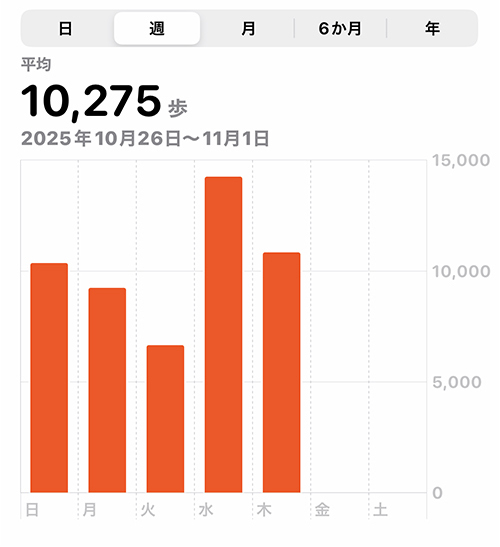
 これはあきらかに「1日8,000歩の歩行」が健康維持・増進にもっとも効率的だ、という情報が現代人の行動パターンに反映してきている証明でしょう。
まぁ、わたしのような健康維持・増進祈願派の高齢年代に特殊な傾向かも知れませんが、ちょうどパソコンやスマホという短期間に広範に行き渡ったデジタル機器革命がもたらした行動変容でしょう。「1日の歩数」というメルクマールに自分の行動記録が反映されないことに対して「損する」意識が働く。
 たぶんこの意識は、こういう損得勘定に根ざしているように思う。
 少しでも健康長寿を果たしたい、ということはしかし人間の本能でもあるでしょう。逆に言えばそういったiPhoneアプリ「ヘルスケア」の有用性を発見し実装させた慧眼はすばらしい。そしてそのように開発されて利用が広範に進んでいる領域について、産業発展要素もあるのでしょう。
 さて次の領域開発はどんなものになっていくか、興味深いですね。
 
●お知らせ
拙書「作家と住空間」幻冬舎から電子書籍で発刊
お求めはAmazonで。
https://amzn.asia/d/eUiv9yO

English version⬇ 

【The Syndrome Where You Can’t Even Go for a Walk Without Your Smartphone】
The smartphone has become an industrial infrastructure, revolutionizing human behavior. Where will these lost sheep wander next? …

 The day before yesterday, a conversation between husband and wife.
“Oh dear, I forgot my phone, so I can’t go for a walk~”
“Oh, I see~ Well, I guess that can’t be helped…?”
It took us a few breaths to realize how obviously strange that was (laugh).
 When you think about it, walking is a fundamental human activity. Since humans diverged from apes and adopted a primarily terrestrial lifestyle, it’s been a basic action spanning nearly all of human history. It likely began as a way to move one’s body and “search” for potential food sources in the outside world.
 And now, even this fundamental human activity has undergone a change where we carry (or must carry) cutting-edge devices like smartphones. We realize this with a laugh.
Well, that’s how far the transformation of human behavior by electronic devices like smartphones has evolved.
This clearly demonstrates how the information that “walking 8,000 steps a day” is most efficient for maintaining and improving health has been reflected in modern people’s behavior patterns.
Well, it might be a tendency specific to my generation of health-conscious seniors, but it’s likely an behavioral shift brought about by the digital device revolution – PCs and smartphones spreading widely in a short time. There’s a sense of “losing out” when your activity log doesn’t reflect the benchmark of “daily steps.”
I suspect this feeling stems from this kind of cost-benefit calculation.
 However, the desire to achieve even a little more health and longevity is surely also a human instinct. Conversely, the foresight that discovered and implemented the usefulness of iPhone apps like “Healthcare” is remarkable. And in areas developed and widely adopted in this way, there are likely industrial development factors at play.
Well, it will be interesting to see what the next area of development will be.

●Notice
My book “Writers and Living Spaces” published as an e-book by Gentosha
Available on Amazon.

【札幌いよいよ雪の季節 in 北海道神宮境内】


 本日は札幌の最低気温1度。マイナス気温まで直前。
 外套もダウンジャケットでオーバーでは無く、それも薄手から普通の暖か仕様になってきた。
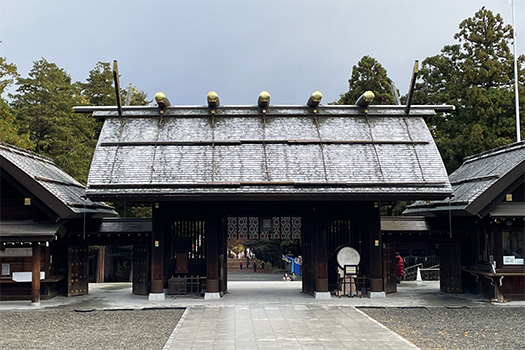
 写真は昨日の散歩で久しぶりに訪れた北海道神宮の様子。本殿入口「神門」で、屋根がうっすら白装束。前日の雨水が屋根に残り氷結していた上にうっすらと雪が積もったようでした。
 北海道人は、初雪がしずかに降り始める時に一種、やすらぎに似たものを感じる。
 なんとも言い難い独特の感情で「あ、ついに来たか」でもあるし「雪の消音感が迫ってくるなぁ」というようでもある。雪に覆われると自然の音響レベルが下がって、静かな時間が訪れる。
 視界からも「色合い」が後退してモノクロが支配するようになる。
 そういう「さみしさ」に似た背景になっていくのだけれど、一方で「おかえり」とでも声掛けしたくなるなつかしさもこころに芽生えてくる。・・・
 そんな散歩道でしたが、実は神宮の外苑である円山公園「下の池」付近で、ある老人男性が野生の小動物に「給餌」されている現場と遭遇。まき散らされた米粒の散乱ぶりを見て「これは困ったものですね・・・」と話しかけた。対してその方は「なにが悪いんだ」みたいな発言をされ、いきり立ってこれ見よがしに手許から木の実をポケットから出してリスたちに給餌され始めてしまった。
 この付近ではあきらかな米粒の散乱ぶりも最近目にしたしカモたちの様子にあきらかな異変も見られる。動物への餌やりは禁止の決まり、としてご注意したのですが「人間が環境を破壊したんだ、そのためかわいそうな動物にエサを与えているのだ。おれは環境を保全する善意の人間だ」「警察に突き出してやるぞ」と記述がはばかられる罵詈雑言を吐き散らす始末。
 警察に同行すれば餌やり禁止の公園規則マナーを知っていただけるとは思いましたが、まぁかなりヒステリックだったので、時間のムダとやむなくその場を立ち去りました。
 なんとも暗澹とした気分。餌やりは上辺だけの「善意」であり、結果として自然を大きく破壊する行為であること、周知が必要と実感した次第。う〜む。

●お知らせ
拙書「作家と住空間」幻冬舎から電子書籍で発刊
お求めはAmazonで。
https://amzn.asia/d/eUiv9yO

English version⬇ 

【Sapporo’s Snow Season Finally Arrives at Hokkaido Jingu Shrine】
Winter’s footsteps draw near. As northerners, we feel a unique “nostalgia” for the changing seasons. Many still fail to understand that feeding wild animals is not permitted. …

 Today’s low in Sapporo is 1 degree Celsius. Just shy of freezing.
Coats aren’t just down jackets anymore; they’ve shifted from thin to standard warm styles.
The photo shows Hokkaido Shrine, visited during yesterday’s walk after a long time. At the main hall entrance, the “Shinmon Gate,” the roof was lightly dusted white. It seemed the previous day’s rainwater had frozen on the roof, and a light dusting of snow had settled on top.
 When the first snow begins to fall quietly, Hokkaido residents feel a kind of peace.
It’s a unique, indescribable feeling – like “Ah, it’s finally here,” or “The muffling effect of snow is approaching.” Once covered in snow, the natural sound level drops, bringing a quiet time.
The “colors” recede from view too, and monochrome dominates.
 It becomes a backdrop resembling a kind of “loneliness,” yet at the same time, a nostalgic feeling sprouts in the heart, making one want to say something like “Welcome back.” …
It was a walk like that, but actually, near the “Lower Pond” in Maruyama Park, which is the outer grounds of the Imperial Shrine, I encountered an elderly man being “fed” by wild small animals. Seeing the scattered rice grains strewn about, I remarked, “This is a bit of a problem, isn’t it…” In response, he said something like, “What’s wrong with that?” and, clearly annoyed, began feeding the squirrels nuts he pulled from his pocket, doing so conspicuously.
 I’d recently noticed the obvious scattering of rice grains in this area, and the ducks’ behavior also showed clear signs of distress. Thinking feeding animals was prohibited, I tried to caution him. But he responded with a torrent of abuse too vulgar to repeat, shouting things like, “Humans destroyed the environment! That’s why I’m feeding these poor animals. I’m a benevolent person preserving the environment!” and “I’ll report you to the police!”
 I thought accompanying them to the police might help them understand the rules about no feeding in the park, but they were quite hysterical, so I reluctantly left, deciding it was a waste of time.
What a gloomy feeling. I truly felt it necessary to raise awareness that feeding is merely superficial “goodwill” and ultimately a major act of environmental destruction. Hmm.

●Notice
My book “Writers and Living Spaces” published as an e-book by Gentosha
Available on Amazon.