本文へジャンプ

【わが家系が「尾道の商家」だった江戸後期の時代相】


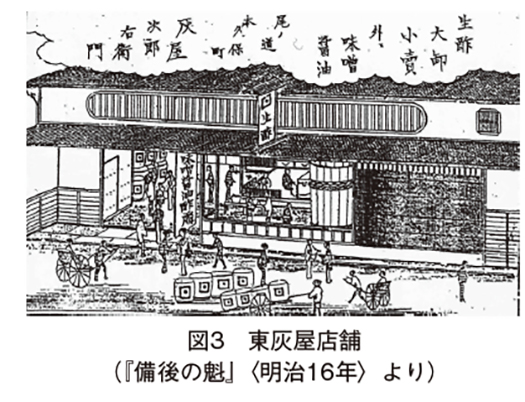
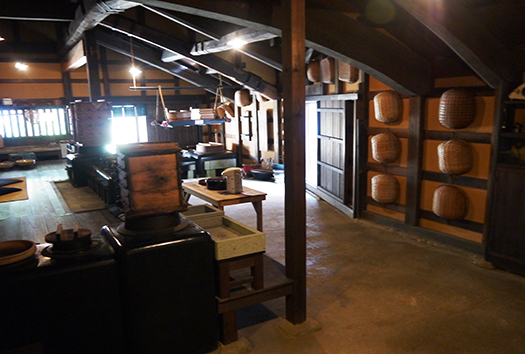
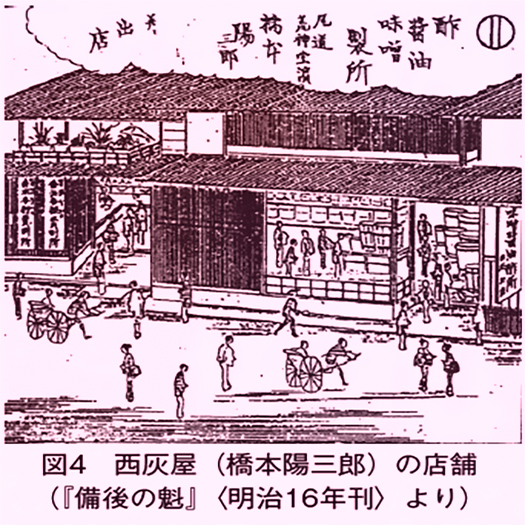
 写真は、2013年頃に石見銀山地域を巡ったときに参観していた「商家」の佇まい。で、その下の絵図は昨日に続いて尾道の豪商「灰屋」の店先風景。瀬戸内海側と日本海側ですが、ほぼ同時代の空気感。
 わたしは独立して以降、住宅にかかわって仕事を続けてきましたが、基本的に建築の内部空間が数寄の基本。それもこの写真のような商家が醸し出してくる空気感により強く惹かれる。農家のものづくり主体の機能性空間よりも、商家の人間交流が主体の空間性により惹かれる。
 コミュニケーション主体の空間性によりシンパシーを感じるのです。
 たぶんそれは幼年期から少年期に過ごしていた商家兼食品製造工場としてのわが家の空間記憶が大きいのだろうと思っていたのですが、家系調査を経てきてこの尾道で確実に過ごしていた血脈の様子が明確化してきた。江戸期の政治経済機構のなかで一族が生き延びてきたことが遠雷としてこだましてくる。
 「おう、阿賀屋、繁盛してるか?あ?」
 「おお◎◎さん、いつもご贔屓にありがとうございます。きょうはどちらへ?」
 「ああ、尾道の港から午後の便でこれから堺まで、半月ほどの商用だよ・・・」
 っていうような会話が迫ってきてくれるようなのです。そういう交流の中には武家もいただろうし、同業者同士の切った貼ったもあったことでしょう。そういうなかでわが家系は「塩」がキーポイントだったようです。
 「そういえば近頃、蝦夷地じゃぁサケを塩引きにして遠距離輸送・流通が可能なようにするんだって?」
 「そうなんですよ、高田屋嘉兵衛さんなどウチから塩を大量に船積みして北前航路に向かって、蝦夷地じゃぁたくさんの人足を使って群来のサケを水揚げして、塩で捌きまくるのだそうですね。荒稼ぎ。」
 「しかし塩鮭はうまいからなぁ、結構なことで(笑)」
 江戸期はこういった経済活動が、北前などの商品大量輸送を起動要素として発展したのでしょう。蝦夷地の北方漁業産品など多様な品々が天下の台所・大阪へ、瀬戸内海の潮の干満の要地・尾道は交易の最高立地。
 人的往来と情報の活発な流通。日本の市井の資本主義経済が力強く勃興する起点だったのでしょう。
 想像力はフツフツと沸き立ってきて、たまりません(笑)。

お知らせ
拙書「作家と住空間」幻冬舎から電子書籍で発刊
お求めはAmazonで。
https://amzn.asia/d/eUiv9yO
English version⬇

The Late Edo Period Through the Lens of My Family’s “Onomichi Merchant House”
Onomichi, the greatest trading hub of the Edo period where goods and information flowed freely. The way my family lived comes alive against this backdrop, bubbling up in my imagination (laugh). …

 The photograph shows the appearance of a merchant house I visited while touring the Iwami Ginzan region around 2013. Below it is a sketch, continuing from yesterday, depicting the shopfront scene of the wealthy merchant “Haiya” in Onomichi. Though on opposite sides of the Seto Inland Sea and the Sea of Japan, they share a similar atmosphere from roughly the same era.
 Since becoming independent, I’ve continued working in residential design, but fundamentally, the interior space of architecture is the essence of aesthetics. I’m particularly drawn to the atmosphere exuded by merchant houses like the one in this photo. More than the functional spaces centered on craftsmanship found in farmhouses, I’m captivated by the spatiality of merchant houses, where human interaction takes center stage.
 I feel a deep connection to these communication-centered spatial qualities.
I had always thought this stemmed largely from my childhood memories of my own home, which served as both a merchant house and a food manufacturing factory. However, through genealogical research, the clear presence of my bloodline’s time spent here in Onomichi has become evident. The echoes of my clan surviving within the political and economic structures of the Edo period resonate like distant thunder.
“Oh, Aga-ya, business booming? Huh?”
 “Oh, Mr. ◎◎, thank you for your continued patronage. Where are you headed today?”
“Ah, I’m taking the afternoon ship from Onomichi Port to Sakai. About a fortnight’s business trip…”
Conversations like this seem to come rushing back. Such exchanges would have included samurai, and no doubt fierce rivalries among fellow merchants. Within that, “salt” appears to have been the key point for my family line.
 “Speaking of which, I hear they’re salting salmon in Ezo these days to make long-distance transport and distribution possible?”
“That’s right. People like Takadaya Kahei ship huge loads of salt from us to the Kitamae route. In Ezo, they use tons of laborers to haul in the salmon run and process it all with salt. Making a killing.”
 “But salted salmon is delicious, so it’s a good thing (laughs).”
During the Edo period, such economic activities likely developed with the mass transport of goods via routes like the Kitamae as a driving force. Diverse products like northern fisheries goods from Ezo flowed to Osaka, the nation’s kitchen. Onomichi, a key location for the tides of the Seto Inland Sea, was the prime location for trade.
 The active flow of people and information. This was likely the starting point for the vigorous rise of Japan’s grassroots capitalist economy.
My imagination is bubbling up, I can’t stand it (laugh).

Notice
My book “Writers and Living Spaces” published as an e-book by Gentosha
Available on Amazon.


【江戸末〜明治初期の「尾道商家」の絵図】


 わが家の家系研究の一断面。
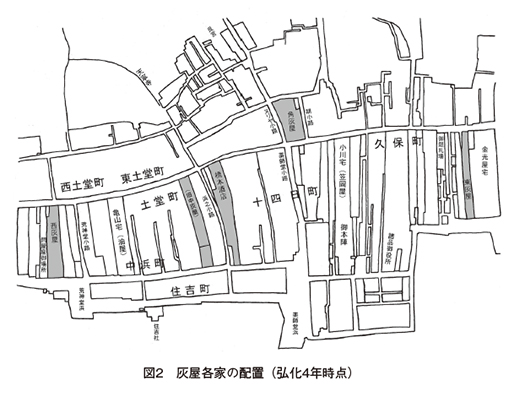
 この絵図は、広島県立文書館紀要のなかの「近世尾道商人の系譜と展開」中のもの。いかにも「町屋」としての商家のたたずまいが表現されている。江戸期の一般的な商家の店舗風景を思わせる。江戸の街のにぎわい絵図などでもこういった表現をよく見受ける。尾道は瀬戸内海交易の中核的な存在であり、日本の「資本主義」が揺籃されたというふうに考えられる。いま考察してみれば・・・。
 しかしわたしたちが60年以上前当時に学習していた「日本歴史」教育では、仇敵のように江戸期の「身分制度」を教えられ厳格な「士農工商」身分制が江戸期の人びとの価値観の根幹を規定したと教わってきた。わたしなど「よい子」そのものだったので(笑)固く信じて疑わなかった。日本の近代資本主義化は、明治維新以降、初めて成し遂げられたような錯覚を刷り込まされてきた。
 しかし尾道など家系の故地、その事跡を探究すればするほど、背景としての江戸期商品経済活動のダイナミックさに気付かされる。そういった経済面に着目しなければ動態的な理解が得られないことに直面してしまう。
 最近も、磯田道史先生MCのNHK歴史番組で江戸期の東北荘内の酒田藩と「本間家」のことがビビッドに解明されていた。庄内では江戸期の「回米」経済が主要な「原動力」だったことがわかる。武家による統治は政治表面上はそうだけれど、庄内の場合は基本商品としてのコメは大阪に回米されて現金化され、それが藩全体の経済基盤を形成した。加えて自助努力で紅花・商品作物への旺盛な取り組みなど、藩経済全体の「代理者」としての本間家という存在がわかりやすく見えていた。いわば藩全体の経済運営が本間家という起動力だったのだと知れる。回米は巨大な輸送船・運搬手段が大前提であり、その回船を維持管理する資力がこの本間家に集中する地域特性があったとわかるのだ。
 そういう実態は日本中でそのようだったことが容易に理解できる。
 江戸期のそういう商品流通の巨大なセンター機能を瀬戸内海交易・尾道は担っていた。その周辺地域に根拠を持ったわたしの家系は、おのずとその中で生き延びていたのだ。経済構造の歴史解明がいちばん正鵠だと気付かされてきている。・・・ちょっと遅いかなぁ(泣)。

お知らせ
拙書「作家と住空間」幻冬舎から電子書籍で発刊
お求めはAmazonで。
https://amzn.asia/d/eUiv9yO

English version⬇

【Illustrated Map of Onomichi Merchant Houses from Late Edo to Early Meiji Periods】
Everything hinges on the economy. That’s only natural. Understanding its true nature defines human destiny. We must firmly incorporate this perspective into our reconstruction of family histories. …

 A glimpse into my family’s genealogical research.
This illustration is from “The Genealogy and Development of Early Modern Onomichi Merchants” in the Bulletin of the Hiroshima Prefectural Archives. It vividly captures the appearance of a merchant house as a typical “machiya” townhouse. It evokes the common sight of merchant shops during the Edo period. Such depictions are frequently seen in illustrations of bustling Edo streets. Onomichi was a pivotal hub in Seto Inland Sea trade and is often considered the cradle of Japan’s “capitalism.” Reflecting on it now…
However, in the “Japanese History” education we received over 60 years ago, the Edo period’s “class system” was taught as if it were an enemy. We were taught that the strict “samurai, farmers, artisans, merchants” hierarchy fundamentally defined the values of Edo period people. Being the very picture of a “good student” (laugh), I firmly believed this without question. We were indoctrinated with the illusion that Japan’s modern capitalist transformation was only achieved after the Meiji Restoration.
However, the more I researched the ancestral lands of places like Onomichi and their historical deeds, the more I became aware of the dynamic nature of Edo-period commercial economic activity as a backdrop. I found myself confronted with the fact that without focusing on these economic aspects, a dynamic understanding simply cannot be gained.
 Recently, an NHK historical program hosted by Professor Michifumi Isoda vividly illuminated the Edo-period Sakata Domain in Tohoku’s Shonai region and the “Honma family.” It became clear that the Edo-period “rice circulation” economy was the primary “driving force” in Shonai. While samurai rule was the political facade, in Shonai’s case, rice as a basic commodity was circulated to Osaka, converted into cash, and formed the economic foundation of the entire domain. Furthermore, the program clearly showed the Honma family acting as a kind of “agent” for the entire domain economy, driven by their own efforts and vigorous engagement in safflower and other cash crops. Essentially, the Honma family served as the driving force behind the domain’s overall economic management. Rice circulation required massive transport ships and means of transportation as a fundamental prerequisite. Regional characteristics meant the financial resources to maintain and manage these transport ships were concentrated within the Honma family.
 It’s easy to understand that this reality was common throughout Japan.
The Seto Inland Sea trade and Onomichi served as a massive center for such commodity distribution during the Edo period. My family lineage, rooted in the surrounding areas, naturally survived within this system. I’m increasingly realizing that unraveling the history of economic structures is the most accurate approach… though perhaps a bit late (tears).

Notice
My book “Writers and Living Spaces” published as an e-book by Gentosha
Available on Amazon.

【家系史で繰り返し「嫁取り」の福山・芦田川周辺】


 自分の家系史を探究していると、時空間認識がまことに面白く「超越」してくる。
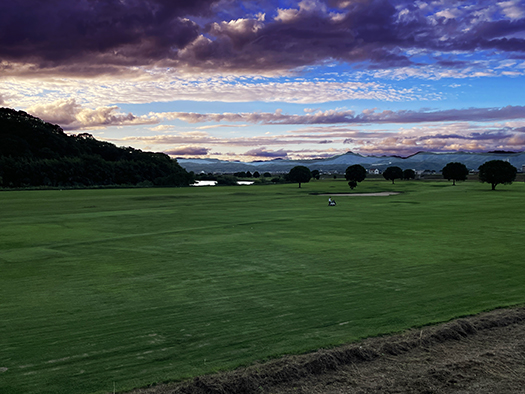
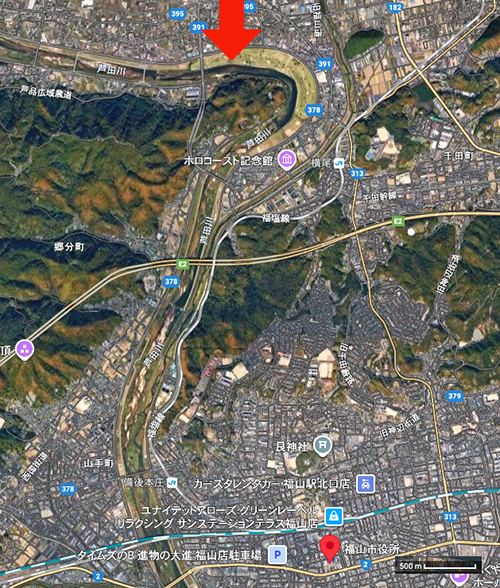
 そして機会を捉えて「現場風景」を意図的に加えるとさらに「奥行き」感が湧いてくる。上の写真はわたし自身の直系の8代先祖から3代前(祖父)まで、繰り返し通婚させていただいた「お嫁さん」が生まれ続けた「特定」地域のほぼ1ヶ月前訪問時の風景写真。
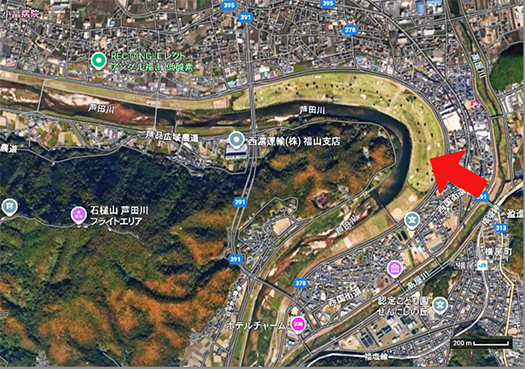
 たまたま夕景だったこともありますが、まことに「母性」的な印象を持たされた。Googleマップに夕陽を眺めていた方角を赤い矢印で表示してみた(下の図ではおおまかな位置表示の矢印)。手前は現在ゴルフ場で広い緑地が広がっていて、その先に「西方浄土」みたいなアングルで夕陽が落ちて、こころのなかで無性に「般若心経」のリズム感が生成されていた(笑)。
 場所は、広島県福山市の市役所から4-5km北にあたる位置。芦田川が広島県福山市の「石鎚山」をグルッと廻遊するように湾曲して流れる地域です。

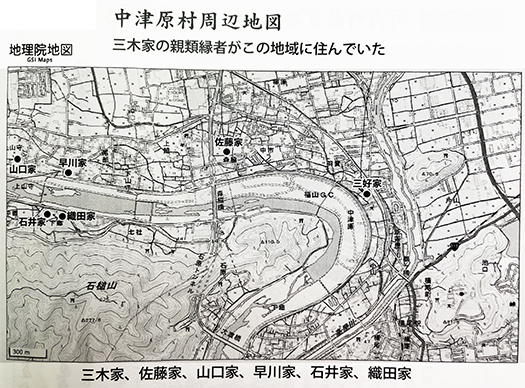
 家系調査では、この地図のなかの「黒丸●」地点にある家々から来ていただいた女性たちがわたしの家系直系の「母」になっていただいていたことが非常に「有力」なのです。え、こんなに近い場所から?と驚かされるのです。まぁ家系調査なので学術的な「事実」認定とまでは言い切れないとは思いますが、十分以上に信頼性は高い。
 わたし自身は絵画とか文学とかの「表現」に親近感を抱く人間タイプなので、こういう風景感と伝承のふたつを重ねて「うっとり」させられる。
 家系調査としてはこの時代の前後もどんどん解明を進めています。明治以降の近現代については当然ですが、それ以前の時代についても、関ヶ原からそれ以前について「見えてきて」いる段階。肉親たちの家系探訪努力に基盤的に支えられながら、その上で自分なりの手法、AI活用など周辺的「足固め」をしながら、先祖が日々生きる中で感じていただろう「世情」「経済事情」などを巨視的に「腑に落ち」させてきています。
 戦国期から江戸期そして近現代という中での庶民・日本人の生き様、という解析でしょうか。
 日々、発見の毎日で「輪廻」を感じ続けています。

お知らせ
拙書「作家と住空間」幻冬舎から電子書籍で発刊
お求めはAmazonで。
https://amzn.asia/d/eUiv9yO

English version⬇

【The Fukuyama-Ashidagawa Area: Where “Taking Wives” Repeatedly Appears in Family Histories】
Life can only be woven through the bonds between men and women. The final song of life from a lineage spanning hundreds of years is condensed into the landscape. An overwhelming sense of happiness and “motherhood.” …

 Exploring my family history makes my perception of time and space truly fascinating and transcendent.
And when I seize the opportunity to add “on-site visual landscapes” to my experience, a unique sensation arises. The photo above is from my recent visit, just about a month ago, to a specific region where my direct ancestors—from the 8th to the 3rd generation back (my grandfather)—repeatedly married women born there.
 It happened to be sunset, but it truly gave me a profoundly “maternal” impression. I marked the direction I was facing while watching the sunset on Google Maps with a red arrow. The foreground is now a golf course, with vast green fields stretching out. Beyond that, the sunset dipped into the horizon like a view of the “Western Pure Land,” and inexplicably, the rhythmic cadence of the Heart Sutra began forming in my mind (laugh).
 The location is about 4-5 km north of Fukuyama City Hall in Hiroshima Prefecture. It’s an area where the Ashida River curves around Mount Ishizuchi in Fukuyama City, Hiroshima Prefecture, flowing in a looping manner.

 In my family lineage research, it is highly significant that the women who came from the homes marked with black circles ● on this map became my direct maternal ancestors. While it’s not quite an academic “fact” due to the nature of genealogical research, the reliability is sufficiently high.
 Personally, I’m not a logical thinker; I’m the type who feels an affinity for “expression” through things like painting and literature. So, I find myself utterly captivated by this sense of landscape and its “legacy.”
As for the genealogical research itself, we are steadily advancing our understanding of the periods both before and after this era. While the modern and contemporary periods since the Meiji era are self-evident, we are also reaching a stage where insights into the prehistoric part—from Sekigahara and earlier—are becoming visible. Fundamentally supported by the exploration efforts of my blood relatives, I am using my own methods, including AI applications, to solidify peripheral groundwork. This allows me to gain a macro-level understanding of the “social climate” and “economic circumstances” my ancestors likely experienced in their daily lives.
 Perhaps it’s an analysis of how common people and Japanese lived through the Warring States period, the Edo period, and into modern times.
Every day brings new discoveries, and I continue to feel a sense of “reincarnation.”

Notice
My book “Writers and Living Spaces” published as an e-book by Gentosha
Available on Amazon.


【「鳳山造」流の鶴の紋様デザイン感覚を分析したい・・・】


 さて、次兄からもたらされた大量の資料をひととおりは目を通し終えられた。ふ〜やれやれ。
 で、そこから直感的にいくつかの断片的な「事実」もしくは興味深い「昔人の記憶痕跡」が捉えられて、それを起点にして5代前や6代前の祖先の「息づかい」、一種生命感のようなものが湧き上がってきます。言ってみれば、そういった祖先からの「肉声」が残響してくるような感覚。
 もうすでに世を去ってからはるかな時間を経過している先人から、なにかの涅槃的な「サイン」が示されるようです(笑)。やはり無上の充足感を味わえる。そしてその根拠を明確にして公知のものごとに昇華させていくことが、使命ということになっていくのでしょう。引き続き体重を掛けていきたい。
 さてそういう作業に没頭させられているのですが、昨日のブログで触れた「輪島の漆器」に特徴的な「鶴」紋様について、知人の方から興味を示されたので本日はそのあたりを。
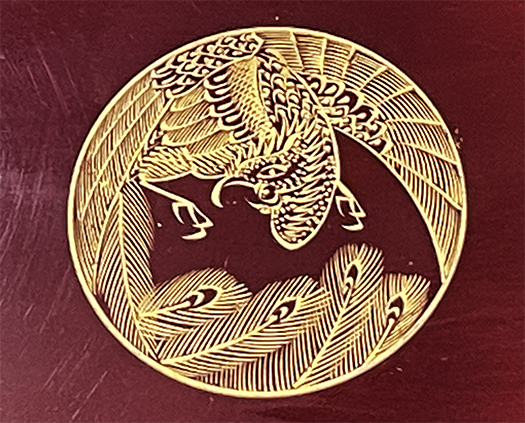
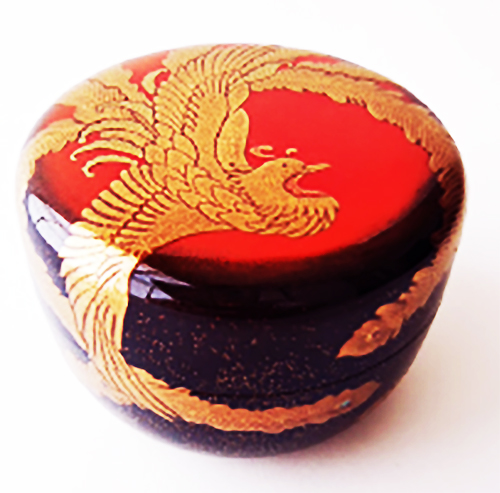
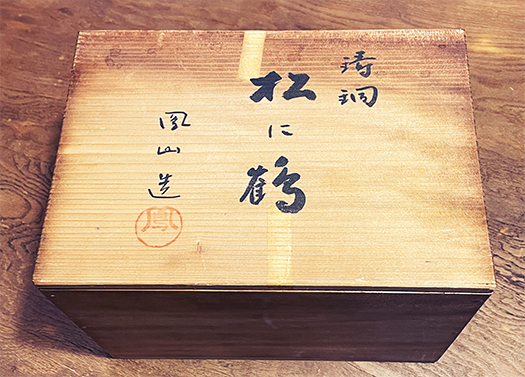
 鳳山造という一種の「メーカー」印から情報を集めてみると、2番目の写真のような漆器の写真にめぐり会うことが出来た。こういうグッズの骨董品マーケットみたいなところで取引されているようです。まぁわたしは、情報が欲しいのと、絵画美術は「数寄」そのものなので、この鶴のデザイン表現について、興味を持った次第。
 わが家の伝承された盆に描かれた鶴は、アタマが左下側に向いていて、一方の下の椀では右上方向に向けられている。また、盆の方では足の形状を丹念に描ききっているけれど、椀の方では描かれていないように見える。そういう違いはあるけれど、図案としては羽根が大きく円状に広げられて、それがデザイン表現上の大きな特徴。このふたつの画像だけなのだけれど、円の形状と羽根の広げ方にデザインコード性が感じられる。
 まぁ、絵画や工芸には一般解的な共通言語は見出しにくいけれど、なにか「作法」のような部分でこの「流派」の定型手法があったようにも思える。こういったちょっとした気付きから入っていって、あるリアルにゴツンとぶつかる部分もある。さて、みなさんの印象はいかがでしょうかね?

お知らせ
拙書「作家と住空間」幻冬舎から電子書籍で発刊
お求めはAmazonで。
https://amzn.asia/d/eUiv9yO

English version⬇

I want to analyze the design sensibility of crane patterns in the “Hōzan-style” tradition…
To delve deeply into objects left behind by our predecessors, it’s essential to uncover the subtle signs they left. Analyzing nirvana (lol)…

 Well, I’ve finally finished skimming through the massive pile of documents my second brother brought over. Whew, what a relief.
And from that, intuitively, I grasped several fragmented “facts” or intriguing “traces of ancient memories.” Using those as a starting point, the “breath” of ancestors from five or six generations back—a kind of palpable sense of life—began to well up. It’s like hearing the lingering echoes of their actual voices.
It feels as if some kind of nirvanic “sign” is being shown to me by these ancestors who passed away so long ago (laugh). It truly brings an immense sense of fulfillment. And I suppose my mission is to clarify the basis for this and elevate it into something publicly known. I intend to keep pouring my weight into this work.
 Now, while immersed in such work, an acquaintance expressed interest in the distinctive “crane” motif characteristic of “Wajima lacquerware,” mentioned in yesterday’s blog. So today, I’ll cover that.
Gathering information from the “maker’s mark” known as Hozan-zukuri, I came across photos of lacquerware like the one in the second image. It seems these items are traded in antique markets for such goods. Well, I wanted more information, and since painting and art are all about “suki” (a refined aesthetic sensibility), I became interested in the design expression of this crane.
The crane painted on the tray passed down in my family has its head facing down and to the left, while on the bowl below, it faces up and to the right. Also, on the tray, the leg shape is meticulously rendered, but on the bowl, it appears not to be depicted. Despite these differences, the design features large, circularly spread wings as a major stylistic characteristic. Though I only have these two images, I sense a design code in the circular shape and the way the wings are spread.
 Well, while it’s hard to pinpoint a universal common language in painting or crafts, it seems this “school” had established techniques in some sort of “methodology.” Starting with these small observations, you sometimes hit a real, hard-hitting aspect. So, what are your impressions?

Notice
My book “Artists and Living Spaces” published as an e-book by Gentosha
Available on Amazon.

【江戸末期の輪島塗漆器 & 73年前それを包装した新聞紙】


 さて次兄からの「先祖探索−業務命令」でありますが、いろいろな資料類を次々と持ってきてくれる。これまでは「ああ、兄貴や伯父貴たち、よくやってくれているなぁ」と思って感謝している立場だったのですが、だんだんと責務を負わされてきている・・・う〜む、頑張るしかないか、というところ。
 でもまぁ人類社会の情報進化はAIの技術進展で、より加速化してきていることは疑いない。事実、AIとの対話で過去の深掘りはより深くなって来ている。そういうのを活用しない手はない。
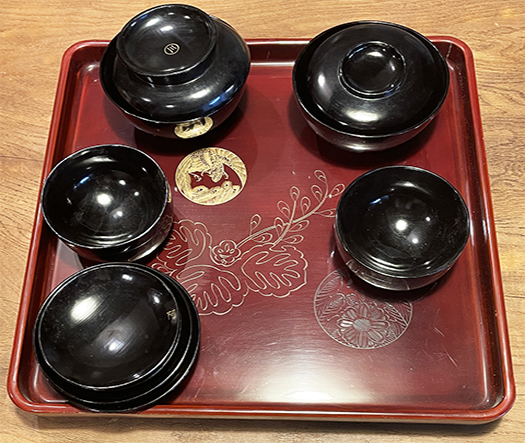
 この漆器は言い伝えでは、わが家系が広島県福山市周辺にいた江戸中期から明治初期ころまでの期間で、地域の「商家」として活動していた当時に入手していた。「屋号金刻入り」の膳セットで、そういった経緯から考えて、一定数量(30-50セット程度か?)を発注して制作してもらったものだと推定できる。モノの情報としてはその程度だったのですが「鳳山造」という箱の署名がわかったのでAIを使って調べたら、輪島塗のひとつの漆器ブランドだとわかった。当時は高田屋嘉兵衛などの活躍する北前船交易の時代なので、瀬戸内海有数の「商都」である尾道にほど近く、しかも尾道に根拠を持つ「阿賀屋」の屋号共有グループとしては、こうした受発注取引はほぼ日常的に行われていた可能性が高い。
 こうした受発注活動の痕跡からは、この刻印入り漆器膳部の流通実態が見えてくる。
 自分の家の漆器を発注したのはたまたまで、商家として普段から有力家の「漆器製作」がビジネス化していたことが容易に想像できてくる。尾道周辺、安芸・備後地域からだけでもかなりの「需要」が考えられる。コスト試算では現在価値に換算すると高級車価格とほぼ近似の金額をAIは返答してきている。
 家系の探査は同時にその特定された時代状況、その「空気感」も沸き立って復元されてくる。

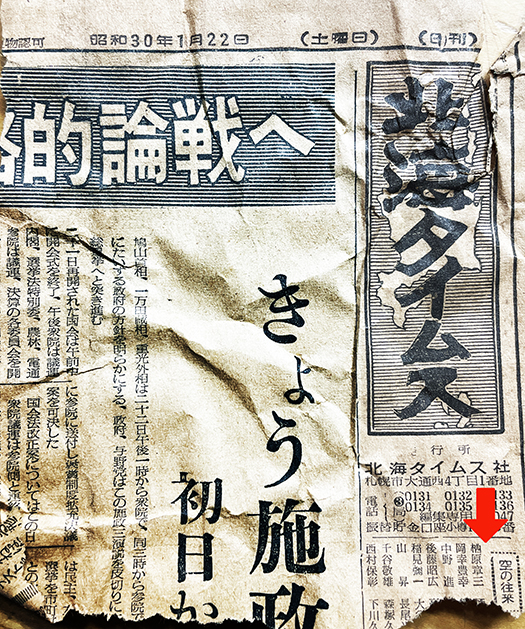
 さらにこの漆器膳セットを、わたしの父母が岩見沢近郊から札幌に移転してくる頃(昭和30年〜1955年)に購読していた「北海タイムス」という新聞紙で包装していた(!)。わたしが2歳の当時。まだ物心の付いていない幼児は12歳前後の姉に背負われて札幌に移転してきたのですが、その「引っ越し」作業の様子まで復元してきてしまった。まことに時空間の涅槃化(笑)か・・・。 
 
●お知らせ
拙書「作家と住空間」幻冬舎から電子書籍で発刊
お求めはAmazonで。
https://amzn.asia/d/eUiv9yO

English version⬇

Late Edo Period Wajima Lacquerware & Local Newspaper Used to Wrap It 73 Years Ago
Genealogical research activities achieve dramatic leaps in precision and accuracy through AI utilization. The sensation of the era’s “atmosphere” emanating in waves…

 Now, regarding my second brother’s “Ancestral Research – Official Assignment,” he keeps bringing me various documents one after another. Until now, I’ve been in the position of thinking, “Ah, my brothers and uncles are really doing a great job,” and feeling grateful. But gradually, responsibilities are being placed on me… Hmm, I guess I just have to do my best.
 But well, there’s no doubt that the evolution of information in human society is accelerating, driven by advances like AI technology. In fact, digging deeper into the past through conversations with AI is becoming more effective. There’s no reason not to leverage that.
 According to family lore, this lacquerware was acquired during the period when our family operated as a local merchant house in the Fukuyama City area of Hiroshima Prefecture, from the mid-Edo period to the early Meiji era. It’s a tray set bearing the engraved shop name “Kin,” and considering this background, it’s likely a commissioned production run of a certain quantity (perhaps 30-50 sets?). That was the extent of the known information about the object itself. However, upon discovering the box signature “Hōzan-zukuri,” I researched it using AI and learned it was a lacquerware brand within the Wajima-nuri tradition. This was the era of the Kitamae-sen trade, when figures like Takadaya Kahei were active. Given its proximity to Onomichi, one of the leading “commercial hubs” in the Seto Inland Sea, and considering it belonged to the “Agaya” house name group based in Onomichi, such order-and-delivery transactions were likely a near-daily occurrence.
 Traces of these order-and-delivery activities reveal the distribution reality of this stamped lacquerware tray section.
Ordering lacquerware for one’s own household was likely incidental; it’s easy to imagine that, as a merchant house, “lacquerware production” for influential families was a regular business activity. Considerable “demand” can be inferred from the Onomichi area alone, including the Aki and Bingo regions. Cost estimates calculated by AI indicate a value equivalent to a luxury car in today’s currency.
Investigating family lineages simultaneously brings to life and reconstructs the specific historical context and the “atmosphere” of that era.

 Furthermore, this lacquerware tray set was wrapped in the newspaper “Hokkai Times” that my parents subscribed to around the time they moved from near Iwamizawa to Sapporo (1955). I was two years old then. As a toddler too young to remember, I was carried on my older sister’s back during that move to Sapporo. Now, even the scene of that “moving” process has been reconstructed. Truly a nirvana of time and space (lol)…
●Notice
My book “Writers and Living Spaces” published as an e-book by Gentosha
Available on Amazon.

【中国総領事の脅迫発言を、米駐日大使が激しく非難】


 このところ身の回りの調査活動や免許更新のための講習受講などでなかなか「テーマ深掘り型」のブログに復帰できません(泣)。先般の道南周遊で最後に訪れた「八雲」で実に印象的な北海道開拓の活動痕跡を見たので、それをまとめたいのですが、その準備が必要でなかなかその時間が取れません。
 というところですが一方、家系史調査関係ではAIを活用しての、いわば「証拠固め」がどんどんと進展してきています。AIは平気で間違えるけれど、それを丹念に指摘してあげると「間違いを認める」ようになってくることを新発見(笑)。やはりキチンとした「事実」を提示してあげることが大切。そうすると実に「潔く」自らの間違いを率直に認めてくる。要するにAIは「使いよう」ですね。
 ということで、実は話題になっている中国総領事の高市首相への明白な「脅迫」発言についても、あるAIは2023年段階でのこの同じ中国総領事発言と混同・誤認していました。その点を丁寧に正させた。こういうことは、AIを「より使い勝手に役立つ」常識化させることに繋がるだろうと思います。
 さてそういった経緯も水面下であったのですが、2日前の日経報道で以下の記事〔要旨)。
 ●グラス駐日米大使、中国総領事を「本性露呈」と批判 SNS投稿巡り<2025年11月10日 20:30>
〜グラス駐日米大使は10日、高市早苗首相の台湾有事を巡る発言に対し「汚い首は斬ってやるしかない」などと投稿した中国の薛剣・駐大阪総領事を批判した。自身のXで「高市首相と日本国民を脅しにかかっている」と記した。<中略>「中国政府は『良き隣人』を口癖のように繰り返すが、全く実態が伴っていない。いいかげんにその言葉通りの振る舞いを示すべきではないか」と強調した。薛氏は8日にXで、台湾有事と「存立危機事態」に関する首相の発言を報じた記事を引用し「勝手に突っ込んできたその汚い首は一瞬のちゅうちょもなく斬ってやるしかない。覚悟ができているのか」と投稿していた。〜
 この件についてのわが国のあるべき対応は、やはり日米同盟こそが基盤だろう。国際的な連携で冷静な国際常識を形成していくことが肝要だと思える。

●お知らせ
拙書「作家と住空間」幻冬舎から電子書籍で発刊
お求めはAmazonで。
https://amzn.asia/d/eUiv9yO

English version⬇

【U.S. Ambassador to Japan Strongly Condemns Threatening Remarks by Chinese Consul General】
Against the blatant tyranny of an authoritarian state, international coordination is paramount. The Japan-U.S. alliance remains the bedrock. The recent behind-the-scenes movements warrant close attention.・・・

 Lately, between local research activities and attending license renewal courses, I just haven’t been able to get back to writing in-depth blog posts (sigh). During my recent trip around southern Hokkaido, I saw some truly striking traces of Hokkaido’s pioneering history at the final stop, Yakumo. I want to write about it, but preparing the material takes time I just can’t seem to find.
 That said, on the family history research front, using AI for what you might call “evidence consolidation” is progressing steadily. I made a new discovery: AI makes mistakes without hesitation, but if you meticulously point them out, it starts to “admit its errors” (laugh). Presenting solid “facts” is crucial. When you do that, it actually admits its mistakes quite ‘honestly’ and straightforwardly. In short, AI is all about “how you use it.”
 That said, regarding the recent controversy over the Chinese Consul General’s explicit “threat” against Prime Minister Takaichi, one AI had actually confused and misidentified this statement with a similar one made by the same Chinese Consul General back in 2023. We carefully corrected that point. I believe such efforts contribute to making AI more “user-friendly” by instilling common sense.
Now, while these developments were largely behind the scenes, a Nikkei article two days ago reported the following [summary]:
 ● U.S. Ambassador to Japan Glass Criticizes Chinese Consul General for “Revealing True Colors” Over SNS Post
~ U.S. Ambassador to Japan Glass criticized Chinese Consul General in Osaka Xue Jian on the 10th for posting comments like “We’ll just have to cut off the dirty head” regarding Prime Minister Sanae Takaichi’s remarks on a Taiwan contingency. On his X account, he wrote, “This is threatening Prime Minister Takaichi and the Japanese people.” He emphasized, “The Chinese government repeats ‘good neighbor’ like a mantra, but their actions completely fail to match their words. It’s about time they started behaving as they claim.” On the 8th, Xue posted on X, quoting an article reporting the Prime Minister’s remarks on a Taiwan contingency and “existential crisis situations,” stating: “That filthy head that dares to intrude will be severed without a moment’s hesitation. Are you prepared?” ~
Our nation’s proper response to this matter must still be grounded in the Japan-U.S. Alliance. It is crucial to calmly shape international norms through global cooperation.

●Notice
My book “Writers and Living Spaces” published as an e-book by Gentosha
Available on Amazon.

【運転免許歴・半世紀超え「高齢者講習」受講します!】


 まぁ一般的には別に「!」を付けるまでもないテーマでありますが、個人的にこれは超大切。
 わたしは免許取得可能になった学生時代、18歳になった年に教習所に通ってすぐに免許取得した。家業は食品製造業で休暇中には「配達」作業をアルバイトがてらやっていたので、必需資格だった。・・・こともあるけれど、実家の目の前が札幌でも最高の交通メイン道路で、自転車の練習中にクルマに轢かれそうになったことがあって、父親から自転車練習を厳禁された。素直ないい性格(笑)だったので、それを墨守していて、移動の自由に「飢え」続けていた。
 そういう不自由からの脱却が運転免許取得だったので「やっと!」と精魂込めた記憶が鮮明。
 で、そこから幾星霜、半世紀以上が経過していますが、2日で1,000kmの運転三昧をいまでもこなす生き方を続けてきています。友人たちの中には老化が目の疲れなどに出てくるヤツもいて、「オマエ、そんなに運転して疲れないのか?」と言われることもありますが、至って平静。長い運転歴でも仙台から東京を往復してさらに盛岡方面へ1日700km近くに達したときに、さすがに疲労感に襲われてすぐ近くのビジネスホテルに急遽飛び込んだことが一度ありました。が、それ以外ではおかげさまで、無事安全運転で過ごしてきています。
 たぶんクルマの運転って、人類が経験してきた「進化」のなかでも超絶なものであり、確実に歴史記述に刻まれると信じますが、その最初期近くに人生を過ごせたことは、ありがたいと思っています。
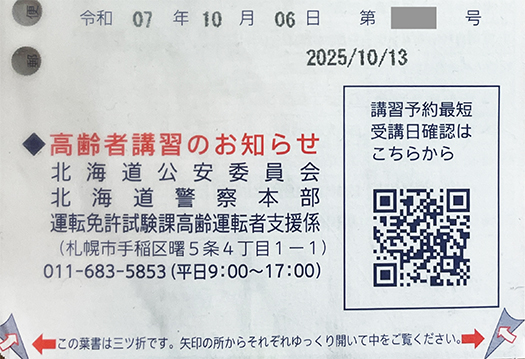
 現代では後期高齢者の運転による「事故」例が報告されていることから、高齢者講習が義務づけされて、ついに今回の更新で期間中にその年齢に達することから、受講することになった次第。これからも、地上風景の中の自由な移動を元気に続けたいので、心して受講したいと思います。

●お知らせ
拙書「作家と住空間」幻冬舎から電子書籍で発刊
お求めはAmazonで。
https://amzn.asia/d/eUiv9yO

English version⬇

【Driving License History: Over Half a Century! Taking the “Senior Driver Training” Course!】
The notification for the mandatory training course arrived as I approach the age for the Late-Stage Elderly category. I’ll take this course seriously to ensure safe driving for years to come! …

 Well, generally speaking, it’s not exactly a topic that warrants an exclamation point, but personally, this is super important.
When I became eligible to get my license as a student, I went to driving school the year I turned 18 and got my license right away. My family ran a food manufacturing business, and during breaks I’d help out with deliveries as a part-time job, so it was an essential qualification. …That was part of it, but also, right in front of my parents’ house was one of Sapporo’s busiest main roads. I’d nearly been hit by a car while practicing on my bike, so my dad strictly forbade me from practicing cycling. Being the obedient, good-natured kid I was (lol), I followed that rule to the letter and remained starved for freedom of movement.
 Getting my license was my escape from that restriction, so I vividly remember pouring my heart and soul into it, thinking “Finally!”
Well, many years have passed since then—over half a century—and I still live a life where I can easily drive 1,000 km in two days. Some friends, showing signs of aging like eye strain, ask, “Don’t you get tired driving so much?” But I’m perfectly calm about it. Even with my long driving history, there was one time I pushed nearly 700km in a day—round-tripping from Sendai to Tokyo and then heading toward Morioka—and fatigue finally hit me hard. I had to dash into a nearby business hotel on the spot. But other than that, thankfully, I’ve managed to drive safely and without incident.
 I believe driving is one of humanity’s most extraordinary “evolutions,” something that will surely be etched into the annals of history. I feel truly grateful to have lived through its very early days.
In modern times, reports of “accidents” caused by elderly drivers have led to mandatory refresher courses for seniors. Since I will reach that age during this renewal period, I’ve decided to take the course. I intend to take this course seriously, as I wish to continue moving freely through the world with vigor.

●Notice
My book “Writers and Living Spaces” published as an e-book by Gentosha
Available on Amazon.

【生成AIによる「公的機関住所」の大間違い・・・】


先日来使ってきている生成AI。大きくはアメリカ系のソフトを利用することを心がけています。独裁国家に情報ダダ漏れになる危険性を避けるのは常識以前だと思う。いまのところWEB上では「原産地表記」は義務づけられていないけれど。そういった危機管理意識は絶対必要条件。その上で、いくつかのソフトを使い分けているのが現状であります。日本勢の進出を期待。
 いまのところはアメリカ由来の複数のソフトを使うことが間違いを防ぐことに繋がると思える。
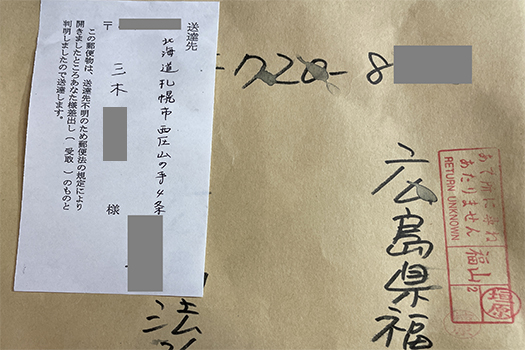
 きょうのブログは、先週広島県にある国家行政機構の公的機関に対して公文書の発給を依頼する文書を送った件。その返信がやや遅れ気味だなぁと思っていたら、写真上のように「返送」されてきてしまった。で、確認したところ「住所の間違い」だと判明した。当方の手落ち。
 しかし、とここでこの住所は生成AIが返してきた情報に基づいていたことを思い出した。
 明治38年・1905年段階、いまから120年前のわが家系の「故地」についての情報検索だったのですが、それについて生成AIを使って一連の情報調査活動をしていた、その途中経過で、生成AI側から提起されたアクションがこの「公文書確認作業」だったのです。そもそもが「不明なこと」について探索しているので、そういった役割としては生成AIは役立つ。
 しかし、返ってくる情報には虚偽推測情報も多いので、注意深く再確認作業は必要。そう心がけてはいたのですが、生成AI側から公文書確認のための公的機関の住所について情報提供してきていたので、こんなことは生成AIは得意というか、公知の情報なのでまさかと、再確認はしていなかった。それが間違えていたのです。具体的には町名までは正しいけれど、丁目と枝番が間違えていた。オイオイ。
 ・・・う〜む、でありますね。
 ようするに「使い方」の問題なのでしょうね。生成AIはあくまでも便利な「ツール」であって人間行動の判断主体はあくまでも人間。巨視的な「つかみ」の情報探査については有用だ、というのが現在の状況なのでしょうか。そしてその探査情報の初源もまた人間が作成したものなのですね。
 便利な情報の「仲介役」で、しかも対話型なので深めやすい。生成AIとの付き合い方、まだまだ試行錯誤の段階と言えるのでしょうね。しかし、未来は確実にある。

●お知らせ
拙書「作家と住空間」幻冬舎から電子書籍で発刊
お求めはAmazonで。
https://amzn.asia/d/eUiv9yO

English version⬇

【Generative AI’s Huge Mistake with “Government Agency Addresses”…】
Oh my god, that’s where it went wrong? (lol) It’s like a baseball pitcher throwing the ball “accurately” to the first baseman instead of the catcher. Handle with extreme caution. …

Regarding the generative AI I’ve been using lately, I’ve been consciously focusing on using American-based software. Avoiding the risk of information leaking to authoritarian regimes is a matter of common sense, even before considering legal obligations. While “country of origin labeling” isn’t currently mandated online, this kind of risk management awareness is an absolute necessity. That said, I’m currently using several different software tools depending on the task. I look forward to Japanese companies entering this space.
For now, using multiple American-developed tools seems like the best way to avoid mistakes.
 Today’s blog post is about a document I sent last week to a public agency of the national administrative organization in Hiroshima Prefecture, requesting the issuance of official documents. I thought the reply was taking a bit longer than expected, but then it came back “returned” as shown in the photo. Upon checking, it turned out to be an “address error” on my part.
However, I then remembered that this address was based on information provided by the AI.
 This was research about my family’s ancestral home from the Meiji 38/1905 era, 120 years ago. I had been using generative AI for a series of investigative activities related to this, and this “official document verification task” was an action suggested by the AI during that process. Since I was exploring “unknown matters” in the first place, generative AI is useful for that role.
 However, the information it returns often includes false or speculative data, so careful re-verification is essential. I had been mindful of this. But since the AI itself had provided the address of the public institution for document verification, I thought, “This is something the AI excels at,” or rather, “It’s public knowledge, so surely…” and skipped re-checking. That was my mistake. Specifically, the town name was correct, but the block number and branch number were wrong. Oh dear.
 …Hmm, indeed.
In short, it’s a matter of “how you use it,” isn’t it? Generative AI is ultimately a convenient “tool,” and humans remain the ultimate decision-makers for human actions. The current situation seems to be that it’s useful for broad, high-level information gathering. And the original source of that gathered information is also created by humans.
 It acts as a convenient “intermediary” for information, and being conversational makes it easier to delve deeper. How we interact with generative AI is still very much a trial-and-error phase. But the future is definitely there.

●Notice
My book “Writers and Living Spaces” published as an e-book by Gentosha
Available on Amazon.
 

【北海道開拓期はひたすらヒグマとの戦い・・・】


 先日訪問していた「八雲町開拓記念館」。わたしはこういった博物館や記念館というのに弱くて、たくさんの訪問経験があります。そうしたら、最近、散歩コース化してきている北大の博物館で、そういった人間行動を研究されている北大の先生がいて、その講演会もあるということ(!)。AIで確認したところ〜「ミュージアム体験の記憶を未来へと紡ぐ ライフストーリーの観点からのアプローチ」〜という講演会だそうです。
 ぜひ参加していろいろ学ばせていただきたいと志向しています。開催日時: 2025年12月13日(土)会場: 北海道大学総合博物館(札幌市北区北10条西8丁目)参加費: 無料
 内容: ミュージアムでの体験がどのように記憶され、人生の物語(ライフストーリー)の中で未来へと繋がれていくのか、という観点からアプローチする講演です。
 ・・・やはり情報摂取が膨大化している現代人には適時、こういう「まとめ・確認」が不可欠ですね。
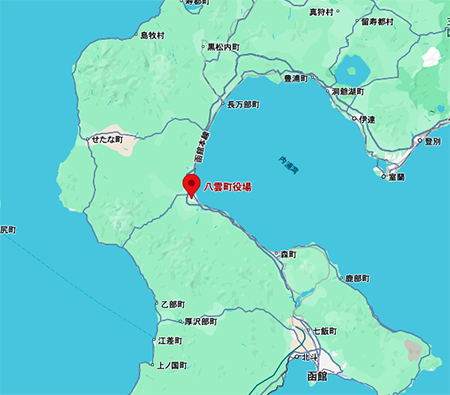
 で、八雲町開拓記念館での参観体験で、恥ずかしながらこの町の開拓当時の様子を初めて知った次第。八雲町の位置はこちら。北海道渡島半島の最北端的な場所ですね。気候風土的にはそこそこ温暖地。

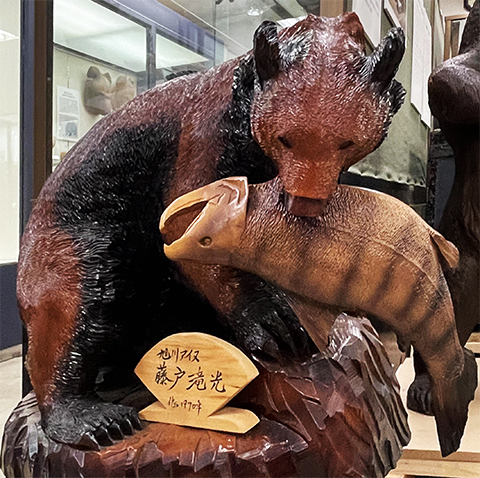
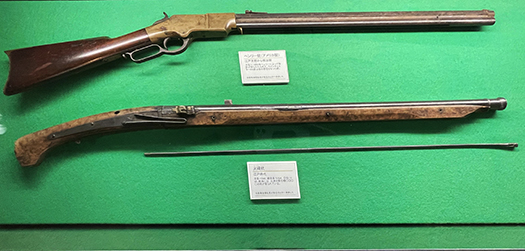
 こちらの2階には大量の「クマの彫り物」が展示されている。最近のクマの市街地出没ですっかり嫌気しているので、もうまったく見たくないと思った次第ですが、八雲は最近市町村統合した「熊石」も含めてヒグマとの戦いが開拓期の最大のテーマだったようです。大量のヒグマ彫像と併せて、上の写真のように江戸〜明治初期の鉄砲が展示されていて、開拓地の安全確保が基盤的なテーマだったことがわかりやすく伝わる。
 昨日夕刻確認した情報では、日頃「散歩コース」になっている札幌市中央区の円山動物園内でヒグマの足跡が確認されたことから、その通路にあたる木道コースが「立ち入り禁止」だという。う〜む。
 札幌の「自然の緑地に近い地域」は高級住宅地として成立してきたのですが、そういう価値観が根底的に揺らいできているように思える。ただ、ヒグマなどの対策は地域全体の安全面でのことなので、地域内での格差を論じることではないとも思える。しかし、市民には駆除の手段はなく、許可もされていないので、ひたすら駆除の進展を祈るのみ。
 明治初期のような「一択」こそが求められると思いますね。

●お知らせ
拙書「作家と住空間」幻冬舎から電子書籍で発刊
お求めはAmazonで。
https://amzn.asia/d/eUiv9yO

English version⬇

The Hokkaido Pioneering Era Was a Relentless Battle Against Brown Bears…
Over a century and a half, the struggle against brown bears for human survival and safety persisted. It reminds us that the pioneers risked their lives…

 The Yakumo Town Pioneering Memorial Museum I visited the other day. I’m a sucker for museums and memorial halls like this, and I’ve visited many. Then, recently, I discovered that at the Hokkaido University museum—which has become part of my walking route—there’s a professor researching such human behavior, and they’re holding a lecture on it (!). According to AI, the lecture is titled ~“Weaving Museum Experience Memories into the Future: An Approach from the Perspective of Life Stories”~.
 I’m determined to attend and learn as much as possible. Date: Saturday, December 13, 2025 Venue: Hokkaido University Museum (Kita 10-jo Nishi 8-chome, Kita-ku, Sapporo) Admission: Free
Content: This lecture approaches the topic from the perspective of how museum experiences are remembered and woven into one’s life story, connecting them to the future.
 …Indeed, for modern people inundated with information, timely “summaries and confirmations” like this are essential.
And, during my visit to the Yakumo Town Pioneering Memorial Museum, I was embarrassed to realize I learned about the town’s pioneering days for the very first time. Yakumo Town’s location is here. It’s at the northernmost tip of Hokkaido’s Oshima Peninsula. Climate-wise, it’s a fairly warm area.

 The second floor here displays a large number of “bear carvings.” Having grown thoroughly weary of recent bear sightings in urban areas, I really didn’t want to see any more. However, it seems that the battle against brown bears was the central theme of the pioneering era in Yakumo, including the recently merged municipality of Kumaishi. Alongside the numerous brown bear sculptures, firearms from the Edo to early Meiji periods are displayed, as seen in the photo above. This clearly conveys that ensuring the safety of the settlement was a fundamental theme.
 According to information confirmed yesterday evening, brown bear tracks were found within Sapporo’s Maruyama Zoo in Chuo Ward, which is part of my usual walking route. Consequently, the wooden walkway path where the tracks were found is now “off-limits.” Hmm.
Sapporo’s “areas close to natural green spaces” have developed as high-end residential districts, but it feels like that underlying value is now fundamentally being shaken. However, measures against brown bears and such are about the safety of the entire area, so it doesn’t seem like something to debate within the community. Still, citizens have no means to cull them and aren’t permitted to do so, so all we can do is pray for progress in the culling efforts.
I think what’s needed is a “single choice” like in the early Meiji period.

●Notice
My book “Writers and Living Spaces” published as an e-book by Gentosha
Available on Amazon.
 

【「雪かきと散歩」 健康維持・増進効率での「対比」は?】


 昨日は約10cmくらいの本格的な降雪があって、せっせと雪かき作業。
 はじめは、けっこう加齢してきているしどうなんだろうと不安な部分もあったのですが、やり始めてみると案外、超前向きに片付けておりました。まぁ、通行路と駐車場の面積、高々20坪程度のことなので、ものの1時間ほどで基本的に終了。「これくらいなら・・・」今年も元気に片付けられるなぁという心境。
 で、スマホを持ち続けていたので「歩数」を確認すると1,600歩ほど。1時間ほどであればふつうの散歩での歩数としては5,000くらいにはなるのですが、疲労感としては歩くだけよりもやや「強め」。
 すっかり歩数換算で健康維持増進の目安としてきているので、この除雪作業との対比はどうなのか、と調べてみたくなった。どうもこういった素朴な疑問については、AIとの対話が習慣化してきている(笑)。なので、googleに「雪かきと散歩の歩数 肉体的消耗度の対比は?」と聞いたら以下の回答(要旨)。
 〜雪かきと散歩では、雪かきの方がはるかに肉体的消耗度が大きいです。
 肉体的消耗度の対比(METs)
 運動強度の指標である「METs(メッツ)」で比較するとその差は明確。安静時を1METsとした場合、それぞれの活動の一般的な強度は以下の通り。
 ・散歩 約 3.5 METs 平地を普通の速さ(時速4.2km程度)で歩く場合
 ・雪かき 3.5 ~ 7 METs 程度 (作業の強度や雪の重さによって変動)
 ●雪かきは散歩の約2倍、またはそれ以上の運動強度に相当し、軽いジョギングや登山と同じレベルの運動量とされます。雪をすくって持ち上げ運ぶという全身運動であり、特に腕、肩、背中、脚の筋肉群を使うため、エネルギー消費が高まります。 〜
 ということで、約2倍からもうちょっと、だそう。
 そういう目安が得られたので、1,600×2.5程度と判断し歩数換算で雪かき1時間は約4,000歩と判断。
 で、以降昨日は約5,000歩ほど歩いていたので、合算すると約9,000歩ほど。
 1日8,000歩という「お約束」のレベルは超えていた。これから先、冬場の健康維持管理にとって、このような目安が適正かなぁと思っていました。さてどうかなぁ・・・。
 <本日の写真は本文とは無関係でやや「涅槃」系(笑)>

●お知らせ
拙書「作家と住空間」幻冬舎から電子書籍で発刊
お求めはAmazonで。
https://amzn.asia/d/eUiv9yO

English version⬇

【“Snow Shoveling vs. Walking”: How Do They Compare in Health Maintenance/Improvement Efficiency?】
Snow shoveling labor is about 2.5 times more intense. Walking as a health management strategy. A guideline for converting winter “snow removal work” exercise volume into step counts. …

 Yesterday brought about 10cm of proper snowfall, so I diligently shoveled.
At first, I was a bit anxious, thinking about my advancing age and whether I could handle it. But once I started, I found myself tackling it surprisingly enthusiastically. Well, it’s just the walkway and parking area, about 20 tsubo at most, so it was basically done in about an hour. “This much is manageable…” I felt confident I could handle it energetically again this year.
 Since I kept my phone with me, I checked my “step count” – about 1,600 steps. For a normal hour-long walk, I’d usually get around 5,000 steps, but the fatigue felt a bit more intense than just walking.
I’ve gotten used to using step counts as a benchmark for maintaining and improving my health, so I got curious about how this snow shoveling compares. It seems these simple questions have become something I habitually ask AI (laugh). So, I asked Google, “How does the physical exertion level compare between shoveling snow and walking?” and got the following answer (summary).
~Shoveling snow is significantly more physically exerting than walking.
Physical exertion comparison (METs)
 Comparing them using METs (Metabolic Equivalents), an indicator of exercise intensity, the difference is clear. With rest set at 1 MET, the typical intensity for each activity is as follows:
・Walking: Approximately 3.5 METs (Walking at a normal pace on flat ground, about 4.2 km/h)
・Snow Shoveling: Approximately 3.5 to 7 METs (Varies depending on the intensity of the work and the weight of the snow)
 ● Snow shoveling corresponds to approximately twice the exercise intensity of walking, or even more, and is considered equivalent to light jogging or hiking. It is a full-body exercise involving scooping, lifting, and carrying snow, particularly engaging the muscles of the arms, shoulders, back, and legs, leading to high energy expenditure. ~
So, it seems to be about twice as much, or even a bit more.
 With that estimate, I judged it to be about 1,600 × 2.5, converting it to steps: one hour of snow shoveling is roughly 4,000 steps.
Then, since I walked about 5,000 steps yesterday afterward, the total came to about 9,000 steps.
 This exceeded the “standard” level of 8,000 steps per day. I thought this might be a suitable benchmark for maintaining health during the winter months going forward. Well, we’ll see…

●Notice
My book “Writers and Living Spaces” published as an e-book by Gentosha
Available on Amazon.

Translated with DeepL.com (free version)