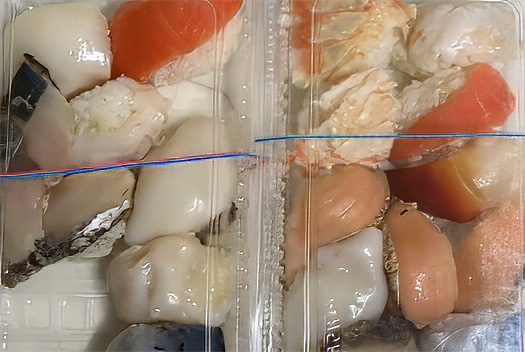
一昨日の寿司にぎり1升2合で疲れが溜まっていたので、昨日は念を入れてボーッとしていた(笑)。
わたし以上に疲れがありありと見えていたカミさんも、終日ボーッと。
こういう「ボーッ」祈願には、わたしは温泉でまったりがいちばんなので、近郊・余市の海岸沿いのお好み温泉へ。湯の質はわかりませんが極上のドロ湯という触れ込み、疲労回復にいいとのご託宣。すぐ近くには大好きな海鮮のお魚屋さんがあるのですが、握り寿司はしばらくは日を置きたいので、きのうは完全スルー。立ち寄ればまたぞろ「お、よさげな鮮魚じゃないか、ふむふむ」と、数寄こころが沸き立つ確率が高いのです。
という過ごし方でアタマも、休息日を心がけ(って、毎日かも)。
そういう時はやはり雲と海の表情を見て過ごすのが、最適であります。加齢とともに、少年期のワクワクこころが俄然、復元してきて仕方がない。北海道札幌の空の造形がさまざまに「想像力」を掻き立てててくれた。遠い石狩川の蛇行に沿った上空の「ゴジラたちの行進」模様の雲のつらなりなどが妄想力を涵養してくれた。
そういういちばん単純な「心理のゆらぎ」に、高齢期の心理は還ってくるのでしょうか。
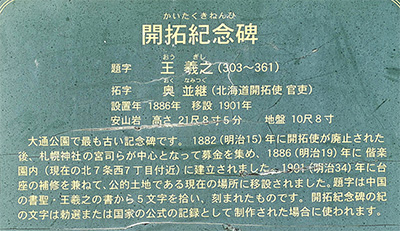
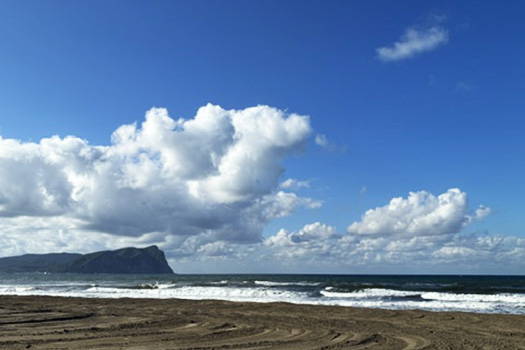
この写真は北海道の西岸、日本海側を見晴らす光景です。近くには「フゴッペ洞窟」があって、古代からの人びとの壁画が描かれている。約2,000〜1,500年前の続縄文時代に刻まれた、国内でも非常に珍しい800点以上の岩面刻画(壁画)が残る国の史跡。
このような地形位置が、こうした壁画芸術の存立基盤であったように思える。この海の先には北東アジアのアムール川流域地帯が広がり、樺太から北海道の西海岸を伝って、この積丹半島地域と交流があったと思えるのです。そうした交流を可能ならしめたのは、海と空の表情に表れる天候条件だったことでしょう。
「雲行き」を見ながら、フゴッペ洞窟での語らいの前後、船での人びとの交流が妄想されてくる。
ボーッとしたいとき、ってわたしの場合は常時なのですが(笑)、こういう自然風景の、絵画を超える天地を見ている時間が、サイコーの過ごし方なのであります。無念無想というのは、すばらしい言語表現。
●お知らせ
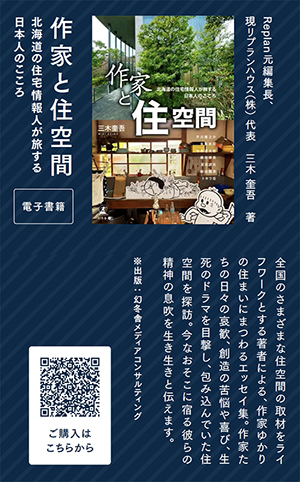
拙書「作家と住空間」幻冬舎から電子書籍で発刊
お求めはAmazonで。
https://amzn.asia/d/eUiv9yO
English version⬇
[No Regrets, No Thoughts: A Day Spent Watching the Clouds Drift By]
The Fugoppe Cave site evokes images of exchanges between Northeast Asia and this region in ancient times. On that seashore, I let my mind wander and give free rein to my imagination…
I was still feeling the effects of eating 1 sho and 2 go of sushi nigiri the day before yesterday, so yesterday I made a point of just zoning out (lol).
My wife, who looked even more exhausted than I did, spent the whole day zoning out too.
For this kind of “zoning out” session, I think relaxing at a hot spring is best, so we headed to Okimi Onsen along the coast in Yoichi, just outside the city. I don’t know much about the water quality, but it’s advertised as a top-notch mud bath, and the wisdom goes that it’s great for recovering from fatigue. There’s a seafood shop I love right nearby, but since I want to give nigiri sushi a break for a while, I completely skipped it yesterday. If I’d stopped by, there’s a high probability my connoisseur’s instincts would have kicked in, making me think, “Oh, that looks like some fresh fish—hmm, hmm.”
Spending my time this way, I made a conscious effort to give my mind a rest (though, come to think of it, maybe I do that every day).
On days like that, there’s nothing better than spending time watching the ever-changing expressions of the clouds and the sea. As I get older, that sense of excitement I felt as a boy is suddenly coming back—I just can’t help it. The ever-changing shapes of the sky over Sapporo, Hokkaido, really sparked my “imagination.” The pattern of clouds in the sky—resembling a “march of Godzillas”—tracing the meandering course of the distant Ishikari River, nourished my imagination.
Perhaps the mind in old age returns to these simplest “psychological fluctuations.”
This photo shows the view overlooking the west coast of Hokkaido, facing the Sea of Japan. Nearby is “Fugoppe Cave,” which features wall paintings created by people since ancient times. It is a national historic site where more than 800 rock engravings (wall paintings)—extremely rare even in Japan—carved during the Late Jomon period, approximately 2,000 to 1,500 years ago, remain.
It seems that this specific geographical location served as the foundation for the existence of such wall painting art. Beyond this sea lies the Amur River basin region of Northeast Asia, and I believe there were exchanges between that area and the Shakotan Peninsula region, traveling along the western coast of Hokkaido from Sakhalin. It was likely the weather conditions reflected in the expressions of the sea and sky that made such exchanges possible.
As I watch the “clouds gathering,” I find myself imagining the interactions between people on boats, both before and after their conversations at Fugoppe Cave.
When I want to zone out—which, in my case, is all the time (laughs)—spending time gazing at natural scenery like this, at a world that transcends even a painting, is the absolute best way to spend my time. “No thoughts, no worries” is a truly wonderful way to put it.
● Announcement
My book, *Writers and Living Spaces*, has been published as an e-book by Gentosha.
Available on Amazon.
共有:

Posted on 9月 23rd, 2026 by 三木 奎吾
Filed under: 未分類 | No Comments »