本文へジャンプ

【308年の星霜を経て「古縁者」から便りが・・・】


 昨日、次兄から驚ろかされる知らせが届いた。
 今年5月下旬、九州を旅した折り、わたしは単独日帰りで福岡県宗像から広島県東広島市へと向かった。わが家系は400年前の当時この広島の「故地」に根付いていたことが『広島県史』の公的資料とわが家の伝承によって裏付けられ、当時の檀家寺と推認される安芸門徒の「順教寺」を訪問する目的。
 わが家系はその後、1718(享保3)年に当地で起きた百姓一揆による「打ち毀し」被災を経て、隣の福山藩領・松永塩田へと移動の大きな転進を遂げる。しかしその際この地に留まった家系、すなわち別れた本家筋の一統が存在したことが推認されていた。事実『広島県史』では、一揆から10年ほど後の藩の記録として、その当時の当主の名が当時の故地の経済報告に記載されている。当主の息子(わが家系の直接の祖)が藩境を越えて福山藩領へ移動したにもかかわらず、なのだ。
 そこで5月の訪問時、順教寺のご住職にそれ以降の本家筋の消息をお尋ねしたのだった。まさに「あたって砕けろ」の心理。その際、次兄が編纂したわが家系史の書物をご住職にお預けしていたのだが、今回、そこから大きな「反応」が寄せられることとなった。
 寺院側は5月末頃にさっそくそのお宅を訪問してくださっていたようなのだ。ご高齢ということもあり、その場での直接の対話は叶わなかったものの、次兄の記した家系史の書物はご当主のもとに渡り、じっくりと読み進めていただけたという。

 そしてなんと、その読後感を綴った一統からの便りが「速達」で筆者である次兄宛に届いたのだ。
 ご高齢ゆえ読書や返信にも相応の時間を要したこととお察しするが、届いた便りの行間からは「ついに巡り会えた血脈」としての魂の震えが響いてくるようだった。
 手紙には百姓一揆の顛末を巡って本家筋には全く異なる奇異な「伝承」が語り継がれてきたことが詳細に記されていた。一方で、公的資料に基づいて明かされた事件の実相と以降のわが家系の歩みに触れ、「初めてすべての背景がわかり、深く腑に落ちた」という率直な心境が告白されていた。
 308年の時を超えた、枝分かれした一統の「再会」・・・。
 歴史の暗雲の中に埋もれていた事実が、こうして再生認識されたことに、ひとりの情報人として、また末裔として未踏の喜びを感じずにはいられない。
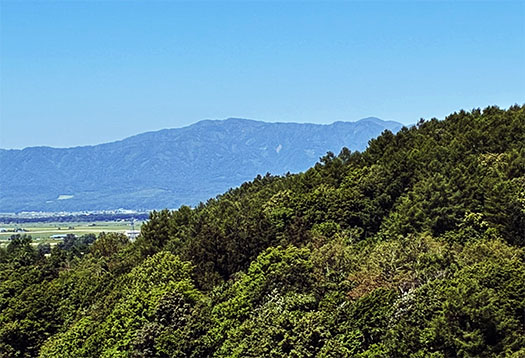
 写真はわたしが「四百年間のいのちの履歴書」と名付けて編纂中の一書の表紙画像撮影場所の真夏の風景。この喜ばしい前進でさらに家系の歩みと向き合いたい。あたって砕けろ(笑)。

●お知らせ
拙書「作家と住空間」幻冬舎から電子書籍で発刊
お求めはAmazonで。
https://amzn.asia/d/eUiv9yO
English version⬇

[After 308 Years, a Message from an “Old Acquaintance”…]
A reply that came like a distant thunderclap from a branch of the family that split off following the “destruction” caused by a peasant uprising in the Hiroshima Prefecture region in 1718. As a researcher, this brings me an unprecedented joy. …

 Yesterday, I received some surprising news from my second-oldest brother.
 In late May of this year, while traveling through Kyushu, I took a solo day trip from Munakata in Fukuoka Prefecture to Higashi-Hiroshima City in Hiroshima Prefecture. Official records from the *History of Hiroshima Prefecture* and our family’s oral traditions confirm that our family lineage was rooted in this “ancestral homeland” in Hiroshima 400 years ago, so my purpose was to visit *Junkō-ji*, a temple of the Aki Monto sect believed to have been our family’s parish temple at that time.
 My family line subsequently underwent a major relocation to the Matsunaga Salt Fields in the neighboring Fukuyama Domain after suffering damage from the “destruction” caused by a peasant uprising that occurred in this area in 1718 (Kyōhō 3). However, it had been inferred that a branch of the main family—one that had split off—remained in this area at that time. In fact, according to the *History of Hiroshima Prefecture*, a domain record dating from about ten years after the uprising lists the name of the head of the household at that time in an economic report on the former territory. This was despite the fact that the head’s son—the direct ancestor of our family line—had moved across the domain border into the territory of the Fukuyama Domain.
 So, during my visit in May, I asked the head priest of Junkyo-ji Temple about the whereabouts of the main family line since then. It was truly a case of “go for it and see what happens.” At that time, I had left the book on our family history—compiled by my second-eldest brother—with the head priest, and this time, it elicited a significant “response.”
 It seems the temple staff promptly visited the family home around the end of May. Although a direct conversation on the spot was not possible due to the head of the household’s advanced age, the book on our family history written by my second-eldest brother was handed to him, and he reportedly read through it carefully.

 And lo and behold, a letter from the head of the household—expressing his thoughts after reading it—arrived by “express mail” addressed to my second eldest brother, the author.
While I can imagine that, given his advanced age, reading the book and composing a reply took a considerable amount of time, the lines of the letter seemed to resonate with the soul-stirring emotion of having “finally encountered his bloodline.”
 The letter detailed how a completely different and peculiar “legend” regarding the outcome of the peasant uprising had been passed down through the main branch of the family. At the same time, it touched upon the true nature of the incident—revealed through official records—and the subsequent history of our family line, confessing his candid feelings: “For the first time, I understand the full context, and it has finally clicked.”
 A “reunion” of a branched lineage spanning 308 years…
As a researcher and as a descendant, I cannot help but feel an unprecedented joy that these facts, long buried beneath the dark clouds of history, have been rediscovered and recognized in this way.
 The photo shows a midsummer scene at the location where I took the cover image for a book I’m currently compiling, which I’ve titled “A 400-Year Resume of Life.” With this joyful step forward, I want to delve even deeper into the history of my family line. I’ll just have to dive in headfirst (laughs).

● Announcement
My book, “Writers and Living Spaces,” has been published as an e-book by Gentosha.
Available on Amazon.


【Photoshop不調からアプリ乗り換えで「画像調整」チャレンジ】


 わたしは1990年代から、Macを使うようになった。
 仕事の出版編集ではDTPという、Macネットワーク上のデータをスタッフ間で共有して住宅雑誌を作って行くプロセスが社会に導入されていった初期段階にあたります。そのコアな部分にAdobe社のPhotoshopが位置していて、それが写真表現上の事実上の「プラットホーム」として機能してきていた。
 そういった事業環境を積極的に導入して、画像品質の向上とその表現の「管理」を並行させてきた。編集と制作が事実上一体化することで、写真表現の段階での「表現活動」が進化していく経過。
 そういう人類的な表現活動進化のワンシーンだったのだろうと、いま思えています。
 で、そういう環境で個人的にも過ごしてきて、自分自身の興味分野の深化で、住空間写真と人間のそこでの「息づかい」みたいな領域が「数寄」になって内面に残り続けてきている。DTP的な環境からはやや距離感ができてきているけれど、自分自身の「表現」環境としてはPhotoshopは継続的に同伴してきていた。
 なんだけれど、もう30年以上の時間経過のなかで徐々にアプリからのアラートが出てくるようになった。
 面倒さの方が優ってきて、今後もこの環境を維持していくべきかどうか、思案の段階になって来た。具体的にはその「アラート」に対して、別のMac標準アプリでもその機能を活用すれば「それなり」の表現活動は可能だと言うことに気付かされるようになったのですね。いまのわたしは、画像解析の第1線的な立ち位置ではないし、むしろ大量に保存してきた画像データの再活用の方に主たる興味は変容してきている。
 むしろ表現での「新領域開拓」的な方面に意識が向いてきているので、画像処理についてはより簡便な「標準型」ソフトで十分と思えるようになって来たのですね。Adobeとのわかれ、かと。
 まぁ親和的なMac標準ソフトなので、基本的にできる作業領域は確保できていると思える。
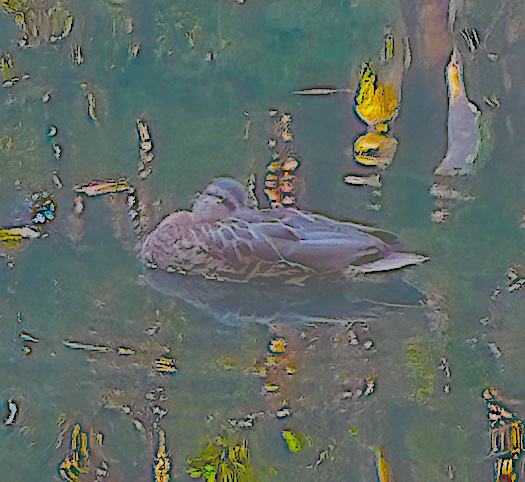
 写真は昨日の散歩道で撮影したiPhoneでの写真ですが、幻想的な水上のカモさんと水面の様子。それにMac標準アプリを使ってみて、実験的に画像処理してみた次第。自分なりには面白みも感じながら、操作できていた。
 しばらく「様子見」しながら、先行きを考えて見たい。う〜む、どうもピンと来ないかなぁ・・・

●お知らせ
拙書「作家と住空間」幻冬舎から電子書籍で発刊
お求めはAmazonで。
https://amzn.asia/d/eUiv9yO

English version⬇

[Switching Apps After Photoshop Issues: The “Image Adjustment” Challenge]
An opportunity to reevaluate my creative environment, which I’ve maintained even after overcoming a major “turning point” in my life. What should I do about the apps I’ll use for my future creative work? …

 
 I started using a Mac in the 1990s.
 In my work as a publishing editor, this coincided with the early stages of the widespread adoption of DTP—a process in which staff members shared data over a Mac network to produce home design magazines. Adobe Photoshop was at the core of this system, functioning as the de facto “platform” for photographic expression.
 We actively embraced this business environment, simultaneously improving image quality and “managing” its expression. As editing and production effectively merged, the “creative process” at the level of photographic expression evolved.
 Looking back now, I realize that this was likely just one scene in the evolution of human creative expression.
 Having spent time in that environment personally, and as my own areas of interest deepened, the realm of residential space photography and the “breath” of human life within those spaces has become a kind of “suki” that continues to linger within me. Although I’ve distanced myself somewhat from the DTP-oriented environment, Photoshop has remained a constant companion in my own “expressive” environment.
 However, over the course of more than 30 years, alerts from the app have gradually begun to appear.
 The hassle has started to outweigh the benefits, and I’ve reached the point where I’m pondering whether I should continue maintaining this setup. Specifically, these “alerts” have made me realize that I can still achieve “adequate” creative results by utilizing those same functions in other standard Mac apps. I’m no longer on the front lines of image analysis; rather, my primary interest has shifted toward repurposing the vast amount of image data I’ve stored over the years.
 In fact, my focus has shifted toward “pioneering new frontiers” in creative expression, so I’ve come to believe that simpler, “standard” software is sufficient for my image processing needs. Is this my parting of ways with Adobe?
Well, since these are Mac’s native apps that work well with my workflow, I feel I’ve basically secured the necessary scope of work.
The photo below was taken with my iPhone during yesterday’s walk—it captures a duck floating on the water in a dreamlike scene. I also experimented with some image processing using the Mac’s standard apps. I found the process quite interesting and was able to navigate the controls fairly well.
I’d like to “wait and see” for a while and think about where this is headed. Hmm, I’m not quite sure if it’s the right fit for me…

● Announcement
My book, “Writers and Living Spaces,” has been published as an e-book by Gentosha.
Available on Amazon.

【福山「備陽史探訪の会」ほかの活発な情報発信】


 わたしの家系は広島県がながく留まっていた地域。関ヶ原の合戦が終わって以降ですから400年前からほどがわかってきている。芸州浅野藩が広島入りした時期と同時期に現在の東広島市河内町入野に入植した一族。そこで短期間に地域経済活動の中心的な存在である「庄屋」に代々なっていた。その後、江戸時代中期、1730年頃に当時の新開地・松永塩田に移住した一統。一族としては「枝分かれ」した流れの末裔です。
 その松永の近く、山陽道の宿駅「今津」近辺から1905年に当主が北海道に移住してくるまでの間、175年間はこの周辺で過ごしていた一族。家系史をたどり続けてきて、そういう実相が浮かび上がって来ている。
 当然ながら、この地域の情報を求めていろいろな「つながり」を訪ね歩いてきています。次兄からのバトンタッチで徐々にわたしもそういうご縁に沿って動いてきています。
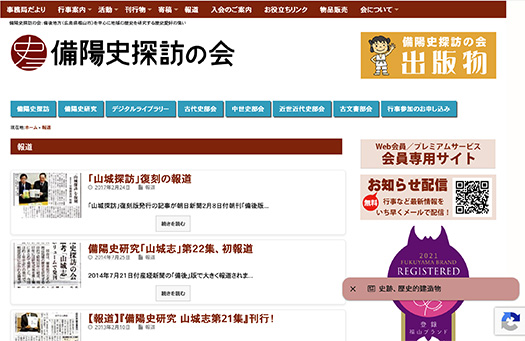
 そういうなかで「地域史」研究グループの存在を知って入会申込みし、毎回「会報」も受け取ってきています。会の名前は「備陽史探訪の会」という存在。2026年6月末段階で会員数は187名とのこと。
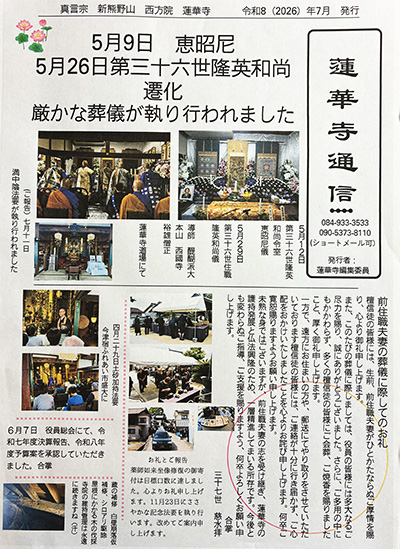
 また今津の「旧檀家寺」蓮華寺さんも住職さんがたいへん現代的な活動ぶりで、写真のように「蓮華寺通信」という郵送してきていただいております。わたしの家は父が北海道の同じ真言宗寺院でお世話になって檀家になっているので、旧縁ではあるのですが、歴史探索には欠かせないつながり。
 という次第ですが、やはり本州、広島県地方という歴史積層地域では「地方史」の研究活動が非常に活発。備陽史探訪の会では活動内容に沿った出版物も多数出されている。またほぼ月イチ程度で各種イベント活動まで行われているのですね。まぁ北海道でもこういう活動自体はあるのでしょうが、この備陽史探訪の会のようなレベルには遠いように思えます。またわたしは北海道人ですが、当然ながら「故地」は本州地域にあることは自明なので、地方史として興味を持つのはこういう地方になるのが自然ですね。移動交通などハンデキャップはありますが、やむを得ない。
 こういう志向性は柳田國男の民俗学や民藝運動などともつながる日本人らしさの重要なファクターなのでしょう。終の志向性と考え、捉えていきたいと思います。北海道人にもそういう気分はある、と。

●お知らせ
拙書「作家と住空間」幻冬舎から電子書籍で発刊
お求めはAmazonで。
https://amzn.asia/d/eUiv9yO

English version⬇

[Fukuyama’s “Biyō History Exploration Society” and Other Active Information Outreach Efforts]
A modern-day continuation of Kunio Yanagita’s folklore studies and the Mingei Movement. We in distant Hokkaido would like to join in response to their vibrant activities. …

 My family lineage traces back to an area in Hiroshima Prefecture where my ancestors resided for a long time. We now know that this dates back about 400 years, beginning after the Battle of Sekigahara. Our clan settled in Irino, Kawachi-cho, in what is now Higashi-Hiroshima City, around the same time that the Asano clan of Geishu entered Hiroshima. There, generation after generation, they served as “shoya”—the village headmen who played a central role in the local economy—for a short period. Later, during the mid-Edo period, around 1730, a branch of the family moved to the then-newly developed Matsunaga Salt Fields. I am a descendant of this “branch” of the family.
From the area near Matsunaga, close to the “Imazu” post station on the Sanyo Highway, until the head of the family moved to Hokkaido in 1905, the family lived in this vicinity for 175 years. As I have continued to trace our family history, this reality has gradually come to light.
Naturally, I have been visiting various “connections” in search of information about this region. Taking over the baton from my second-eldest brother, I, too, have gradually begun to follow these leads.
In the course of this, I learned of the “Regional History” research group, applied for membership, and have been receiving their “newsletter” every issue. The group is called the “Biyō History Exploration Society.” As of the end of June 2026, the membership stood at 187.
 Furthermore, at Renge-ji Temple in Imazu—my family’s former parish temple—the head priest is very active in modern initiatives, and, as shown in the photo, he sends us the “Renge-ji Newsletter” by mail. My father was a parishioner at a Shingon sect temple in Hokkaido, so we have a long-standing connection with the temple; this connection is indispensable for my historical research.
 That being said, research into “local history” is indeed very active in regions with a rich historical legacy, such as Honshu and the Hiroshima Prefecture area. The Biyō History Exploration Society has published numerous works related to its activities. They also hold various events roughly once a month. Well, I suppose such activities exist in Hokkaido as well, but they seem far from reaching the level of the Biyō History Exploration Society. Also, although I am from Hokkaido, it goes without saying that my “hometown” is on Honshu, so it’s only natural that I take an interest in the history of regions like this. There are some challenges, such as transportation, but that’s unavoidable.
This kind of inclination is likely an important factor in what makes us Japanese, one that connects to Kunio Yanagita’s folklore studies and the Mingei Movement. I intend to view this as my ultimate aspiration. I believe even people from Hokkaido share this sentiment.

● Announcement
My book, *Writers and Living Spaces*, has been published as an e-book by Gentosha.
Available on Amazon.


【「前向き」抱っこヒモで孫と目線・感性の同期(笑)】


 友人たちとの年に一度の高校同期会のゴルフ大会は、なんとも運悪く亡父の命日法要と重なったので参加できなくなった。ブービーの恐怖から解放されるので悲しいような良かったような(笑)・・・。 
 ということですが、体力維持の方は散歩10,000歩以上が毎日達成されているほどなので、ほぼ大丈夫。そこで昨日は息子の家の孫を「北海道開拓の村」に連れていって、前向きに抱っこするのに「抱っこヒモ」を装着して散策しておりました。まぁ出張に出ていた息子の代理役なのですが、無事任務完遂。
 北海道開拓の村は、北の「古民家園」なのですが、市街地から交通の便がイマイチなので、狙い通り夏休みの日曜日ですが比較的ゆったり気味。
 現在8kg超の6ヶ月児。腰に疲労が出てくるかなぁと不安で、今朝は起き抜けには寝具の中で腰のストレッチをしてから起床しましたが、いまのところ支障は無い(ほっ)。
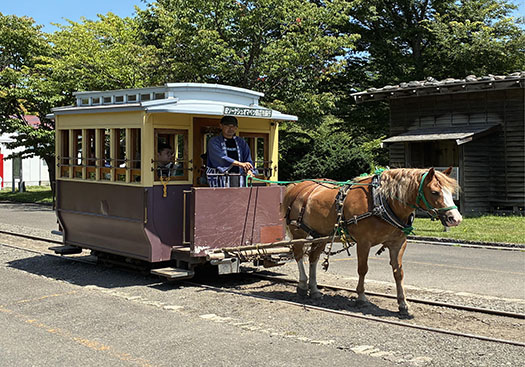
 写真は会場内を往復している馬車鉄道の様子ですが、前向き抱っこしていると、どうもこっちの心理は孫と同期してくるような気がする。漁家の廻りでは野ウサギも発見して、とっさに孫の思いとわたしの思いが完全に一致して、追いかけていた。「うさぎ追いし〜」。
 建築を見ているときには、知らず知らず孫に「興味」を持ってもらいたくてあれこれと解説。ときどき「ダァダァ」という反応が返ってくるので、ジジバカ丸出しで大喜びしてカミさんと嫁さんからは呆れ笑いされておりました。そんなのは一切気にしない。「この家はなぁ、昔の漁師さんの親方の家だぞ、たくさんの季節雇い人さんたちがここで暮らして、ニシンとかの魚を捕っていたんだ、ダァダァ」
 そうこうするうちにこの馬車とご対面。やはり孫の動物への目線、その目力感というのは感じる。
 ジイジ抱っこ状態では孫は怖いもなにも感じるスキは無いでしょう。なるべくお馬さんとの会話を口に出して、孫のこころにイキモノの出会い感を同期させるように努めておりました。孫の人生教育と、ジイジの「若返り」作戦の両立なのかなぁ。しかし今のところは孫には取り立てた変化は感じられず、ジイジの精神年齢の低下のみが加速してきているようです(笑)。・・・

●お知らせ
拙書「作家と住空間」幻冬舎から電子書籍で発刊
お求めはAmazonで。
https://amzn.asia/d/eUiv9yO

English version⬇

[“Upward-Facing” Baby Carrier: Synchronizing Eye Level and Sensibilities with My Grandchild (lol)]
Since my son was away on a business trip, it fell to me to spend some quality time with my grandchild. I ended up realizing that, for the whole day, I was basically at the same “eye level” as my grandchild. …

 The annual golf tournament with my high school classmates—which happens once a year—unfortunately coincided with the memorial service marking the anniversary of my late father’s passing, so I couldn’t attend. I’m both sad and relieved to be freed from the fear of finishing last (lol)…. 
 That said, as for staying in shape, I’m managing just fine—I’ve been hitting over 10,000 steps on my daily walks. So yesterday, I took my grandson from my son’s family to “Hokkaido Pioneers’ Village,” and I put on a baby carrier to carry him facing forward as we strolled around. Well, I was just filling in for my son, who was away on a business trip, but I successfully completed the mission.
The Hokkaido Pioneers’ Village is a “traditional folk house park” in the north, but since transportation from the city center isn’t great, it was relatively quiet—just as I’d hoped—even though it was a Sunday during summer vacation.
My grandchild is a 6-month-old who now weighs over 8 kg. I was worried my back might start to ache, so this morning I did some back stretches right in bed before getting up, but so far, I’m feeling fine (phew).
 The photo shows the horse-drawn tram going back and forth through the venue. When I hold him facing forward, I feel like my mindset somehow syncs with my grandson’s. We also spotted a wild rabbit near the fisherman’s house, and in that split second, my grandson’s thoughts and mine were completely in sync—we both chased after it. “Chasing the rabbit~.”
 While looking at the buildings, I found myself unconsciously explaining this and that, hoping to spark my grandson’s “interest.” Every now and then, I’d get a “Da-da!” in response, and I’d get so excited—showing off my doting grandpa side—that my wife and daughter-in-law just laughed in exasperation. I didn’t care one bit. “You know, this house used to belong to a master fisherman back in the day. Lots of seasonal workers lived here and caught fish like herring, da-da!”
Before I knew it, we came face-to-face with this horse-drawn carriage. I could really sense my grandson’s fascination with animals—that intensity in his eyes.
 With Grandpa holding him, my grandson probably didn’t have a chance to feel scared or anything like that. I made a point of talking aloud to the horse as much as possible, trying to help my grandson experience that sense of encountering a living creature. I suppose this is a way to balance my grandson’s life education with Grandpa’s “rejuvenation” strategy. However, so far I haven’t noticed any significant changes in my grandson; it seems the only result has been a decline in Grandpa’s mental age (laughs). …

● Announcement
My book, “Writers and Living Spaces,” has been published as an e-book by Gentosha.
Available on Amazon.


【家系史探究:戦前と戦後の日本社会構造革命】


 先日の従兄弟の家系史ヒアリングからの「解析」作業進行中。
 従兄弟の「先祖認識」は一族の渡道前の母系の故地に深い心底があることを驚きを持って知ることになった。なんともノスタルジックな気分が発出されていた。「え、そんなドップリ世界なの?」。
 わたしは戦後1952年生まれで、戦前期の「肌感覚」は当然持っていない。敗戦後ベビーブーム世代の後の世代。成長後「歴史」が数寄になった人間だが、小学校から高校まで、時代を追ってきたのに明治維新すらきちんと学ばされなかった。「学年末に近いから以降はパスな」「受験テストに出ないから」みたいに放置教育されてきた。(教科書にはその後も記載はあったけど)
 明治〜戦前期社会についての学習は、いまその時のリアルな政治とも関わりすぎる、という面は確かにあっただろう。センシティブな権力実態にも関わる。けれど、それ以上に教師たちの様子を見ていて「あ、触れたくないんだな」ということを子ども心として確信的に受け取った。良い子は受け入れ一択。
 歴史教育が結果としてその段階で終わってしまうので「戦前社会」への基本理解が放り出された。社会の基層支配構造についてイマイチ、リアリティがない。戦争に突き進んだ「軍部独裁」に至ったという慚愧だけが刷り込まれてきた。
 こういう教育を受けてきた人間にとって、北海道で生まれ育ちながら満州から帰還する地が、その母系の故地ということに想像を超えた落差を感じ、同時に戦前期の社会支配構造を垣間見た。
 それは当時『寄生地主』と呼ばれた大土地所有層の厳然たる存在。
 戦前期は江戸末期の混乱時期に大土地所有層として身分固定された階層に「だけ」衆議院議員資格が保証されていたような時代。徐々に戦争期に向かって実質解体されていったが名家意識は残り続けた。
 明治維新当時、急激な社会改革を進めるため安定税収確保が絶対条件で、形成されていた地主金融資本=大規模土地所有層から税を得ることが合理的だったことに由来する。納税とバーターで身分保証が戦前期国家から容認されてきていた。多く発生した「小作争議」では基本的に地主側に立った治安策が執行された。
 持てる層に依拠した思潮も有力だった。特権層のドヤ意識と事実として経済構造を握る実相。
 わたしなどの戦後世代にしてみると、それならそうと教えてくれよですが(笑)・・・。

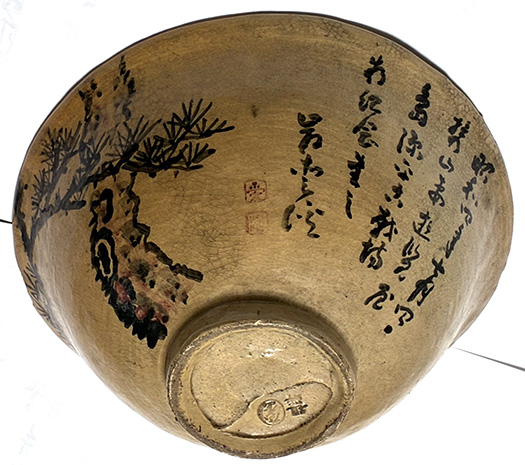
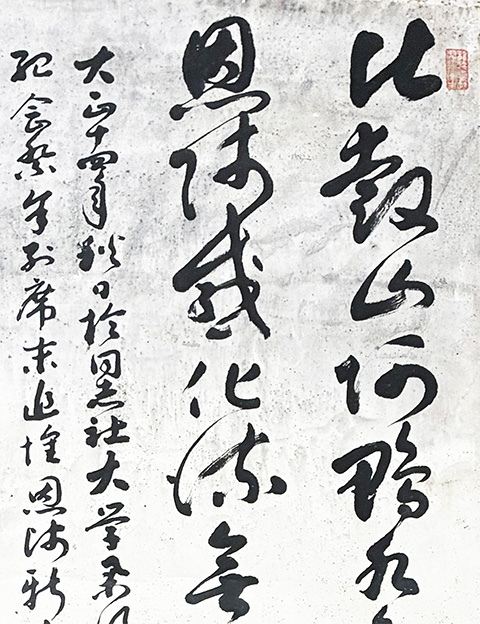
 <写真は「ドヤ」顔表現系の書・ウツワ工芸品。名家の文化意識は、書や茶の湯、美術品の教養の世界に対しても表れる。>

●お知らせ
拙書「作家と住空間」幻冬舎から電子書籍で発刊
お求めはAmazonで。
https://amzn.asia/d/eUiv9yO

English version⬇

[Exploring Family History: The Structural Revolution in Japanese Society Before and After the War]
From the late Edo period onward, financial capital pursued large-scale land acquisition, and the Meiji government condoned this, leading to the solidification of the prewar ruling class. Was the GHQ’s land reform a structural reform for Japan? …

 I’m currently working on “analyzing” the information I gathered the other day during an interview with my cousin about our family history.
 I was surprised to learn that my cousin’s “perception of his ancestors” is deeply rooted in the maternal ancestral homeland from before our clan migrated to Hokkaido. It evoked a truly nostalgic feeling. “Wait, is he that deeply immersed in that world?”
 I was born in 1952, after the war, so naturally I have no “firsthand experience” of the pre-war era. I belong to the generation that came after the post-war baby boom. Although I developed a passion for “history” as an adult, even though I followed the progression of eras from elementary school through high school, I wasn’t even properly taught about the Meiji Restoration. I was neglected in my education with excuses like, “We’re nearing the end of the school year, so we’ll skip this,” or “It won’t be on the entrance exams.” (Although the textbooks did cover it later on.)
 It’s certainly true that studying Meiji-era and pre-war society was seen as too closely tied to the political realities of the time. It also touched on sensitive aspects of the reality of power. But more than that, watching the teachers’ demeanor, I instinctively sensed as a child, “Ah, they don’t want to touch on this.” For a well-behaved child, acceptance was the only option.
 Since history education effectively ended at that stage, a basic understanding of “pre-war society” was left out. I lack a real sense of the underlying structures of social domination. The only thing that was instilled in me was a sense of shame over how the country had descended into a “military dictatorship” that drove the nation toward war.
 For someone who received this kind of education, the fact that—despite being born and raised in Hokkaido—the place I returned to from Manchuria was my mother’s ancestral homeland struck me as a disparity beyond my imagination; at the same time, it offered a glimpse into the social power structures of the pre-war era.
 That was the imposing presence of the large landowning class, known at the time as “parasitic landlords.”
 In the pre-war era, eligibility to serve as a member of the House of Representatives was guaranteed “exclusively” to those who had been fixed in their social status as large landowners during the chaotic period of the late Edo era. Although this system was gradually dismantled as the country moved toward the war years, the sense of being part of a distinguished family persisted.
 This stemmed from the fact that, at the time of the Meiji Restoration, securing stable tax revenue was an absolute prerequisite for advancing rapid social reform, and it was reasonable to collect taxes from the landowner-financial capitalists—that is, the large-scale landowners—who had been established. The state had tacitly accepted the guarantee of social status in exchange for tax payments during the pre-war period. In the numerous “tenant disputes” that arose, public order measures were generally enforced in favor of the landlords.
 Ideologies relying on the privileged class were also influential. The sense of superiority among the privileged class and the reality that they effectively controlled the economic structure.
 From the perspective of my postwar generation, I just wish they’d have told us that outright (laughs)….


● Announcement
My book, *Writers and Living Spaces*, has been published as an e-book by Gentosha.
Available on Amazon.


【米価推移ウォッチ。最安値10kg-5,990円/令和7年産】


 消費のリアリズムを追求する料理大好き男子です(笑)。
 自分で料理するのは健康長寿にとって有益という情報に接し我が意を得たりと喜び気味。男子の料理好きは「こだわり系」のケースが多いようですが、わたしの場合はそういう趣味はあんまり無く、むしろ「主婦目線」的コスパ最優先興味が同時に健康に良いという領域だと思える。
 仕事人生で夫婦共働きだったので必然的に料理は数寄もあってわたしの割合が高かった。洗濯は全自動に入れるだけとはいえ、干してたたんでという業務はカミさんに預けっぱなしの人生。
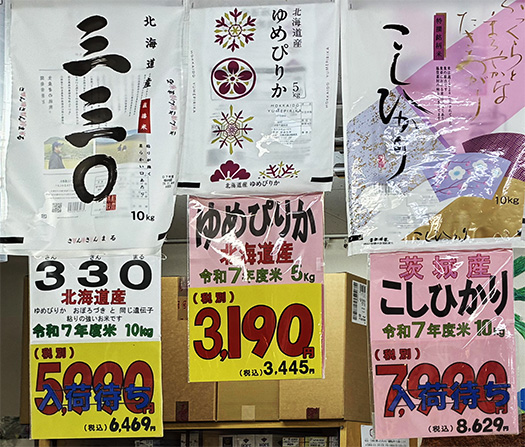
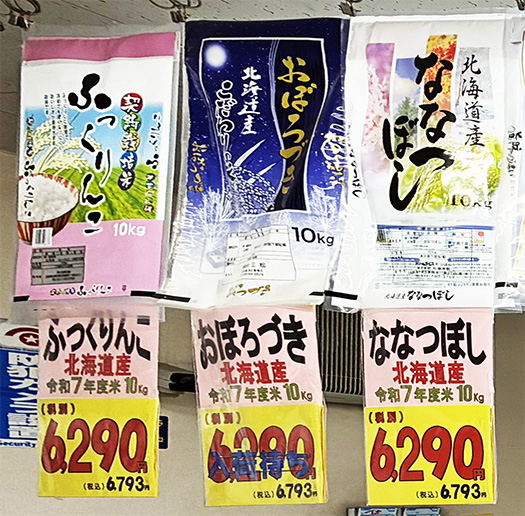
 買い物はだいたい夫婦で週に1度、買い出しに出掛けます。写真はコスパ優先で贔屓にしているスーパーのお米最新価格情報。先日は別の店で5kg-2,500円を切る価格でしたが、本日は10kg-5,990円。ですが令和7年度産・北海道産銘柄米なので、単純比較では金額高めだけれど、銘柄も考えればという現場情報。
 早い銘柄は8月には新年度産米が出荷されはじめるので、さてどういう展開になるのでしょうね。わが家は生産者直で購入しているので、こういう調査は高齢者としての社会参加的領域。生活感覚を維持し続けることは、こころの健康を保つ大きな要素とも考えられますね。
 一方家系史探究では次兄と活発なLINEでやり取り。兄貴たちも80歳超えながらスマホが大きな連絡手段となってくれている。長兄に関しては指が太すぎて(笑)入力はダメですが、見る方はちゃんとチェックできている様子。次兄は家系史を出版物としてまとめた経験を持っているのでパソコンも使えるのですが、なぜか、WEBへの接続はできていない・・・。このあたり、電子機器との付き合い方に団塊世代とそのすぐ後世代とで、微妙に違いがある。
 まぁスマホでも連絡自体はできるので問題はないけれど表現で長文が送れるかどうか、に影響は出てきますね。末弟として情報の場の充実に努めながら交信を維持発展させたい。このLINEもわたしが場所を作り、各自に使い方を説明しながら運用してきていますが、みんな慣れると「家族LINE」として機能してくれている。
 まぁ、このインフラ整備が「家系史探究」という場の社会的誘因要件なのでしょうね。高齢期の情報感度維持にも、こういう環境は意味があるだろうと思います。

●お知らせ
拙書「作家と住空間」幻冬舎から電子書籍で発刊
お求めはAmazonで。
https://amzn.asia/d/eUiv9yO

English version⬇

[Rice Price Trends Watch: Lowest Price—5,990 yen per 10 kg / Reiwa 7 Harvest]
“Rice Price Check” helps you stay in touch with everyday life. Exploring your family history also helps keep your mind sharp—and helps you maintain a sense of being “active” as you age. …

 I’m a guy who loves cooking and strives for realism in my eating habits (lol).
 When I came across information stating that cooking for yourself is beneficial for a long, healthy life, I was delighted—it really struck a chord with me. While men who enjoy cooking often tend to be the “meticulous” type, that’s not really my style. Instead, I’m more interested in the “housewife’s perspective”—prioritizing value for money—which I believe naturally leads to healthier choices.
 Since both my wife and I worked throughout our careers, I naturally took on a larger share of the cooking out of necessity. As for laundry, even though I just toss the clothes into the fully automatic washer, I’ve left the tasks of hanging them out to dry and folding them entirely to my wife my whole life.
 We usually go grocery shopping together once a week. The photo shows the latest rice prices at the supermarket I frequent because of its great value. The other day, I saw 5 kg for under 2,500 yen at another store, but today it’s 10 kg for 5,990 yen. However, since this is a branded rice from Hokkaido harvested in Reiwa 7, it’s a bit pricier in a direct comparison, but that’s the on-the-ground information when you factor in the brand.
 For early varieties, shipments of the new harvest start as early as August, so I wonder how things will play out. Since our family buys directly from the producers, this kind of research is part of my social engagement as a senior citizen. I think maintaining a sense of everyday life is a major factor in preserving mental health.
 Meanwhile, regarding our family history research, I’ve been having lively exchanges with my second-eldest brother via LINE. Even though my brothers are over 80, smartphones have become a major means of communication for them. As for my eldest brother, his fingers are too thick (laughs) to type, but he seems to be able to check messages just fine. My second-eldest brother has experience compiling our family history into a published book, so he can use a computer, but for some reason, he can’t connect to the internet… In this regard, there’s a subtle difference in how the baby boomer generation and the generation immediately following them interact with electronic devices.
Well, since we can still communicate via smartphone, it’s not a problem, but it does affect whether we can send long messages. As the youngest brother, I want to enrich our information-sharing space while maintaining and developing our communication. I set up this LINE group and have been managing it while explaining how to use it to everyone, but once they got used to it, it’s been functioning well as our “family LINE.”
 I suppose setting up this infrastructure is a necessary social incentive for our “family history research” efforts. I also believe an environment like this is meaningful for maintaining information literacy in old age.

● Announcement
My book, *Writers and Living Spaces*, has been published as an e-book by Gentosha.
Available on Amazon.


【家系史探索/生々しい血脈を感じる時代に】


 高齢化を迎えビジネス生活からすこし距離を置き始めてきて、次兄から「業務命令」を受けてわが家の「家系史」を継続探究してきています。先日、従兄弟(父親同士が兄弟)から「別の見方」を受け止めたいと、じっくり懇談4時間半超の対話をしておりました。
 同じ一族の従兄弟でも、基本的なものごとの見方が大きく相違していることに、驚いていました。
 祖父の生き方についての考え方が、父親世代でも当然ながら相違するし、そこに母系の違いからの受け止め方の距離感も発生することを、痛感させられています。わたしの父親は基本的に祖父が選択した移住地北海道で「独立独歩」的な生き方を好んできた人生で、それはわたしにも強く伝わってきていると実感しています。が、父の兄にあたる一統では、祖父はやはり「故地に帰り錦を飾る人生を夢見ていた」という考え方が強いようでした。
 そんなことを含めて「生々しい血脈」を強く感じる、いまに直接繋がってくる家系史段階になってきた。
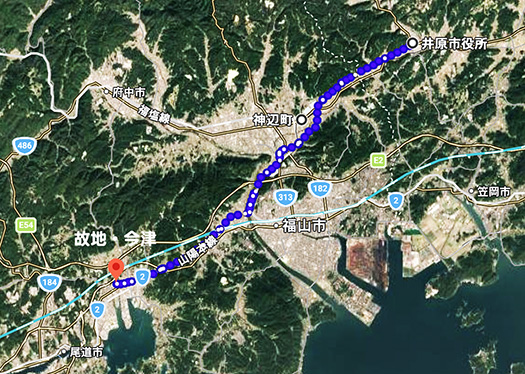
 地図は、従兄弟が強く意識している「岡山県・井原」のかれの母系の故地と、わが家系統が江戸後期からの「故地」と考えてきた広島県福山市今津の距離感を表現したもの。江戸期「西国街道(山陽道)」のルートとして1直線。山陽道の宿駅としては、今津宿からすぐ東隣の神辺宿を超えて「高屋宿」「七日市宿」のあった井原地域まで29km程度。
 間の「神辺宿」には菅茶山の「廉塾」があってわが家系の曾祖父が入塾していたようで、同時期に井原の縁者になる人物も塾にいたようなのです。そこで縁がつながってか、この井原の人物にわが家系の女子が嫁入りしている。
 私から数えれば4−5代前くらいに相当する「つながり」が克明に浮かび上がってくる。
 そして、先述した従兄弟は、この井原の家から嫁入りして来た伯母の子。
 この伯父は太平洋戦争期、満州国で官僚になっていてそこから艱難の末に日本に帰国したとき、伯母の実家の方に帰国している。実の父母のいる北海道空知郡の方ではなかった、という消息。
 このあたり「人生判断基準」に違いがあることに深く気付かされる思い。
 まぁ当然ですね。人類はそのように「枝分かれ」しながら、世の動きの中でそれぞれが生存戦略を持って生き続けてきた存在なのでしょう。 しかし、だんだんと「血肉」が迫ってくる・・・。

●お知らせ
拙書「作家と住空間」幻冬舎から電子書籍で発刊
お求めはAmazonで。
https://amzn.asia/d/eUiv9yO

English version⬇

[Exploring Family History / In an Era Where We Can Feel the Vivid Pulse of Our Bloodline]
From the turmoil of the late Edo period through the Meiji era to the end of World War II, the true nature of that era seems to have emerged in a single, continuous thread. I find myself drawn in by its vivid, living quality…

 As I’ve entered my later years and begun to step back a bit from my business life, I’ve been continuing to research our family history following an “official order” from my second-eldest brother. The other day, I had a thorough conversation lasting over four and a half hours with a cousin (whose father and my father are brothers) who wanted to hear a “different perspective.”
 I was surprised to discover that even among cousins from the same family, our fundamental perspectives on things differed so greatly.
I’ve come to keenly realize that views on my grandfather’s way of life naturally differ even among my father’s generation, and that differences in maternal lineage also create a gap in how we perceive things. My father has essentially led a life of “independence and self-reliance” in Hokkaido—the place my grandfather chose to settle—and I truly feel that this spirit has been strongly passed down to me. However, among my father’s older brother’s branch of the family, there seems to be a strong belief that my grandfather had always “dreamed of returning to his ancestral homeland to live a life of glory.”
 Taking all this into account, I’ve reached a stage in my family history where I strongly feel the “vivid bloodline” that connects directly to the present.
 The map illustrates the distance between “Ibara, Okayama Prefecture”—the ancestral homeland on my cousin’s maternal side, which he is deeply conscious of—and Imazu in Fukuyama City, Hiroshima Prefecture, which our family line has considered our “ancestral homeland” since the late Edo period. It is a straight line along the route of the Edo-period “Saigoku Kaidō (Sanyō-dō).” As for the post stations along the Sanyō-dō, it is about 29 km from Imazu-juku, passing through the neighboring Kanbe-juku to the east, to the Ibaraki area where Takaya-juku and Nanokaichi-juku were located.
 At “Kannabe-juku,” located along this route, there was Suganoyama’s “Renjuku” academy, where my family’s great-grandfather apparently studied; it seems that a person who would later become a relative in Ibara was also attending the academy at the same time. Perhaps because of this connection, a woman from my family’s line married into this Ibara family.
 This “connection”—dating back about four or five generations from my own time—comes into sharp focus.
 Furthermore, the cousin I mentioned earlier is the child of my aunt, who married into this family in Ihara.
 During the Pacific War, this uncle served as a bureaucrat in Manchukuo; after enduring great hardships, he returned to Japan and settled at his wife’s family home. Reports indicate he did not return to Sorachi District in Hokkaido, where his biological parents lived.
 This really makes me keenly aware of the differences in “life values.”
Well, that’s only natural. Humanity has likely always existed in this way—branching out and continuing to survive with our own survival strategies amid the changing world. However, the reality of “blood ties” is gradually closing in on me…

● Announcement
My book, *Writers and Living Spaces*, has been published as an e-book by Gentosha.
Available on Amazon.

【米の好きずき。雑穀米のたのしさ】


 日本人の主食のコメですが、白米だけで食べる習慣というのはつい最近、現代になってのもので、江戸期までの一般家庭ではコメにいろいろな雑穀類を混ぜ込んで食べる方が一般的だったとされるそうです。
 健康面で考えるといろいろな雑穀が栄養分を補強するような食べ方には、合理性もあるのでしょう。
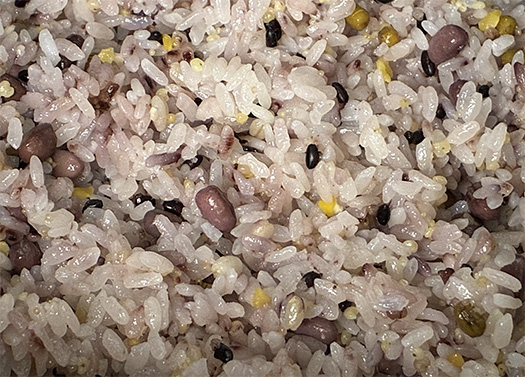
 わが家では、なんとか元気で長生きという目標に向かって、ごらんのような雑穀米ぶり。
 雑穀類は、小豆をベースに、黒米・九穀米のブレンド。黒米というのは玄米の一種で表皮が黒く覆われているコメということ。九穀米の方は、もちきび・胚芽押麦・とうもろこし・丸麦・緑豆・もちあわ・アマランサス・玄米・黒米のブレンドだそうであります。単なる一般消費者なので、なんとなく健康になれる、という淡い期待だけをもって、食べ続けてきています。
 食感としては、やはり小豆を食べるときに「主役感」があって、コメはその「やわらかい背景」みたいな食味を感じ続けてきています。たぶん「多品種少量ずつ」というのが、健康に良いという刷り込みなのでしょう。ふしぎとこういう主食にしているとおかず類も多品種少量ずつになって、よく言われる「1日30品目を食べる」健康法志向なのでしょうか。
 長年続けてきて、毎日10,000歩以上の散歩運動などをクリアし続けているので、こういった食事法は、健康に良いという呪文のような生活習慣のルーチン化なのでしょう。まぁ全体として生活バランスの基調として効果的と判断して継続してきている次第。この主食であれば「コメだけ・ばっかり」だとしてもそれなりのバランス食かも。

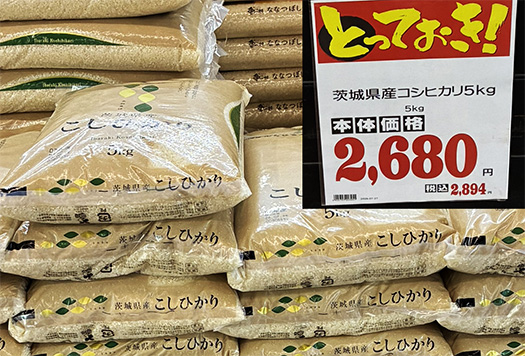
 一昨日のお米価格の続篇。今度は「茨城県産コシヒカリ・令和7年産」と表記されたお米が5kg-2,680円価格。
 先日のは「ブレンド米」だったものが昨日は一応銘柄米。
 見た段階では大量に積み上がっていましたが、さて消費者の購買動向はどうなっていくのか。麺類などへの食習慣チェンジが相当進んでしまった感があるので、単に価格低下で消費が増えるのかどうか、予断は許さない。身近な「社会動向ウォッチ」としてお米の値段のチェック、続けたいと思います。さて?

●お知らせ
拙書「作家と住空間」幻冬舎から電子書籍で発刊
お求めはAmazonで。
https://amzn.asia/d/eUiv9yO

English version⬇

[Rice Preferences: The Joy of Mixed-Grain Rice]
Supporting the “many varieties, small portions” healthy eating habit of consuming 30 different food items a day. The peace of mind that comes from knowing 10 of those items are covered by your staple food. Now, I’m personally testing just how effective this really is…

 Rice is the staple food of the Japanese, but the custom of eating only white rice is a relatively recent development—one that emerged in modern times. It is said that, up until the Edo period, it was more common for ordinary households to mix various grains into their rice.
 From a health perspective, there is certainly some merit to this way of eating, as the various grains help supplement one’s nutrition.
In our household, with the goal of staying healthy and living a long life, we’ve adopted the mixed-grain rice shown here.
The blend consists of adzuki beans as the base, along with black rice and nine-grain rice. Black rice is a type of brown rice with a black outer husk. As for the nine-grain rice, I’m told it’s a blend of glutinous millet, germinated barley, corn, round barley, mung beans, glutinous foxtail millet, amaranth, brown rice, and black rice. As just an ordinary consumer, I’ve continued eating it with nothing more than a faint hope that it might somehow improve my health.
 In terms of texture, the adzuki beans definitely take center stage, while the rice continues to provide a “soft backdrop” to the overall flavor. I suppose I’ve been conditioned to believe that eating “a variety of foods in small portions” is good for my health. Strangely enough, when I make this my staple food, my side dishes also tend to consist of a variety of foods in small portions—perhaps reflecting the often-cited health trend of “eating 30 different food items a day.”
 I’ve kept this up for many years, and since I consistently manage to walk over 10,000 steps every day, this eating pattern has become a routine—almost like a mantra—that I believe is good for my health. Well, overall, I’ve judged it to be effective as the foundation of a balanced lifestyle, which is why I’ve continued with it. With this staple food, even if it’s “just rice—nothing but rice,” it might still be a reasonably balanced diet.

 A follow-up to the rice prices from the day before yesterday. This time, rice labeled “Ibaraki Prefecture Koshihikari, Reiwa 7 Harvest” is priced at 2,680 yen for 5 kg.
 While the rice mentioned the other day was a “blend,” yesterday’s was, at least, a specific brand.
At first glance, there were large piles of it stacked up, but I wonder how consumer purchasing trends will play out. It feels like the shift toward eating noodles and other foods has progressed quite significantly, so it’s too early to say whether consumption will increase simply because of the price drop. I’d like to continue monitoring rice prices as a way to keep an eye on “social trends” in my daily life. Well, we’ll see?

【熊本地震発生、2016年の被害視察が追想フラッシュバック】


 昨日は息子夫婦と孫がわが家に来てくれていた。息子の嫁さんは九州・久留米の出身者。
 夕方になってカミさんが彼女を外出先から連れ戻してきてくれて、わたしはわが家で孫と遊んでいたのですが、ふとMac画面でYahooニュース欄を見たら、「熊本で地震発生」のニュースが飛び込んできた。
 「え〜っ」と一声叫んでから、さっそく彼女は久留米の実家と連絡を取り始めた。先般九州一周の旅で久留米の位置関係がわたしにもようやくアタマに入ってきたので、熊本との近接ぶりが理解できていた。すぐにこのような対応になること、実感は非常に切実に伝わってくる。
 余震も含めて揺れは強く感じられたようですが、今のところは幸い近親者に被害はない模様。
 しかし医療関係の仕事一家なので、熊本からの近接地域として患者さんの「救急搬送」などが予想されるため、事態の進行・推移に注意を深く払っている様子。
 わたしはいまは仕事からは中半はリタイヤしているので孫の面倒を見つつ情報を注意深く聞いていた。彼女には熊本にも友人が多いようで、「あの子大丈夫かなぁ、そうだあの人も・・・」と次々に消息を確認しているようでした。LINEはすぐに繋がって母親とはテレビ電話もしていましたが、無事を願う一択。
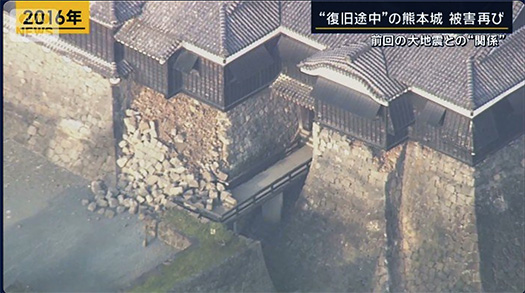
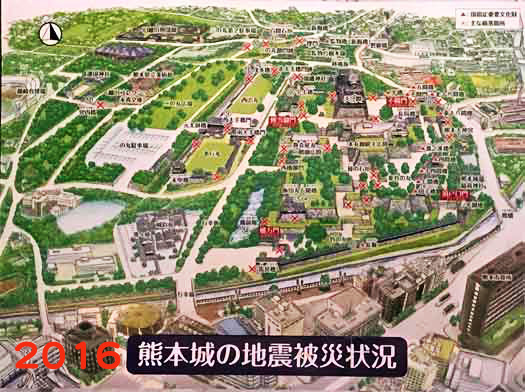
 わたしは前回2016年の熊本地震の折りには翌年8月に住宅研究団体「東北フォーラム」の一員として視察取材で訪れていた。いちばん上の写真は今回の地震のニュース画面と、その下は2017年視察のときに熊本市の住宅施策部門から示されていた「被害状況まとめ資料」からの抜粋です。仮設住宅などの状況を視察させていただいていた。この様子は過去ブログ記事でも紹介しています。
 2011年の東日本大震災はわたしにも事業人生の大きな転機になったのですが、前後して起こったこの熊本地震でもこのような経験がフラッシュバックしてくる。まさに有為転変そのものと感じます。そして縁者がこうしてふたたび危機にもさらされ、まことに諸行無常を感じさせられる。
 今回の震災では次々と被害状況がわかってきていますが、テレビニュースではAEONの店舗での爆発事故、行方不明などが大きく報じられている。北海道と九州と離れてはいますが、まことに災害はいつ何時、やってくるかわからない。ひたすら、みなさんの無事を祈念しています。

●お知らせ
拙書「作家と住空間」幻冬舎から電子書籍で発刊
お求めはAmazonで。
https://amzn.asia/d/eUiv9yO

English version⬇

[Kumamoto Earthquake Strikes; Flashbacks to My 2016 Damage Assessment Visit]
Having experienced a complete shift in the course of my professional life following the Great East Japan Earthquake, I continue to pray fervently for the safety of everyone affected by this disaster. …

 Yesterday, my son, his wife, and my grandchild came to visit us. My daughter-in-law is originally from Kurume in Kyushu.
As evening fell, my wife brought her back from an outing, and while I was playing with my grandchild at home, I happened to glance at the Yahoo News section on my Mac screen and saw a headline pop up: “Earthquake Strikes Kumamoto.”
 “What?!” I exclaimed, and she immediately began contacting her parents’ home in Kurume. Thanks to a recent trip around Kyushu, I’d finally gotten a handle on where Kurume was located, so I understood just how close it is to Kumamoto. It really hit home how urgently this kind of response is needed.
 It seems the tremors, including the aftershocks, were felt quite strongly, but fortunately, as of now, it appears none of her close relatives have been harmed.
However, since her family works in the medical and nursing fields, they’re closely monitoring the situation’s progress and developments, anticipating that patients from the areas near Kumamoto may need to be transported by ambulance.
 I’m now semi-retired from work, so while looking after my granddaughter, I’ve been listening closely to the news. She seems to have many friends in Kumamoto as well, and she was checking on their well-being one after another, saying things like, “I wonder if that girl is okay… Oh, and that person too…” She was able to connect on LINE right away and even had a video call with her mother, but all we could do was hope they were safe.
 During the previous Kumamoto Earthquake in 2016, I visited the area in August of the following year as a member of the housing research group “Tohoku Forum” for an inspection and reporting trip. The top photo shows a news screen from this recent earthquake, and the one below is an excerpt from the “Summary of Damage” document provided by Kumamoto City’s housing policy department during my 2017 inspection. I was allowed to inspect the conditions of temporary housing and other facilities.

 The 2011 Great East Japan Earthquake marked a major turning point in my professional life, and the recent Kumamoto Earthquake, which occurred around the same time, has brought back flashbacks of that experience. I feel this is the very essence of impermanence. And seeing my loved ones once again exposed to such a crisis truly makes me keenly aware of the transience of all things.
 As details of the damage from this disaster continue to emerge, television news is giving extensive coverage to the explosion at an AEON store and reports of missing persons. Although Hokkaido and Kyushu are far apart, it truly is impossible to predict when or where a disaster will strike. I am praying earnestly for everyone’s safety.

● Announcement
My book, *Writers and Living Spaces*, has been published as an e-book by Gentosha.
Available on Amazon.


【明治初期からのキリスト教伝道と同志社の現在地】


 先般3/16の傷ましい女子生徒の沖縄・辺野古沖での抗議船転覆死亡事故を受け、教育機関である同志社国際高校に対して刑事告訴が行われ、昨日海上保安庁が家宅捜索に入ったという報道。
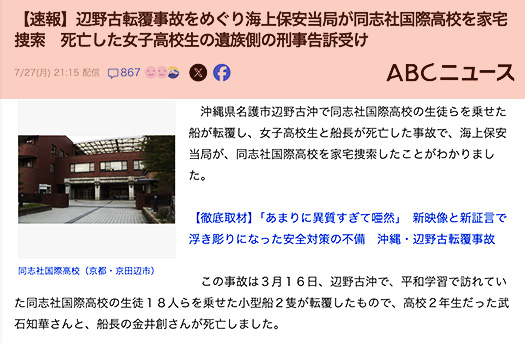
 写真はそれを「速報」で伝えたABCニュースのYahooニュース画面ショット。ABCテレビ=朝日放送テレビは、近畿広域圏を放送対象地域とするテレビ朝日系列(ANN)加盟局。この速報の画面下には要旨以下の情報。
 〜刑事告訴の対象は高校の校長ら4人と「ヘリ基地反対協議会」の共同代表ら7人の11人。遺族側によると、捜索は業務上過失致死傷容疑などでの告訴を受けたもので、学校法人同志社は27日夜のANNの取材に対し、「取材対応できる者が帰っているので、分からない」とコメント。〜
 この事故についてはわたしはまったく門外漢で、特段の知見を持っていません。たいへん傷ましいことであり、ご遺族の心中を思い、ひとりの人間として深く同情の念を持っておりました。
 ですが、わたしの「家系史探索」活動から明治維新前後期に深く関係していた親族に、明治後のキリスト教布教活動に中心的に関わり、故地にほど近い岡山県西部地方での教会設立の中心だった人物の足跡を知るに及んできています。その人物と祖父は手紙のやり取りを活発に行ってきている(古文書くずし字満載で解読には悩まされ続け・・・)。家系史研究では当然、その生きた先人の心情などを慮ることが基本になる。
 わが家系では幕末〜明治の社会の大変動のなかで非常にきびしい局面を迎えていたと思われます。
 広島県福山市近郊の松永塩田の出荷基地としての今津集落での「藩の御用」商家としてのそれまでの基盤が大きく影響を受けていた。そういうなかで、大きな力添えを受けていたと推認されるのが、この教会設立の中心だった人物。かれは新島襄の同志社設立とも連携していた足跡もある。
 こういった背景情報に向き合い始めてみて、明治後のキリスト教布教活動の流れとわが家系の受けた影響についても考究させられている次第。わが家系の信教自体は真言宗寺院と深い関係があって北海道移住後もこちらの寺院とご縁を持ち続けてきています。ただ、キリスト教のみなさんとも疎遠ではない関係性の中で一族は生き延びてきている。まことに思いが沈殿するような気分であります。

●お知らせ
拙書「作家と住空間」幻冬舎から電子書籍で発刊
お求めはAmazonで。
https://amzn.asia/d/eUiv9yO

English version⬇

[Christianity in Japan from the Early Meiji Period to Doshisha’s Current Position]
The spread of Christianity in Japanese society has followed a politically sensitive path. I feel as though I am sinking into the current state of affairs…

 Following the tragic accident on March 16, in which a female student died when a protest boat capsized off the coast of Henoko, Okinawa, a criminal complaint was filed against Doshisha International High School—an educational institution—and reports indicate that the Japan Coast Guard conducted a search of the school yesterday.
 The photo is a screenshot of the Yahoo News page showing ABC News’ “Breaking News” report on the incident. ABC TV (Asahi Broadcasting Corporation) is an affiliate of the TV Asahi Network (ANN) that serves the Kansai metropolitan area. The following information is summarized at the bottom of this breaking news screen:
 ~ The criminal complaint names 11 individuals: four people, including the high school principal, and seven co-representatives of the “Heliport Opposition Council.” According to the bereaved families, the search was conducted in connection with criminal complaints filed on charges including professional negligence resulting in death or injury. When interviewed by ANN on the evening of the 27th, the Doshisha Educational Foundation commented, “The person authorized to respond to media inquiries has already left for the day, so we do not know.” ~
 I am a complete outsider when it comes to this accident and have no particular expertise on the matter. It is a deeply tragic event, and thinking of the bereaved families’ feelings, I have felt deep sympathy for them as a fellow human being.
 However, through my “family history research,” I have come to learn about a relative who was deeply involved in the early and late periods of the Meiji Restoration—specifically, a figure who played a central role in post-Meiji Christian missionary activities and was instrumental in establishing a church in western Okayama Prefecture, near his hometown. My grandfather and this individual exchanged letters frequently (the ancient documents are full of cursive script, which has been a constant challenge to decipher…). In genealogical research, it is, of course, fundamental to consider the feelings and circumstances of those ancestors who lived before us.
 It appears that my family faced an extremely difficult period amid the massive social upheavals of the late Edo and Meiji eras.
 Their previous foundation as a merchant family serving as an “official supplier to the domain” in the Imazu settlement—a shipping hub for the Matsunaga Salt Fields near Fukuyama City, Hiroshima Prefecture—was significantly affected. Amid these circumstances, the figure who played a central role in establishing this church is believed to have provided significant support. There is also evidence that he was involved in the establishment of Doshisha University by Jo Niijima.
 As I’ve begun to engage with this background information, I’ve found myself delving into the flow of Christian missionary activities after the Meiji era and the impact they had on my family lineage. My family’s religious affiliation itself has deep ties to a Shingon Buddhist temple, and we have maintained a connection with this temple even after migrating to Hokkaido. However, our clan has also survived while maintaining a relationship—albeit not a close one—with members of the Christian community. It is a feeling that truly weighs heavily on my heart.

● Announcement
My book, *Writers and Living Spaces*, has been published as an e-book by Gentosha.
Available on Amazon.