本文へジャンプ

【東京渋谷に残る自然痕跡・・・と北の鳥たち】


 自分のカラダはいま東京の雑踏の中にいて徒歩と電車・地下鉄での移動のなかに身を置いているのですが、やはり加齢とともに心理は「彷徨っている」意識に支配されてくる。きのうも触れた渋谷の土地「記憶難民」ぶりですが、ちょっとSNSを覗いてみると東京地元のみなさんまでそういった声にあふれているのですね。「迷子になる〜〜」という悲鳴(笑)。
 人間と「住」空間を主な領域として生きてきたわたしですが、その領域にプラスしてやはり現代人の「無機質空間でのいとなみ」ということも考えざるを得ないなぁと思える。機能性に特化して「風景的」空間性を捨て去った空間に対して、人間的なアプローチはなにか可能なのか。人間が作った空間なので、やがてそこに「なじみ」の感覚が生起してきて、それなりの「愛着」のとっかかりのようなものが認識されるようになるのでしょうか、果たして?
 いまのところ、高齢者にはなかなか想像力が湧いてこない。ふ〜む。
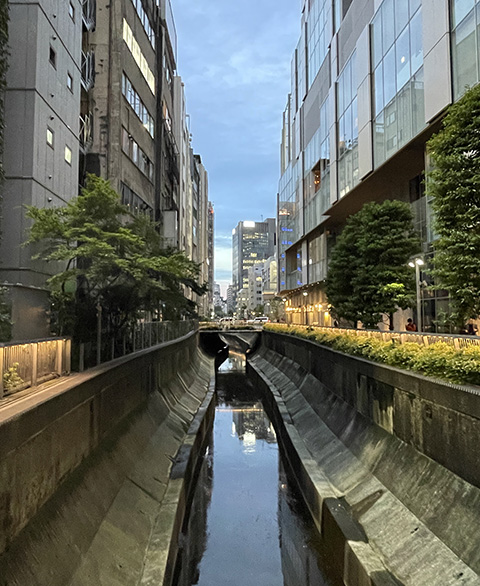
 上の写真は、ふと過去の渋谷風景の「痕跡」とも思えたコンクリートで覆われた「渋谷川」の様子。渋谷川は渋谷駅南方から南、広尾五丁目の天現寺橋までの2.4 kmを流れる二級河川。まるで現代建築技術でコントロールされ切った「自然」だけれど、その流路の不定形ぶりに辛うじての自然感が漂って見える。わたしが最初にこの川を見ていたのはいまから55年前でそこから8−9年は見た記憶を持っている。もちろん当時はなんの感慨を持つことも無かった。むしろコンクリートで「半ばは殺された川」という印象を強く抱いていた。もちろん川鳥など見たこともない。
 だから渋谷という地域・自然の「墓」の記憶なのかも知れないと思う。しかし墓であっても、なにかの残影を想起させるものではあるだろうか。
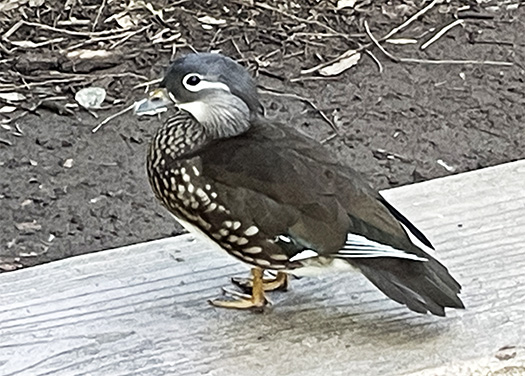
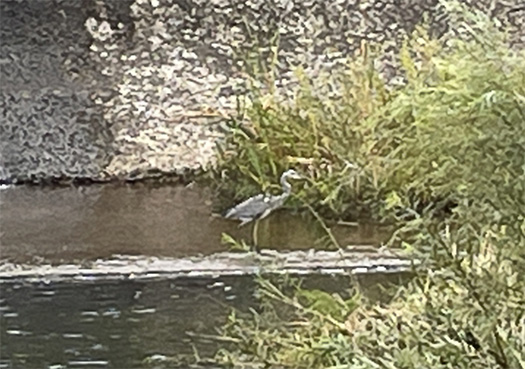
 そんなことで札幌の散歩道で、都市化されたとはいえその生きようを担保している環境の中で、ごく自然に表情を感じさせてくれる存在に思いが向かっていた。やはり心理に「渇望」感が起こっているのでしょうね。渋谷以外ではそれなりに鳥たちのさえずりも聞こえるので、たくましく生き延びていることを感じるけれど、時間が無いので、その姿を拝むことは難しい。
 昔人は「ふるさとは遠くにありて思うもの」と記したけれど、現代の大都会の暮らしではよりデフォルメされていくのでしょうね。

●お知らせ
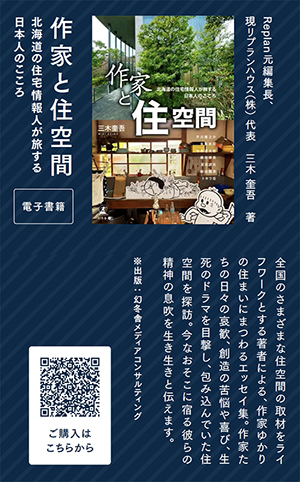
拙書「作家と住空間」幻冬舎から電子書籍で発刊
お求めはAmazonで。
https://amzn.asia/d/eUiv9yO
English version⬇

【Natural Traces Remaining in Tokyo’s Shibuya… and Birds from the North】
The terminal in Tokyo’s Shibuya, transformed into an inorganic landscape. Seeing traces of former nature in a river that resembles a “grave.” Unconsciously searching for cute birds. …

 My body is currently immersed in Tokyo’s bustling crowds, navigating on foot and via trains and subways. Yet, with age, my psyche increasingly succumbs to a sense of “wandering.” Yesterday I mentioned Shibuya’s status as a “memory refugee” zone, but glancing at social media reveals even Tokyo locals are flooded with similar sentiments. “I’m getting lost~~” cries abound (laugh).
 As someone who has lived primarily within the domains of humans and “residential” spaces, I find myself compelled to also consider the modern human’s “activities within inorganic spaces.” Is there any human-centered approach possible for spaces that prioritize functionality and discard “scenic” spatiality? Since humans create these spaces, does a sense of ‘familiarity’ eventually emerge there, allowing us to recognize some semblance of an “attachment” to them? I wonder…
 For now, I find it hard to imagine this happening for the elderly. Hmm.
The photo above shows the concrete-covered “Shibuya River,” which suddenly struck me as a “trace” of Shibuya’s past scenery. The Shibuya River is a Class II river flowing 2.4 km south from Shibuya Station to Tenjōji Bridge in Hiroo 5-chome. It’s like a “nature” completely controlled by modern construction technology, yet the irregularity of its course still manages to give off a faint sense of naturalness. I first saw this river 55 years ago and remember seeing it for another 8-9 years after that. Of course, I felt nothing special about it back then. Rather, I strongly felt it was a river “half-killed” by concrete. Naturally, I never saw any river birds.
 So perhaps it’s a memory of Shibuya as a “grave” for the region and its nature. But even a grave might evoke some lingering trace, mightn’t it?
That’s why, on my walks in Sapporo, amidst an environment that, though urbanized, still safeguards its vitality, my thoughts turned to those beings that so naturally reveal their expressions. I suppose it’s because a sense of “longing” stirs within me. Outside Shibuya, I can hear birds chirping reasonably well, so I sense they’re surviving robustly. But with no time, it’s hard to actually see them.
Ancient people wrote, “Hometown is something you think of when far away,” but in modern metropolitan life, that feeling probably gets more distorted.

●Notice
My book “Writers and Living Spaces” published as an e-book by Gentosha
Available on Amazon.

【サケ遡上の札幌から大変貌の東京渋谷へ】


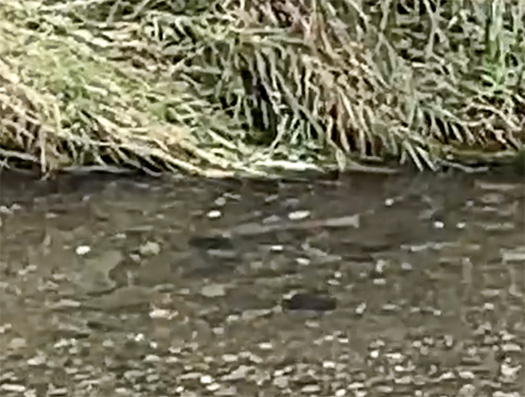
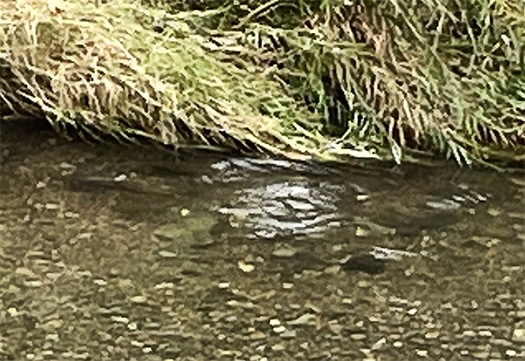
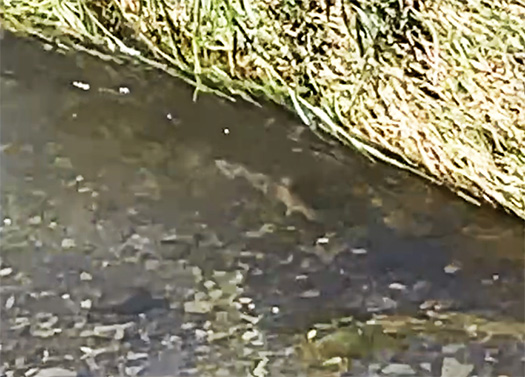
 写真は一昨日午後のわが家周辺の「琴似発寒川」の架橋から見下ろしたサケ(サクラマス説もあり)たち。ここから数十メートルには人間が河川管理のために設けたコンクリート製の高低差のあるダム装置が有り、遡上する魚種に対して「魚道」が整備されているけれど、かれらにとっては相当に過酷な遡上ポイントになっているのでしょう。その直前のこの草むら周辺にしばしたむろして、体力を整えてから魚道にチャレンジするように見受けられます。
 ちょっと前に見ていたときには1尾だけを確認していましたが、この時点では7−8尾を目視確認。わが家周辺でも、このように大自然の輪廻、いとなみが脈々と永遠の時間軸のなかで営まれていることに、深い歓びを感じさせてもらえる。ありがたい機縁。
 一方で、わたしは昨日東京に来ておりました。所用で日曜日までこちらにいるのですが、昨日は渋谷周辺に用事があって、ちょうど夕刻、ラッシュアワーの時間に渋谷駅頭に遭遇した。
 渋谷は東京在住時代、学生時代から社会人として就職した時代の間、東横線沿線で暮らしていたのでそのターミナル駅としていちばん利用していた。昨日は渋谷と恵比寿の中間点くらいから徒歩で、渋谷の街区ゾーンに「降りて」いっておりました。渋谷の中心街区・駅のゾーンは東京でも有数の「再開発」が行われてきていて、ここ数年の変貌ぶりはまことにハンパない。
 よく見知っていた街区が跡形もなく消え去って、まったく見たこともないようなビル街が出現してきている。いまから40-50年前ころの土地空間記憶・自分のウチ側と対話しながら「あれれ、ハチ公はどこ?」と彷徨わされる事態に突入していた。着いたら外国旅行者たちが順番に写真撮影スポット活用。ぜひ良い旅路を楽しんでくださいね(笑)。
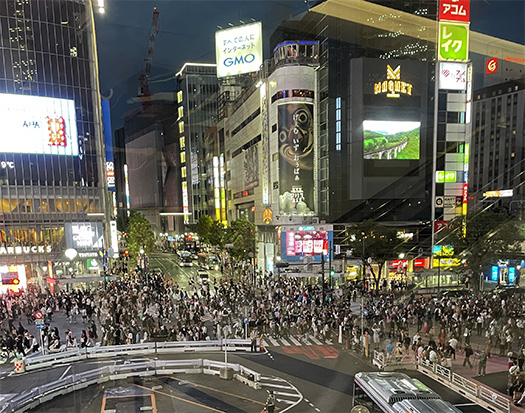
 ターミナル駅なので「銀座線」に乗るのが目的だったのですが、恵比寿方向からはちょうど「対角」的な位置にあたるのですね。まぁ昨日はハチ公像に久しぶりに対面したく、遠回りもしたワケですが、あやうく老人迷子になってしまう寸前(笑)。写真は道玄坂方向へのスクランブル交差点に蝟集した「人の群」。
 ふと、サケの遡上光景とこの人の波がアタマのなかで反応していました。
 どちらも輪廻転生のひとつの断面なのでしょう。

●お知らせ
拙書「作家と住空間」幻冬舎から電子書籍で発刊
お求めはAmazonで。
https://amzn.asia/d/eUiv9yO

English version⬇

【From Salmon Runs in Sapporo to Tokyo’s Shibuya in Turmoil】
Living things obediently follow the great cycle of life. The salmon runs in Hokkaido and the human tide in Tokyo’s Shibuya. I felt something shared between them. …

 The photo shows salmon (possibly cherry salmon) viewed from the bridge over the Kotoni Hassamu River near my home the afternoon before yesterday. Just a few dozen meters downstream, there’s a concrete dam with varying heights installed by humans for river management. While a fish ladder has been provided for migrating fish species, it must be an extremely harsh migration point for them. They seem to linger for a while in this grassy area just before it, gathering their strength before attempting the fish ladder.
 Earlier, I had only spotted one fish, but at this point, I visually confirmed seven or eight. Even around my home, witnessing nature’s eternal cycle and the relentless flow of life unfolding within the timeless axis brings me profound joy. A truly grateful opportunity.
Meanwhile, I arrived in Tokyo yesterday. I’ll be here until Sunday for business, and yesterday I had errands around Shibuya. I happened to be near Shibuya Station during the evening rush hour.
 During my time living in Tokyo, from my student days through my early career, I lived along the Toyoko Line, so Shibuya was the terminal station I used most frequently. Yesterday, I walked from somewhere between Shibuya and Ebisu, “descending” into Shibuya’s district zone. The central district and station area of Shibuya has undergone some of Tokyo’s most extensive redevelopment, and the transformation over the past few years is truly staggering.
 Familiar blocks vanished without a trace, replaced by entirely unfamiliar skyscraper districts. I found myself wandering, talking to my inner self about the spatial memories from 40-50 years ago, thinking, “Huh? Where’s Hachiko?” Once I arrived, foreign tourists were lined up taking photos at the spot. I hope you all enjoy your travels (laugh).
 Since it’s a terminal station, my goal was to board the Ginza Line, but coming from the Ebisu direction, it’s positioned almost diagonally opposite. Well, yesterday I wanted to see the Hachiko statue again after so long, so I took the detour, but I nearly ended up as an elderly lost soul (lol). The photo shows the “human swarm” gathered at the scramble crossing heading toward Dogenzaka.
Suddenly, the sight of salmon swimming upstream and this human tide reacted in my mind.
Both are probably just one cross-section of the cycle of life.

●Notice
My book “Writers and Living Spaces” published as an e-book by Gentosha
Available on Amazon.

【北海道移住者が入居した一般的な住宅】


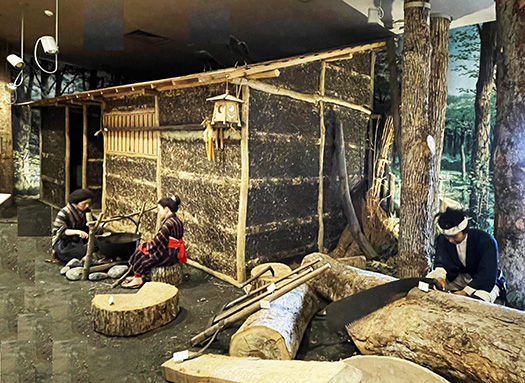
わたしの家系、祖父が北海道に渡って来たのが1905年当時。その当時の様子をリアリティのある展示として伝えてくれているのが、入植した栗沢町上幌から50数キロ北西方向の新十津川開拓記念館。
 新十津川は祖父が入植した時代から15-6年前に、奈良県十津川での大水害を受けて集団移住した。明治の後半時期に当たる。いま現代のわたしたちが「高気密高断熱」という住宅性能革命時代に生き、住宅というものが「商品化」されて流通する時代ではなく、まさに「外界とウチを仕分けてその土地に暮らす」という住宅の根源的な機能性にだけ特化した家づくりが行われていた。もちろんハンドメイドの手づくり。
 このような家づくりについて公的なガイダンスというものもあったことが想像できる。とくに地域自治体である北海道庁が今日に至っても「建築指導課」という部署を持って「住宅施策」を独自に展開していることの歴史的機縁になっていることからもうなずける。やや西部開拓期のアメリカに学んでいるとも思える。実際に北海道にはアメリカから「御雇い外国人」が多数、寒冷地開拓の「文化」を移植した。
 新十津川の場合には未曾有の大災害であり、江戸末期には「勤皇」の地域として知られていたことから災害から集団移住に際して、天皇からの「下賜」も受けるなど、手厚く段取りが取られていたことが伺える。入植から2年間は北海道庁から食糧給与があったという。入植地の選定にあたって、わたしの母の実家の三笠地域・市来知も候補に挙がっていた事実も確認された。

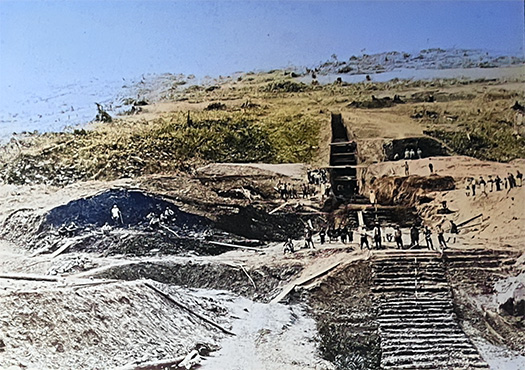
 そういう経緯からさまざまな「写真記録」も現存していて明治中〜末期の北海道開拓の実相が伝わってくる。こちらは農業用水の確保のための土地改良の土木作業の様子。
 わたしの祖父の場合にはこの写真の時期からは15-6年経過して、また、近隣には多くの入植者がいて、公的な学校などもすでに整備されていたようだ。しかし入植当時は裏の山にはヒグマが棲息していて、夜に家に帰ってくるときは「ガンガン」を叩いて音を発生させ「クマ除け」としたという。・・・先人たちと同様に現代人も対ヒグマということでは追体験させられつつあるのか?
 このような住宅では、室内気候の維持にはとにかく囲炉裏の火が生命線。その必死さが、展示からヒシヒシと伝わってくるようだった。祖父と祖母、家系のひとびとの心象に思いが募る。

●お知らせ
拙書「作家と住空間」幻冬舎から電子書籍で発刊
お求めはAmazonで。
https://amzn.asia/d/eUiv9yO

English version⬇

【Typical Housing for Hokkaido Settlers】
A situation similar to American “settlement” during the western expansion unfolded in Hokkaido. Housing, however, generally involved traditional handmade construction, clinging to a life centered around the hearth. …

My family lineage traces back to my grandfather, who came to Hokkaido around 1905. The Shin-Totsukawa Pioneering Memorial Museum, located about 50 kilometers northwest of Kurisawa Town’s Kamihoro settlement, vividly conveys what life was like back then through realistic exhibits.
Shin-Totsukawa was settled about 15-16 years before my grandfather’s arrival, following a mass migration from Totsukawa in Nara Prefecture after severe flooding there. This occurred during the latter half of the Meiji period. Unlike today, where we live in an era of housing performance revolution characterized by “high airtightness and high insulation,” and where housing is commoditized and distributed, homebuilding back then focused solely on the fundamental functionality of housing: “separating the outside world from the inside and living on that land.” Naturally, it was handmade.
 One can imagine that public guidance existed for such homebuilding. This makes sense given the historical connection to the Hokkaido Government, a regional authority, which even today maintains a “Building Guidance Division” to independently develop “housing policies.” It seems somewhat inspired by the American frontier era. Indeed, many “foreign experts” were hired from America to transplant the “culture” of cold-region development to Hokkaido.
 In the case of Shintotsukawa, it was an unprecedented disaster. Given the area’s reputation as a “loyalist” region during the late Edo period, the collective migration following the disaster was meticulously arranged, including receiving “gifts” from the Emperor. It is said that for the first two years after settlement, food rations were provided by the Hokkaido Government. It has also been confirmed that the Mikasa region and Ichikichi, where my mother’s family home was located, were among the candidate sites considered for the settlement.

 As a result of these circumstances, various “photographic records” still exist today, conveying the reality of Hokkaido’s development from the mid- to late Meiji period. This one shows civil engineering work for land improvement to secure agricultural water.
 In my grandfather’s case, about 15-16 years had passed since the time of this photo. Many settlers were already living nearby, and public schools and such facilities seemed to be established. However, back when they first settled, brown bears lived in the mountains behind their homes. When returning home at night, they would bang on a “gan-gan” (a type of wooden clapper) to make noise and scare off the bears. …Are modern people, like our predecessors, being forced to relive this experience with bears?
In dwellings like these, the hearth fire was absolutely vital for maintaining indoor warmth. The sheer desperation behind it seemed palpable from the exhibit. My thoughts turned to my grandfather, grandmother, and the people of my family line.
 

【1912年祖父「小作農」の地。父が生まれ、わたしも・・・】


 さて、ときどき「家系」の来し方を書き留めておく、の第2回。
 新天地北海道での事業を夢見て1905年に「渡道」してきた祖父の一家。祖父は建築素材である木材の豊富な供給地域である北海道の特性に事業の運を掛けていた。道北の天塩川流域の山林から樹木を伐採して、それを本州たぶん大阪の市場に出荷する事業を行っていた痕跡がある。
 そういう事業を行っていくのに、生活拠点としては開拓地主として成功されていた同郷人の隣接地に居を構えたということ。この現・岩見沢市栗沢から汽車などを利用して道北地域の山林地(名寄・美深)の原木を買い求め、それを伐採して天塩川などの水運を利用して海辺の港に集約し、そこから本州市場に運搬させたのだろう。
 当然ながら、この「水運」利用が最大のリスクであることは想像しやすい。リスクがあることは同時にビジネスとしての「利幅」も大きかったことだろう。家系にはいつ、どのように、という記録は残っていないけれど、春の雪融け時期にこの木材が洪水被害を受けて、天塩川から日本海に流出してしまった。
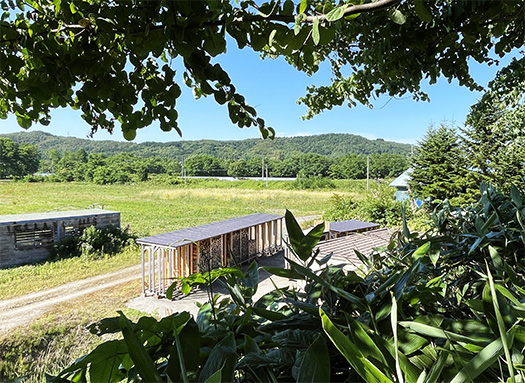
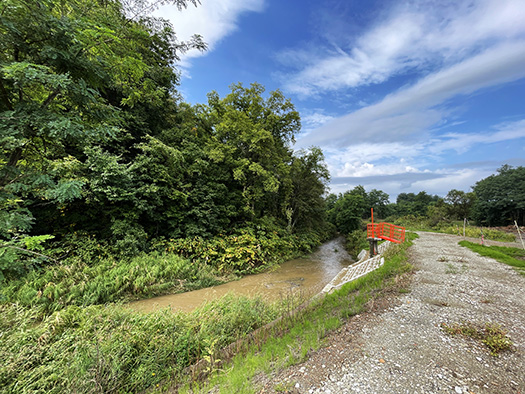
 妻と3人の幼子を抱え、その逆境からやむなく「小作農」になったのだという。その土地の現在の様子が上の写真。わが家系にとって最大の「困難期」だったと思える。

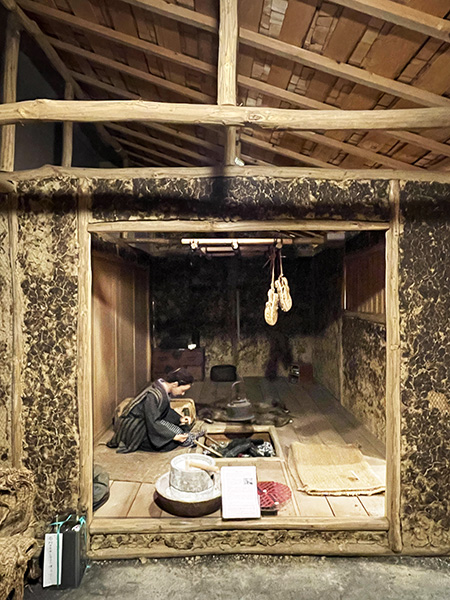
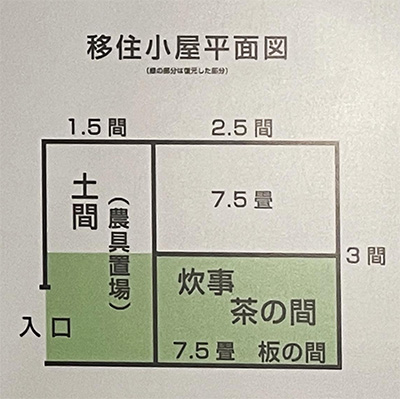
 この写真は当時の「家」の参考図。北海道空知郡の新十津川開拓記念館に展示されている明治末の頃の開拓期の「民家」の様子。1889年8月、24時間降水量1,000mmを超えたという記録的豪雨になった奈良県十津川。
 この大水害で、死者249名・家屋全壊565棟という壊滅的被害を受けたひとびとは北海道への移住を決意して2600人ほどが集団で渡道してきた。その当時に建てられた「民家」の様子。
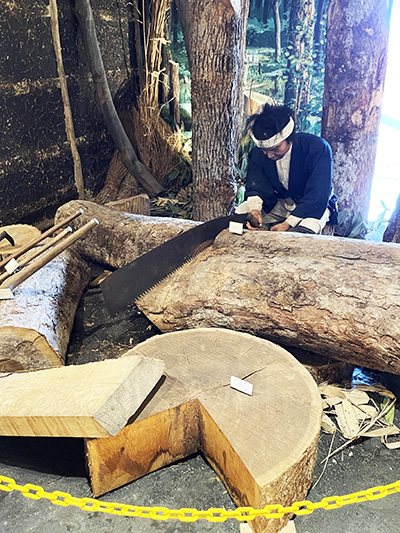
 壁には家の周囲の土の泥水に「切り藁」を入れて、足で十分に踏み固めて「木舞」で作った下地に塗り込めていく仕様で作られている。当時の北海道への入植者たちの一般的な手づくり住宅。もちろん構造材や木舞の材料である木材は、周辺の樹木が宛てられていた。現代の工業的な生産システムからの完成品として「住宅を購入する」感覚とはまったく違う。「家を建てる」営為の日本列島普遍なありようだと思える。血肉的・・・。

●お知らせ
拙書「作家と住空間」幻冬舎から電子書籍で発刊
お求めはAmazonで。
https://amzn.asia/d/eUiv9yO

English version⬇

【1912: My grandfather’s “tenant farmer” land. Where my father was born, and I too…】
My family migrated to Hokkaido. My grandfather worked in lumber, but suffered losses from snowmelt floods. He switched to farming. A handmade house using local natural materials. …

 Now then, the second installment of occasionally jotting down the history of our family lineage.
My grandfather’s family came to Hokkaido in 1905, dreaming of building a new life in this land. Grandfather staked his business fortune on Hokkaido’s unique characteristics as a region rich in timber, a key building material. There are traces of him running a business cutting timber from the forests along the Teshio River basin in northern Hokkaido and shipping it to markets on Honshu, probably Osaka.
To run this business, he established his living base adjacent to the land of a fellow countryman who had successfully become a pioneering landowner. From present-day Kurisawa in Iwamizawa City, they likely used trains and other means to purchase logs from the mountainous forest areas of northern Hokkaido (Nayoro, Bifuka). They would then fell these trees, utilize water transport on rivers like the Teshio to gather the logs at coastal ports, and from there ship them to markets on Honshu.
Naturally, it’s easy to imagine that this reliance on “water transport” was the greatest risk. The presence of risk likely meant substantial profit margins for the business. While our family records don’t specify when or how it happened, during the spring snowmelt, this timber suffered flood damage and was washed from the Teshio River into the Sea of Japan.
With a wife and three young children to support, he was forced by this adversity to become a tenant farmer. The photo above shows the current state of that land. It seems to have been the greatest “period of hardship” for our family lineage.

 This photo shows a reference diagram of a “house” from that era. It depicts a “private residence” from the pioneering period around the late Meiji era, displayed at the Shintotsukawa Pioneering Memorial Museum in Sorachi District, Hokkaido. In August 1889, Totsukawa, Nara Prefecture, experienced a record-breaking torrential rain with over 1,000mm of rainfall in 24 hours.
 Devastated by this flood disaster—which claimed 249 lives and completely destroyed 565 houses—the survivors resolved to migrate to Hokkaido. Around 2,600 people collectively crossed over to the island. This shows the appearance of a “private residence” built at that time.
The walls were constructed by mixing cut straw into the muddy water from the surrounding soil, thoroughly compacting it with feet, and then plastering it onto a base made of wooden latticework. This was the typical handmade housing for settlers in Hokkaido at the time. Naturally, the structural timber and wood lattice materials came from surrounding trees. It was entirely different from the modern sensation of “purchasing a house” as a finished product from an industrial production system. It seems to represent the universal Japanese way of “building a house” – deeply embodied…

●Notice
My book “Writers and Living Spaces” published as an e-book by Gentosha
Available on Amazon.
 

【札幌市西区・発寒川に2025年のサケ初遡上か?】


 本日朝5時半のわが家、札幌市西区山の手では最低気温10℃。すっかり「秋冷」が始まったように感じられる今日この頃であります。つい先日までは、誤差が大きいことで評判のある近隣の金融機関店舗の気温計では、30℃超から、場合によっては40℃以上まで計測していたことが、まったくのウソのよう。
 ただそれでも異常な暑さが継続していて、日中も北海道なのにこの時期でも25℃以上の気温。
 というところですが、例によって早朝散歩でわが家近隣の「発寒川」の架橋を歩いていて、ふと川面を見ていたら不明瞭ながら、魚影がチラついている。目を懲らしていると、魚体の様子からサケと判別できた。
 北海道人は川でこの魚体を見る経験知があるので、その様子からわかるのですね。
 どうやらことしの「初姿」と思われました。一昨日などけっこうな水量で雨が降っていたので、川の水量は多く、場所によっては泥が至る所に散乱しているほどの強い水流に対して、果敢に上流目指して必死の泳ぎ。「おお、ことしも帰ってきてくれたのか! がんばれよ!」と、こころのなかで静かに念じていました。自然の輪廻。
 発寒川周辺では写真の地点から上流方向1kmほどの市街地で、最近ヒグマが目撃。自然の食物連鎖ではヒグマは遡上するサケが大好物とされる。自然からのシグナルでこうしたサケの遡上という「叫び声」が達するのかも。
 さてサケの遡上という「風物詩」が見られるようになると、同時に朝晩の冷え込みが加速してくる。
 加齢とともに気温低下に敏感になってくるので、一昨日には機械のチェックも兼ねて早朝1時間ほどは「床暖房」装置の試運転もしておりました。元気よくシステムは稼働してくれて、気温低下を迎え撃つ体制も万全。
 ちょうど本日は「秋分」ですが、本州以南地域でも猛暑から徐々に解放されてくることを祈念しております。って、今週末に掛けては東京に行く用事もあるので、着る服に悩むことになる(笑)。北海道の「ふつう」と温暖地の「ふつう」がまったくすれ違ってくる季節の到来ですね。

●お知らせ
拙書「作家と住空間」幻冬舎から電子書籍で発刊
お求めはAmazonで。
https://amzn.asia/d/eUiv9yO

English version⬇

【Sapporo’s Nishi Ward: First Salmon Run of 2025 in the Hassamu River?】
The familiar sight of fish bodies leaping, bravely challenging the fierce current as they strive upstream. Their desperate struggle makes you want to cheer them on. It signals the end of the scorching summer…

 This morning at 5:30 AM at my home in Yamate, Nishi Ward, Sapporo, the low temperature was 10°C. It really feels like the “autumn chill” has set in these days. Just the other day, the thermometer at the nearby financial institution branch—notorious for its large margin of error—was registering over 30°C, sometimes even over 40°C. It seems like a complete lie now.
Still, the abnormal heat persists, with daytime temperatures even in Hokkaido staying above 25°C this time of year.
 That said, during my usual early morning walk across the bridge over the Hassamu River near my house, I happened to glance at the river surface and saw vague flashes of fish. Focusing my eyes, I could tell from the shape of the bodies that they were salmon.
Hokkaido natives have the experiential knowledge to recognize this fish in rivers, so we can tell just by their appearance.
It seemed like this year’s “first sighting.” The day before yesterday, it had rained heavily, so the river’s flow was strong. In some places, mud was scattered everywhere due to the powerful current. Yet, the fish were swimming upstream with all their might. “Oh, you’ve come back again this year! Hang in there!” I silently cheered them on in my heart. The cycle of nature.
Recently, a brown bear was spotted in the urban area about 1 km upstream from the location in the photo along the Hassamu River. In nature’s food chain, salmon running upstream are a favorite food for brown bears. Perhaps the salmon’s upstream migration, this “cry,” reaches them as a signal from nature.
Now, as the “seasonal spectacle” of salmon migration becomes visible, the morning and evening chill intensifies simultaneously.
 As I age, I become more sensitive to temperature drops, so the day before yesterday, I also ran a trial operation of the “floor heating” system for about an hour in the early morning, combining it with a machine check. The system kicked in vigorously, and we’re fully prepared to face the dropping temperatures.
Today happens to be the “Autumnal Equinox,” and I pray that regions south of Honshu will also gradually be freed from the intense heat. That said, I have business in Tokyo this weekend, so I’ll be agonizing over what clothes to pack (laugh). It’s the season when Hokkaido’s “normal” and warmer regions’ “normal” completely diverge.

●Notice
My book “Writers and Living Spaces” published as an e-book by Gentosha
Available on Amazon.


【わが家系「渡道」最初地、ふるさとは・・・】


 まだまだ元気ながら仕事の最前線からはやや距離を置き始めると、以前から気に掛かっている家系のルーツ確認に気分が傾いてきている。
 わが家系は広島県の福山市に隣接する現在の「府中市」から1905年に「渡道」してきている。江戸期の確実性の高い資料などもあって、その先祖たちが眠る墓地にも、折に触れて詣っている。その墓地のある寺院と隣接の有力者は、江戸期「今津宿」という薩摩藩も指定する「本陣」を営んでおり、その用向きを承る「商家」として江戸期を過ごしていた。
 で、その広島県からはるばる北海道に渡って来た。「渡道」という言葉は北海道以外の地域の人には馴染みのない言葉でしょうが、東京に行くのが「上京」であることと対応的な言葉で、日本人にとって「海を渡る」ということに特別の感慨があり、その心理が込められた表現なのだと思います。実際、祖父一家が北海道に来たときには、その印象が深かっただろうと思う。
 当初は開拓入植という考えではなく、広島県地域で縁のあった開拓者として成功して大地主になっていた人物を頼って、現在岩見沢市栗沢町であるこの場所に入植し住居を建て事業を考えていたとされている。いわゆる「一旗」志向だったようなのです。この写真の場所は、その折りに家屋を建てて住んでいた場所。
 見るとおり、住居地としてはいまは面影はなく自然林に帰っている。幌向川が蛇行する場所に位置していて、入植当時は副業として川の水流を利用して「水車小屋」を営んでいたという。1905年当時のこの地域の農業産業にとっての「機械力」を提供したという。たしかにこの立地で、周辺の状況を推察すれば、さもありなんと腑に落ちる。・・・
 ということですが、ブログにこのテーマを「書き留め」始めると、心理的きっかけにはなりますがやはり日々更新のテーマとしては、ヘビーすぎる。今後は画像とセットで断片的に触れられればと思います。
 さて、昨日の「歩道の暴走自転車」テーマについていろいろなご意見が寄せられました。ついに自転車大好きの旧友からも、その立場を踏まえた意見も寄せられ、さまざまな意見が飛び交っております。意見を寄せていただいたみなさん、たいへんありがとうございました。非常に有意義だなぁと感謝。ご興味のある方は、拙Facebookページのコメント欄をご確認ください。

●お知らせ
拙書「作家と住空間」幻冬舎から電子書籍で発刊
お求めはAmazonで。
https://amzn.asia/d/eUiv9yO

English version⬇

【The First Land My Family Crossed into Hokkaido, My Hometown…】
Impressive primeval forests and rivers. The scenery my grandfather’s family saw when they crossed into Hokkaido. Back then, a wooden bridge even spanned this Horomui River. A sense of “being far away”…

 Though still quite energetic, I’ve begun to distance myself somewhat from the front lines of work, and my mind is increasingly drawn to confirming the roots of my family lineage, something that has long been on my mind.
My family migrated to Hokkaido in 1905 from what is now Fuchu City, adjacent to Fukuyama City in Hiroshima Prefecture. With reliable records from the Edo period available, I occasionally visit the cemetery where my ancestors rest. The temple housing that cemetery and its neighboring influential family operated the “honjin” (official inn) designated by the Satsuma domain at the Edo-period “Imazu-juku” post station. They spent the Edo period as a merchant family serving that role.
 Thus, they journeyed all the way from Hiroshima Prefecture to Hokkaido. The term “crossing to Hokkaido” (渡道) may be unfamiliar to those outside Hokkaido, but it corresponds to the concept of “going to Tokyo” (上京). For Japanese people, “crossing the sea” carries a special sentiment, and this expression embodies that psychology. Indeed, when my grandfather’s family arrived in Hokkaido, that impression must have been profound.
 Initially, it wasn’t about pioneering settlement. They came to this location, now Kurisawa Town in Iwamizawa City, relying on a successful settler they knew from Hiroshima Prefecture who had become a large landowner. They built a house here and planned to start a business. It seems they were aiming to make their fortune. This photo shows the place where they built their house and lived at that time.
 As you can see, the residential area now bears no resemblance to its former self, having reverted to natural forest. Located where the Horomukai River meanders, they reportedly operated a “watermill” using the river’s flow as a sideline during the settlement period. It provided “mechanical power” for the agricultural industry in this region around 1905. Indeed, given this location and the surrounding circumstances, it makes perfect sense. …
That said, while starting to “jot down” this theme on my blog provides a psychological trigger, it’s still too heavy a subject for daily updates. Moving forward, I hope to touch on it fragmentarily, paired with images.
Now, regarding yesterday’s theme of “runaway bicycles on sidewalks,” I received various opinions. Even an old friend who loves bicycles shared their perspective, and a wide range of views are now being exchanged. To everyone who contributed their thoughts, thank you very much. I’m deeply grateful for the extremely valuable discussion. If you’re interested, please check the comments section on my humble Facebook page.

●Notice
My book “Writers and Living Spaces” published as an e-book by Gentosha
Available for purchase on Amazon.


【歩道の自転車「危険走行」への自己防衛は?】


 毎日のウォーキング、ほぼ10,000歩超え程度で元気に動いています。
 カミさんもわたしに連れられ昨年10月からダイエットのため「伴歩」して習慣化。昨日無事に帰ってきた韓国旅行の間中も同行の友人たちが驚くほど行動的だったと歓びの表情。
 やはり「歩くこと」は人間の原初的な営為であって元気の源だと思います。
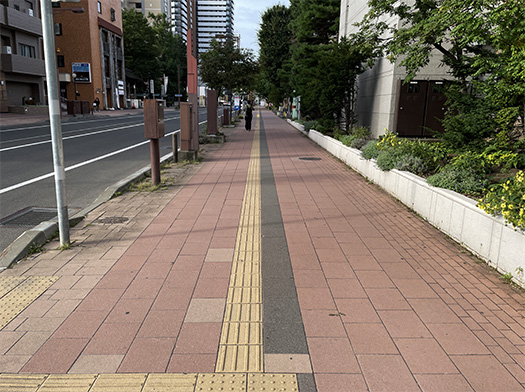
 で、ウォーキングのコースは「意欲を盛り上げる」意味合いから近場のなかから選択しています。写真は最近よく歩いている「琴似本通り」の片側6m歩道。反対側にも同じ歩道があって実に歩きやすい。旧5号線との交差点からJR琴似駅までの区間、約1km徒歩10分〜15分程度。非常に歩きやすく整備され、多くの通行者が往来している「基幹」的な歩道。
 ここを先日歩行中、反対側の同様の歩道に「横断歩道」から渡ろうと「方向転換」した瞬間、猛スピードで後方からわたしを追い抜く自転車と激突寸前になった。強い「風圧」がわたしの左半身を直撃した。思わず呆然と立ち尽くしてしまった。
 暴走自転車は意気揚々と、猛速ではるかに疾走して行ってしまった。

 万が一、こういう状況で歩行者と自転車が激突した場合、どうなるのか、と考えざるを得なかった。
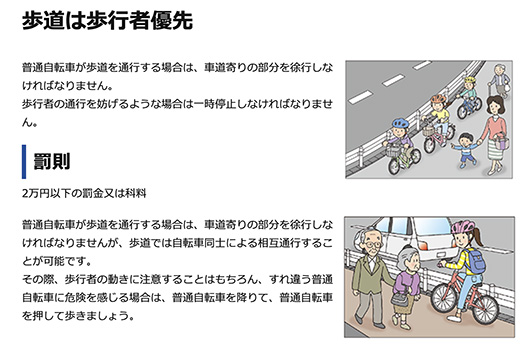
 法律は歩行者最優先であることは当然の旨の記載があるが、どこをどう読んでも自転車側についての「罰則規定」全般に疑問符がつく。というか、加害者としての責任者特定があまりにゆるすぎる。自動車であれば運転免許証や自動車の登録規定などで容易に「犯罪者」特定が可能だけれど、自転車については非常にゆるゆる。もし重大事故があっても容易に「逃げ切り」可能と思える。
 そういうことがあって、聞き取りしてみると、けっこう事故が起こっているようです。
 わたし自身も複数人の高齢の方がゆっくり歩かれているところに対面方向から走行してきた自転車の人物が「どけろよな、オマエら」みたいな表情で迫っていた光景を見たことがあった。怖ろしい。
 このような危険状況がある中で、歩行者として「自己防衛」の権利は認められないのだろうか?歩行者はただおとなしい羊として危険にさらされなければならないのか?
 危険性が高いと判断しうる自転車走行に対して、それを抑止させる行動は不可能なのか?

 あわせて。昨日大雨が降り続き夜間になって非常に視界が困難になった札幌市内車道で、視認自体が困難な「全身黒ずくめ」の競走用と思える自転車走行者がわたしの自動車と併走する十数分間があった。けっこう「車線変更」を繰り返し、自動車側としては危険度MAXと言わざるを得なかった。自動車運転者としてひたすら安全最優先運転は心がけるけれど、さて。

●お知らせ
拙書「作家と住空間」幻冬舎から電子書籍で発刊
お求めはAmazonで。
https://amzn.asia/d/eUiv9yO

English version⬇

【How to Protect Yourself Against Dangerous Bicycle Riding on Sidewalks?】
Bicycles riding dangerously on sidewalks as if they own the place. Must pedestrians just be docile sheep in response? …

 My daily walks keep me active, averaging just over 10,000 steps.
 My wife, dragged along by me, started “walking together” last October to lose weight and has made it a habit. She was beaming yesterday, saying she was amazed at how active our friends were throughout our recent trip to Korea.
Walking really is a fundamental human activity and the source of vitality, I think.
So, I choose walking routes nearby to “boost motivation.” The photo shows the 6-meter-wide sidewalk on one side of Kotoni Main Street, where I walk often lately. The opposite side has an identical sidewalk, making it incredibly easy to walk. The section from the intersection with the old Route 5 to JR Kotoni Station is about 1km, taking 10-15 minutes on foot. It’s a well-maintained, “main artery” sidewalk that’s very walkable and bustling with many pedestrians.
 While walking here the other day, just as I turned to cross over to the similar sidewalk on the opposite side from the crosswalk, I nearly collided with a bicycle speeding past me from behind. A powerful gust of wind hit my right side directly. I stood there stunned, unable to move.
The reckless cyclist sailed past me, riding away at breakneck speed, looking completely unfazed.

 I couldn’t help but wonder what would happen if, in such a situation, a pedestrian and a cyclist collided violently.
The law naturally states that pedestrians have priority, but no matter how you read it, the “penalty provisions” for cyclists raise questions. Or rather, the identification of responsibility as the perpetrator is far too lax. With automobiles, it’s easy to identify the “offender” through driver’s licenses and vehicle registration regulations, but for bicycles, it’s extremely lax. It seems like even if a serious accident occurs, it would be easy to “get away with it.”
Given this, when I asked around, it seems quite a few accidents actually happen.
I myself have witnessed scenes where cyclists approaching head-on from the opposite direction, seeing multiple elderly people walking slowly, would press forward with expressions like “Get out of the way, you guys.” Terrifying.
Given these dangerous situations, isn’t the right to “self-defense” recognized for pedestrians? Must pedestrians simply submit to danger?
Is it impossible to take action to deter bicycle riding that can be judged highly dangerous?

Also. Yesterday, heavy rain continued into the night, making visibility extremely poor on Sapporo city roads. For over ten minutes, a cyclist wearing what appeared to be racing gear – completely clad in black, making them nearly invisible – rode alongside my car. He repeatedly changed lanes, making it a maximum danger situation from the driver’s perspective. As a driver, I always prioritize safety above all else, but still…

●Notice
My book “Writers and Living Spaces” published as an e-book by Gentosha
Available on Amazon.


【IT活用・革新で各人のルーツ・過去の事跡がたどれる】


 わたしの家系では、次兄とか叔父とかがいくつかの「先祖情報」を探究してくれております。
 北海道に渡って来た人々にはそういう「ルーツをたどってみたい」という心情が強いのでしょう。日本社会の中で北海道が歩んできた歴史時間を考えて見れば、ごく自然なことでしょう。日本各地から渡って来てこの地で生き抜いていこうとしたのが、北海道の現代史の「事始め」。
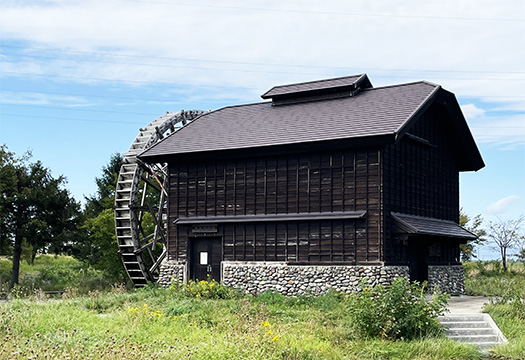
 現役世代の時期には、そういうことにまで時間的ゆとりを持てないのが一般的なのでこれまでは、興味は強かったけれど、そういうことを本格的には追究できなかった。まぁようやくすこしづつ、現代の情報利器と言えるNET活用・AI活用なども交えながら、情報の整理整頓を始めております。写真は、わたしの家系が北海道に渡って来た時期に祖父が造作していたという「水車小屋」の参考写真。この写真の被写体は北海道三笠市の道の駅に隣接してイメージ的に建てられている水車小屋です。
 WikiのAIに尋ねると「水車小屋の役割は、水車を用いて様々な機械的工程を駆動し、穀物の精米、製材、織物の生産、金属加工など、動力源を必要とする作業を機械的に行うことです。具体的には、水車の軸とつながった歯車や羽を使って杵を動かし玄米を精米したり、ソバの実をひいたりする役割がありました」ということですが、入植地は北海道岩見沢市近郊の栗沢だったので、その当時、どのような活用方法があったのか、丹念に調べてみる必要性があると思っています。地域での「人間関係」も探っていくことで、モノクロ写真が徐々に「カラー化」させられるようにリアリティに迫れるのではと期待しています。
 やっぱり現代の情報利器はすばらしく利活用できる。現代ではこういう利活用機会がごくふつうにあるので、わたしの先祖探査も工夫次第かと。
 さらに言えば、こういう「個人レベル」のIT活用で時空超越型の探究が可能になってくると、文芸作品のような架空のお話し、というようなものへの興味は普遍性を失っていくような気がしてなりません。いわば「想像力」というものが特定の人物に「だけ」専有されるということ自体が消滅していくのではないか。
 多くの普通一般人が、自らの興味分野に対して、すばらしい「想像力の翼」を得ると思えるのです。
 そういうことが出版の世界で、どのように現実化していくのか、これも興味深い。

●お知らせ
拙書「作家と住空間」幻冬舎から電子書籍で発刊
お求めはAmazonで。
https://amzn.asia/d/eUiv9yO

English version⬇

【IT Utilization and Innovation Enable Tracing of Each Person’s Roots and Past Achievements】
The realization of modern AI technology is dramatically advancing “imaginative” work. Perhaps the question now is how to spread the wings of imagination? …

 In my family, my second eldest brother and uncle have been researching various pieces of “ancestral information.”
People who came to Hokkaido likely feel a strong desire to trace their roots. Considering the historical journey Hokkaido has taken within Japanese society, this is only natural. The very beginning of Hokkaido’s modern history lies in those who came from all over Japan, determined to survive and thrive in this land.
 For the working generation, having the time to delve into such matters is generally difficult. So, while interest was strong, serious pursuit wasn’t possible until now. Well, finally, little by little, we’re starting to organize the information, incorporating modern tools like the internet and AI. The photo is a reference image of a “watermill hut” that my grandfather apparently built around the time my family migrated to Hokkaido. The subject in this photo is a watermill house built for visual effect adjacent to a roadside station in Mikasa City, Hokkaido.
When I asked the Wiki AI, it explained: “The role of a watermill house is to use a waterwheel to drive various mechanical processes, mechanically performing tasks requiring a power source such as rice milling, lumbering, textile production, and metalworking. Specifically, it used gears and blades connected to the waterwheel’s shaft to drive pestles for polishing brown rice or grinding buckwheat.” However, since the settlement was in Kurisawa near Iwamizawa City, Hokkaido, I believe it’s necessary to diligently research what specific uses existed at that time. By also exploring the “human relationships” within the region, I hope to gradually bring the monochrome photographs to life, as if adding color, and approach their reality.
Modern information tools are truly remarkable and highly useful. Since such opportunities for utilization are quite common today, my ancestral research depends on how resourceful I can be.
 Furthermore, as this kind of “individual-level” IT utilization enables trans-temporal exploration, I can’t help but feel interest in fictional narratives, like literary works, may lose its universality. In a sense, the very notion that “imagination” is exclusively possessed by specific individuals might disappear.
I believe many ordinary people will gain remarkable “wings of imagination” for their own areas of interest.
 How this will materialize in the publishing world is also fascinating.

●Notice
My book “Writers and Living Spaces” published as an e-book by Gentosha
Available on Amazon. 

【下鴨神社楼門と東京ビッグサイト夕景の「朱色」】


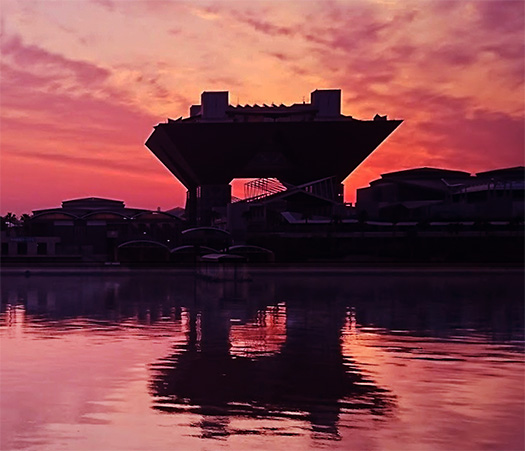
 現代建築の中で、たぶんいちばん多くそこに行っているスポットと思えるのが「東京ビッグサイト」。いろいろな業界での全国イベントの会場として、北海道人としても参集することが多い。上の写真は、その東京ビッグサイトの夕景の瞬間を、日本建築伝統の「水面の映り込み」とのバランスを考えて捉えてみたもの。
 言うまでもなく、人類やイキモノすべてはその生死の日々において天候が条件付けば、必ず夕陽を見続ける。その印象はイキモノの脳髄深く刻み込まれていく。その自然が生み出す夕景の色に、完膚なきまでに決定的な色彩感を抱くに違いない。たぶん歴世の画家たちも、その光景に息を呑んでいたに違いない。この惑星での最大のイキモノ共通心情かも。

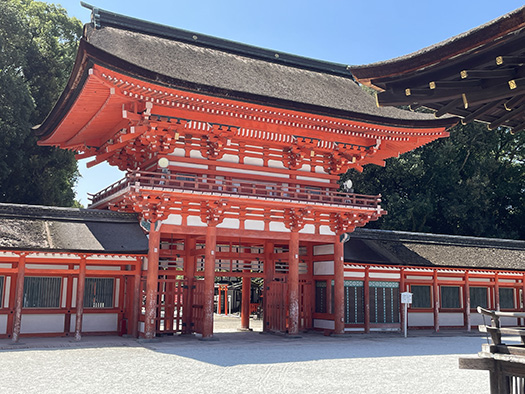
 一方こちらは世界遺産に指定されている下鴨神社の「楼門」。
 当然ながら、木造の重厚な木組みを魅せながら高層建築とするためにこのような造形になる。そしてその木組みに対して、このように「朱色」が彩色されるのが、宗教建築の約束事。このような配色の約束事にはいろいろな意味があるのだろうけれど、イチ参観者としては、前述のような自然現象からの基底的「刷り込み」を想起させられる。
 朱色は、たぶんイキモノの脳にもっとも決定的な打撃力を持っているのだと思う。
 共産主義も赤い旗を振るのには、ある原初的なアジテーション要素があるのだろう。怒りとか、攻撃性のような心情にはもっともふさわしい、それを「利用する」という基層心理。
 宗教がそういったイキモノの精神作用を利用しない手はない。そのような意味合いが濃厚。以前2023.7.25にも【東京ビッグサイトと宗教建築デザイン】https://kochihen.replan.ne.jp/?p=41321 と題してブログを書いてみたけれど、それは「カタチ」のことだったと思う。
 今回はその色彩について、同意できると思えるようになった次第。
 自分では加齢とともにより「単純」なことにこころが向かってきている。多くの過去の人びとも同様だったのではないかと、いわば対話的な心情を持ってきております。

●お知らせ
拙書「作家と住空間」幻冬舎から電子書籍で発刊
お求めはAmazonで。
https://amzn.asia/d/eUiv9yO

English version⬇

【Vermilion: Shimogamo Shrine’s Tower Gate and Tokyo Big Sight at Sunset】
Within Earth’s natural cycle, the sun’s journey is like a heartbeat, a breath. The rhythm it creates resonates in our sense of color. Overwhelmed by its power…

 Among modern architecture, the spot I probably visit most often is Tokyo Big Sight. As a venue for national events across various industries, I frequently attend gatherings there as a Hokkaido resident. The photo above captures a moment of Tokyo Big Sight at sunset, balancing the traditional Japanese architectural concept of “reflections on water surfaces.”
 Needless to say, all humans and living creatures, as long as the weather permits during their days of life and death, will inevitably keep watching the sunset. That impression is deeply engraved into the very marrow of living beings. They must feel an utterly decisive sense of color in the hues of that sunset created by nature. Probably, painters throughout the ages must have been breathless at that sight too. It might be the greatest shared sentiment among all living creatures on this planet.

 On the other hand, this is the “Romon Gate” of Shimogamo Shrine, designated as a World Heritage Site.
Naturally, to achieve this form as a tall structure while showcasing the solid wooden framework, it takes on this shape. And for this wooden framework, painting it “vermilion” like this is a convention of religious architecture. While such color conventions likely hold various meanings, as a mere visitor, it evokes that fundamental “imprinting” from the natural phenomena mentioned earlier.
 Vermilion, I suspect, possesses the most decisive impact on the brains of living creatures.
Communism, too, likely employs the waving of red flags for some primal agitational element. It taps into a foundational psychology that “exploits” this color as most fitting for emotions like anger or aggression.
 Religion certainly wouldn’t pass up the chance to utilize such mental processes in living beings. That connotation is quite strong. I previously wrote a blog post titled [Tokyo Big Sight and Religious Architecture Design] https://kochihen.replan.ne.jp/?p=41321 on 2023.7.25, but I think that focused on the “form.”
 This time, I’ve come to agree with the perspective on its color scheme.
Personally, as I age, my heart seems drawn more toward “simple” things. I feel a kind of dialogic connection, thinking many people in the past likely felt the same way.

●Notice
My book “Writers and Living Spaces” published as an e-book by Gentosha
Available on Amazon. 

【敬老パス利用♬ 往復1時間半の札幌市内行脚】


 わたしはクルマ移動一択で、ほとんど札幌地下鉄などを利用しないライフスタイルで生きてきました。そういうことで、札幌市が「敬老パス」という制度を取り入れ、高齢者におトクな割引料金制度を提供しているという情報にすっかり無関心でいた。
 で、前回1ヶ月前8/15に「ワクワク」という記事投稿したのですが、やはりこれまでのライフスタイルに不整合なのでなかなか利用する機会はやってきてくれない。というか、「あ、そうだ」と思いつかないとどんどんスルーしてしまうのですね。
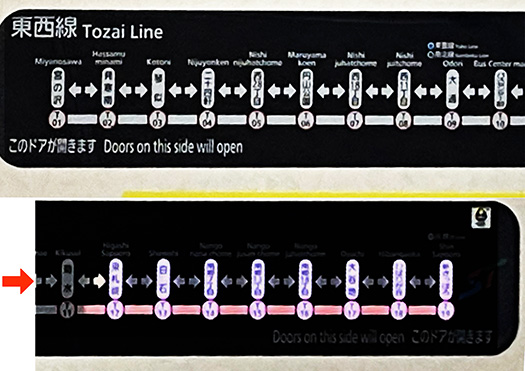
 ということで一昨日、ある要件で札幌地下鉄の「東西線」で西の果てから3駅目である「琴似駅」から合計15駅目の東方地点の「ひばり野」駅まで意を決して利用させていただきました。その結果でようやく昨日時点までで利用したのは、合計で2,000円弱(実費で200円)であります。1,000円で入手した10,000円の券面のうちようやく1/5が消化出来た次第。なかなか利用は進まない。
 なんですが、さすがに15駅の移動はなかなかで時間は30分ほど。往復利用で1時間超。移動歩行(最大の狙いは実はこれ!)を含めて約1.5〜2時間。ながらく「自宅兼用」の仕事環境にどっぷりとハマっていて、現代人にほぼ一般的な「通勤地獄」を忘却した人生だったのだと思い至る時間。〜行きは昼前後の時間で帰り時間が夕方6時前後と少し退勤時間に掛かった程度。みなさんの労苦の足許にも及びません。
 そういえば東京での会社勤務時代はエラかったなぁと人生回想・・・。
 ということでしたが、まだまだ敬老パス「追加購入」まで至りません。できればJR線にも適応してくれれば、とは思うのですが、ムリなのでしょう、いろいろ事情は理解できる。
 自分で考えてみて、日常的な移動手段を転換するというのは意識チェンジが難しい。わたしは札幌市内よりもそれ以外との交流の方がはるかに大きいということも再認識。札幌市内中心部に行くのは非常にレアで、むしろ新千歳空港〔タウン)の方がはるかに日常感覚に近い。新千歳空港の駐車場が大幅値上げする超混雑状況だそうですが、たしかに臨空ゾーンの社会的ウェートは比重が高まっていくでしょうね。
 しかしせっかくの特典。なんとか健康・歩数稼ぎの移動手段として、大いに活用したいです。

●お知らせ
拙書「作家と住空間」幻冬舎から電子書籍で発刊
お求めはAmazonで。
https://amzn.asia/d/eUiv9yO

English version⬇

【Using the Senior Citizen Pass ♬ A 1.5-Hour Round-Trip Journey Through Sapporo】
A wonderful service for seniors. Trying to use it creates mismatches in daily routines. I’ll figure out how to make it work and increase opportunities for walking for my health. …

 I’ve lived a lifestyle where driving is my only option for getting around, hardly ever using the Sapporo subway or similar transit. Because of that, I was completely oblivious to the fact that Sapporo City had introduced a system called the “Senior Citizen Pass,” offering discounted fares for the elderly.
 Then, about a month ago on August 15th, I posted an article titled “Exciting News.” But since it didn’t really fit my lifestyle, I never really had a chance to use it. Or rather, unless I suddenly thought, “Oh, right,” I just kept forgetting about it.
 So, the day before yesterday, for a specific errand, I finally resolved to use the Sapporo Subway Tozai Line. I rode from Kotoni Station, the third station from the western terminus, all the way to Hibarino Station, the 15th station eastward. As a result, my total usage up until yesterday amounted to just under 2,000 yen (200 yen out of pocket). I’ve finally used up 1/5 of the ¥10,000 face value I got for ¥1,000. Progress is slow.
Still, traveling 15 stations took about 30 minutes. Round trip was over an hour. Including walking (which was actually the main goal!), it took about 1.5 to 2 hours. It made me realize how deeply immersed I’d been in my “home-office hybrid” work environment, forgetting the “commuting hell” that’s almost universal for modern people. ~My departure was around noon, and my return was around 6 PM, slightly overlapping with the evening rush hour. It’s nothing compared to everyone else’s struggles.
Come to think of it, my corporate days in Tokyo were pretty tough… reminiscing about life…
 That said, I’m still not quite at the point of needing to buy an additional senior citizen pass. I wish it could be used on JR lines too, but I understand it’s probably not feasible given the circumstances.
Thinking about it myself, changing your daily transportation habits requires a significant shift in mindset. I’ve also realized again that my interactions outside Sapporo far outweigh those within the city. Going to central Sapporo is extremely rare; in fact, New Chitose Airport (Town) feels much more like my daily reality. I hear New Chitose Airport’s parking is extremely crowded with a significant price hike. Indeed, the social weight of airport zones will likely grow heavier.
Still, it’s a valuable perk. I want to make the most of it as a means to boost my health and step count.

●Notice
My book “Writers and Living Spaces” published as an e-book by Gentosha.
Available on Amazon.