

自分のカラダはいま東京の雑踏の中にいて徒歩と電車・地下鉄での移動のなかに身を置いているのですが、やはり加齢とともに心理は「彷徨っている」意識に支配されてくる。きのうも触れた渋谷の土地「記憶難民」ぶりですが、ちょっとSNSを覗いてみると東京地元のみなさんまでそういった声にあふれているのですね。「迷子になる〜〜」という悲鳴(笑)。
人間と「住」空間を主な領域として生きてきたわたしですが、その領域にプラスしてやはり現代人の「無機質空間でのいとなみ」ということも考えざるを得ないなぁと思える。機能性に特化して「風景的」空間性を捨て去った空間に対して、人間的なアプローチはなにか可能なのか。人間が作った空間なので、やがてそこに「なじみ」の感覚が生起してきて、それなりの「愛着」のとっかかりのようなものが認識されるようになるのでしょうか、果たして?
いまのところ、高齢者にはなかなか想像力が湧いてこない。ふ〜む。
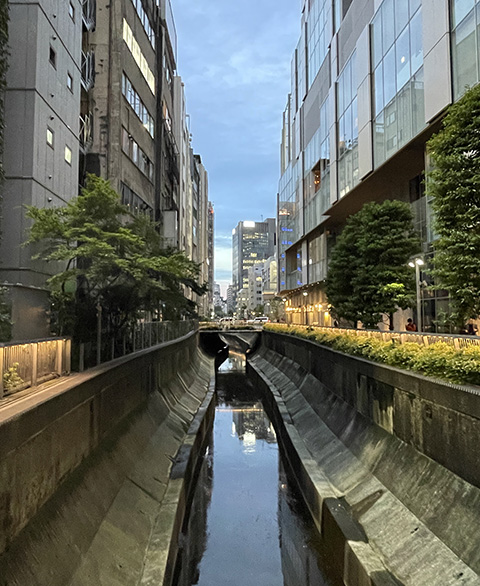
上の写真は、ふと過去の渋谷風景の「痕跡」とも思えたコンクリートで覆われた「渋谷川」の様子。渋谷川は渋谷駅南方から南、広尾五丁目の天現寺橋までの2.4 kmを流れる二級河川。まるで現代建築技術でコントロールされ切った「自然」だけれど、その流路の不定形ぶりに辛うじての自然感が漂って見える。わたしが最初にこの川を見ていたのはいまから55年前でそこから8−9年は見た記憶を持っている。もちろん当時はなんの感慨を持つことも無かった。むしろコンクリートで「半ばは殺された川」という印象を強く抱いていた。もちろん川鳥など見たこともない。
だから渋谷という地域・自然の「墓」の記憶なのかも知れないと思う。しかし墓であっても、なにかの残影を想起させるものではあるだろうか。
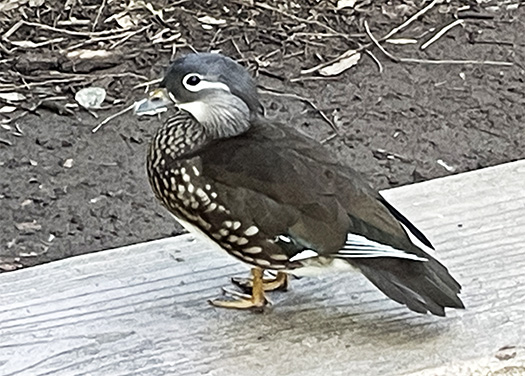
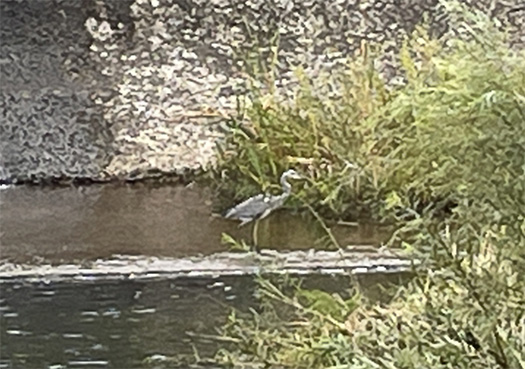
そんなことで札幌の散歩道で、都市化されたとはいえその生きようを担保している環境の中で、ごく自然に表情を感じさせてくれる存在に思いが向かっていた。やはり心理に「渇望」感が起こっているのでしょうね。渋谷以外ではそれなりに鳥たちのさえずりも聞こえるので、たくましく生き延びていることを感じるけれど、時間が無いので、その姿を拝むことは難しい。
昔人は「ふるさとは遠くにありて思うもの」と記したけれど、現代の大都会の暮らしではよりデフォルメされていくのでしょうね。
●お知らせ
拙書「作家と住空間」幻冬舎から電子書籍で発刊
お求めはAmazonで。
https://amzn.asia/d/eUiv9yO
English version⬇
【Natural Traces Remaining in Tokyo’s Shibuya… and Birds from the North】
The terminal in Tokyo’s Shibuya, transformed into an inorganic landscape. Seeing traces of former nature in a river that resembles a “grave.” Unconsciously searching for cute birds. …
My body is currently immersed in Tokyo’s bustling crowds, navigating on foot and via trains and subways. Yet, with age, my psyche increasingly succumbs to a sense of “wandering.” Yesterday I mentioned Shibuya’s status as a “memory refugee” zone, but glancing at social media reveals even Tokyo locals are flooded with similar sentiments. “I’m getting lost~~” cries abound (laugh).
As someone who has lived primarily within the domains of humans and “residential” spaces, I find myself compelled to also consider the modern human’s “activities within inorganic spaces.” Is there any human-centered approach possible for spaces that prioritize functionality and discard “scenic” spatiality? Since humans create these spaces, does a sense of ‘familiarity’ eventually emerge there, allowing us to recognize some semblance of an “attachment” to them? I wonder…
For now, I find it hard to imagine this happening for the elderly. Hmm.
The photo above shows the concrete-covered “Shibuya River,” which suddenly struck me as a “trace” of Shibuya’s past scenery. The Shibuya River is a Class II river flowing 2.4 km south from Shibuya Station to Tenjōji Bridge in Hiroo 5-chome. It’s like a “nature” completely controlled by modern construction technology, yet the irregularity of its course still manages to give off a faint sense of naturalness. I first saw this river 55 years ago and remember seeing it for another 8-9 years after that. Of course, I felt nothing special about it back then. Rather, I strongly felt it was a river “half-killed” by concrete. Naturally, I never saw any river birds.
So perhaps it’s a memory of Shibuya as a “grave” for the region and its nature. But even a grave might evoke some lingering trace, mightn’t it?
That’s why, on my walks in Sapporo, amidst an environment that, though urbanized, still safeguards its vitality, my thoughts turned to those beings that so naturally reveal their expressions. I suppose it’s because a sense of “longing” stirs within me. Outside Shibuya, I can hear birds chirping reasonably well, so I sense they’re surviving robustly. But with no time, it’s hard to actually see them.
Ancient people wrote, “Hometown is something you think of when far away,” but in modern metropolitan life, that feeling probably gets more distorted.
●Notice
My book “Writers and Living Spaces” published as an e-book by Gentosha
Available on Amazon.
共有:

Posted on 9月 27th, 2025 by 三木 奎吾
Filed under: 未分類





コメントを投稿
「※誹謗中傷や、悪意のある書き込み、営利目的などのコメントを防ぐために、投稿された全てのコメントは一時的に保留されますのでご了承ください。」
You must be logged in to post a comment.