
わたしの家系では、次兄とか叔父とかがいくつかの「先祖情報」を探究してくれております。
北海道に渡って来た人々にはそういう「ルーツをたどってみたい」という心情が強いのでしょう。日本社会の中で北海道が歩んできた歴史時間を考えて見れば、ごく自然なことでしょう。日本各地から渡って来てこの地で生き抜いていこうとしたのが、北海道の現代史の「事始め」。
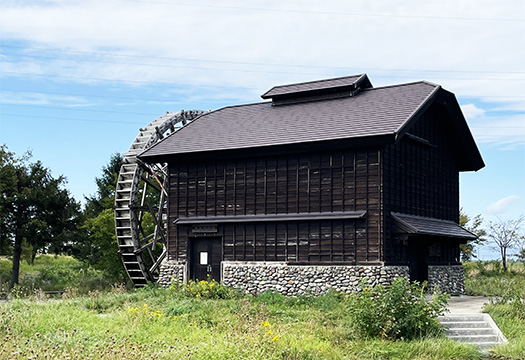
現役世代の時期には、そういうことにまで時間的ゆとりを持てないのが一般的なのでこれまでは、興味は強かったけれど、そういうことを本格的には追究できなかった。まぁようやくすこしづつ、現代の情報利器と言えるNET活用・AI活用なども交えながら、情報の整理整頓を始めております。写真は、わたしの家系が北海道に渡って来た時期に祖父が造作していたという「水車小屋」の参考写真。この写真の被写体は北海道三笠市の道の駅に隣接してイメージ的に建てられている水車小屋です。
WikiのAIに尋ねると「水車小屋の役割は、水車を用いて様々な機械的工程を駆動し、穀物の精米、製材、織物の生産、金属加工など、動力源を必要とする作業を機械的に行うことです。具体的には、水車の軸とつながった歯車や羽を使って杵を動かし玄米を精米したり、ソバの実をひいたりする役割がありました」ということですが、入植地は北海道岩見沢市近郊の栗沢だったので、その当時、どのような活用方法があったのか、丹念に調べてみる必要性があると思っています。地域での「人間関係」も探っていくことで、モノクロ写真が徐々に「カラー化」させられるようにリアリティに迫れるのではと期待しています。
やっぱり現代の情報利器はすばらしく利活用できる。現代ではこういう利活用機会がごくふつうにあるので、わたしの先祖探査も工夫次第かと。
さらに言えば、こういう「個人レベル」のIT活用で時空超越型の探究が可能になってくると、文芸作品のような架空のお話し、というようなものへの興味は普遍性を失っていくような気がしてなりません。いわば「想像力」というものが特定の人物に「だけ」専有されるということ自体が消滅していくのではないか。
多くの普通一般人が、自らの興味分野に対して、すばらしい「想像力の翼」を得ると思えるのです。
そういうことが出版の世界で、どのように現実化していくのか、これも興味深い。
●お知らせ
拙書「作家と住空間」幻冬舎から電子書籍で発刊
お求めはAmazonで。
https://amzn.asia/d/eUiv9yO
English version⬇
【IT Utilization and Innovation Enable Tracing of Each Person’s Roots and Past Achievements】
The realization of modern AI technology is dramatically advancing “imaginative” work. Perhaps the question now is how to spread the wings of imagination? …
In my family, my second eldest brother and uncle have been researching various pieces of “ancestral information.”
People who came to Hokkaido likely feel a strong desire to trace their roots. Considering the historical journey Hokkaido has taken within Japanese society, this is only natural. The very beginning of Hokkaido’s modern history lies in those who came from all over Japan, determined to survive and thrive in this land.
For the working generation, having the time to delve into such matters is generally difficult. So, while interest was strong, serious pursuit wasn’t possible until now. Well, finally, little by little, we’re starting to organize the information, incorporating modern tools like the internet and AI. The photo is a reference image of a “watermill hut” that my grandfather apparently built around the time my family migrated to Hokkaido. The subject in this photo is a watermill house built for visual effect adjacent to a roadside station in Mikasa City, Hokkaido.
When I asked the Wiki AI, it explained: “The role of a watermill house is to use a waterwheel to drive various mechanical processes, mechanically performing tasks requiring a power source such as rice milling, lumbering, textile production, and metalworking. Specifically, it used gears and blades connected to the waterwheel’s shaft to drive pestles for polishing brown rice or grinding buckwheat.” However, since the settlement was in Kurisawa near Iwamizawa City, Hokkaido, I believe it’s necessary to diligently research what specific uses existed at that time. By also exploring the “human relationships” within the region, I hope to gradually bring the monochrome photographs to life, as if adding color, and approach their reality.
Modern information tools are truly remarkable and highly useful. Since such opportunities for utilization are quite common today, my ancestral research depends on how resourceful I can be.
Furthermore, as this kind of “individual-level” IT utilization enables trans-temporal exploration, I can’t help but feel interest in fictional narratives, like literary works, may lose its universality. In a sense, the very notion that “imagination” is exclusively possessed by specific individuals might disappear.
I believe many ordinary people will gain remarkable “wings of imagination” for their own areas of interest.
How this will materialize in the publishing world is also fascinating.
●Notice
My book “Writers and Living Spaces” published as an e-book by Gentosha
Available on Amazon.
共有:

Posted on 9月 20th, 2025 by 三木 奎吾
Filed under: 未分類




コメントを投稿
「※誹謗中傷や、悪意のある書き込み、営利目的などのコメントを防ぐために、投稿された全てのコメントは一時的に保留されますのでご了承ください。」
You must be logged in to post a comment.