
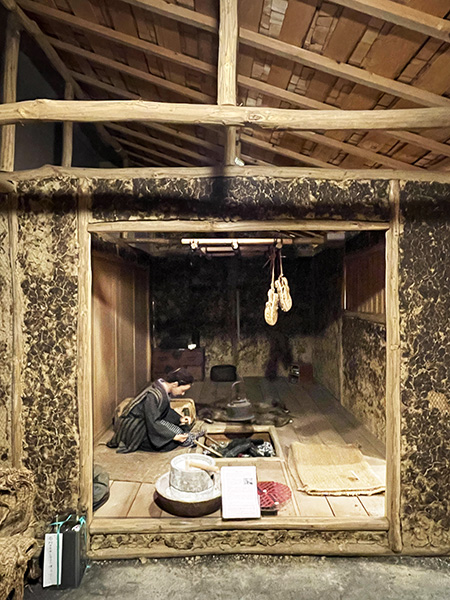
わたしの家系、祖父が北海道に渡って来たのが1905年当時。その当時の様子をリアリティのある展示として伝えてくれているのが、入植した栗沢町上幌から50数キロ北西方向の新十津川開拓記念館。
新十津川は祖父が入植した時代から15-6年前に、奈良県十津川での大水害を受けて集団移住した。明治の後半時期に当たる。いま現代のわたしたちが「高気密高断熱」という住宅性能革命時代に生き、住宅というものが「商品化」されて流通する時代ではなく、まさに「外界とウチを仕分けてその土地に暮らす」という住宅の根源的な機能性にだけ特化した家づくりが行われていた。もちろんハンドメイドの手づくり。
このような家づくりについて公的なガイダンスというものもあったことが想像できる。とくに地域自治体である北海道庁が今日に至っても「建築指導課」という部署を持って「住宅施策」を独自に展開していることの歴史的機縁になっていることからもうなずける。やや西部開拓期のアメリカに学んでいるとも思える。実際に北海道にはアメリカから「御雇い外国人」が多数、寒冷地開拓の「文化」を移植した。
新十津川の場合には未曾有の大災害であり、江戸末期には「勤皇」の地域として知られていたことから災害から集団移住に際して、天皇からの「下賜」も受けるなど、手厚く段取りが取られていたことが伺える。入植から2年間は北海道庁から食糧給与があったという。入植地の選定にあたって、わたしの母の実家の三笠地域・市来知も候補に挙がっていた事実も確認された。
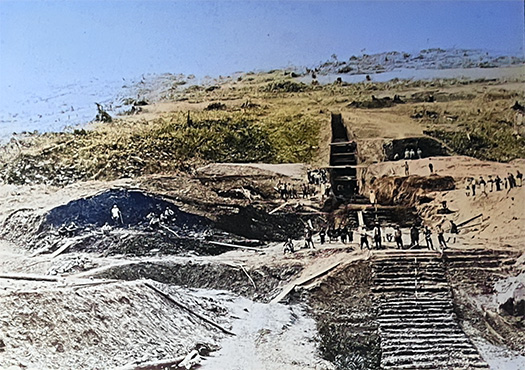
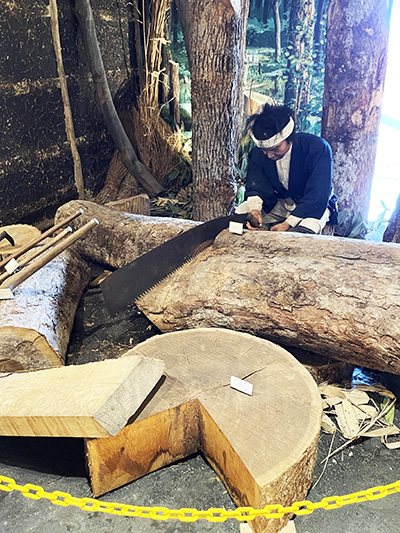
そういう経緯からさまざまな「写真記録」も現存していて明治中〜末期の北海道開拓の実相が伝わってくる。こちらは農業用水の確保のための土地改良の土木作業の様子。
わたしの祖父の場合にはこの写真の時期からは15-6年経過して、また、近隣には多くの入植者がいて、公的な学校などもすでに整備されていたようだ。しかし入植当時は裏の山にはヒグマが棲息していて、夜に家に帰ってくるときは「ガンガン」を叩いて音を発生させ「クマ除け」としたという。・・・先人たちと同様に現代人も対ヒグマということでは追体験させられつつあるのか?
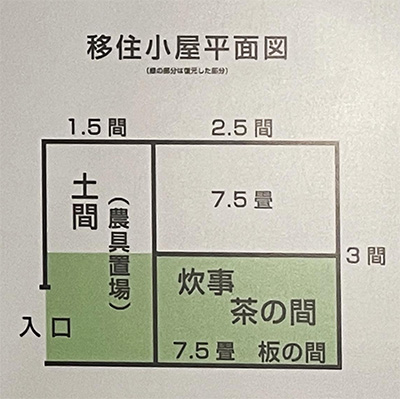
このような住宅では、室内気候の維持にはとにかく囲炉裏の火が生命線。その必死さが、展示からヒシヒシと伝わってくるようだった。祖父と祖母、家系のひとびとの心象に思いが募る。
●お知らせ
拙書「作家と住空間」幻冬舎から電子書籍で発刊
お求めはAmazonで。
https://amzn.asia/d/eUiv9yO
English version⬇
【Typical Housing for Hokkaido Settlers】
A situation similar to American “settlement” during the western expansion unfolded in Hokkaido. Housing, however, generally involved traditional handmade construction, clinging to a life centered around the hearth. …
My family lineage traces back to my grandfather, who came to Hokkaido around 1905. The Shin-Totsukawa Pioneering Memorial Museum, located about 50 kilometers northwest of Kurisawa Town’s Kamihoro settlement, vividly conveys what life was like back then through realistic exhibits.
Shin-Totsukawa was settled about 15-16 years before my grandfather’s arrival, following a mass migration from Totsukawa in Nara Prefecture after severe flooding there. This occurred during the latter half of the Meiji period. Unlike today, where we live in an era of housing performance revolution characterized by “high airtightness and high insulation,” and where housing is commoditized and distributed, homebuilding back then focused solely on the fundamental functionality of housing: “separating the outside world from the inside and living on that land.” Naturally, it was handmade.
One can imagine that public guidance existed for such homebuilding. This makes sense given the historical connection to the Hokkaido Government, a regional authority, which even today maintains a “Building Guidance Division” to independently develop “housing policies.” It seems somewhat inspired by the American frontier era. Indeed, many “foreign experts” were hired from America to transplant the “culture” of cold-region development to Hokkaido.
In the case of Shintotsukawa, it was an unprecedented disaster. Given the area’s reputation as a “loyalist” region during the late Edo period, the collective migration following the disaster was meticulously arranged, including receiving “gifts” from the Emperor. It is said that for the first two years after settlement, food rations were provided by the Hokkaido Government. It has also been confirmed that the Mikasa region and Ichikichi, where my mother’s family home was located, were among the candidate sites considered for the settlement.
As a result of these circumstances, various “photographic records” still exist today, conveying the reality of Hokkaido’s development from the mid- to late Meiji period. This one shows civil engineering work for land improvement to secure agricultural water.
In my grandfather’s case, about 15-16 years had passed since the time of this photo. Many settlers were already living nearby, and public schools and such facilities seemed to be established. However, back when they first settled, brown bears lived in the mountains behind their homes. When returning home at night, they would bang on a “gan-gan” (a type of wooden clapper) to make noise and scare off the bears. …Are modern people, like our predecessors, being forced to relive this experience with bears?
In dwellings like these, the hearth fire was absolutely vital for maintaining indoor warmth. The sheer desperation behind it seemed palpable from the exhibit. My thoughts turned to my grandfather, grandmother, and the people of my family line.
共有:

Posted on 9月 25th, 2025 by 三木 奎吾
Filed under: 未分類



コメントを投稿
「※誹謗中傷や、悪意のある書き込み、営利目的などのコメントを防ぐために、投稿された全てのコメントは一時的に保留されますのでご了承ください。」
You must be logged in to post a comment.