
さて、ときどき「家系」の来し方を書き留めておく、の第2回。
新天地北海道での事業を夢見て1905年に「渡道」してきた祖父の一家。祖父は建築素材である木材の豊富な供給地域である北海道の特性に事業の運を掛けていた。道北の天塩川流域の山林から樹木を伐採して、それを本州たぶん大阪の市場に出荷する事業を行っていた痕跡がある。
そういう事業を行っていくのに、生活拠点としては開拓地主として成功されていた同郷人の隣接地に居を構えたということ。この現・岩見沢市栗沢から汽車などを利用して道北地域の山林地(名寄・美深)の原木を買い求め、それを伐採して天塩川などの水運を利用して海辺の港に集約し、そこから本州市場に運搬させたのだろう。
当然ながら、この「水運」利用が最大のリスクであることは想像しやすい。リスクがあることは同時にビジネスとしての「利幅」も大きかったことだろう。家系にはいつ、どのように、という記録は残っていないけれど、春の雪融け時期にこの木材が洪水被害を受けて、天塩川から日本海に流出してしまった。
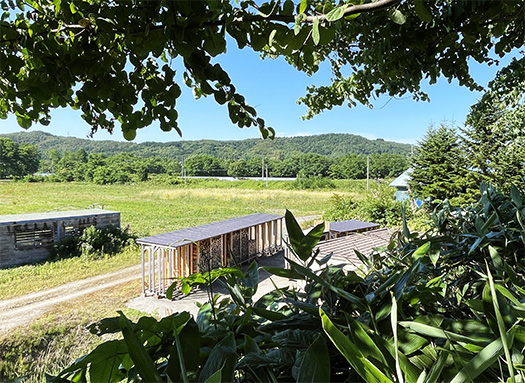
妻と3人の幼子を抱え、その逆境からやむなく「小作農」になったのだという。その土地の現在の様子が上の写真。わが家系にとって最大の「困難期」だったと思える。
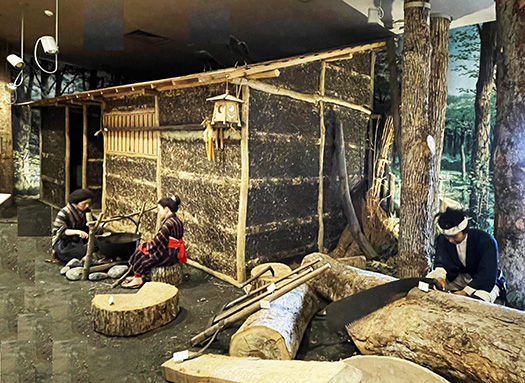
この写真は当時の「家」の参考図。北海道空知郡の新十津川開拓記念館に展示されている明治末の頃の開拓期の「民家」の様子。1889年8月、24時間降水量1,000mmを超えたという記録的豪雨になった奈良県十津川。
この大水害で、死者249名・家屋全壊565棟という壊滅的被害を受けたひとびとは北海道への移住を決意して2600人ほどが集団で渡道してきた。その当時に建てられた「民家」の様子。
壁には家の周囲の土の泥水に「切り藁」を入れて、足で十分に踏み固めて「木舞」で作った下地に塗り込めていく仕様で作られている。当時の北海道への入植者たちの一般的な手づくり住宅。もちろん構造材や木舞の材料である木材は、周辺の樹木が宛てられていた。現代の工業的な生産システムからの完成品として「住宅を購入する」感覚とはまったく違う。「家を建てる」営為の日本列島普遍なありようだと思える。血肉的・・・。
●お知らせ
拙書「作家と住空間」幻冬舎から電子書籍で発刊
お求めはAmazonで。
https://amzn.asia/d/eUiv9yO
English version⬇
【1912: My grandfather’s “tenant farmer” land. Where my father was born, and I too…】
My family migrated to Hokkaido. My grandfather worked in lumber, but suffered losses from snowmelt floods. He switched to farming. A handmade house using local natural materials. …
Now then, the second installment of occasionally jotting down the history of our family lineage.
My grandfather’s family came to Hokkaido in 1905, dreaming of building a new life in this land. Grandfather staked his business fortune on Hokkaido’s unique characteristics as a region rich in timber, a key building material. There are traces of him running a business cutting timber from the forests along the Teshio River basin in northern Hokkaido and shipping it to markets on Honshu, probably Osaka.
To run this business, he established his living base adjacent to the land of a fellow countryman who had successfully become a pioneering landowner. From present-day Kurisawa in Iwamizawa City, they likely used trains and other means to purchase logs from the mountainous forest areas of northern Hokkaido (Nayoro, Bifuka). They would then fell these trees, utilize water transport on rivers like the Teshio to gather the logs at coastal ports, and from there ship them to markets on Honshu.
Naturally, it’s easy to imagine that this reliance on “water transport” was the greatest risk. The presence of risk likely meant substantial profit margins for the business. While our family records don’t specify when or how it happened, during the spring snowmelt, this timber suffered flood damage and was washed from the Teshio River into the Sea of Japan.
With a wife and three young children to support, he was forced by this adversity to become a tenant farmer. The photo above shows the current state of that land. It seems to have been the greatest “period of hardship” for our family lineage.
This photo shows a reference diagram of a “house” from that era. It depicts a “private residence” from the pioneering period around the late Meiji era, displayed at the Shintotsukawa Pioneering Memorial Museum in Sorachi District, Hokkaido. In August 1889, Totsukawa, Nara Prefecture, experienced a record-breaking torrential rain with over 1,000mm of rainfall in 24 hours.
Devastated by this flood disaster—which claimed 249 lives and completely destroyed 565 houses—the survivors resolved to migrate to Hokkaido. Around 2,600 people collectively crossed over to the island. This shows the appearance of a “private residence” built at that time.
The walls were constructed by mixing cut straw into the muddy water from the surrounding soil, thoroughly compacting it with feet, and then plastering it onto a base made of wooden latticework. This was the typical handmade housing for settlers in Hokkaido at the time. Naturally, the structural timber and wood lattice materials came from surrounding trees. It was entirely different from the modern sensation of “purchasing a house” as a finished product from an industrial production system. It seems to represent the universal Japanese way of “building a house” – deeply embodied…
●Notice
My book “Writers and Living Spaces” published as an e-book by Gentosha
Available on Amazon.
共有:

Posted on 9月 24th, 2025 by 三木 奎吾
Filed under: 未分類




コメントを投稿
「※誹謗中傷や、悪意のある書き込み、営利目的などのコメントを防ぐために、投稿された全てのコメントは一時的に保留されますのでご了承ください。」
You must be logged in to post a comment.