
さて昨日は通常ペースを復元させる1日で、あれこれと要件を片付け。
東京の空気に浸るとわたしの場合、20代の「職業&生活感覚」が蘇ってきて若返らざるを得ないようです。しかし確実に老化で体力は劣ってきているので、そのギャップにふと気付き「ゆったり」を心がける。そういう瞬間の頻度が増えてきているのは確か。用心が肝心。
東京では某国「団体旅行客」キャンセルがどのような状況かと興味があったのですが、インバウンド状況はほとんど変わりない。とくにアジア系若年層が労働力活用されているのが目に付く。札幌のわが家のまわりでもアジア系の女性たちが近くの「看護師養成施設」に通っている様子によく遭遇するので、全国どこでも同様なのでしょう。
そういうなかでは某国のそれも団体旅行客の姿が見えないこと自体は、別段どうということもない。
むしろ異常な高止まり傾向だった「宿泊施設」のコストがやや低下傾向の喜ばしい側面も。団体枠として相当早い段階で予約が入るので全体としてコストアップにつながり、その分、国内のビジネス・観光需要が落ち込まざるを得ない状況から、徐々に復元してきているのかも。インバウンド増加と反比例して国内旅客の減少が言われましたが、この異様なコストアップが要因だったのではと思います。
巨視的に見れば、国内の情報交流機会減少は景気にはマイナス要因と思える。単純な「某国からの旅客が減って経済的に損失がー」と叫ぶオールドメディアの論調には疑問を感じますね。
・・・おっと、サッパリ本論に「復帰」していない(笑)。
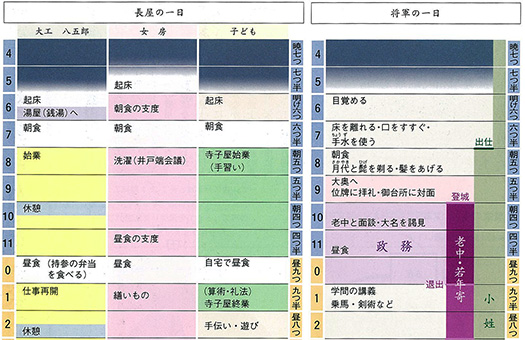
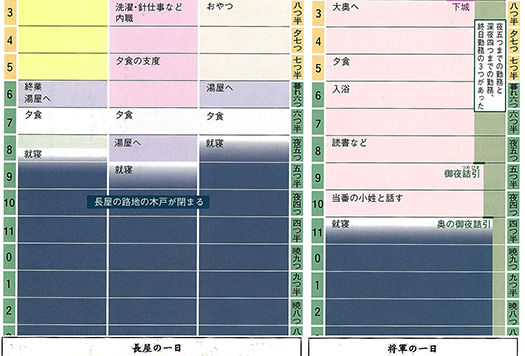
遅ればせですが、図は江戸期の人びとのライフスタイルを表す「生活時間割」。わが家系の江戸期動向を深掘りするには時代相を分析したいと調査・発見した、2004年刊行の小学館「ひと目でわかる江戸時代」からの一部抜粋引用。
わたしも加齢と共に「早寝早起き」が極端に(笑)進行していますが、江戸期のひとびとも全体としてこの傾向にあったのですね。朝6時には起床して、夜8時には就寝する暮らしようが基本。
就寝時間の早さは素晴らしい。また大工さんは1日に朝と晩に2回入浴している。よく働きよく休む。
こういう生活習慣が一般的だった「社会」という認識は、けっこうな気付きポイントかと。
お知らせ
拙書「作家と住空間」幻冬舎から電子書籍で発刊
お求めはAmazonで。
https://amzn.asia/d/eUiv9yO
English version⬇
【Late Edo Period: Human “Timetable” – A Return to Time Travel Exploration】
A lifestyle where one promptly goes to bed by 8 PM. A carpenter who bathes twice at the public bathhouse. Work hard, rest well. A splendid sense of moderation. …
Yesterday was a day to get back to my normal pace, taking care of various tasks.
When I immerse myself in Tokyo’s atmosphere, my professional and lifestyle sensibilities from my twenties seem to resurface, making me feel rejuvenated. However, my physical stamina has definitely declined with age, and I suddenly notice this gap, reminding me to take it easy. The frequency of such moments is certainly increasing. Caution is key.
I was curious about the situation regarding cancellations by group tourists from a certain country in Tokyo, but the inbound tourism landscape remains largely unchanged. Notably, young Asian workers are being actively utilized. Around my home in Sapporo, I frequently encounter Asian women commuting to a nearby nursing training facility, so this is likely the case nationwide.
In this context, the absence of group tourists from that particular country isn’t particularly noteworthy.
Rather, there’s a welcome aspect: the abnormally high accommodation costs are showing a slight downward trend. Group bookings are made very early, driving overall costs up and inevitably squeezing domestic business and tourism demand. This trend may now be gradually reversing. While it’s been said that domestic passenger numbers decline inversely with inbound growth, I suspect this abnormal cost surge was a key factor.
From a macro perspective, reduced domestic information exchange opportunities seem like a negative factor for the economy. I question the old media’s simplistic narrative of “economic losses due to fewer visitors from a certain country.”
…Whoops, I haven’t quite “returned” to the main topic yet (laugh).
Better late than never, here’s a diagram showing the “daily schedule” representing the lifestyle of people in the Edo period. To delve deeper into my family’s activities during the Edo period, I wanted to analyze the era’s context. This is an excerpt from Shogakukan’s “The Edo Period at a Glance,” published in 2004, which I researched and discovered.
As I age, my “early to bed, early to rise” habit has become extremely pronounced (laugh). It seems people in the Edo period also generally followed this trend. The basic routine was waking at 6 AM and going to bed by 8 PM.
The early bedtime is wonderful. Also, carpenters bathed twice a day, morning and evening. Work hard, rest well.
Recognizing that this lifestyle was common in society is quite a significant insight point.
Notice
My book “Writers and Living Spaces” published as an e-book by Gentosha
Available on Amazon.
共有:

Posted on 12月 4th, 2025 by 三木 奎吾
Filed under: 未分類




コメントを投稿
「※誹謗中傷や、悪意のある書き込み、営利目的などのコメントを防ぐために、投稿された全てのコメントは一時的に保留されますのでご了承ください。」
You must be logged in to post a comment.