
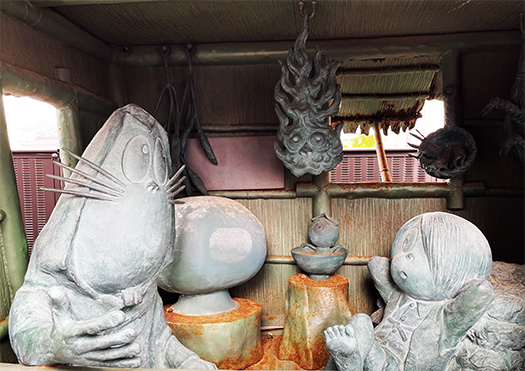
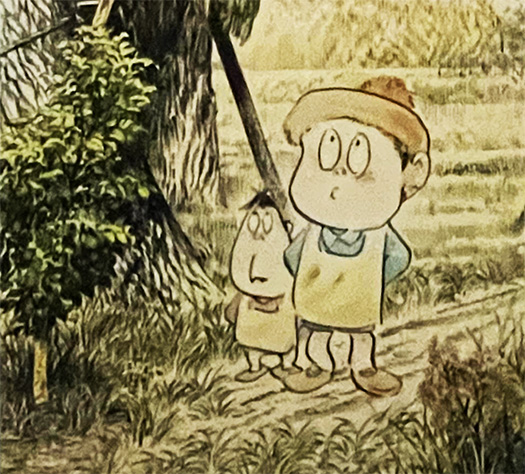
今回の山陰を中心にしたツアーは、カミさんの「足立美術館に行きたい」という強いリクエストから動機がスタートした計画。わたしとしては婦唱夫随的に、喜ばしく従わせていただいた経緯。ということだったのですが、いろいろな訪問スケジュールを計画していって大きな候補地になっていったのが、島根県の松江市街からクルマで1時間ほど離れた境港市にある「水木しげる記念館」。
下の「お知らせ」にあるようにまとめた「作家と住空間」というライフテーマをジミジミとたどっていると、次第に「作家」のなかで自分自身にとっては「マンガ家」の存在が非常に大きく、石ノ森章太郎以降に知った描き手たちに強いシンパシーを感じていることが浮き彫りになってきていました。
水木しげるは、そういうマンガ家たちのひとりではあるのですが、わたしがマンガにのめり込むようになったのは石ノ森章太郎、藤子不二雄、赤塚不二夫の年代・漫画少年という雑誌が掘り起こした作家たちであって、東京豊島区の「トキワ荘」を聖地とする年代層が中心だった。自分もヘタなマンガを描いて投稿したりしたのは、こうしたマンガ作家年代に後続したい、という気分を持っていた。
一方で戦前から戦後すぐの頃には「貸本屋」マンガ文化という存在があって、白土三平やこの水木しげるなどの作家たちの流れもあった。年代的には戦中期を生きてきた親世代に近い存在だった。そうした年代のマンガ家たちもやがて少年週刊誌の世界で作品を発表するようになっていった。
水木しげるは出征経験がありその結果、片手を喪失しつつマンガ作品を書き続ける作家として独特の存在感を占めていた。そのかれの「記念館」が生地の堺港にあると知ったのだ。
わたし自身はそういった年代で、またマンガ家夢見から挫折した少年期以降はマンガとは縁遠い人生を歩き続けていたので、水木しげるのさまざまな活動については深く知る機会はなかった。しかし、猛烈に「なつかしい」気分で少年期にフィードバックさせられるメルクマールとして浮かび上がってきていた。・・・
<この項、あした以降に続く>
●お知らせ
拙書「作家と住空間」幻冬舎から電子書籍で発刊
お求めはAmazonで。
https://amzn.asia/d/eUiv9yO
English version⬇
To the memorial museum in Sakai Port, Shimane Prefecture, to meet “Shigeru Mizuki” -1]
Manga culture has thrived since my boyhood. A rare presence who also shared his war experiences. A manga artist with a glow like the setting sun on Lake Shinji. I was a young boy when I was a child.
This tour around the San-in region was motivated by my wife’s strong request to visit the Adachi Museum of Art. I, for my part, was happy to comply with her request. However, as we planned our visit schedule, one of the major candidates was the Shigeru Mizuki Memorial Museum in Sakaiminato City, about an hour’s drive from Matsue City in Shimane Prefecture.
As I was deeply exploring my life theme of “Artists and Living Space,” which I have summarized in the ‘Notice’ below, it gradually became clear that among “artists,” “manga artists” were very important to me, and that I felt strong sympathy for the artists I had come to know after Shotaro Ishinomori. Mizuki Shigeru is one such manga artist.
Shigeru Mizuki is one of these manga artists, but it was around the time of Shotaro Ishinomori, Fujiko Fujio, and Fujio Akatsuka that I became absorbed in manga. These were the artists that Manga Shonen magazine had uncovered, and the pioneering “Tokiwaso” in Toshima-ku, Tokyo, was a major part of that generation. They were in the mood to draw and submit bad manga, following in the footsteps of these manga artists’ generation.
On the other hand, there was a “rental bookstore” manga culture from the prewar period to the immediate postwar period, which included such trends as Sanpei Shirado and this Shigeru Mizuki. In terms of age, they were close to the generation of their parents who lived through the middle of the war. Manga artists of that generation eventually began to publish their works in weekly boys’ magazines.
Shigeru Mizuki, who had been in the war and lost one hand as a result, occupied a unique presence as an artist who continued to write manga works. I learned that there is a “memorial museum” for him in Sakai Port, where he was born.
I myself was of that age, and since I had been living my life far away from manga since I was a young boy who had failed in his dream of becoming a manga artist, I had no opportunity to learn much about Shigeru Mizuki’s various activities. However, I had never had a chance to know about Mizuki Shigeru’s various activities in depth, but they emerged as a merkmal that made me feel intensely “nostalgic” and fed back to my boyhood.
My book “Writers and Living Space” is published by Gentosha as an e-book.
Please visit Amazon for more information.
共有:

Posted on 6月 17th, 2025 by 三木 奎吾
Filed under: 出張&旅先にて




コメントを投稿
「※誹謗中傷や、悪意のある書き込み、営利目的などのコメントを防ぐために、投稿された全てのコメントは一時的に保留されますのでご了承ください。」
You must be logged in to post a comment.