
さて「四百年間のいのちの履歴書」シリーズ、松永塩田へ「藩境を越えた移転」篇。
広島・浅野藩の徴税責任者としての「所務役」であった家系の当主・原平七は1718年の百姓一揆で「打ち毀し」されてしまった。その時点でのわが家系の次世代当主(原源七)はまだ10歳だった。そして結婚と同時に「原」姓を捨て「三木姓」へ家名も変え身分も商家へ転身している。
〜はじめ源七、故有りて備後松永にて塩浜を営む。のち結婚して尾道三木阿賀屋に入家す〜と、家系に伝わる「原氏由来の事」文書を書いた筆者の「三木寛蔵」にとって、原源七は顔を見ることもなかった祖父に当たる。いや、寛蔵はその父すらも1歳の時点で失っている。そこから寛蔵は母方の祖母と母から深い愛情を一身に受け、やがて今津の有力者の支援を受けて商家を「再興」させるのだが。・・・
この間の「身分と姓の変転」がわが家系の伝世推移のひとつのクライマックス。
市場経済資本主義の現代とは倫理感も社会常識もまったく相違する江戸社会での生き様の地殻変動。
この家系の大変動には、やはり究極的な社会の変動ぶりが反映していると考えられるのだ。
まず第1に浅野藩から福山藩への移動がある。それも藩の「所務役」という公人格を有した家がこのように転身するには、容易ならざる制度桎梏のクリアが必要だったこと。浅野藩からすれば藩の重要機密が他藩に漏洩することを意味するが、そこをクリアするのに商家に転身して姓を変えるのは、非常に的確。
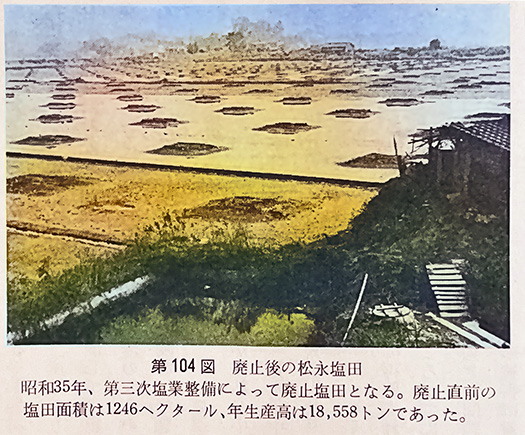
そして第2として、その飛躍をさせた「経済的根拠」として当時の瀬戸内海沿岸地域の塩業産業の活性化が考えられる。地域史書として「福山市史」を参照すると、福山藩はこの当時の浅野藩領・竹原の塩業の隆盛ぶりをみて、藩経済振興策の最重点として新田開発を藩の公共事業として推進していた。
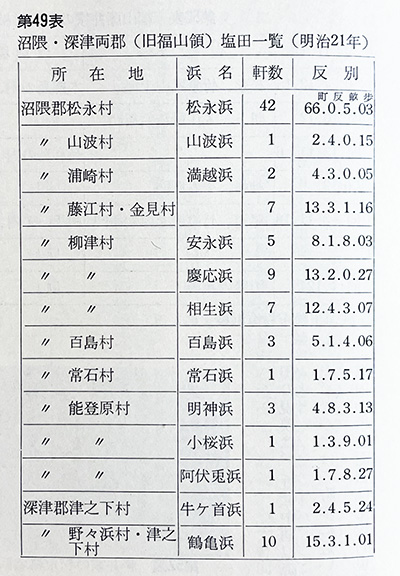
そして福山市史での重要な記述として「他領の者は塩田地主になれないとする藩法」があったと記載。
そこにはその藩法に適合させて「名義上浜主(塩田地主)」を立てるとの記述。う〜む、であります。
さらに第3に、当時の塩の主要な移出先として、北前交易の船便で環日本海の各地が挙げられている。言うまでもなく、それは「尾道の商家株」が必須の身分要件になってくることがわかる。
わが家系はこうした諸条件へ最も適応していった事実が浮かび上がってくるのだ。
●お知らせ
拙書「作家と住空間」幻冬舎から電子書籍で発刊
お求めはAmazonで。
https://amzn.asia/d/eUiv9yO
English version⬇
【1718: Expelled from Asano Domain ~ Grand Transition to Matsunaga in Fukuyama Domain / Family History】
The climax of the family lineage’s transmission. Execution of the “sublimation” strategy for family traces across domain borders. A strategic decision to change names and live for practical gain. …
Now, in the “Four Hundred Years of Life’s Resume” series, the chapter on “Relocation Across Domain Borders” to Matsunaga Salt Fields.
Hara Heishichi, the head of our family line who served as the “tax collector” for the Hiroshima Asano domain, was “executed” during the 1718 peasant uprising. At that time, the next head of our family line (Hara Genjichi) was only ten years old. Upon marriage, he abandoned the “Hara” surname, changed the family name to “Miki,” and transformed his status into that of a merchant family.
~Genji, for certain reasons, began operating a salt field in Matsunaga, Bingo. Later, he married and entered the Miki Agaya household in Onomichi~. For the author of the family document “The Origin of the Hara Clan,” Miki Kanzao, Hara Genji was a grandfather he never met. In fact, Kanzao lost his own father when he was just one year old. From then on, Kanzao received profound love solely from his maternal grandmother and mother. Eventually, with the support of influential figures in Imazu, he “revived” the merchant house. …
This period of “transition in status and surname” represents one climax in the succession of our family lineage.
It signifies a tectonic shift in how people lived within Edo society, whose ethics and social norms differed entirely from those of modern market-driven capitalism.
This profound upheaval in our family lineage undoubtedly reflects the ultimate nature of societal transformation itself.
First, there was the move from the Asano domain to the Fukuyama domain. For a family holding the official position of “domain administrator” to make such a transformation required overcoming formidable institutional barriers. From the Asano domain’s perspective, this meant the risk of important domain secrets leaking to another domain. Transforming into a merchant family and changing their surname was an extremely effective way to overcome this hurdle.
Second, the “economic basis” enabling this leap was likely the revitalization of the salt industry along the Seto Inland Sea coast at that time. Referring to the regional historical text “History of Fukuyama City,” the Fukuyama domain, observing the flourishing salt industry in Takehara (then part of the Asano domain), promoted new rice field development as a domain public works project, making it the top priority of its domain economic revitalization policy.
And as a key entry in the Fukuyama City History, it states: “A domain law stipulated that individuals from other domains could not become salt field landowners.”
It further describes establishing a “nominal beach master (salt field landowner)” to comply with this domain law. Hmm, indeed.
Thirdly, it lists various locations around the Sea of Japan as primary destinations for salt shipments via Kitamae trade routes. Needless to say, this makes “Onomichi merchant shares” an essential status requirement.
The fact emerges that my family lineage was best suited to meet these various conditions.
●Notice
My book “Writers and Living Spaces” published as an e-book by Gentosha
Available on Amazon.
共有:

Posted on 2月 18th, 2026 by 三木 奎吾
Filed under: 未分類



コメントを投稿
「※誹謗中傷や、悪意のある書き込み、営利目的などのコメントを防ぐために、投稿された全てのコメントは一時的に保留されますのでご了承ください。」
You must be logged in to post a comment.