
自分の家系の過去をたどる、というのは自分のDNA的な「アイデンティティ」を探索する旅。
メッチャのめり込んでしまう。その理由は史的な事実が掘り起こされる都度、同じ体験をいま現在の自分がしたらどう感じるだろうと考えること。そのときに「この体験をしたのは自分とほぼ同じDNAのいのちなんだ」ということに、深く沈殿させられながら事実としての先祖の対応ぶりと向き合うことになる。
そしてその対応の仕方に、自分でも深く同意せざるを得ないのだ。「苦労したんだね」。
でもまぁあんまり深刻に考えてもしょうがないので、自分的に「ドラえもん旅」と考えています。
後世のマンガのような「軽い視点」で冷静に見るように心がける。
でも、やっぱり切なく、心情が揺り動かされ続けることになるのですね。
そういうときはドラえもんのひと休みで「途中下車」。
歴史好きなので、いろんな歴史的画像を貯め込んでおります。そのひとつがこちら。
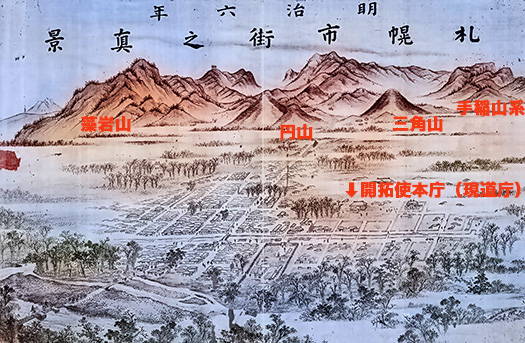
1874年(明治6年)の「札幌市街之真景」図。当時「開拓使吏員」であった画家・船越長善の画筆。
明治2年、開拓判官・島義勇を担当責任者として明治6年中には「開拓使本庁」も含めて一応の建設工事が一段落した段階に当たる。そのことを記録として残す意味で、絵画で表現したものだろう。日本画の伝統を踏まえて、洛中洛外図などと同様に斜め中空からの、まるで現代のドローン目線で描かれている。
札幌は南を山地が取り囲み、対ロシアの国防最前線首府を意識して開発されていった。その心理そのままに、画角は北から南を見晴らすアングルになっている。ドライブで道央道を旭川方面から南下してくると、このような山並みが明瞭に浮かび上がってくる。この山並み観が札幌の原風景かと思われる。きっと、ドラえもんが22世紀からやってくるとき、藤子不二雄さんもこう描くのではないだろうか。
手許の記録画像はモノクロだったのでPhotoshopでカラー化させてみた。
「ふるさとの山に向かいて言うことなし」。
ごく単純な自然造形の地域だけれど、明治の都市計画者のみなさんの総意が込められた都市。
そういう「ありがたさ」をこれからも受け継いで行きたいですね。
●お知らせ
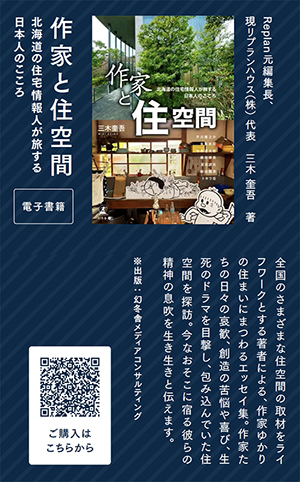
拙書「作家と住空間」幻冬舎から電子書籍で発刊
お求めはAmazonで。
https://amzn.asia/d/eUiv9yO
English version⬇
【Doraemon-Style “Time Travel”/A Brief Stop in Sapporo, 1874】
I once wrote on my blog about the real-time reconstructed images of Hokkaido’s settlement that I’d been completely absorbed in. A brief pause in my family’s journey spanning over 400 years. …
Tracing my family’s past is a journey exploring my DNA-based “identity.”
I get completely absorbed in it. The reason is that every time a historical fact is unearthed, I think about how I would feel if I experienced the same thing right now. At that moment, I’m deeply struck by the realization that “this experience was lived by a life with almost the same DNA as mine,” while confronting how my ancestors actually responded to it.
And I find myself deeply agreeing with their choices. “They really struggled, didn’t they?”
But well, there’s no point dwelling too heavily on it, so I personally think of it as a “Doraemon journey.”
I try to view it calmly, with a “light perspective” like a manga from a later era.
Still, it inevitably stirs my emotions and keeps tugging at my heartstrings.
At times like that, I take a Doraemon break and “get off at an intermediate stop.”
As a history buff, I’ve collected various historical images. Here’s one of them.
The “True View of Sapporo City” from 1874 (Meiji 6). Painted by Nagayoshi Funakoshi, an artist who was a “Kaitakushi official” at the time.
By Meiji 2, with Kaitaku Judge Yoshitake Shima as the responsible officer, construction work, including the “Kaitakushi Headquarters,” had reached a stage where it was more or less completed by Meiji 6. This painting likely served as a record of that achievement. Rooted in Japanese painting tradition, it adopts a diagonal, aerial perspective—much like modern drone footage—similar to the “Views of Kyoto and Its Environs” genre.
Sapporo was developed with mountains encircling its south, consciously positioned as the frontline defense capital against Russia. Reflecting this mindset, the painting’s angle looks southward from the north. Driving south on the Hokkaido Expressway from the Asahikawa direction, this mountain range emerges clearly. This view of the mountains likely represents Sapporo’s original landscape. Surely, if Doraemon came from the 22nd century, Fujiko F. Fujio would depict it this way too.
The reference image I had was monochrome, so I colorized it in Photoshop.
“Facing the mountains of my homeland, I have nothing more to say.”
It’s a region of very simple natural formations, yet a city imbued with the collective vision of Meiji-era urban planners.
I hope we can continue to cherish that sense of gratitude.
●Notice
My book “Writers and Living Spaces” published as an e-book by Gentosha
Available on Amazon.
共有:

Posted on 2月 16th, 2026 by 三木 奎吾
Filed under: 未分類




コメントを投稿
「※誹謗中傷や、悪意のある書き込み、営利目的などのコメントを防ぐために、投稿された全てのコメントは一時的に保留されますのでご了承ください。」
You must be logged in to post a comment.