
さて、家系にとって隣藩の福山藩・松永で勃興しつつあった藩総力での塩田事業。
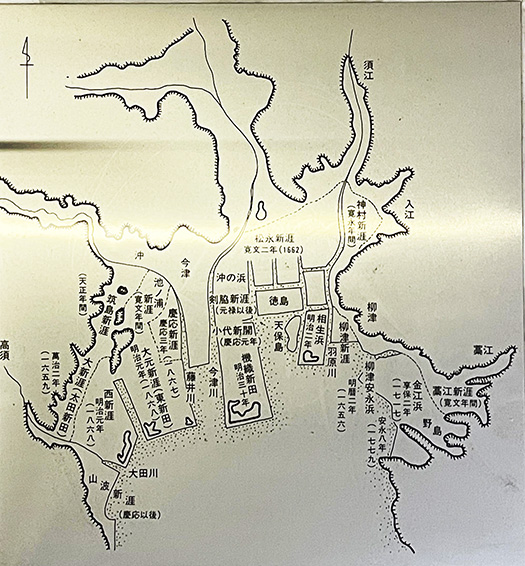
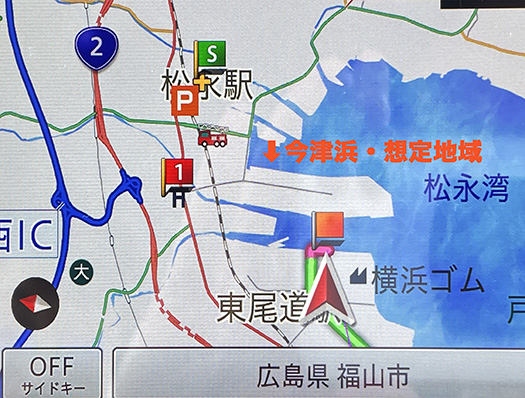
上の地図は「松永はきもの資料館」で確認した塩田地図。松永地域でもたくさんの新開塩田が時系列的に分かれていることがわかる。そのなかで「今津」と記された場所が、わたしの家系がその後明治期に至るまで本拠地としていた地域。この地域から北海道に「仏壇を背負って」渡って来たのです。在地の蓮華寺は真言宗で家系の祖先の墓がたくさんある。
1718年の百姓一揆で浅野藩・入野の家宅が打ち毀された、浅野藩・所務役だった家系当主、原平七はまだ10歳だった次世代・源七とともにこの地へ一族で転身した。浅野藩・竹原塩田の大成功をみて隣の福山藩はここで活発に塩田開拓事業を行っていた。
そのなかで「今津」の時代特定がされていなかったのですが、今回AI・Geminiで再度「今津の塩田開拓時期は?」とプロンプトしたら、1710年に第1期工事が完成していたという回答。AI回答なので、しっかり証拠を確定させる必要はあるのですが当面それを受け入れれば、たしかに家系の1718年の打ち毀し受難からの「再起」のステージとして時代相も適合している。
江戸期の塩産業についての概要は以下:
江戸期の塩は、現代と比較して非常に価値の高い商品であり、藩の経済を支える重要な財源。
•藩の財源: 製塩業は幕府や藩の許可制であり特に瀬戸内の有力藩にとって、その生産・販売による収入は米の生産以上に安定した利益をもたらす重要な財源(塩田収入は水田の10倍、良い時は20倍になったとする試算もある)。
•生活必需品: 食生活に不可欠であることはもちろん、魚や野菜の保存、味噌・醤油などの調味料製造にも不可欠な、最重要の生活必需品。
•厳格な管理: 藩財政を支えるため密売は厳しく取り締まられ生産から流通販売に至るまで管理体制が敷かれていた。〜
こういう背景事情の中、藩を越えて身分も家名も変えざるを得なかった境遇で移転先を求めていた浅野藩で「所務役」だった家系の存在は、福山藩にとっても「使い出」のある家系と映っていただろうことは疑いがない。「あんた、業界構造の裏のウラまで知ってる、だろう?」「ま、それほどでもありませんが、それなりには・・・」
そういった「相見互い身」の関係性が浮かんでくる。・・・
●お知らせ
拙書「作家と住空間」幻冬舎から電子書籍で発刊
お求めはAmazonで。
https://amzn.asia/d/eUiv9yO
English version⬇
【The Imazu Beach Salt Fields of Bingo Matsunaga, Established in 1710 / Family History】
The Bingo Matsunaga region reached through a “survival strategy” that even changed the family name. Then came the encounter with “Imazu,” the ancestral homeland 2.0. …
Now, regarding the salt field enterprise that was emerging with the full force of the neighboring Fukuyama Domain in Matsunaga for our family lineage.
The map above is a salt field map confirmed at the Matsunaga Hakimono Museum. It shows that numerous newly opened salt fields in the Matsunaga area are separated chronologically. Among them, the location marked “Imazu” is the area my family lineage used as its base until the Meiji period. It was from this region that my ancestors crossed over to Hokkaido, “carrying Buddhist altars on their backs.” The local Rengeji Temple, a Shingon sect temple, holds many graves of my family ancestors.
During the 1718 peasant uprising, the residence of the family head, Hara Heishichi, who served as an administrative official for the Asano domain in Irino, was destroyed. He, along with his 10-year-old son, the next generation, Genji, relocated their entire clan to this land. Seeing the great success of the Asano Domain’s Takihara salt fields, the neighboring Fukuyama Domain actively pursued salt field development projects here.
While the specific era for “Imazu” hadn’t been determined, prompting AI Gemini again with “When was the Imazu salt field development period?” yielded the answer that the first phase of construction was completed in 1710. As this is an AI response, definitive evidence is still needed, but provisionally accepting it aligns well with the historical context as a stage of “rebirth” following the family’s 1718 persecution and ruin.
An overview of the Edo period salt industry follows:
Salt in the Edo period was a commodity of far greater value than today, serving as a crucial revenue source supporting domain economies.
• Domain Revenue: Salt production required permission from the shogunate or domain. For powerful domains in the Seto Inland Sea region, income from its production and sale provided more stable profits than rice production, making it a vital revenue source (some estimates suggest salt field income was 10 times that of rice paddies, and up to 20 times in good years).
• Essential Commodity: Salt was indispensable not only for daily meals but also for preserving fish and vegetables, and for producing essential seasonings like miso and soy sauce.
• Strict Regulation: To support domain finances, illicit sales were rigorously suppressed, with a management system established covering everything from production to distribution and sales.
Given these circumstances, the existence of a family line that had served as “domain officials” in the Asano domain—forced to relocate beyond domain borders while changing both status and family name—would undoubtedly have appeared to the Fukuyama domain as a lineage with “useful connections.” “You know the ins and outs of the industry’s hidden workings, don’t you?”
“Well, not quite that much, but I know my way around…”
Such a relationship of mutual understanding emerges. …
●Notice
My book “Writers and Living Spaces” published as an e-book by Gentosha
Available on Amazon.
共有:

Posted on 2月 19th, 2026 by 三木 奎吾
Filed under: 未分類



コメントを投稿
「※誹謗中傷や、悪意のある書き込み、営利目的などのコメントを防ぐために、投稿された全てのコメントは一時的に保留されますのでご了承ください。」
You must be logged in to post a comment.