本文へジャンプ

【北海道人、雪かき疲労から一転、元気回復(笑)】


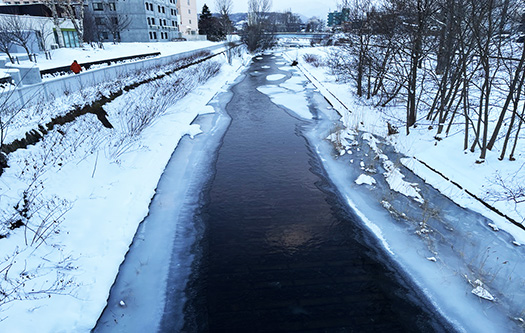
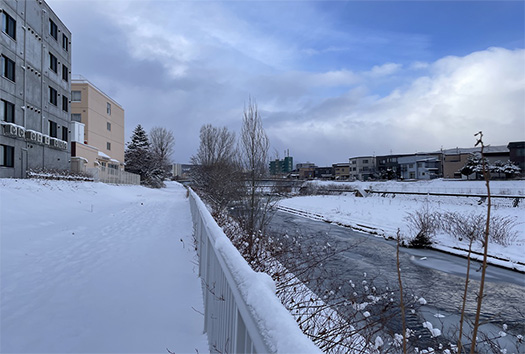
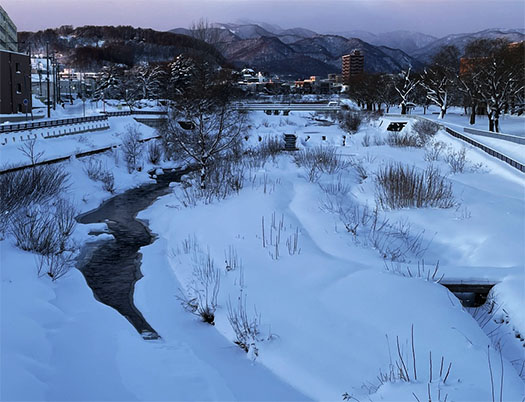
 写真は昨日早朝の琴似発寒川の様子。旧国道5号線架橋上から南側方向を見たところ。
 札幌市西区の山の手地域は写真上方の百松沢山(読者のNさんからご指摘があり、わたしの思い込みで「札幌岳」と記述していましたが、山名を確認したので修正します。深く感謝申し上げます。)の山並みを南にして、そこからの丘陵地系が特徴。山の手というのはこうした地形特徴を表現したものと思っています。
 さて1月時期としては記録的とされた50cm超ではないかというドカ雪もようやく納まりました。1/9午前9時段階の降雪量はこの周辺で平年値167cmが、今年度はすでに240cm。「積雪深」は平年値41cmが、今年度は61cm。<札幌市HPより>
 昨日は早朝から、夜間に行われた公共除雪作業の結果、家の前に残置された「重たく固い雪」をせっせと処理して片付けておりました。ヘトヘト状態になってバタンキューと爆睡していたのですが、なんと予想に反して若々しく元気が蘇って、わが家周辺+借り上げている個人敷地の一部の駐車場スペースまでバリバリと処理。もう1箇所の3台分借り上げている駐車場には、午前8時くらいまでには除雪が入ることになっているので、除外しましたが、1時間近くの雪かき作業でも颯爽としておりました。我ながら若々しい(笑)。
 ということで除雪作業後、この写真周辺地を散歩までしていました。除雪作業での歩数は2,500歩ほどで、昨日の歩数合計は9,298歩でしたので、たぶん運動量としては12,000歩程度でしょうか。
 散歩してみると公共除雪の結果、至る所で道路脇堆雪が目立っていて、通常の4車線が2車線に、そして通常の2車線がギリギリ1.5車線になっておりました。当然、各所でクルマ交通は大渋滞発生。
 そんな散歩から帰ってきたら、近所の友人から緊急SOS電話。なんでも自家用車がバッテリー変調でかエンジンが掛からず、家人を病院での検査に連れて行くのに「参った」コール。わたしは、前述のように元気絶好調でしたので一発OKで引き受けまして、点検仕立ての愛車で送迎しておりました。
 この道中でも各所で交通渋滞しておりましたが、迷うことなく幹線道路ゆったり通行の一択。こういうドカ雪状況前後は、覚悟を決めてのゆったり運転が最上の作戦行動。案の定、ほぼ日常的な時間感覚で目的の国立病院まで送ることが出来ました。
 札幌はこれからもっとも降雪が多くなる時期。元気を涵養して前向きに過ごしたいですね。

●お知らせ
拙書「作家と住空間」幻冬舎から電子書籍で発刊
お求めはAmazonで。
https://amzn.asia/d/eUiv9yO
English version⬇

【Hokkaido Residents: From Snow Shoveling Exhaustion to Full Recovery (lol)】
Does heavy snow flip a switch deep inside northerners? After three rounds of exhausting shoveling, my body launched a counterattack. Now I’m facing winter with renewed energy!

 This photo shows the Kotoni-Hassamigawa area early yesterday morning. View looking south from the bridge over the old National Route 5.
The Yamate district in Sapporo’s Nishi Ward is characterized by the Sapporo-dake mountain range to the south (upper part of the photo) and the hilly terrain extending from it. I believe the name “Yamate” (literally “mountain hand”) reflects this topographical feature.
Now, the heavy snowfall—possibly exceeding 50cm, considered record-breaking for January—has finally subsided. As of 9:00 AM on January 9th, the snowfall accumulation in this area was already 240cm this season, compared to the average of 167cm. The “snow depth” was 61cm this season, compared to the average of 41cm.
Yesterday, starting early in the morning, I diligently cleared away the “heavy, packed snow” left in front of my house as a result of the public snow removal work done overnight. I was completely exhausted and passed out cold, but surprisingly, I woke up feeling youthful and energetic. I tackled the area around my house plus part of the parking space on the privately leased land I use. I skipped the other leased parking area for three cars since snow removal was scheduled to come by around 8 a.m., but I was still brisk and energetic even after nearly an hour of shoveling. I must say, I feel young (laugh).
 After finishing the snow removal, I even went for a walk around the area shown in this photo. The snow removal itself added about 2,500 steps, and yesterday’s total was 9,298 steps, so my exercise for the day probably came to around 12,000 steps.
During my walk, I noticed the public snow removal had left piles of snow along the roadsides everywhere. Where there were normally four lanes, there were now only two, and where there were normally two lanes, it was barely 1.5 lanes. Naturally, major traffic jams formed at various points.
Upon returning from that walk, I got an emergency SOS call from a neighbor. Apparently, their car wouldn’t start due to battery issues or engine trouble, and they were stuck trying to take a family member to the hospital for tests. I was feeling great, as mentioned earlier, so I readily agreed to help and drove them in my freshly serviced car.
 Traffic was congested in many spots along the way too, but I stuck to the one option: taking the main roads at a leisurely pace. In heavy snow conditions like this, the best strategy is to drive slowly and deliberately. Sure enough, I managed to get them to the National Hospital in almost the usual amount of time.
Sapporo is now entering its heaviest snowfall period. I want to stay energized and keep moving forward positively.

●Notice
My book “Writers and Living Spaces” published as an e-book by Gentosha
Available on Amazon.

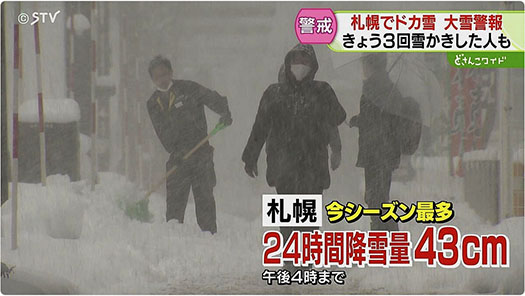
【札幌ドカ雪43cm雪かき1日3回ヘトヘト・・・】


 さて昨日のブログで少年時代の「雪埋め」あそびで転がされた瞬間の写真を掲載してしまったワケですが、アップの時間は午前5時半ころ。
 で、その頃は雪はチョロチョロ降り始めた程度で、軽い感じで雪かきを始めておりました。しかし様子を見ているとどうも、降り止む気配がなくてどんどん激しくなってきて降り続く。一応1回目として、わが家の周囲と前面道路の通行確保、そして会社が借り上げている駐車場の近隣2箇所、延べ100坪ほどを利用可能なように除雪作業して、様子を見ようとしていました。激しい降雪が止む気配なく降り続く。・・・
 降り始めが朝6時頃だったので、公共の除雪体制はまったく「スキを付かれた」ようで、わが家前の中学校通学路には全然除雪が来ない。やはり除雪の体制は対応させるのに一定の準備時間が掛かるので、間に合わなかった。また契約している民間駐車場も午前8時には利用者が駐車し始めるので、その事前に除雪する決まりになっていて、そちらも体制がまったく間に合わず、終日機械除雪が入らないことになってしまった。
 どうもきのうの降雪は時間的に最悪のタイミングで大雪が降ってしまったようです。
 やむなく人力のみで、その後も本格的除雪を合計3回行っておりました。さすがに参った・・・。
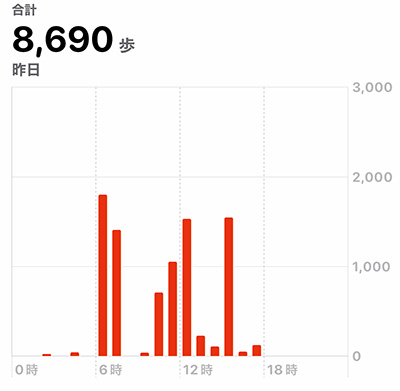
 上の「歩数計」はわたしの昨日の歩数ですが、大雪対応の雪かきオンリーだったもの。通常散歩はしていない。それなのに8,690歩を計測しています。これはほぼ雪かき作業だけの「歩数」に相当。以前にも書きましたが、雪かき労務のエネルギー消費は散歩歩行に対して2〜2.5倍程度。実際の雪かきでは堆雪させる「雪山」に運んで排雪するので感覚的には「3倍程度」の疲労感なのですが、そうするときのうの運動量は歩数換算で17,000〜26,000歩程度。
 運動疲労に加えて、腰や背筋・上腕などの筋肉痛などもジワジワ感じられてくる。まぁ日頃10,000歩程度の散歩運動しているので、そこまでの筋肉痛はありませんが、やはり疲労感はハンパない。
 やはり個人的な感想としては、きのうの「雪埋め」写真が災いしてしまったのかと(泣)・・・。なにか運命の機微に触れてしまった感が強烈。深く反省しております。

●お知らせ
拙書「作家と住空間」幻冬舎から電子書籍で発刊
お求めはAmazonで。
https://amzn.asia/d/eUiv9yO

English version⬇

【Sapporo’s Heavy Snowfall: 43cm… Exhausted After Shoveling Three Times a Day…】
Public snow removal was caught off guard and failed to function. Citizens were forced to shovel snow alone, isolated and without support. This labor equates to 17,000 to 26,000 steps…

 Well, yesterday’s blog featured a photo of the moment I was rolled down a snow-covered hill during childhood “snow burial” play. I posted it around 5:30 AM.
 At that time, the snow had just started falling lightly, so I began shoveling with a casual attitude. However, watching the situation, it didn’t seem like it was going to stop anytime soon. Instead, it kept getting heavier and heavier, continuing to fall. As a first round, I cleared the area around my house, the front road to ensure passage, and two nearby spots in the parking lot leased by my company, totaling about 100 tsubo (approx. 330 sq m), to make them usable. I planned to monitor the situation. The heavy snowfall showed no sign of stopping and continued relentlessly. …
Since the snow started around 6 AM, the public snow removal system seemed completely caught off guard. The middle school route in front of my house hadn’t been cleared at all. The snow removal system clearly requires a certain amount of preparation time to respond, and they simply couldn’t keep up. Additionally, the private parking lot we contract requires snow removal before 8 AM when users start parking. Their system also completely failed to keep up, meaning no mechanical snowplows came all day.
It seems yesterday’s heavy snowfall hit at the worst possible time.
We had no choice but to do it all by hand, performing full-scale snow removal a total of three times afterward. Honestly, I was beat…
 The “pedometer” above shows my steps yesterday, but these were solely from snow shoveling to handle the heavy snow. I didn’t take my usual walk. Even so, it recorded 8,690 steps. This is almost entirely “steps” from snow shoveling work. As I’ve written before, the energy expenditure of snow shoveling labor is about 2 to 2.5 times that of walking during a stroll. In actual snow shoveling, you carry the snow to a “snow pile” to clear it away, so it feels like about “three times” the fatigue. When doing that, the exercise volume translates to about 17,000 to 26,000 steps.
On top of the exercise fatigue, muscle soreness in my lower back, back muscles, upper arms, etc., is slowly creeping in. Well, since I usually walk about 10,000 steps daily, the muscle soreness isn’t that bad, but the overall fatigue is absolutely brutal.
Personally, I can’t help but wonder if yesterday’s “snow burial” photo was the culprit (sob)… I have this intense feeling I somehow touched some subtle thread of fate. I deeply regret it.

●Notice
My book “Writers and Living Spaces” published as an e-book by Gentosha
Available on Amazon. 

【人間を考える方法〜「家系DNA」考究の可能性】


 人間社会というのは常に現在の状況把握が基本であって、その要因分析の必要性で過去からの「流れ」を解析手段として利用し未来を展望していく。当然でしょう。
 しかしそれとは別の視点で、社会を構成し参加している各個人はどのような「背景」と「志向性」を持っているのかを分析する分野も存在する。広く言えば、文学作品などに表出される「人間個人」の内面を考える領域がもっとも特徴的。
 しかしどうもこうした分析は「近代個人主義」的な分野に特定されすぎていると思う。
 人間は結局、人間から生まれ、人間に育てられ、その上でようやく社会に「参加」するのであって、最初から個人としてのみいのちを生きているのではない。個人を生んだ「家庭」背景を、継承されてきた大きな「価値観」として認識把握することも不可欠なのではないか。
 家系の四百年超の「歩み」を跡づけながら探索するという作業に意識的になってみると、それぞれの時代相のなかで祖先・血縁がどのように「生きたか」が可視化してくる。その個人の「事跡」をあきらかにしていくことで、それが浮かび上がってくる。
 たぶんわたしがいま感じている「新鮮な気付き」には、わたしのこれまでの人生ではただ自分自身という主体・個人としてだけの「自己認識」に留まっていて、血縁の「ながれ」のようなものをまったく意識してこなかった、ということへの目の醒めるような自覚がある。
 実際に血縁の先祖がたどった事跡を確認すると、どうしても客観視だけではない視点が自分の中から沸き起こって来る。このことが未体験で新鮮な精神作用を与えてくれるのだ。
 いわば「個人」を越えた「自己認識」とでも言える領域。
 さらに言えば、宗教などの「世界」認識と個人主義との中間に存在するような領域。
 いかにも、いのちの履歴、DNAの響き合いのような領域だと思えるのです。
 近代的合理主義ではこうした領域は客観的価値とは認識されにくいので、見ないことにしてきたのではないだろうか。いま、こんな気分のなかにいる。
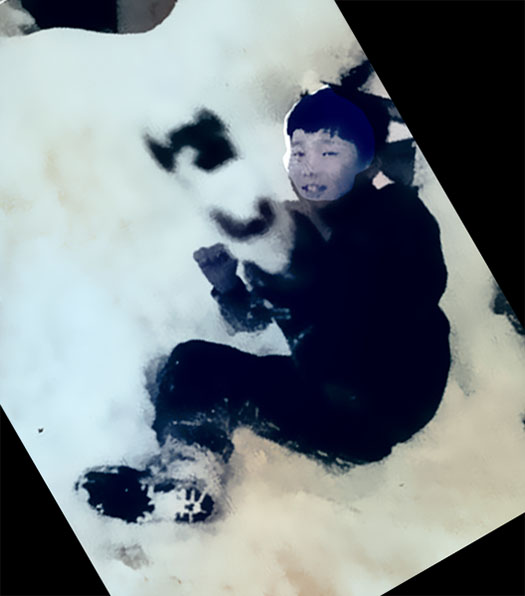
 〜写真はわたしの少年期、たぶん小学校低学年ころ。雪国のこどもたちは「雪埋め」という残酷系あそびをする。その遊びの表情をたまたま撮影してくれた写真。無性になつかしい(笑)。

●お知らせ
拙書「作家と住空間」幻冬舎から電子書籍で発刊
お求めはAmazonで。
https://amzn.asia/d/eUiv9yO

English version⬇

Ways of Thinking About Humanity: The Potential of Genealogical DNA Research
A photo of snow country kids playing “snow burial”—a game that would likely be called bullying today, yet feels strangely nostalgic. An analysis of the “gaps” between society and humanity. …

 Human society fundamentally relies on grasping the present situation, utilizing the “flow” from the past as an analytical tool to assess its causes and envision the future. That’s only natural.
However, from a separate perspective, there also exists a field that analyzes the “background” and “orientation” possessed by each individual who constitutes and participates in society. Broadly speaking, the most distinctive area is the study of the inner world of the “individual human being” as expressed in literary works and the like.
However, I feel this kind of analysis is overly confined to the realm of “modern individualism.”
Ultimately, humans are born from humans, raised by humans, and only then do they finally “participate” in society. They do not live their lives solely as individuals from the very beginning. Isn’t it also essential to recognize and grasp the ‘family’ background that gave birth to the individual, as a larger inherited “value system”?
 When consciously engaging in the task of tracing and exploring the over four-hundred-year “journey” of one’s lineage, how ancestors and blood relatives ‘lived’ within each era becomes visible. By clarifying the individual “deeds” of these ancestors, this emerges.
 Perhaps the “fresh realization” I feel now stems from a startling awareness: throughout my life thus far, my “self-recognition” has been confined solely to myself as a subject, an individual, completely unaware of the “flow” of blood ties.
When I actually confirm the deeds traced by my blood ancestors, a perspective inevitably wells up within me that is not merely objective. This provides an untried, fresh mental experience.
It’s a realm that could be called “self-awareness” transcending the “individual.”
To put it further, it’s a realm existing somewhere between the “world” view of religion and individualism.
It feels like the very realm of life’s history, the resonance of DNA.
 In modern rationalism, such realms are difficult to recognize as having objective value, so perhaps we’ve chosen not to see them. That’s the mood I’m in right now.
~The photo is from my boyhood, probably around the lower grades of elementary school. Children in snow country play a cruel game called “snow burial.” This photo happened to capture the expression of that game. It’s inexplicably nostalgic (laugh). 


【健康散歩せっせと10,000歩超の年末年始】


 本日は連載テーマ「四百年間のいのちの履歴書」シリーズ、ひと休み。
 こういう歴史ネタでは大量の資料チェックが膨らんでくるので、縁辺的なデータの領域が広大で、1人の認識能力では、やや拡大しすぎでアタマのなかの整理整頓が一定時間で必要なんだと思います。
 なんですが、やはり生きているウチにこういう精神作業へ没入する時間は持ちたかった。ビジネスの第1線から少し離れて、内面的な深掘り系の領域。そういう時間を持てることに深いよろこびはある。でも過労は避けたい。
 写真はわが家周辺の発寒川河畔の様子であります。
 昨日はかなり冷え込んでいて、けっこうな「結氷」が見られています。本日早朝では気温はマイナス12度まで下がってきています。きょうは日中はプラス気温になって、やや暖かくなるようですが、この時期札幌は一進一退を繰り返しながら、徐々に「真冬」に突入して行くことになる。大雪なども、襲ってくる可能性が高まってきます。
 そうなると「雪かき」での運動量は通常の散歩の3倍程度とのこと。
 その雪かきの量がどれくらいになるか、カラダで感じる「冬のきびしさ」具合。住環境自体は、性能向上の結果、北海道人はそれほど「寒冷」を意識しなくなってきているかも知れませんから、雪かきの方がきびしさを実感させられる行為であるかも知れませんね。
 ということで、鬼がそれほど来ていないウチに、楽しい冬の散歩であります。最近はついに「スパイク靴」一択で、完全防備体制での散歩。ドカ雪は別にすれば、通常の氷結ツルツル道路も、積雪道路もまったく平気。
 そしてカラダは全身をダウンジャケット体制で防衛するので、顔をマスクで覆ってしまえば、戦国時代の鎧兜の武者姿並みの寒さ・ツルツルからの完全防備で出掛けております。
 子ども時代のような「寒さ」意識は北海道ではかなり消失してきているかも知れませんね。
 さて、本日も早朝の寒気の中、元気を盛り立てて行きたいと思います。

●お知らせ
拙書「作家と住空間」幻冬舎から電子書籍で発刊
お求めはAmazonで。
https://amzn.asia/d/eUiv9yO

English version⬇

【Healthy Walking: Diligently Exceeding 10,000 Steps Over the New Year Holidays】
High insulation and airtightness have nearly eliminated the harsh northern winter indoors, and with down jackets fully equipped, mobility has also evolved. The lack of exercise factor is also resolved. …

 Today marks a break in our serialized theme, “A 400-Year Life Resume” series.
With historical topics like this, the volume of material to review swells, and the periphery of relevant data becomes vast. For a single person’s cognitive capacity, it feels a bit too expansive, requiring regular mental tidying up.
 Still, I truly wanted to carve out time to immerse myself in this kind of mental work while I’m alive. Stepping back a bit from the front lines of business to delve into deeper, more introspective territory. There’s profound joy in having that kind of time. But I want to avoid overworking myself.
The photo shows the banks of the Hassamu River near my home.
Yesterday was quite cold, and you can see significant ice formation. This morning, the temperature dropped to minus 12 degrees Celsius. While it’s supposed to warm up slightly above freezing during the day, Sapporo at this time of year moves forward and backward, gradually plunging into the depths of winter. The likelihood of heavy snowfall also increases significantly.
When that happens, the physical exertion of shoveling snow is said to be about three times that of a regular walk.
The sheer volume of snow to be shoveled is a physical reminder of winter’s harshness. While improved housing performance might mean Hokkaido residents are less conscious of the “biting cold” itself, shoveling snow might be the activity that truly makes you feel its severity.
So, while the real cold hasn’t fully arrived yet, it’s a pleasant winter walk. Lately, I’ve finally settled on “spiked boots” as my sole choice, walking in full protective gear. Barring heavy snowfalls, I’m completely fine on both normally icy, slippery roads and snow-covered roads.
 And since my body is defended by a full-body down jacket system, covering my face with a mask means I head out with complete protection against the cold and slipperiness, comparable to a warrior in full armor and helmet from the Warring States period.
The childhood awareness of “cold” might be fading quite a bit in Hokkaido.
Well then, today too, I’ll try to boost my energy in the early morning chill.

●Notice
My book “Writers and Living Spaces” published as an e-book by Gentosha
Available on Amazon.

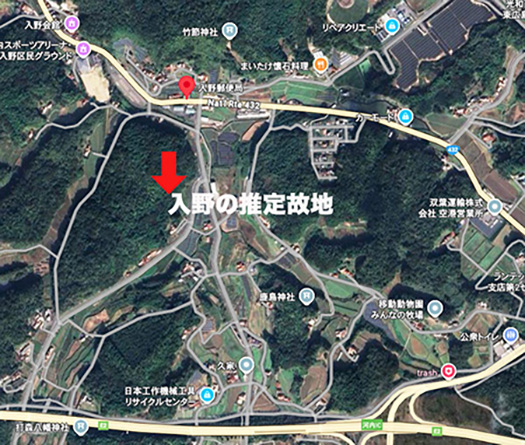
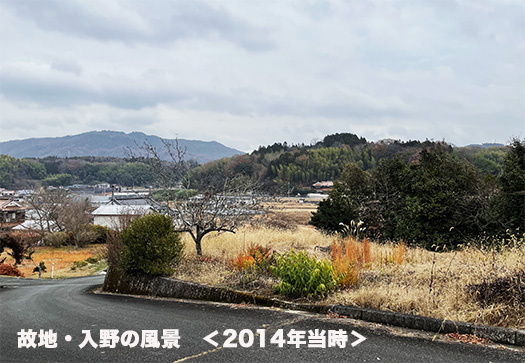
【故地・入野 入植210年で先祖が、420年で子孫が巡る】


 きのう、わたしの家系が423年前に紀州から移動してきた入植地・広島県東広島市河内町入野(こうちちょう・にゅうの)について書きました。本日のドラえもん型タイムマシン旅はその現在地の探訪。
 どうしてこの写真の場所・地域がわが家の故地と推定されるか? それは江戸期1815年(文化12年)にわたしの六世の祖が、その当時住んでいた広島県福山市今津から、おおむね60km超の距離を旅してその当時から210年前に紀州からこの地に入植したと確認した文書を遺したくれたからです。
 六世の祖は名前を三木寛蔵と言いますが、この先祖は尾道で商家・阿賀屋を営んでいた祖父を継いだ父親が28歳で早世したことで商家としては立ちゆかなくなり、実家に戻った母に連れられ生まれて1歳で福山市北方4kmほどの「中津原」の実家で育てられていた。
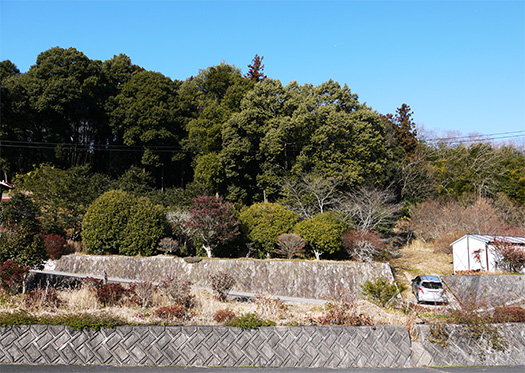
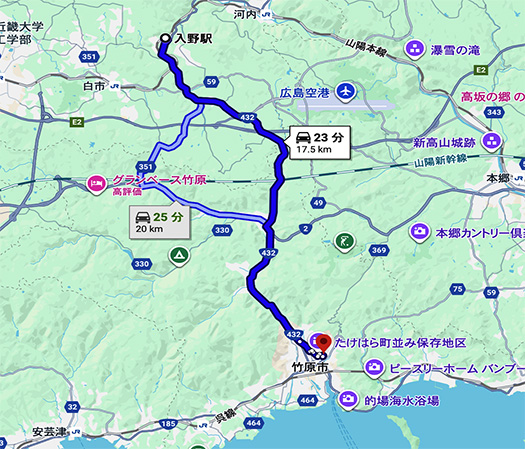
 その後、自立し独立して商家を復興させたのですが、そういう人生航路だったことで自分のルーツ、顔も覚えていない父祖について強い思いを抱き続けていたのでしょう。その思いは痛切にわかる。そこで、再興させた商家人生のひと区切りが付いたころ45歳の時点で、この故地・入野を探訪して「原氏」一族の墓地を尋ね、墓参を果たしてきた<墓域は3枚目の写真の森の中>。その折りに近郷のひとびとに先祖のことを伝え聞いた。その内容を記述し巻物にして後世に残してくれていたのです。
 この巻物のおかげで、そこからさらに210年ほど後世北海道への移住を経たわたしたちもその導きに与って、この故地を尋ね歩くことが出来るのです。言ってみれば、2重のタイムマシン旅行を重ねてきているようなものでしょうか。寛蔵さんは父の死で血脈が途切れそうだったことでむしろ血の縁に強くこだわりを持つことになり、一方わたしたちは遠く北海道まで故地を離れたことで、より強い望郷感を持つに至った。どちらも、DNAからの「響き」のように思えるのですね。心象の共通性を感じる。

 210年の昔の段階では尋ね歩くことで得られる情報痕跡も多くあったことでしょう。安定した江戸社会であったし機縁は存在していたのだろうと。さすがにわたしたちのように420年以上になると、地域自治体「地域史研究職」などを頼る事になる。しかし次兄は墓域は確認できたのだという。
 故地にしてみれば、繰り返しドラえもんが訪れているようなものかなぁ(笑)。なにかウレシイ。

●お知らせ
拙書「作家と住空間」幻冬舎から電子書籍で発刊
お求めはAmazonで。
https://amzn.asia/d/eUiv9yO

English version⬇

【Hometown・Iri no: Ancestors Return After 210 Years, Descendants After 420】
The Doraemon lineage keeps returning to their ancestral land from the future. Echoes of bloodline reverberate through the silent landscape.・・・

 Yesterday, I wrote about Nyūno in Kōchichō, Higashihiroshima City, Hiroshima Prefecture—the settlement where my family migrated to 423 years ago from Kishū. Today’s Doraemon-style time machine journey explores its present-day location.
 Why do we presume this photographed location and region to be our ancestral home? Because my sixth-generation ancestor left behind documents confirming that in 1815 (Bunka 12), during the Edo period, he traveled over 60km from his then-home in Imazu, Fukuyama City, Hiroshima Prefecture, to settle here—210 years after his family originally came from Kishu.
 My sixth-generation ancestor was named Miki Kanzo. His father, who had succeeded his grandfather in running the merchant house Aga-ya in Onomichi, died young at age 28. This left the merchant house unsustainable. His mother, who had returned to her family home, brought him back and raised him at her family home in “Nakatsuhara,” about 4 km north of Fukuyama City, starting when he was just one year old.
 Later, he became independent and revived the merchant house. Given this life journey, he likely held a deep, enduring attachment to his roots and to his ancestors, whose faces he never knew. That feeling is painfully understandable. So, around the age of 45, when a significant phase of his revived merchant life had concluded, he visited this ancestral land of Irino. He sought out the gravesite of the Hara clan and paid his respects there . During that visit, he gathered stories about his ancestors from local villagers. He recorded these accounts, compiled them into a scroll, and left it for posterity.
Thanks to this scroll, even we—descendants who migrated to Hokkaido some 210 years later—can follow its guidance and walk these ancestral lands. You could say it’s like taking a double time machine journey. Mr. Kanzo, facing the potential end of the bloodline with his father’s death, became even more deeply attached to blood ties. Meanwhile, we, having left our ancestral home for distant Hokkaido, developed an even stronger sense of nostalgia. Both feel like a resonance from our DNA. I sense a commonality in our inner feelings.

 Back in the 1820s, there must have been plenty of information traces to uncover through inquiries. It was a stable Edo society, and opportunities likely existed. But after over 420 years, like us, one has to rely on local government “regional history research positions.” Still, my second brother managed to confirm the grave site.
For the hometown, it’s probably like Doraemon visiting over and over again (laugh). Somehow, it makes me happy.

●Notice
My book “Writers and Living Spaces” published as an e-book by Gentosha
Available on Amazon.

【1603年入植後「所務役」管理地・竹原の塩田開発】


 ドラえもん的なタイムマシン家系探訪、時代は1603年から1650年、さらに1600年代後期へとさかのぼってくる。今(2026年)から423年の過ぎ去りし過去。
 1603年に芸州(広島)浅野藩が関ヶ原合戦後の恩賞で紀州から移封した当時、ときを同じくしてわたしの家系は芸州「入野」地域に入植している。家系の当時の苗字は「原氏」。家系伝承を伝える書物では「紀州で仕官」していたが「故有りて」土地に根ざす土豪層の立場でこの地に入植と。
 そこからすぐに入野村の庄屋を務めている。武家として仕官の立場からすぐに入植地で庄屋になる流れは、その入植自体が地域権力機構との強い紐帯・連携を想起させる。そこから3代の代替わりを経て「九世の祖」である先祖は、周辺地域の庄屋層を連合的に束ね統括する「所務役」という芸州藩地方支配機構の重要な役割を担うようになっている。苗字帯刀を許される特権層。
 管理する領地の当時の総石高は9,615石。1万石で「大名」となる社会でこの規模の地域支配役。武家支配社会で経済・農業生産を管理遂行する役とは、心臓部的な社会的役務だろう。
 そしてこの「管理地」のなかに現在の竹原市(当時は吉名村・木谷村)の塩浜・塩田が含まれていた。
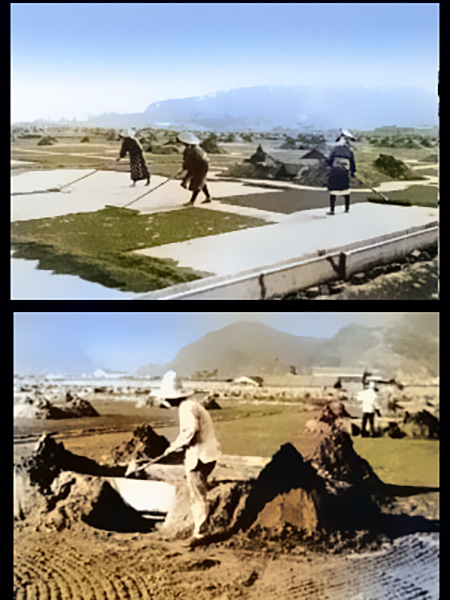
 この塩浜では兵庫県の赤穂藩が取り入れて最新技術であった「入浜式塩田」が1650年に導入されたことが歴史的に明らかになった。そこから交易港・尾道で商家「竹原屋」が成立し、竹原の塩は一種ブランド化されていった。信州では北前交易で塩が到着すると「竹原が来た」と喜んだ伝承が伝えられている。
 ・・・なにやら、先日まで深掘りしていた「松永の塩」との連想が強く働いてくる。
 松永では地域権力・福山藩が塩田テクノラート(本庄重正)をスカウトして開発したが、故あってわたしの家系はそこで「塩浜づくり」していた伝承記録。松永では先行の成功例としてこの竹原の塩田経営が手本とされ、家系はその経済文化を背に負って松永・今津に移動してきた蓋然性は非常に高い。
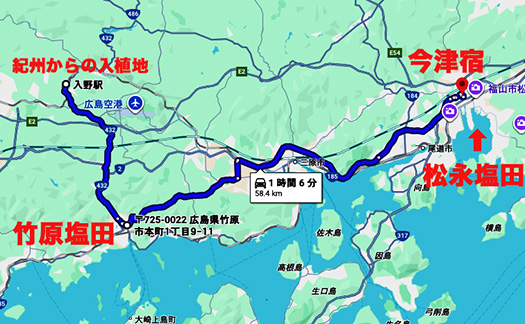
 上の地図は現代のものだが江戸期のルートに沿っている。入植した入野から竹原までは17km。そこから松永の塩田を見晴らして家系の痕跡が色濃い「今津宿」まで約40km。
 距離的にも経済活動情報の伝達範囲として非常に妥当性が高い。
 1600年代初期から、その後の家系の事跡・証拠がたくさん残る1730年ころまでの「ミッシングリンク」が非常に整合的に見えてきた。さらに深掘りしていきたい。

●お知らせ
拙書「作家と住空間」幻冬舎から電子書籍で発刊
お求めはAmazonで。
https://amzn.asia/d/eUiv9yO

English version⬇

【Development of Takahara Salt Fields: Administrative Land Managed by “Tokumiyaku” Officials After 1603 Settlement】
The lineage’s footprints remain unbroken until the early Edo period. Economic structures linking Takahara to Matsunaga and further to Onomichi through salt fields. Visualizing the missing link. …

 A Doraemon-esque time machine journey through my family lineage, tracing back to the era spanning 1603 to 1650, and further into the late 1600s. A past now 423 years removed from the present (2026).
 In 1603, when the Asano clan of Geishu (Hiroshima) was transferred from Kishu as a reward after the Battle of Sekigahara, my family settled in the “Iri no” region of Geishu at the same time. The family surname at that time was “Hara”. According to family tradition records, they had been “serving as retainers in Kishu” but “due to certain circumstances” settled here as local landowners rooted in the land.
Immediately thereafter, they served as village headmen (shoya) in Irino Village. This progression from samurai retainers to village headmen in the settlement suggests the settlement itself involved strong ties and collaboration with the local power structure. After three generations, the ancestor who was the “9th generation progenitor” assumed the crucial role of “Sokumiyaku” within the local governance structure of the Geishu Domain. This position involved uniting and overseeing the village headmen of the surrounding areas. They were a privileged class permitted to bear a surname and wear swords.
The total kokudaka (land yield) of the managed territory at that time was 9,615 koku. In a society where 10,000 koku defined a “daimyo,” this represented a significant scale of regional governance. In a samurai-dominated society, managing and executing economic and agricultural production was a core social function.
Within this “managed territory” lay the salt ponds and salt fields of what is now Takehara City (then Yoshina Village and Kitanimura).
It became clear that the “inlet-style salt fields”—a cutting-edge technique introduced in 1650 by the Akō Domain of Hyōgo Prefecture—were adopted at these salt ponds. From there, the merchant house “Takeharaya” was established in the trading port of Onomichi, and Takehara salt gradually became a kind of brand. In Shinshu, there is a tradition that when salt arrived via the Kitamae trade, people rejoiced, saying, “Takehara has come!”
…Somehow, strong associations with “Matsunaga Salt,” which I had been researching deeply until recently, come to mind.
 In Matsunaga, the regional power, Fukuyama Domain, recruited a salt field technocrat (Honjo Shigemasa) for development. Due to certain circumstances, my family lineage has records of “salt beach construction” there. Matsunaga likely used this earlier successful example of Takahara’s salt field management as a model. My family lineage, carrying that economic and cultural heritage, moved to Matsunaga and Imazu. The probability of this is very high.
 The map above is modern but follows the Edo-period route. From the settlement at Irino to Takehara is 17km. From there, looking out over the Matsunaga salt fields, it’s about 40km to “Imazu-juku,” where traces of the family lineage are particularly strong.
Distant-wise, it’s also highly plausible as a range for transmitting economic activity information.
 The “missing link” from the early 1600s to around 1730, when abundant evidence of the family’s subsequent activities remains, now appears highly coherent. I wish to delve deeper.

●Notice
My book “Writers and Living Spaces” published as an e-book by Gentosha
Available on Amazon.


【タイムマシン「ドラえもん」的探訪・家系探索に復帰・・・】


 正月休みも3が日を終えて、あすからは平日モードで新年のスタート。
 ということで、昨年からの懸案の領域に徐々に復帰していきたいと思っています。これまで伯父(父の兄)やわたしの次兄が中心になって家系肉親の調査活動が行われてきていたのですが、わたし自身、会社仕事からは少し離れてきたことで、次兄から「オマエ、やれ!」という命令が下ってきたという経緯。
 大量に収集されてきた「資料類」を譲渡されたので、それをベースにしながら、わたしとしてはそれぞれの家系の人びとが遭遇した江戸期から以降の戦後にまで至る歴史経緯を対照させながら、経済を中心にして社会のありよう、わが家系の事業の実相に基本的に着目しながら立体的な探究を心がけています。
 こういう探訪は、日本人としての家系情報から比較的に途切れ気味の北海道人には、きわめて鮮烈な領域。
 おお、こういう知的興奮領域があったのか、と驚かされてもいる。もちろん、そういう基盤を作ってくれてきたのは伯父や次兄の丹念な調査活動。そしてやはり「現地調査」で知り得る「気付き」こそが最大の基礎。その基盤に立って現代で活性化してきている「地域史」探求の成果である各地域の情報集積の文献をしっかり参照。さらに現代的な探索手段としてその「誤情報」(笑)にも悩まされるけれども、きわめて有用なことは間違いがない生成AIなどを活用しつつ、多角的に情報の真贋見極め作業を継続してきています。
 そういうなかから、江戸期までの瀬戸内海世界における基盤的な経済基盤「塩業」とわが家系の関わり合い探索をひとつの掘り起こし領域に。未来からやってきた子孫として十分敬意を払ってそれぞれの時代に「降臨」してご先祖の事跡に「こんにちは」と旅する気分。ドラえもん的な探訪記か(笑)。

 それこそ、リアリティのある「家系の履歴書」編纂作業のような心理であります。
 さっそく「塩業」の瀬戸内海世界での先駆け的存在としての「竹原の塩」〜江戸期の尾道で塩の代名詞的な商家だった「竹原屋」の塩業の故地・広島県竹原海浜と、わが家系の江戸初期・慶長年中の入植地「入野」との距離が、ほんの17km程だったという事実に気付かされた。まずはわが家系・八世の祖にあたる先祖の生きた時代とその背景に、ドラえもん的に接近遭遇していきたい・・・今年もどうぞよろしく。

●お知らせ
拙書「作家と住空間」幻冬舎から電子書籍で発刊
お求めはAmazonで。
https://amzn.asia/d/eUiv9yO

English version⬇

【Time Machine “Doraemon”-Style Exploration: Returning to Family History Research…】
I never imagined I could relive my ancestors’ deeds from a Doraemon-like perspective, rather than Nobita’s. An exhilarating historical excavation viewpoint…

 The New Year holidays have ended after the first three days, and starting tomorrow, it’s back to the weekday grind for the new year.
So, I intend to gradually return to the unfinished business from last year. Until now, my uncle (my father’s older brother) and my second older brother had been leading the research activities into our family lineage and relatives. However, since I’ve stepped back a bit from my company work, my second older brother issued the command: “You do it!”
 I’ve been handed over a large collection of “reference materials,” and using these as a foundation, I’m aiming for a multidimensional exploration. I’m focusing primarily on the economic and social realities, and the actual nature of our family’s businesses, while cross-referencing the historical contexts encountered by people from each branch of the family tree, spanning from the Edo period through to the post-war era.
 For us Hokkaido natives, whose family lineage information is comparatively sparse, this kind of exploration is an exceptionally vivid realm.
Oh, I’m amazed to discover such an intellectually thrilling domain existed. Of course, the foundation for this was laid by my uncle and second eldest brother’s meticulous research activities. And indeed, the “insights” gained through “field research” form the most crucial foundation. Building upon this base, I thoroughly reference the accumulated literature from each region—the fruits of the revitalized “local history” research in the modern era. Furthermore, as a contemporary investigative tool, I utilize generative AI (laughs), which, while sometimes troublesome due to its “misinformation,” is undeniably extremely useful. I continue the multifaceted task of discerning the authenticity of information.
 Within this framework, I’ve focused one area of excavation on exploring the connection between my family lineage and the foundational economic pillar of the Seto Inland Sea world up to the Edo period: the salt industry. As a descendant who has come from the future, I pay full respect, “descending” into each era to travel and say “hello” to my ancestors’ deeds. It’s like a Doraemon-esque exploration diary (lol).
“”
It’s precisely that psychological state akin to compiling a realistic “family lineage resume.”
 I was immediately struck by the fact that the distance between “Takahara no Shio”—pioneering salt production in the Seto Inland Sea world—and the salt industry’s ancestral home in Takahara, Hiroshima Prefecture (where the ‘Takaharaya’ merchant house was synonymous with salt in Edo-period Onomichi)—was only about 17km from “Iri no,” the settlement site of my family lineage during the early Edo period, around the Keichō era. First, I wish to approach the era and background of my eighth-generation ancestor, the progenitor of my lineage, in a Doraemon-like close encounter… Wishing you all the best this year too.

●Notice
My book “Writers and Living Spaces” published as an e-book by Gentosha
Available on Amazon.
 

【ことしも自然感受型習慣〜ウォーキング、楽しく継続】


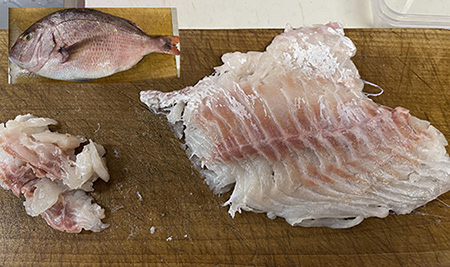
 昨日は早朝、告知通りに体長42cmの大ぶりのタイと格闘して、その骨の硬さ・太さに驚かされながら、ヘタなりになんとか捌ききりました。さばく前の神聖なタイの目元が「おい、受けてやるから、全力で向かってこいよ」みたいな表情を伝えてくれていた。忘我のいっとき。
 ほっとひと息後、体調を整えるのに、ということで「朝方散歩」に向かっておりました。
 冬でも、降雪時以外であれば、それなりに周辺の自然はやさしい表情を見せてくれる。
 太陽光のその季節なりの輝き具合、空の表情、雲の動態。それを反映させた山並みからの「反映」。やはり山並みや空の表情は、さまざまなメッセージを「美しく」伝えてくれますね。言語以前の人類から連綿として、こういう映像と空気感の記憶は脳味噌に叩き込まれているのでしょう。
 そういう渾然一体の視認空間を巡り歩くのは、人間としての根っこのようなものを体験させられ続けるのだろうと思います。
 そのときに来(きた)してくる周辺の自然環境への親和感。
 自分が日常を過ごさせていただいている景色。世界中の中で「たまたま」遭遇して長い時間をそこで「生かされてきている」環境だと思える。だんだん深まる愛着。
 そして一定時間、散歩したあと、わが家に帰ってきて安堵感を得られる。
 ごく単純なことがらだけれど、繰り返してくることで深い愛着が育っていくものなのでしょう。
 自然環境と住宅。そういう両方から人間はその「底力」のようなものを得ている。

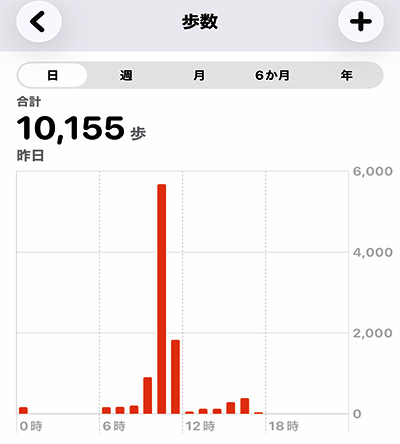
 ・・・ということで、散歩帰還後〜家にいる時間のきのう1日「歩数計」を確認したら、ごらんのような10,000歩越え。元日も8,058歩ということでしたので、まずは目標クリアの日々で新年正月を経てきております。ことしも、高齢化や認知などへのささやかな自己防衛と考えて、この基本習慣を、額にスジを立てるようにではなく、ごく自然に守り続けていきたいと祈念。

●お知らせ
拙書「作家と住空間」幻冬舎から電子書籍で発刊
お求めはAmazonで。
https://amzn.asia/d/eUiv9yO

English version⬇

This year too, embracing nature through daily habits—walking, enjoying the journey.
Though clumsy, I carved a big snapper. Everyone who ate it said, “It was delicious.” A sigh of relief.
Taking walks around the neighborhood to keep my health in check.
Deepening my affection for home and nature…

 Yesterday at dawn, as announced, I wrestled with a large sea bream measuring 42cm in length. Astonished by the hardness and thickness of its bones, I somehow managed to fillet it, clumsy as I was. Before filleting, the sacred eyes of the sea bream seemed to convey an expression like, “Hey, I’ll take you on, so come at me with everything you’ve got.” A moment of complete absorption.
 After catching my breath, I headed out for a “morning walk” to get my body moving.
Even in winter, as long as it’s not snowing, the surrounding nature shows a reasonably gentle face.
The seasonal brilliance of sunlight, the sky’s mood, the movement of clouds. The “reflection” off the mountain ridges mirroring all this. Indeed, the mountain ranges and the sky’s expressions convey various messages “beautifully.” Such memories of these images and atmospheres must be ingrained in our brains, passed down continuously from humanity before language.
Walking through such a seamless visual space likely keeps us experiencing something fundamental to being human.
The affinity for the surrounding natural environment that comes at that moment.
 The scenery where I am allowed to spend my daily life. It feels like an environment I “just happened” to encounter in the world and have been “allowed to live” in for a long time. A gradually deepening attachment.
Then, after walking for a certain time, returning home and feeling a sense of relief.
It’s a very simple thing, but it’s probably something that cultivates deep affection through repetition.
The natural environment and the home. Humans gain something like their “inner strength” from both of these.

 So, after returning from my walk yesterday—checking my pedometer for the time spent at home—it showed over 10,000 steps, as you can see. New Year’s Day also recorded 8,058 steps, so I’ve been clearing my daily goal through the New Year holidays. This year too, I hope to continue this basic habit—not as a strict rule but very naturally—as a small form of self-defense against aging and cognitive decline.

●Notice
My book “Writers and Living Spaces” published as an e-book by Gentosha
Available on Amazon.
 

【本日は家族団欒「しゃぶしゃぶ」。タイも捌くぞ!】


 きのうは早朝5時から北海道神宮に参拝。高齢化で夕方早めから就寝して、ほぼ夜中に起床しての行動であります。スッキリ目覚め。カミさんと同道しての参拝。おかげさまでわたしのおみくじは「大吉」。それも書かれている内容が非常に喜ばしいものでした。深く感謝であります(笑)。
 その後、昼頃には娘夫婦が自家製の「おせち料理」を届けてきてくれた。お正月というと、身の回りの女性、祖母・母親・姉〜カミさんたちの手作り料理に身も心も奪われ続けて生きてこられたことを実感させられますが、近年はとくに娘からの料理にも喜ばされ続けております。ぎっしりギュー詰めされた料理一品一品がコツコツ手づくり感に満ちていて、口元からおなかの内側まで癒してくれる。
 わたしたち日本人が受け継いできた「正月料理」から発せられる心底からのパワー。家族というものの実質に包まれる、貴重な機縁なのだと思えますね。まぁ他国には他国なりにそれぞれ、同様の生活文化が連綿としているのでしょう。いわば民族性のコア部分のように思います。そういう日本の文化伝統に包まれていることに深く感謝したい。
 さて本日はわが家の子どもたち親族一家が集合しての食事会。
 わたしはそのなかで「タイのしゃぶしゃぶを食べたい」という息子の声に応えて調理をします。普段からニシンなどのナマ魚を捌いているので、まぁシロウトなりには得意。オヤジにはそういう役割をさせれば一番喜ぶという「狙い」のように思えますが(笑)しかしそれもまたウレシイ。
 さてどうなるか、計ってみたらアタマの先から尻尾までは42cmだったので、大物ということでしょうか?昨年末の札幌中央市場での買い出し時に目立っていたヤツであります。
 ・・・ということで、これから始めますので本日ブログテーマは以上(笑)。みなさんも良いお正月でありますように。
 
●お知らせ
拙書「作家と住空間」幻冬舎から電子書籍で発刊
お求めはAmazonで。
https://amzn.asia/d/eUiv9yO

English version⬇

Today’s family gathering: Shabu-shabu. Time to butcher the Thai fish!
Purchased at Sapporo Central Market at year’s end, requested to eat alongside crab. Thawed naturally since yesterday. Now, I solemnly face it with my knife. Hmm…

 Yesterday, I visited Hokkaido Shrine starting at 5 a.m. Due to my age, I went to bed early in the evening and rose almost in the middle of the night for this outing. I woke up feeling refreshed. My wife accompanied me on the visit. Thanks to her, my fortune slip was “Great Fortune.” Moreover, the message written on it was extremely pleasing. I am deeply grateful (laugh).
Later, around noon, my daughter and her husband brought over homemade “osechi dishes.” New Year’s always makes me realize how my life has been filled with the handmade dishes of the women around me—grandmothers, mothers, sisters, and my wife—captivating both body and soul. But in recent years, I’ve been especially delighted by my daughter’s cooking too. Each dish, packed full and tightly arranged, brims with the sense of careful, handcrafted effort, healing me from the tip of my tongue to the depths of my stomach.
 The profound power emanating from the “New Year’s dishes” we Japanese have inherited. It feels like a precious opportunity to be enveloped in the very essence of family. Well, other countries surely have their own continuous traditions of similar lifestyle cultures. It feels like the core part of a nation’s character. I want to express deep gratitude for being wrapped in such Japanese cultural traditions.
 Today, my children and their extended family gathered for a meal.
I responded to my son’s request for “Thai shabu-shabu” and prepared it. Since I regularly handle raw fish like herring, I’m pretty good at it for an amateur. It seems like the “plan” was to assign Dad this role because he’d be happiest doing it (laughs). But honestly, I’m happy about it too.
 So, how did it turn out? Measuring it, from head to tail it was 42cm—a big one, I suppose? It was the one that stood out during our shopping trip at Sapporo Central Market late last year.
…And with that, I’m about to get started, so today’s blog theme ends here (lol). Wishing everyone a wonderful New Year.

●Notice
My book “Writers and Living Spaces” published as an e-book by Gentosha
Available on Amazon.

【四百年間の「いのちの履歴書」/発掘の旅路】


 2026年 あけましておめでとうございます。
 昨日も書きましたが、20年を超えて淡々と書いてきた「毎日更新」のこのブログ。今年は21年目に入ります。ブログは平明なメディア手段で個人の情報発信手段として利用できるし、日々書き続けることで特定テーマの深掘り記録も可能。
 わたしはいまはほぼ自由人として個人的に大切に利用してきています。
 人間は結局なにか表現する、テーマを追究することが生きる本質に迫れるのでしょう。
 ということですが現在でもある要件から月イチで東京や関西圏に移動して行動中。北海道人は100年程さかのぼれば日本各地からの移民。わたしの家系も祖父の代に移住。なので関西圏に移動するときには、少し足を伸ばして家系の「故地」広島県や兵庫県を探訪してきている次第。
 近親のみんながそれぞれ強い興味を持ってこれら故地に関わってきている。父の兄・伯父の一統は広島県福山市の縁の深い寺に墓域も再び確保し「帰郷」も果たしている。
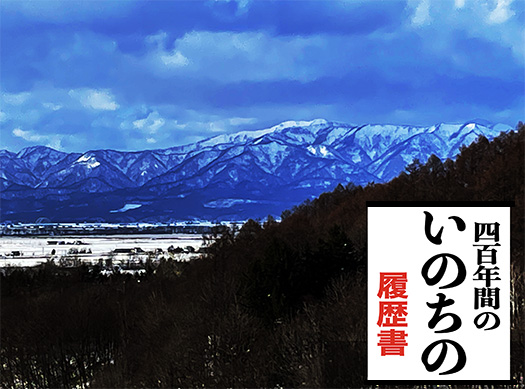
 写真は北海道の中央部・空知地域の平野部やや高台から「ピンネシリ」を主峰とする増毛山地を見た眺め。この増毛山地のさらに北方には祖父が夢見て無惨に失敗した山林業の地、天塩川流域が広がっている。そして父に嫁いだ母にとってはここは生まれた地であり、この山並みは幼少期から見つめ続けてきた山塊。さらにわたし自身も小学校低学年の時に「俳句」を作らされたとき「・・・遠い連山」と書いた記憶がある。上下の文はすっかり忘れたけれど(笑)。俳句って、自然の風景に心象を重ねる短文文学だと先生から教わって、そのとき即座に浮かんでいたのがこの山並み。母が父と夫婦ケンカして頻繁に里帰りをしたとき連れられて行ったけれど、そこで見慣れていたのがこの風景だった。
 はるか南の故地と、そして祖父・父母の響きが木霊してくる山並み。
 そんな経緯からいまタイトルのような探訪を始めてきている。毎日書き続けるブログという手段が、同時に「掘り起こし」探索の動機とも相性が良い。もちろん並行して「まとめ」もしたいと考えてはいますが・・・。市場性と表現形式は今のところまったく不明。
 今年も淡々と続けていきます。みなさまのご意見がなにより最大の財産。なにとぞよろしく、伏してお願い申し上げます。

●お知らせ
拙書「作家と住空間」幻冬舎から電子書籍で発刊
お求めはAmazonで。
https://amzn.asia/d/eUiv9yO

English version⬇ 

【Four Hundred Years of Life’s Resume / The Journey of Discovery】
This year, I wish to continue my “explorations” under this title with quiet determination. How did bloodlines endure through each era? Days spent unearthing memories. …

 Happy New Year 2026.
As I wrote yesterday, this blog has been updated daily without fail for over 20 years. This year marks its 21st year. Blogs are straightforward media tools that individuals can use to share information, and writing daily allows for deep exploration and documentation of specific themes.
I now use it personally and cherish it as a free individual.
Ultimately, humans express themselves and pursue themes to get closer to the essence of life.
 That said, current circumstances require me to travel monthly to Tokyo or the Kansai region for work. Hokkaido residents trace their roots back about 100 years to immigrants from various parts of Japan. My family migrated during my grandfather’s generation. So, when traveling to the Kansai region, I’ve been extending my trips to visit my family’s ancestral lands in Hiroshima and Hyogo Prefectures.
All my close relatives have developed a strong personal connection to these ancestral places. My father’s elder brother and his family secured a burial plot at a temple with deep ties in Fukuyama City, Hiroshima Prefecture, effectively achieving a “homecoming.”
The photo shows the view of the Mashike Mountains, with Mount Pinneshiri as its main peak, from a slightly elevated spot in the plains of the Sorachi region in central Hokkaido. Further north of these Mashike Mountains lies the Teshio River basin – the very land where my grandfather dreamed of establishing a forestry business, only to suffer a bitter failure. For my mother, who married into my father’s family, this is her birthplace, and these mountain ranges are the massif she gazed upon throughout her childhood. Furthermore, I myself remember writing “…distant mountain ranges” when forced to compose a haiku in the lower grades of elementary school. I’ve completely forgotten the rest of the verse (laugh). My teacher taught us that haiku is a form of short poetry where one overlays one’s inner feelings onto natural scenery, and this mountain range immediately came to mind. When my mother frequently returned to her hometown after quarrels with my father, she took me along, and this was the landscape I grew accustomed to seeing there.
The distant southern homeland, and the mountain range where the echoes of my grandfather and parents still resonate.
It is from these circumstances that I have now begun the exploration suggested by the title. The medium of a daily blog, which I continue to write, also aligns well with the motivation for this “unearthing” and exploration. Of course, I also intend to work on a “summary” in parallel… Marketability and form of expression remain entirely unknown at this point.
I’ll continue steadily this year as well. Your opinions are my greatest treasure above all else. I humbly ask for your continued support.

●Notice
My book “Writers and Living Spaces” published as an e-book by Gentosha
Available on Amazon.