本文へジャンプ

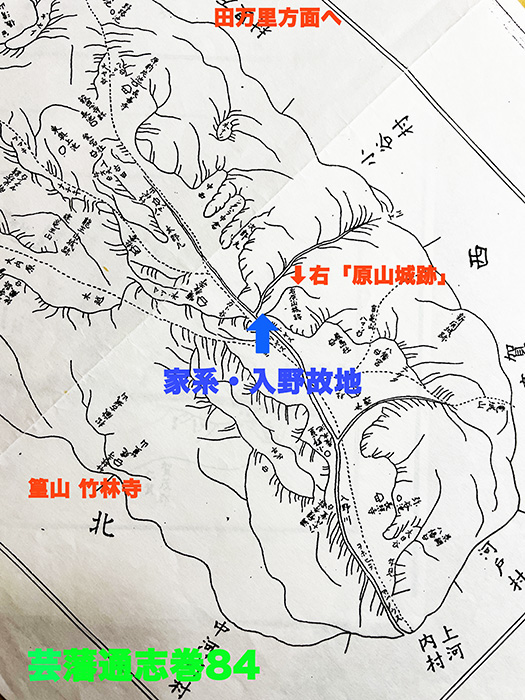
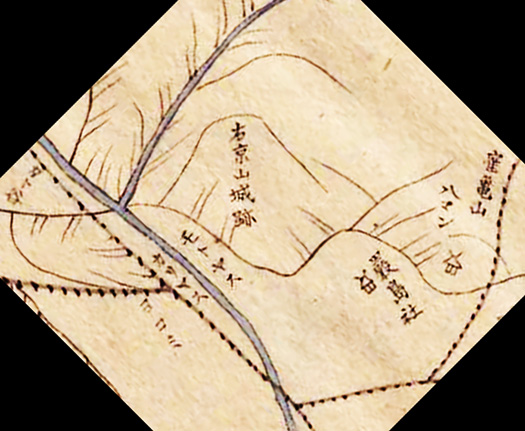
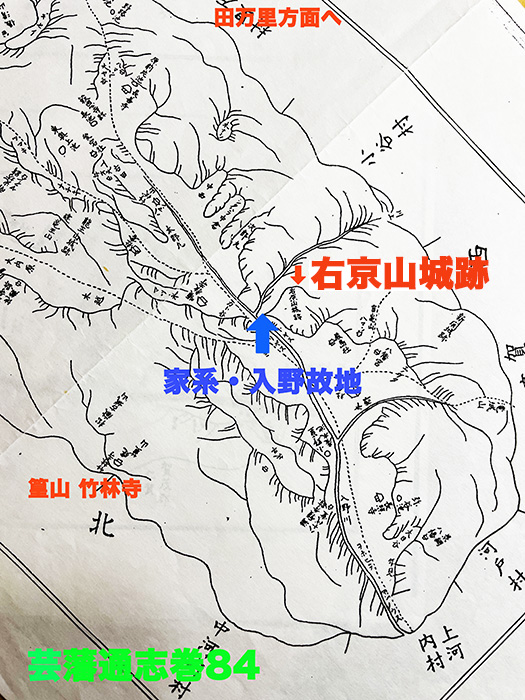
【地名の誤読発見。右“原”山城跡は「右京山城跡」と訂正】


 広島県東広島市河内町入野について、何回か触れ続けてきていました。
 わたしの六世の祖が1815年に訪れて200年前当時の家系の「故地探訪」でこの入野を訪れ詳細調査し先祖の墓地参詣もした旨の記録文書を残してくれていた。そこでその先祖の足跡をたどってわたしもそこからほぼ200年後に入野を訪ねていた次第。
 その経験を元に現代で可能な調査を重ね当時の広島藩浅野家の公式記録「芸藩通志」の当該地域図を参照したところ、やや不鮮明な「ルビ」で故地周辺の地名が表示されていた。そこで、拡大〜シャープなどの修正をPhotoshopアプリで繰り返した結果「右 原山城跡」と読み込んでしまった。
 当時のわが家系の「姓」は原氏であって、記録では「往昔紀州にて仕官たるところ」という記述。紀州から広島への浅野藩転封時期と時を同じくして、祖先はこの入野に入植したと記述されている。そこで「現地でゆかりのある地名」の残る地域に「地域の管理者」の役割を持たせて地域に根付かせたという推測を持ったのです。
 率直に言って古記録に基づく調査ではやはり「試行錯誤」が発生してしまう。
 本日、再確認してみたところ、公式記録「芸藩通志」ではしっかり「右京山城跡」と解読された。
 1/14付けの拙ブログ記事中の当該部分を訂正させていただきます。申し訳ありませんでした。
 この発表後、数日経過した段階で、1/14ブログについても修正しますのでよろしくお願いします。
 今後も慎重に故実を検討しつつ、家系史探訪は深めて行きたいと思っています。

English version⬇

【Correction of misread place name. The “Ura” Yamashiro ruins should be corrected to “Ukyo Yamashiro ruins.”】
We regretfully acknowledge that we spread this error. We sincerely apologize to our readers and have made the correction. We are deeply ashamed. …

 I have mentioned several times the area of Irino in Kawachi-cho, Higashihiroshima City, Hiroshima Prefecture.
My sixth-generation ancestor visited this Irino in 1815, two hundred years ago, as part of a “homestead visit” by the family lineage at that time. He left behind a written record stating he conducted detailed research and also visited the ancestral graves. Following in that ancestor’s footsteps, I too visited Irino roughly two hundred years later.
 Based on that experience, I conducted further research possible in modern times. Referencing the relevant regional map in the official records of the Hiroshima Domain’s Asano family, the “Geihan Tsūshi,” I found the place names around the ancestral home displayed in somewhat indistinct ruby characters. After repeatedly applying enlargement and sharpening adjustments using the Photoshop app, I misread it as “Right: Harayama Castle Ruins.”
 At that time, my family’s surname was Hara, and the records state, “In days of old, they served as officials in Kishu.” It is written that my ancestors settled in this Ino area around the same time the Asano clan was transferred from Kishu to Hiroshima. This led me to speculate that they were given the role of “local administrators” in areas where place names connected to their lineage remained, thereby rooting them in the community.
 Frankly, research based on ancient records inevitably involves trial and error.
Upon rechecking today, the official record “Geihan Tsūshi” clearly reads it as “Ukyō Yamajō-ato.”
 I hereby correct the relevant section in my blog post dated January 14th. My apologies.
After a few days following this announcement, I will also revise the January 14th blog post. Thank you for your understanding.
Moving forward, I intend to continue exploring family history while carefully examining historical precedents.

【北国の「厳冬期」を親子で楽しむ/雪だるまつくり】


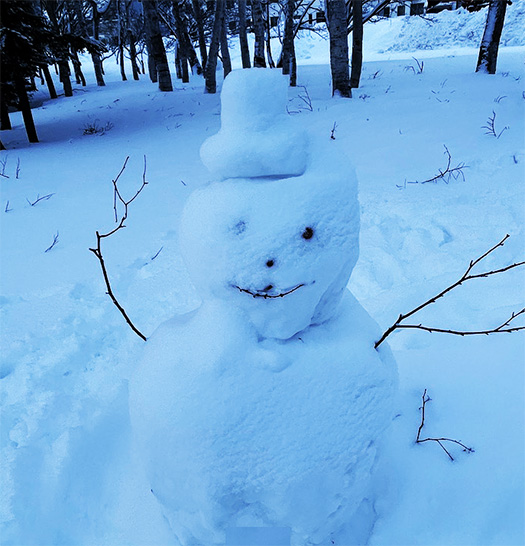
 写真は、昨日の散歩道で近隣の発寒川河畔公園でみかけた雪像。
 どうやら土曜日に作り上げた「作品」のようでした。札幌の直近の雪質は必ずしも雪像つくりには適さない乾燥した雪なのですが、ちょっと重くなった「下の方の雪」を力を込めて丸めた感じがあって、そこから親子での、それも父子での作品と想像していました。
 たぶんお父さんも子ども時代に返った気分で、子どものまっすぐで茶目な「ものづくり」心理と完全同心して転げ回っている風景が想像されてしまっていた。あったかい・・・。
 どうもこういう光景に極端にヨワくなってしまっている(笑)。高齢化。
 
 さて、懸案の家系史探索「四百年間のいのちの履歴書」はるかな旅路・・・格闘中。
 先日記述した河内町教育委員会による江戸中期までのわが家系と同姓の家系調査記録。そこでわかったその家の「系図」に触れたのですが、やはり「面白いし、調査するべき対象」ではあるけれど、すぐに準拠しうるとは思われない。
 そこで「急がば回れ」ということで、わが家の六世の祖が書き残してくれた「原氏由来の事」文書内容に立ち返って、再度筋道を整理。AI時代には「資料検索」など秘書的な「アシスタント」としてGoogle-Geminiなどの生成AIツールが重宝します。
 しばしAIとの対話で焦点を再度絞っていって、ある頓悟にたどりついた次第。
 家系に関わる400年以上前の事柄なのですが、最近は各地の「地域史」が充実してきているので、司馬遼太郎さんの時代などからは格段の進歩発展が見られる。おかげさまで400年からさらにさかのぼり得る、有力な原典候補がおぼろげながらその後ろ姿が見えてきたようです。
 ただ、そういう原典参照には時間も掛かるし読みこなしの努力も必要。
 しかし、最近「念ずれば通ず」みたいに古文書の「てにをは」が見えても来ている。それなりの「楽しさ」も感じられるようになってきたのであります。習い性か?
 ものごとの進展には「緩急」があるのでしょう。それが当然の筋道・・・。

●お知らせ
拙書「作家と住空間」幻冬舎から電子書籍で発刊
お求めはAmazonで。
https://amzn.asia/d/eUiv9yO

English version⬇
 
Enjoying the Harsh Winter Season in the North with Your Family / Making Snowmen
Just imagining a father and son building a snowman together fills my head with dreamlike joy. Am I getting old? (laughs). Restoring my energy to explore my family history…

 The photo shows a snow sculpture I spotted yesterday during my walk at the nearby Hassamu River Riverside Park.
It seemed to be a “creation” made over the weekend. While Sapporo’s recent snow isn’t always ideal for sculpting—it’s rather dry—this one had a feel of being rolled with force using the heavier “lower layer of snow.” That led me to imagine it was a father-son project.
 I could picture the father, feeling like a child again, rolling around in perfect harmony with his child’s straightforward, playful “creative” spirit. So heartwarming…
I’m hopelessly weak for scenes like this (laugh). Aging.
 
 Now, regarding the long-pending family history exploration, “Four Hundred Years of Life’s Resume”—a distant journey… still wrestling with it.
The other day I mentioned the Kawachi Town Board of Education’s records tracing our family line and other families with the same surname back to the mid-Edo period. I touched on the “genealogy” of that family discovered there. While it is indeed “interesting and worth investigating,” I don’t think it can be immediately relied upon as a reference.
 So, taking the “make haste slowly” approach, I returned to the document “On the Origins of the Hara Clan” left behind by my sixth-generation ancestor to reorganize the timeline. In the AI era, generative AI tools like Google-Gemini are invaluable as secretarial ‘assistants’ for tasks like “document searches.”
After some dialogue with the AI to refocus, I arrived at a sudden realization.
 Though these are matters concerning our family lineage over 400 years ago, recent advancements in regional histories across various areas show remarkable progress compared to the era of authors like Ryotaro Shiba. Thanks to this, I now glimpse the faint outline of a promising candidate for primary sources that may extend even further back than 400 years.
However, consulting such primary sources takes time and requires effort to decipher.
 Yet lately, as if “persistence pays off,” I’ve started to discern the particles of classical Japanese in these old documents. I’ve even begun to find a certain “enjoyment” in it. Is it just habit?
Progress in things naturally has its “ups and downs.” That’s the way it should be…

●Notice
My book “Writers and Living Spaces” published as an e-book by Gentosha
Available on Amazon.


【人生を彩ってくれる「家族」団欒の時間】


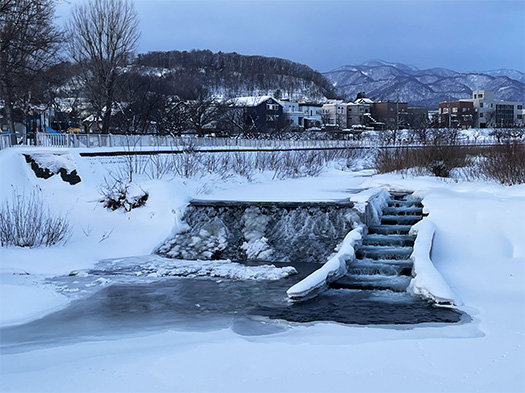
 さて昨日は、早々にわたしの担当調理「タイのアラ汁」を仕上げて、その後写真のようなわが家周辺散歩8800歩ほどに行っておりました。気温はこの時点(午前7時頃)でマイナス5度程度。この河川にはいくつもの人工段丘が造作されていますが、その流路が結氷を見せ始めてきています。
 北国人としての密かな「自然アート」数寄のワンシーン。
 結氷の具合が、その日の気温に応じてさまざまな「変化〜へんげ」を見せてくれて面白い。
 最近は「絵画」の領域では日本画一択になって来ていますが、その心理とこうした写真のような「数寄こころ」は同期していると思います。水という「動」流水と氷「静」というふたつの相貌を見せて、その相克ぶりが見る者にダイナミックな「造物者」として立ち現れてくれる。
 こういう土地で人生時間がゆっくりと流れて行ってくれている、そういう静かな残響感。
 ・・・ということで、家に帰ってことし二度目の正月の会食(昼食)機会。焼き肉パーティという、主に女性たちカミさん・娘・息子の嫁さんの主導による団欒時間であります。ありがたい。わたしの「アラ汁」はそっと食事の場を下支え。
 最初は「高い肉」で舌鼓を打ちつつ、徐々に「お手頃価格」のお肉への満腹ゲーム。念のために用意した4合のごはんもあっという間に底を突く7人での会食は、夢幻天国時間。
 カミさんたち、最後は食べ過ぎからのダイエットのための体操付きテレビゲームみたいなのに盛り上がっていました。わたしはただただ圧倒され爆笑させられ続け(笑)。いや、元気なのは素晴らしいと。
 子どもたち家族を見送った後は、焼き肉の匂いを必死にスプレー退治しつつ、徐々に睡魔に支配されて、まことに安らかな就寝に没入でありました。ご苦労さん。
 そんなことで最近の追求テーマ「家系史探究」は、本日ゆっくりと過ごす中から、また元気よく深掘りを再開したいと思っています。みなさん、よい休日を。

●お知らせ
拙書「作家と住空間」幻冬舎から電子書籍で発刊
お求めはAmazonで。
https://amzn.asia/d/eUiv9yO

English version⬇
 
【Family Time That Colors Our Lives】
After filling our bellies, the ladies of our household were in stitches over a TV game that doubles as diet exercise (lol). Our home is bursting with energy. …
 
 Yesterday, I finished preparing my assigned dish, “Thai Fish Head Soup,” early on, then went for a walk around my neighborhood, clocking about 8,800 steps as shown in the photo. The temperature at this point (around 7 a.m.) was around minus 5 degrees Celsius. Several artificial terraces have been constructed along this river, and its channels are beginning to freeze over.
A scene reflecting my secret “appreciation for natural art” as a northern resident.
 The degree of freezing shows fascinating “changes—henge” depending on the day’s temperature.
Lately, in the realm of “painting,” Japanese painting has become my sole choice, and I think this mindset resonates with the “aesthetic sensibility” captured in photos like this. Water reveals two faces: the “dynamic” flowing stream and the ‘static’ ice. Their interplay manifests to the viewer as a dynamic “creator.”
 A quiet resonance, like life’s time flowing slowly in this land.
…And so, back home for this year’s second New Year gathering (lunch). A barbecue party, a time of togetherness led mainly by the women—my wife, daughter, and son’s wife. Grateful. My “ara soup” quietly supported the meal.
We started feasting on “expensive meat,” gradually transitioning to a satiety game with “more affordable” cuts. The four cups of rice I prepared just in case vanished in no time during this seven-person gathering—a dreamlike paradise.
The ladies ended up getting excited over some TV game with exercise routines, presumably for post-overeating dieting. I was simply overwhelmed and kept bursting into laughter (laugh). Well, it’s wonderful to see them so full of life.
After seeing off the kids and their families, I desperately sprayed away the yakiniku smell while gradually succumbing to sleepiness, sinking into a truly peaceful slumber. Good work, everyone.
So, my recent pursuit theme, “Family History Exploration,” will resume its energetic deep dive from today’s leisurely pace. Have a good holiday, everyone.

●Notice
My book “Writers and Living Spaces” is now available as an e-book from Gentosha.
Available for purchase on Amazon.
 

【きのうススキノで新年会&本日焼き肉パーティ】


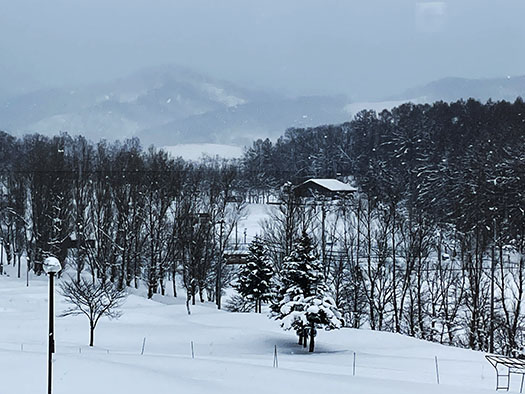
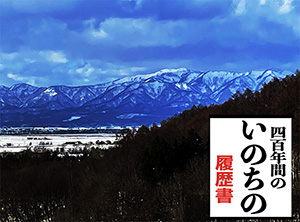
 本日は、故地探訪シリーズはいったん休止。ブログ本来の日々の日記風に。写真は「目を休める」ような印象をいつも感じる北海道美唄の山並み「墨絵」的な風景。ひと休み。
 関連会社の位置付けの本体事業社の新年会ということで久しぶりのススキノ。わたしとしては、事業をしっかり継続してくれている状況を見、スタッフとも交歓できて安堵の気分であります。会話の中では今後の企画内容の一部について意見交換も。
 さらに最近の事業を支えてくれている「外部スタッフ」のみなさんとも情報交換できて有意義。
 なかでも多くのカメラマンや執筆ライターさんとの交流はその仕事ぶり・立ち向かい方など、いま現在のわたしのこのブログ執筆にとっても大いに参考になりました。
 久しぶりに出版事業のリアルタイム感を更新することが出来た次第。
 で、本日は家族一同が集まって、なぜか焼き肉パーティであります(笑)。まぁ先日の新年会第2弾。その準備で夫婦で買い物行脚。都合3軒のお店を回っていたのですが、さすがにあちこち移動ですこしヘトヘトになってしまい、最後の店ではカミさんと別行動でクルマで小休止。
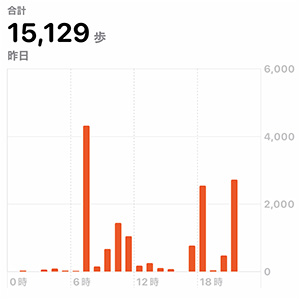
 それも含めて昨日の歩数は以下のよう。

 ほとんどが「ツルツル」路面の冬の札幌で、ちょっと歩きすぎかも知れません。
 ただ、ススキノまでの地下鉄往復は、入手している札幌市の「敬老優待乗車券」を利用できる貴重な移動機会ということで、元気に往復しておりました。
 こういう移動過多ぶりも、日頃の健康維持作戦の成果を確認できる貴重な機会。
 22時前に帰宅できたのですが、おかげさまで稀有な「バタンキュー」機会で即ベッドで爆睡。
 本日パーティではわたしは「アラ汁」担当。元気に調理に向かいたいと思います。やるぞ!

●お知らせ
拙書「作家と住空間」幻冬舎から電子書籍で発刊
お求めはAmazonで。
https://amzn.asia/d/eUiv9yO

English version⬇

【New Year’s Party in Susukino Yesterday & BBQ Party Today】
Walking all over Sapporo on slippery roads. Unusually high step count. Carefully avoiding falls, striding confidently. But occasionally taking a tumble (lol)…

 Today, the “Hometown Exploration” series takes a break. Back to the blog’s original daily diary style. The photo shows the mountain ranges of Bibai, Hokkaido—a landscape reminiscent of ink wash painting that always gives me a sense of “resting my eyes.” Time for a breather.
It was my first time back in Susukino in a while for the New Year’s party of the main company, which is positioned as an affiliate. For me, seeing the business running steadily and mingling with the staff brought a sense of relief. During conversations, we also exchanged opinions on some future project plans.
 It was also valuable to exchange information with the “external staff” who have been supporting our recent projects.
Interacting with many photographers and writers, especially, provided great insights into their work ethic and approach – highly relevant to my own blog writing right now.
It felt like reconnecting with the real-time pulse of publishing after so long.
 And today, the whole family gathered for some reason for a yakiniku party (lol). Well, it’s sort of the second installment of our New Year’s gathering. My wife and I went shopping to prepare for it. We ended up visiting three different stores, and honestly, moving around so much left us pretty exhausted. At the last store, I took a short break in the car while my wife continued shopping.
Including that, yesterday’s step count was as follows.

 In Sapporo’s winter, where most roads are slippery, I might have walked a bit too much.
Still, the subway trip to and from Susukino was a precious chance to use my Sapporo City Senior Citizen Discount Pass, so I energetically made the round trip.
This kind of excessive movement is also a valuable opportunity to confirm the results of my daily health maintenance strategy.
 I made it home before 10 PM, and thanks to that, I had a rare chance to crash instantly and fall into a deep sleep.
At today’s party, I’m in charge of the “ara soup.” I plan to head to the kitchen full of energy. Let’s do this!

●Notice
My book “Writers and Living Spaces” published as an e-book by Gentosha
Available on Amazon.


【1355年に時空ジャンプ? 故地由縁の家の「家系」図・・・】


 ますます迷宮に彷徨う(笑)家系史探究の旅路・・・。
 わたしの家系に伝わっている一族の古文書「原氏由来の事」を1815年に記述した六世の祖・三木寛蔵が探訪した一族由縁の故地・広島県河内町入野。その再発掘途上。
 1997-8年当時、次兄がその一族の古文書を送付したことから現地調査してくれた河内町教育委員会の「報告」書類を精査している。調査訪問してくれた入野に残る同姓(原氏)の家での記録の中に、そのお宅の「家系図」があり、それとじっくり対話を続けているのです。
 もう2ヶ月以上眺め続けているのですが、いまのところ頓悟できません。
 しかし確認しようにもヒアリング対象の方はすでに他界。また調査記録者の方も、健在だとしてもすでに100歳近いご高齢。なかなか確認の術を見いだせない。しかし悶々としていてもラチが開かない。本日ブログでその一端を書き記したいと思い定めた次第。
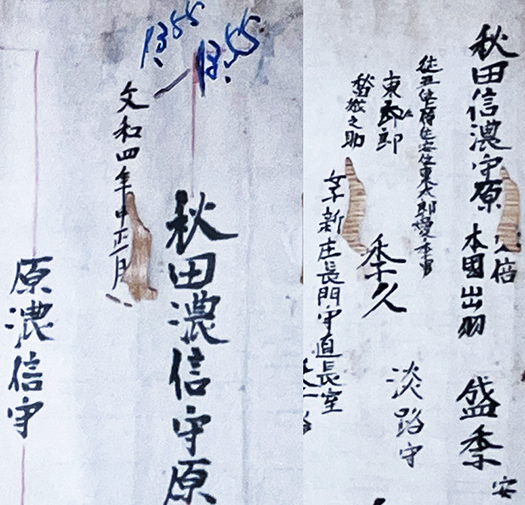
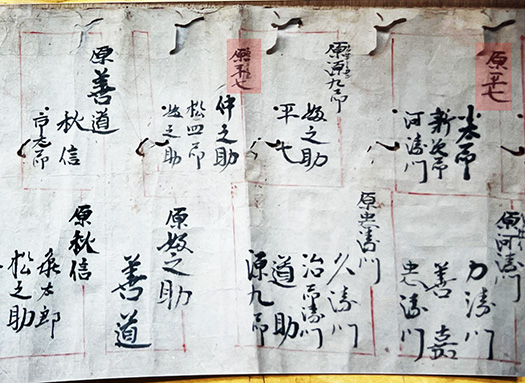
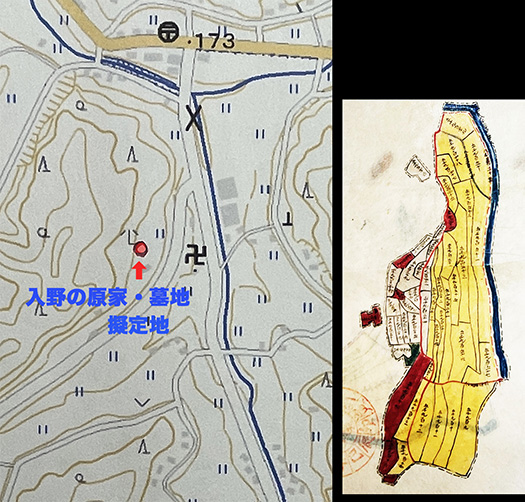
 その家系図の一部が上の写真。調査時に撮影されたもの。かなり「虫食い」も見られ保全が心配です。その下は広島藩公式文書「芸藩通志」での当該地広域地図。
 以前書いたように、わが家系の九世の祖「平七」がこちらの家系図にも記載されている。この平七は浅野藩の所務役を務め結果1718年に百姓一揆で焼き討ちされた旨の広島藩公式記録がある。
 わが家系図ではその子・八世の祖はたった1人だけ伝承記録されている。一方こちらの家系図では当家の八世の祖の人名は不記載。想像すれば、わが家系はその焼き討ち後に入野からは50km以上離れた福山藩領・松永の塩田に「分家」して、生き延びる道を見出していったと考えられるのです。
 一方「本家」筋のこちらの一統は入野に残り、いつかの時点で上に掲載の家系図を再度作成と想像できる。焼き討ち後の時期に記憶を喪失しないよう「再編纂」したものと思える。
 そしてその家系図には記録起点として「文和4年」1355年とある。(この西暦年記載は撮影後、調査記録の教育委員会の方が写真上にメモ書きしたと思われる。)
 この家系図起点がいまから671年前とされ、一族の出自は「秋田信濃守・原」氏という記載。〜右の書き出しの「信濃守」が左側では「濃信守」と誤記されている。単に表記ミスと思われる。〜
 WEBで確認すると符合する「秋田信濃守」という大名家は存在している。源氏による奥州侵攻で攻められた「安東氏」に繋がってくる流れ。
 ・・・という意想外の歴史時空間にジャンプさせられてしまった。さて?

●お知らせ
拙書「作家と住空間」幻冬舎から電子書籍で発刊
お求めはAmazonで。
https://amzn.asia/d/eUiv9yO

English version⬇

【A Time Leap to 1355? The “Family Tree” of a House with Local Roots…】
A “family tree” confirmed during the Kawachi Town Board of Education’s 1997 field survey in Irino. The record’s starting point is marked as 671 years ago. Re-verifying the survey is also difficult. …

 Wandering deeper into the labyrinth (lol) on my journey exploring family history…
Currently re-excavating the ancestral lands of my clan in Irino, Kawachi Town, Hiroshima Prefecture—the very place my sixth-generation ancestor, Miki Kanzo, visited while compiling the clan’s ancient document “The Origin of the Hara Clan” in 1815.
 I’m re-examining the “report” documents from the Kawachi Town Board of Education, who conducted a field survey in 1997-8 after my second eldest brother sent them the clan’s ancient documents. Among the survey records from Ino, where they visited a house bearing the same surname (Hara), there was a “family tree” from that household, and I’ve been having a long, deep conversation with it.
I’ve been staring at it for over two months now, but I haven’t had any sudden enlightenment yet.
 However, the individuals I could have interviewed have already passed away. Even if the investigator were still alive, they would be nearly 100 years old. I find it difficult to discover a way to verify the information. Yet, brooding over it won’t get me anywhere. I have decided to write about this matter in part on my blog today.
Part of that family tree is shown in the photo above. It is a photograph of the family tree taken during the investigation. It shows significant insect damage, raising concerns about its preservation. Below it is a broad-area map of the relevant region from the Hiroshima Domain’s official document, the “Geihan Tsūshi.”
As I wrote before, my family’s ninth-generation ancestor, “Heishichi,” is also listed in this family tree. Official records from the Hiroshima Domain state that during Heishichi’s generation, while serving as an official for the Asano Domain, he was burned alive during a peasant uprising.
 In our family tree, only one descendant is recorded as the eighth-generation ancestor. In contrast, this family tree does not list the name of the eighth-generation ancestor for this branch. It is reasonable to imagine that our family branch, around the time of the burning, established a “branch family” in the salt fields of Matsunaga within the Fukuyama domain, over 50 km away from Irino, finding a way to survive.
 Meanwhile, the “main branch” lineage here remained in Irino and likely recompiled the genealogy shown above at some point. It seems they “recompiled” it around the time of the burning to preserve their memories.
This genealogy lists “Bunwa 4” (1355) as its starting point. (This Western calendar year notation appears to have been handwritten on the photo by the Board of Education researcher after the photograph was taken.)
 This genealogy places its starting point 671 years ago, recording the clan’s origin as the “Akita Shinano-no-kami Hara” family. ~The “Shinano-no-kami” written on the right is mistakenly transcribed as “Nōshin-no-kami” on the left. This is likely simply a notation error.~
 Checking online confirms the existence of a daimyo family named “Akita Shinano-no-kami.” This lineage connects to the “Ando clan,” which was attacked during the Minamoto clan’s invasion of Oshu.
…And just like that, I was transported into an unexpected historical time-space. Well then?


【生涯探訪3軒目「竹林寺」&小野篁伝説 in入野】


 本日も「四百年間のいのちの履歴書」シリーズ続篇。
 ビジネス生活では地域住宅雑誌を創刊しその事業を譲渡した人間として、自由な個人の探究に残りの人生時間を宛てたい。対価を得るわけではない個人ブログでその探究テーマを深掘り的にまとめておきたい。そういう心境で書いています。よろしく。
 家系史という領域は個人の内面探究と似た部分がある。文学小説では私小説という領域が近似するのかも知れない。しかし私小説のように「孤独を突き詰める」のとは違う。もう少しは社会性があると思います。一方、個人や近親者にとっては肉感的な躍動を感じる。昨日触れた「原山城跡」の発見などは無上の爽快感すらある。
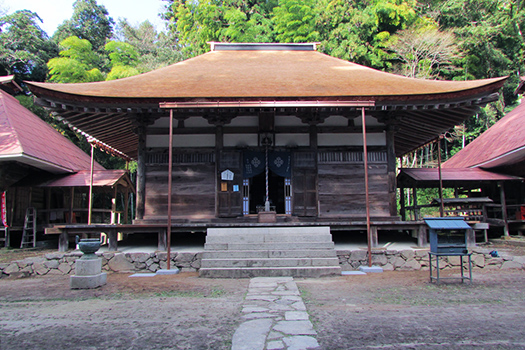
 さて家系400年前「故地」広島県河内町入野にはこれまで出張のついでとかで2度ほど足を運んできている。2度目では少し広範囲に周辺を巡って写真の「竹林寺」も訪れていた。竹林寺というと2023年3月に四国高知の近郊にある同名の寺院をも訪れている。
 その記録もブログで書いています。https://kochihen.replan.ne.jp/?p=40020
 わたしの家系はこの入野から移動していった福山市今津町の寺院・蓮華寺に家系の墓地があり、その宗旨も真言宗。ただ尾道の商家「阿賀屋」の商家株を入手した当時数十年間は律儀にその一族の宗旨・浄土真宗に改宗していた。先祖の法名には両宗派が混在している。
 ただ故地・入野時代さらにそれ以前は真言宗だったと思われます。入野には安楽寺という真言宗寺院もあり、さらに地域本山のように「篁山・竹林寺」が北方の地にある。
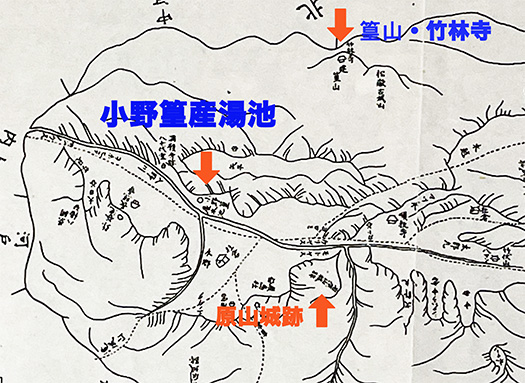
 そしてこの「篁山」という山号にはこの地で平安期の文人・小野篁が生誕したことも伝承されているのだそうです。図のように「産湯の池」というものまで残っている。
 小野篁は「閻魔大王の右腕」という称号を得るほど、冥界とこの世を往復していたという奇人。遣唐使に選ばれた高級官僚で外交官家系に育った。漢籍が堪能で法律に詳しく「日本の白楽天」とも称された。日本三大美人の小野小町の祖父とも言われる。で、京都に上る前、この入野で生まれ誕生に際しての瑞夢譚も残されている・・・。
 どうもこの故地・入野、なかなかの結縁の地のようです。ふ〜む。

●お知らせ
拙書「作家と住空間」幻冬舎から電子書籍で発刊
お求めはAmazonで。
https://amzn.asia/d/eUiv9yO

English version⬇

【Lifetime Exploration Stop 3: “Chikurin-ji Temple” & Ono no Takamura Legend in Irino】
For Hokkaido natives, it’s an ancient temple and legendary tales steeped in an overwhelming sense of antiquity. A journey into history—a pilgrimage to the reverse frontier. …

 Today continues the “Four Hundred Years of Life’s Resume” series.
In my business life, I launched a regional housing magazine and later transferred that venture. Now, I wish to dedicate the remaining time of my life to free personal inquiry. I want to deeply explore and compile these themes in a personal blog, not for monetary gain. That’s the mindset with which I write. Thank you.
 The field of family history shares similarities with personal introspection. In literary fiction, it might be akin to the realm of autobiographical novels. However, it differs from the “pursuit of solitude” found in autobiographical novels. I believe it possesses a bit more social dimension. On the other hand, for individuals and close relatives, it carries a palpable, visceral energy. Discoveries like yesterday’s mention of the “Haramayama Castle Ruins” even bring an unparalleled sense of exhilaration.
Now, regarding my family’s ancestral home in Hirano, Kawachi Town, Hiroshima Prefecture, 400 years ago, I’ve visited twice before, mostly on business trips. On the second visit, I explored a wider area and also visited the “Chikurinji Temple” pictured here. Speaking of Chikurinji, I also visited a temple of the same name near Kochi City in Shikoku in March 2023.
 I wrote about that experience on my blog too. https://kochihen.replan.ne.jp/?p=40020
 My family lineage moved from this Inno area to Imazu-cho, Fukuyama City, where our family graves are at Renge-ji Temple, also Shingon sect. However, for several decades after acquiring shares in the merchant house “Aga-ya” in Onomichi, my family dutifully converted to the Jodo Shinshu sect, which was that merchant family’s faith. My ancestors’ Buddhist names reflect both sects.
It seems our faith was Shingon during the Inno period and earlier. In Irino, there is also a Shingon temple called Anrakuji, and further north lies “Kōzan Chikurinji,” revered as a regional head temple.
It is said that the mountain name “Kōzan” (Bamboo Grove Mountain) is also associated with the legend that the Heian-period scholar Ono no Takamura was born in this area. As shown in the illustration, a place called the “Birthwater Pond” even remains.
 Ōno no Takamura was an eccentric figure said to have traveled between the underworld and this world so frequently he earned the title “Right Hand of King Yama.” He was a high-ranking official selected for the mission to Tang China, raised in a diplomatic family. Proficient in Chinese classics and knowledgeable in law, he was also called “Japan’s Bai Juyi.” He is also said to be the grandfather of Ono no Komachi, one of Japan’s Three Great Beauties. And before heading to Kyoto, he was born here in Irino, where tales of auspicious dreams surrounding his birth remain…
Hmm, it seems this ancestral land of Irino holds quite a special connection. Hmm.

●Notice
My book “Writers and Living Spaces” published as an e-book by Gentosha
Available on Amazon.


【1825年編纂「芸藩通志」巻84での故地「入野」絵図】


 本日も「四百年間のいのちの履歴書」シリーズ・家系の「故地・入野」深掘り篇。
 上の「絵図」は安芸広島藩・浅野氏が編纂した地誌から当該「芸藩通志・入野部分」第84巻。1663年に広島藩作成の地誌『芸備国郡志』を改訂し増補するために、1818年に再調査を開始。最終的に1825年に完成・全159巻。江戸時代以前の安芸国と備後半国(浅野氏の領国)の地理や文化、歴史を知る一級資料。主著者の頼杏坪は頼山陽の叔父。
 当時のわたしの家系の姓は「原氏」で、きのう触れたような推定経緯でこの地域と、隣接する田万里地域の現地での「管理者」として浅野藩から指名されて根付いたと考えられるのです。
 で、この1825年段階はわたしの家系一統はこの地を50kmほど離れた尾道近郊・今津にいたけれど、当主はこの故地を尋ねて記録を探り情報収集した上で1815年に「原氏由来の事」文書を書いた。ほぼ同時代の「公的記録」。
 いろいろ興味深い「地名」痕跡がある。
 入野川という地域の河川名は当然だけれど「シタハラ」中倉とか、図外の上方には「原前片池」という地名も見える。しかし一番驚かされるのが赤字で示した「右 原山城跡」という記載。調べてみると「原山城跡」としてGoogle検索では以下のような情報があった。
 〜原山城跡(はらやまじょうあと)は、現在東広島市河内町入野に位置し、戦国時代に山名氏<武家氏族。山陰地方中心に勢力を持った守護・戦国大名。清和源氏義重流(「河内」源氏・新田氏流)>が築いた山城。毛利氏支配下で支城・前線基地として使われ、現在は遺構が残る史跡。標高約200mの山頂に本丸があり曲輪や石垣、土塁などの遺構が見られ城下町や水運の要衝を見下ろす戦略的な場所だったと考えられています。〜
 ・・・とくに最後のくだりで頓悟させられた。「水運の要衝を見下ろす戦略的な場所」。
 「やっぱりこれか」であります。


 戦国期の芸備地域の勢力争いの中で、この入野地域はまさにさかんに城郭が作られる要衝地域だった。物流・人流を抑えることがそのまま、武権の高度化に繋がっていた。そして江戸幕府体制の定着の中で、新規に広島地域を支配した浅野氏としてこの地域をどう制圧するべきか、そういう結果がわが家系の「入植」だったのだろう。
 そのときに同じ「原」という姓が一定の納得感も伴うのではという期待もあったように感じる。ふむふむ。

●お知らせ
拙書「作家と住空間」幻冬舎から電子書籍で発刊
お求めはAmazonで。
https://amzn.asia/d/eUiv9yO

English version⬇

【Map of the Former Territory “Iri-no” from Volume 84 of the 1825 Compilation “Geihan Tsūshi”】
Having the familiar “Hara” clan serve as regional administrators might foster local ties and a sense of acceptance. Personnel deployment and governance strategy for the newly transferred Asano clan. …

 Today’s installment of the “Four Hundred Years of Life’s Resume” series: Deep Dive into the Ancestral Home of the Family Lineage, “Iri no.”
The “map” above is from Volume 84 of the “Geiban Tsūshi: Iri no Section,” a geographical survey compiled by the Asano clan of the Aki Hiroshima domain. To revise and expand the 1663 Hiroshima Domain gazetteer Geibi no Kuni Gunshi, a new survey began in 1818. It was finally completed in 1825, comprising 159 volumes. A primary source for understanding the geography, culture, and history of Aki Province and the southern part of Bitchu Province (the Asano clan’s domain) prior to the Edo period. The principal author, Yori Kyōhei, was the uncle of Yori Sanyō.
At that time, my family’s surname was “Hara.” Based on the presumed circumstances mentioned yesterday, it is thought that my family was designated by the Asano domain as the local “administrators” for this region and the adjacent Tamari area, and thus took root here.
 At this 1825 stage, my entire family lineage resided in Imazu near Onomichi, about 50km away. However, the head of the family visited this ancestral land, researched records, gathered information, and wrote the document “On the Origins of the Hara Clan” in 1815. This is a nearly contemporary “official record.”
There are various intriguing traces of “place names.”
 The river name “Irinogawa” is obvious, but there’s also “Shitahara” (Nakakura), and above the map outline, the place name ‘Haramekataike’ is visible. However, the most surprising thing is the notation marked in red: “Right: Harayama Castle Ruins.” Upon investigation, a Google search for “Harayama Castle Ruins” yielded the following information:
 ~ Harayama Castle Ruins (Hara Yama Jō Ato) is located in Iri no, Kawachi-chō, Higashi-Hiroshima City today. It was a mountain castle built by the Yamana clan

【隣村・田万里へ嫁入した家が、女子の家名「原氏」に・・・】


 本日も家系史深掘り探訪「四百年間のいのちの履歴書」シリーズ。
 いまから423-4年前、1603年頃に紀州から移住し広島県河内町入野に入植したわが家先祖の故事を書き残してくれた六世の祖・三木寛蔵は、1815年に一族の「故地」入野を訪ねている。そこで書き残したのが「原氏由来の事」文書なのですが、その起点に以下のように書いている。
 「往昔、紀州にて仕官たる処、慶長年中、故有りて浪人と相成る。兄弟四人、内男三人、女一人。(中略)
 芸州豊田郡入野村え住居(すまい)す。女子のち同郡田万里村砂畑といへるに嫁ぎ、
 母方の姓を以って家となされ、原氏を名乗る。」
 という記述であります。実際に隣村の田万里(現在は広島県竹原市田万里町)では、江戸期を通じてこの原氏が庄屋職を務め、現在の国道2号線である山陽道の本陣を営んできた。これは芸藩通史など古記録にも記述。
 ナゾ、なのであります。
 嫁をもらってその嫁さんの家の家名を名乗る、とはどういうことなのか?
 日本社会が基本として世界に冠たる戸籍制度を維持してきたのは、父系一系で維持されてきた天皇制という規範がすべての基底に存在したからと考えます。たしかに現代法では両性の合意があればどちらの姓を名乗ってもいいことになってはいますが、女子の家名をこの時代に名乗るのは・・・。
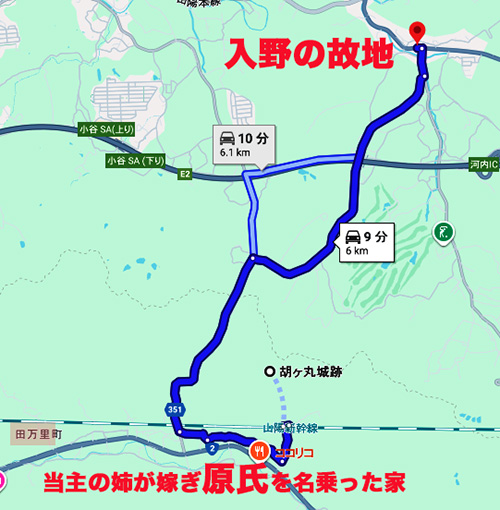
 ひとつ考えられるのは、芸州藩・浅野家からの強い強制。入野と田万里という古代以来の交通の要衝地を「固める」のに、紀州からの国替えに同行した原氏の一族に現地管理の任を期待した。婚姻関係での「同家化」によって一体的管理を強化したか。


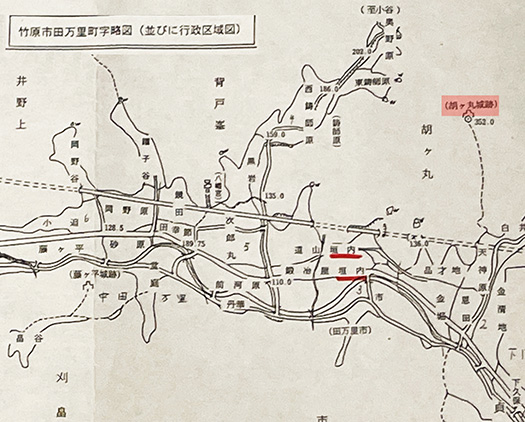
 この田万里には、戦国期以来の古城がありその中心と言える「胡ヶ丸城」の防御的な石垣を想起させる地名「垣内」が複数確認できるのです。わが家系が入野で住居(すまい)した「北之垣内」と地名的に相応している。<一昨日のブログで紹介した江戸初期と思える石垣写真も掲載。>
 やはり「故有りて浪人と相成る」ということの真実の意味合いは、枢要の地を現地で強力に統制管理する役割を紀州から同行させた「もと仕官」の原氏一統に委ねたという支配者・浅野藩の狙いが浮かんでくる。だから後代には藩行政のカギになる「所務役」をも受け持たせたのかと。
 江戸初期の国替え、徳川最大の敵・旧毛利領の引継支配には浅野家の相当の策略があったのではないか。
 家系史探究の脂っこさ沸点(笑)かなぁ・・・。

●お知らせ
拙書「作家と住空間」幻冬舎から電子書籍で発刊
お求めはAmazonで。
https://amzn.asia/d/eUiv9yO

English version⬇

【The family that married into neighboring Tamari adopted the bride’s family name “Hara”…】
A puzzling passage in the family history. The husband’s family actually held the village headman position in neighboring Tamari throughout the Edo period. Was this part of the Hiroshima Asano clan’s regional control strategy? …

 Today continues our series delving into family history: “Four Centuries of Life’s Resume.”
Our sixth-generation ancestor, Miki Kanzo, who recorded the story of our family’s migration from Kishu to settle in Irino, Kawachi Town, Hiroshima Prefecture around 423-4 years ago (circa 1603), visited the clan’s ancestral home in Irino in 1815. The document he wrote there, titled “The Origin of the Hara Clan,” begins as follows:
“Long ago, while serving as retainers in Kishu during the Keicho era, circumstances arose that led us to become ronin. There were four siblings: three sons and one daughter. (…)
We settled in Irino Village, Toyoda District, Geishu. The daughter later married into a family in Sunahata, Tamari Village, in the same district.
They established a household using her mother’s family name and adopted the name Hara.”
This is the account. Indeed, in the neighboring village of Tamari (present-day Tamari-cho, Takehara City, Hiroshima Prefecture), this Hara family served as village headmen throughout the Edo period and operated the honjin (official inn) for the Sanyo Road, now National Route 2. This is also recorded in old documents like the History of the Gei Domain.
 It’s a mystery.
What does it mean to take a wife and then adopt her family name?
I believe Japanese society fundamentally maintained its world-renowned household registration system because the norm of the Emperor system, sustained through a single paternal lineage, existed as the foundation for everything. While modern law certainly allows either surname to be adopted with mutual consent, taking the wife’s family name in this era…
 One possibility is strong coercion from the Asano clan of the Geishu domain. To “secure” the ancient transportation hubs of Irino and Tamari, they likely expected the Hara clan, who had accompanied the transfer from Kishu, to take charge of local administration. Did they strengthen unified management through “same-family status” achieved via marriage?

 Within this Tanemari region, several place names evoking the defensive stone walls of Kogamaru Castle—a central stronghold dating back to the Warring States period—can be identified. The name “Kakuchi” corresponds geographically to “Kita-no-Kakuchi,” where my family resided in Irino.
 Indeed, the true meaning of “becoming a ronin for a reason” reveals the Asano domain’s strategy: entrusting the role of strongly controlling and managing this crucial location to the Hara clan, former retainers brought from Kishu. This explains why they later assigned them the key domain administrative role of “Sokumiyaku” (Office Duty Officer).
 The early Edo period domain transfer and the takeover of the former Mōri territory—Tokugawa’s greatest enemy—likely involved considerable strategy on the part of the Asano clan.
This genealogical research is reaching its boiling point of greasiness (laugh)…

●Notice
My book “Writers and Living Spaces” published as an e-book by Gentosha
Available on Amazon.


【故地での同姓家系図にわが家系と同名人物】


 四百年間のいのちの履歴書シリーズ。
 昨日この故地・入野の属する自治体である河内町教育委員会が現地で、わが家系と縁が深そうな原家を訪問し、当時88歳で隠居されていた時彦氏にヒアリング調査(1997年実施)した様子を調査中と書きましたが、そのひとつの伝承書類が上の写真。
 こちらのお宅の「家系図」の一部でそこにわが家系伝承との人名「重複」(!)。
 こちらの家系図の中にわが家の家系伝承でもその名が記される「原平七」という名が記されている。時代的には亨保3年(1718年)の芸備地域全域での巨大百姓一揆の時代に相当する。
 このご先祖は1676-1728年の52年間を生きた人物で、わが家系の記録探査では「入野村庄屋役・苗字帯刀御免」であり広島浅野藩から「所務役」に任命され、所務管轄領は豊田郡中13ヶ村・9,615石の生産高地域を担当した、いわば浅野藩の地域生産管理役。これらの記録は広島県の公的な歴史記録からも史的事実として確認できている。わたしの家系・九世の祖。その人物が同姓「原氏」の別家において、同時代と比定出来る年代に記録されていた次第。
 この平七の代での百姓一揆による打ち毀しで、この時点で88歳だった時彦氏がまだ幼い時に、たぶん推定すれば江戸末期〜明治期に生きていられた祖母から「昔、わが家は庄屋をしていたが、百姓一揆で焼き討ちに遭い文無しになり、ドロボーも来ない家になった」と聞かされたとのこと。
 伝承としてはピッタリ符合する。
 わたしの家系ではこの平七さん時期の記録は乏しくその子の「源七」という八世の祖が、広島県福山市松永で、塩田経営をしたという流れになっている。
 これらを総合すると1718年の焼き討ちで「一家離散」に追い込まれ、家系の各人が必死の生き残りを賭けてそれぞれ自分の運を天に任せて各地に散らばったと思われる。わたしの家系・源七は平七の何番目の子どもかも記録がない。藩の所務役を務めたような家の当主(平七)で、どう見ても「多産系」の血筋なのにたったひとりしか子を成さなかったとは考えにくい。
 家系の深掘りをしてくると多くのミッシングリンクに突き当たりますが、考えて見れば徳川氏ですらも本流から傍流へ、血の流れは輻輳する。大きな「血脈の発見」に遭遇した次第。

●お知らせ
拙書「作家と住空間」幻冬舎から電子書籍で発刊
お求めはAmazonで。
https://amzn.asia/d/eUiv9yO

English version⬇

【An Ancestor of the Same Surname Appears in Another Family’s Genealogy in My Ancestral Home】
The name of my ninth-generation ancestor appears in the “family tree” of another family with the same surname in my ancestral home. It feels like encountering the depth of human history. What a turbulent life. …

 The Four-Century Life History Series.
Yesterday I mentioned that the Kawachi Town Board of Education—the local government body for this ancestral land of Irino—conducted a field visit to the Hara family, who appear to have deep ties to my lineage. They interviewed Mr. Tokihiko, then 88 years old and retired, as part of their research (conducted in 1997). One of the documents from that oral history is pictured above.
 This is part of the “family tree” from that household, showing a name “duplication” (!) with our family tradition.
Within this family tree is the name “Hara Heishichi,” a name also recorded in our family tradition. Chronologically, this corresponds to the era of the massive peasant uprising across the entire Geibi region in Kyōhō 3 (1718).
 This ancestor lived for 52 years, from 1676 to 1728. Our family records indicate he served as the “Shōya (village headman) of Irino Village” and held the privilege of bearing a surname and sword. He was appointed by the Hiroshima Asano Domain as a “Domain Official” (Tokumiyaku), overseeing the administration of 13 villages in Toyoda District with a total production of 9,615 koku. He was, in essence, a regional production manager for the Asano Domain. These records are confirmed as historical facts through official historical records of Hiroshima Prefecture. He is my ninth-generation ancestor. This individual was recorded in a branch family of the same surname, “Hara,” during a period identifiable as the same era.
 During this period of Heishichi’s time, when the village headman’s house was destroyed in a peasant uprising, Tokihiko, who was 88 years old at the time, was told by his grandmother—who likely lived from the late Edo to Meiji periods and was still alive when he was young—that “Long ago, our family served as village headmen, but we were burned out in a peasant uprising, lost everything, and became a house that even thieves wouldn’t bother.”
This oral tradition fits perfectly.
 Records from Heishichi’s generation in my family line are scarce. The narrative continues with his son, the eighth-generation ancestor named “Genshichi,” who managed salt fields in Matsunaga, Fukuyama City, Hiroshima Prefecture.
Synthesizing these accounts, it seems the 1718 arson forced the family into dispersion. Each member, fighting desperately for survival, entrusted their fate to heaven and scattered to different regions. My branch, Genjiro’s, lacks records indicating which child Heishichi was. He was the head of a family that served as a domain official (Heishichi), and given that he clearly belonged to a “fertile lineage,” it’s hard to believe he fathered only one child.
 Delving deeper into family lineage inevitably reveals many missing links. Yet, upon reflection, even the Tokugawa clan itself sees bloodlines diverging from the main stream into collateral branches. I have thus encountered a significant “discovery of blood ties.”

●Notice
My book “Writers and Living Spaces” published as an e-book by Gentosha
Available for purchase on Amazon.

【400年の故地・東広島市河内「入野」で彷徨いつつ・・・】


ここのところ、大雪に伴う本格的な雪かき非常態勢にかまけていましたが(笑)「四百年間のいのちの履歴書」シリーズ・深掘りは進めてきています。日本全国規模の信長だ、秀吉・家康だという歴史とは位相の違う歴史探究で、いわば血肉の感じられる「庶民史」という新規領域。
 前回ブログ(1月6日【故地・入野 入植210年で先祖が、420年で子孫が巡る】)以来、故地についてさまざまな書類に目を通し続けました。そのなかには著名な山陽地域史の研究者・西向宏介氏(当時・広島県立文書館研究職勤務)からの情報や、故地・入野を含む「河内町」の教育委員会・近貞氏からの現地聞き取り探索情報などを詳しく参照させていただいた。〜次兄の探究での大きな反応成果。〜
 わたしの世代として6代前の先祖(六世の祖と表現)が、その3代前の祖父で広島浅野藩の「所務役」を務めた祖先の事跡を故地・入野を尋ね書き残した記録書に基づいて家系調査を進めてきている。
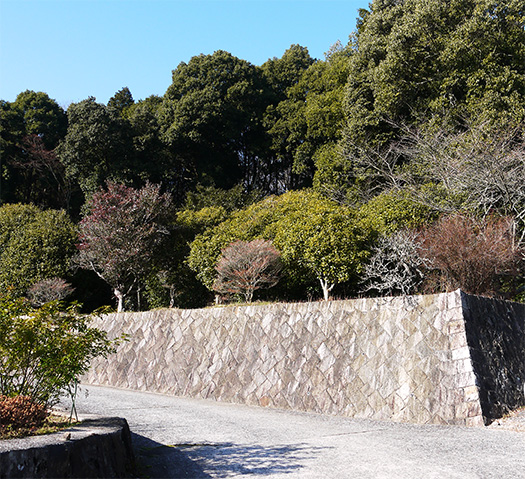
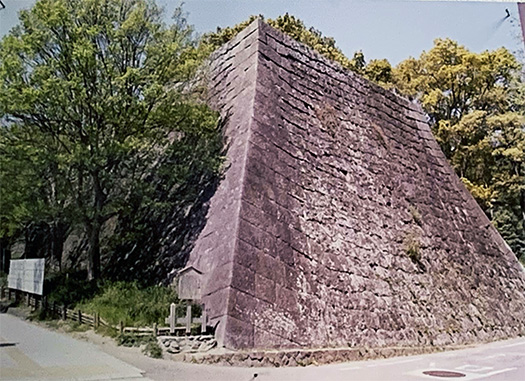
 この探究を進めてきて最近気付かされているのが、当地で見続けていた「垣地」のこと。まるで城郭石垣と同様の石垣が家系の墓域と伝わっている場所の麓にあり、古い江戸期の地名にも「北之垣内」という名前が遺されているということ。
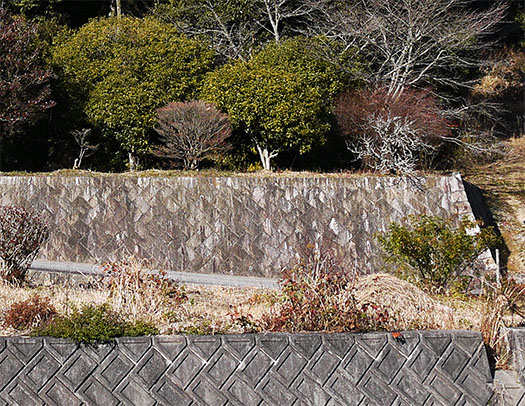
 上の写真はその麓の石垣。下の写真はわたしが先年訪れていた紀州・和歌山城。戦国から江戸初期、城郭造りの名人とされた武将・藤堂高虎の築城とされる「高石垣」の様子であります。わたしには土木についての知識はまったくありません。しかし上の写真の最底辺部分には現代の「石垣」が写っていますが、素人目で見ても石垣の造作に時代的な違いがあると思われ、どうも「高石垣」との相似も感じ取れる。


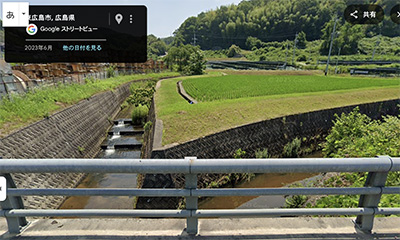
 こちらの写真は、GoogleMapから。右側の奥の山地から故地・入野を流れる入野川支流はがっちりと築堤された様子が見て取れる。やや高台の「垣地」といい紀州からこの地に入植した家系は、河川土木管理に対しての一定の技術力と知識をもっていたので転封で広島に国替えきた浅野藩としては、この水害も想定される要衝地に家系を人員配置したという想像。後の時代に関わることになる「塩田」土木技術とも符合する。
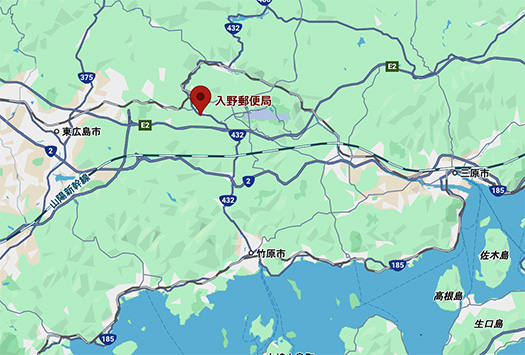
 「平安期律令制度での駅家が置かれ大宰府と都を結ぶ最重要官道・古代山陽道が通る要衝で、政治・経済・軍事の要として機能し物流・人の往来が活発な地域」であるこの入野の支配管理を重視して、わが家系をこの地に「管理人」として配置したという類推が浮かんできたワケです。

●お知らせ
拙書「作家と住空間」幻冬舎から電子書籍で発刊
お求めはAmazonで。
https://amzn.asia/d/eUiv9yO

English version⬇

Wandering through the 400-year-old ancestral lands of “Iri no” in Kawachi, Higashihiroshima City…
Guided by a Hiroshima Prefecture regional historian who rigorously scrutinized the materials, and focusing on local “insights” and observations. The precision of this flesh-and-blood chronological exploration gradually deepens…

Lately, I’ve been preoccupied with the full-scale snow removal emergency mode triggered by the heavy snowfall (lol), but I’ve been steadily progressing with the in-depth research for the “Four Hundred Years of Life’s Resume” series. This is a different dimension of historical inquiry compared to the nationwide narratives of Nobunaga, Hideyoshi, and Ieyasu—a new frontier, so to speak, of “commoners’ history” where you can feel the flesh and blood.
 Since my last blog post (January 6th: [Homestead: Irino – Ancestors Return After 210 Years, Descendants After 420 Years]), I’ve continued reviewing various documents about the ancestral homestead. Among these, I have carefully referenced information from Mr. Kosuke Nishimukai, a renowned researcher of Sanyo regional history (then employed as a researcher at the Hiroshima Prefectural Archives), as well as field investigation and oral history information from Mr. Sadayoshi Chika of the Kawachi Town Board of Education, which includes my ancestral home, Irino. ~ Significant findings from my second brother’s research. ~
 As a member of my generation, I have been conducting genealogical research based on records written by my sixth-generation ancestor (referred to as the sixth-generation progenitor) who visited our ancestral home, Irino, and documented the deeds of his grandfather, three generations prior, who served as a “Sokumyaku” (administrative official) for the Hiroshima Asano Domain.
 What has recently struck me as I’ve pursued this research is the persistent presence of “kakuchi” (enclosed plots) in this area. Stone walls resembling castle ramparts exist at the base of locations passed down as family burial grounds, and an old Edo-period place name, “Kita-no-Kakuchi,” remains preserved.
The photo above shows the stone wall at that base. The photo below is Wakayama Castle in Kishu, which I visited several years ago. It shows the “Takaishigaki” (High Stone Wall), attributed to the warlord Todo Takatora, renowned for his castle-building skills from the Sengoku period to the early Edo period. I have absolutely no knowledge of civil engineering. However, even to my untrained eye, the very bottom section of the top photo, which shows a modern “stone wall,” appears to have a different construction style from the stone wall, and I can’t help but feel a similarity to the “Takaishigaki.”

 This photo is from Google Maps. You can clearly see the embankments firmly constructed along the tributary of the Irino River flowing from the mountainous area in the far right background through the ancestral lands of Irino. The family lineage known as “Kakiji,” who settled here from Kishu on slightly elevated ground, possessed a certain level of technical skill and knowledge in river and civil engineering management. It is conceivable that the Asano clan, transferred to Hiroshima as part of a domain transfer, strategically placed this lineage in this key location, anticipating potential flood damage. This also aligns with the salt field civil engineering techniques that would become relevant in later periods.
 This led me to infer that my family lineage was placed here as “administrators” precisely because of the importance placed on governing and managing Irino—a region that functioned as a political, economic, and military hub. It was a vital point where the ancient Sanyo Road, the most important official route connecting Dazaifu and the capital, passed through, established under the Heian period’s Ritsuryo system. It was a place of active logistics and human traffic.

●Notice
My book “Writers and Living Spaces” published as an e-book by Gentosha
Available on Amazon.